- Category
- Fish and seafood
- State
- Fresh
- Usual unit
- kg
What it is
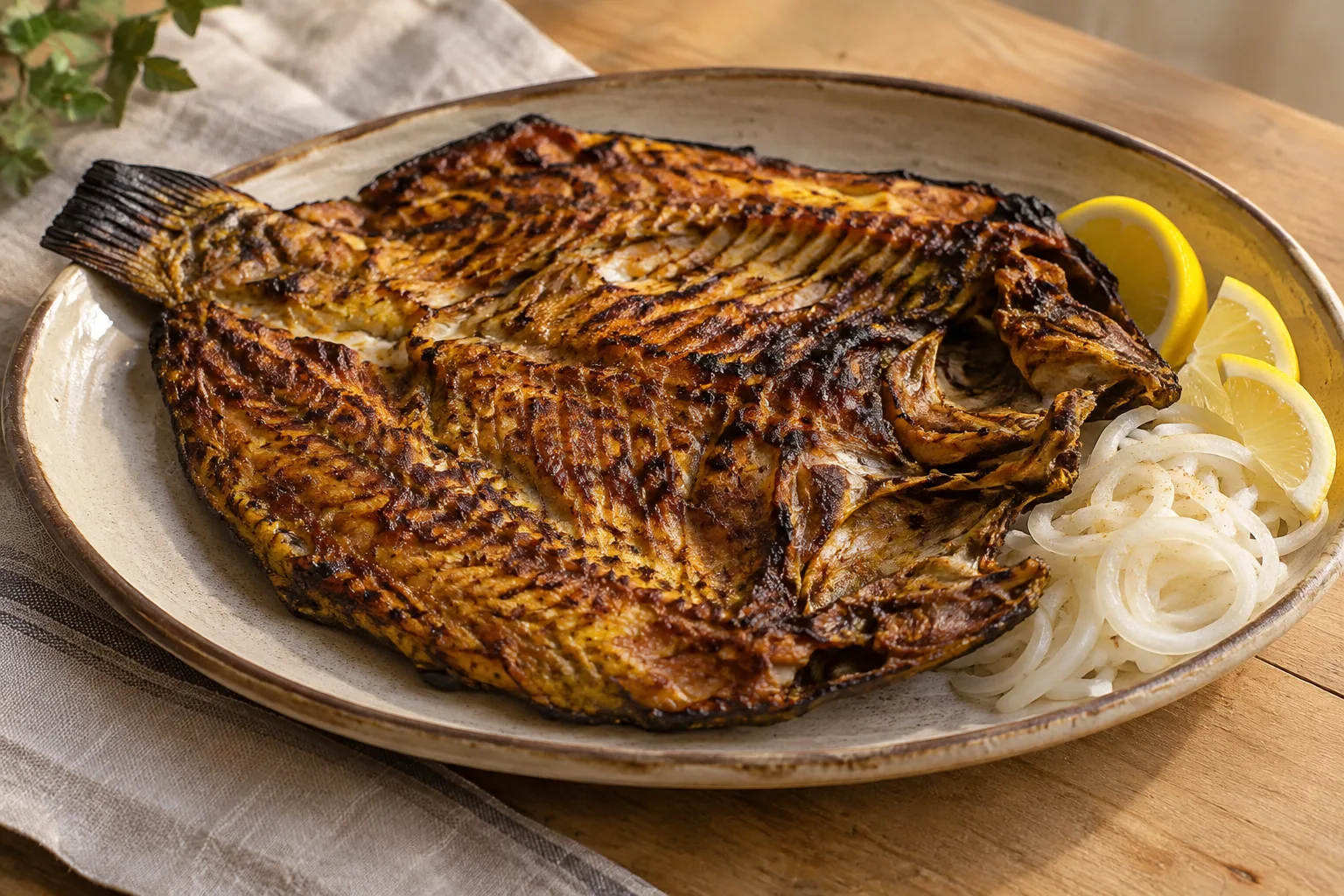
Carp is a freshwater fish name used for several varieties. Common carp belongs to the cyprinid family, and mirror carp is another described variety. In the kitchen, a carp may be prepared whole or in portions, depending on the fish and the dish. Its flavor can have an earthy or muddy note; it is also described as savory with a soft texture. Clean and wash the fish before cooking. If you want to soften that flavor, soak it with water and salt or with lemon. There is no single required method: carp can be baked, grilled, fried, stewed, boiled, steamed, or prepared as escabeche.
When to use it
Choose carp when you want freshwater fish as a main dish and have time to clean it and, if you wish, soak it before cooking. It can suit a baked or grilled meal, a stew, a boiled or steamed preparation, or fried portions. If you are concerned about an earthy note, take that flavor into account while planning the preparation rather than waiting until the end to address it. Carp can also be made into escabeche. The best technique depends on the cut, the fish, and the result you want.
How to use it
Clean and wash the carp before cooking. To soften its characteristic earthy or muddy flavor, you can soak it with water and salt or with lemon, then drain it before continuing with the recipe. Vinegar is also mentioned as a culinary way to counter that note. Next, bake or grill it, fry it, stew it, boil it, or steam it. Carp is also prepared as escabeche. Choose a technique to suit the fish and the dish; do not assume that soaking or a homemade escabeche makes the bones edible. Take care to remove bones when serving.
Flavour and texture
Carp may have a pronounced flavor described as earthy or muddy; it is also described as savory with a soft texture. The intensity can vary from one fish to another. If you want to appreciate its flavor before adding strong seasonings, start with a simple preparation. Salted water or lemon can be used during soaking to soften the earthy note; vinegar is also mentioned as a culinary option.
How to choose it
Choose a fish intended for eating, and ask about the variety if that matters for your recipe. Common carp and mirror carp are names used for described varieties of this fish. Check that the product’s presentation and size suit the technique you have in mind, whether baking, frying, stewing, or making escabeche. Follow the seller’s and product label’s storage instructions, when provided, rather than assuming one recommendation applies to every presentation.
Storage
For carp storage, follow the product label and the seller’s directions, and consult the official food-safety guidance that applies where you live. Product presentation can vary, so do not assume one storage duration or set of conditions applies to all carp. When preparing it for a recipe, plan cleaning and cooking in accordance with the dish instructions and the handling guidance recommended for the product you purchased.
Substitutions
To keep a recipe’s general character, you can replace one carp variety with another, such as common carp with mirror carp. Bear in mind that the fish may differ in size and appearance, so you may need to adapt the cut and technique. The available information does not establish that both varieties behave identically in every preparation; choose the one that suits the dish and follow the recipe instructions.
Common mistakes
Do not skip cleaning or assume that every fish has the same flavor. If you dislike an earthy note, do not wait until cooking is finished to consider it: you can soak the carp with salted water or lemon before proceeding. Avoid assuming that every variety, size, or technique works identically for every fish. Do not assume escabeche makes bones edible; remove them carefully when serving.
Safety and allergens
Follow the product label and seller’s directions, along with the official food-safety guidance applicable where you live, for fish storage and preparation. Take care with bones when serving. Do not assume that soaking or escabeche makes them edible.
Culinary uses
- Plato principal de pescado
- Ingrediente para guisos y escabeches
Recommended techniques
- Asar al horno o a la brasa
- Freír, estofar, hervir o cocinar al vapor
- Macerar con agua y sal o con limón para atenuar el sabor terroso
Pairs well with
- Vinagre
- Limón
- Sal
Frequently asked questions
What does carp taste like?
It may have an earthy or muddy note, though it is also described as savory with a soft texture. Flavor can vary from one fish to another.
How can I soften carp’s earthy flavor?
Before cooking, you can soak it with water and salt or with lemon. Vinegar is also mentioned as a way to counter that note.
How can carp be cooked?
It can be baked, grilled, fried, stewed, boiled, or steamed. It is also prepared as escabeche.
Ingredient allergens
Allergen listThere are no verified associations for these ingredients yet.
Estimated nutrition
- Fat
- 5.6 g
- Saturates
- 1.08 g
- Carbohydrate
- 0 g
- Sugars
- 0 g
- Fibre
- 0 g
- Protein
- 17.8 g
- Salt
- 0.12 g
Sources and review
Automatically researched, cross-checked and validated content. Sources consulted:
- Client Challenge doi.org/10.2307/jj.27939689.16
- Comité Científico aesan.gob.es/dam/jcr:1c57d784-1e9a-48ba-abfc-8dc315083560/comite_cientifico_12.pdf
- Manuscript Collections - Foodways - Library Guides at University of Mississippi Libraries guides.lib.olemiss.edu/food/collections
- Habitat selection is unaltered after severe insect infestation sites.arizona.edu/mtgrahambiology-lab/files/2026/08/Habitat-selection-is-unaltered-after-sev…
- Tree Selection Guide for Mid-Atlantic Silvopastures www.pubs.ext.vt.edu/content/dam/pubs_ext_vt_edu/spes/spes-476/SPES-615.pdf
- LAHC Swap Meet | LAHC www.lahc.edu/campus-life/facilities/swapmeet
- FAQs for Guests - Commencement at Cal Lutheran www.callutheran.edu/commencement/faq-guests.html
- Carbon storage in mountainous headwater streams sites.warnercnr.colostate.edu/carbon/wp-content/uploads/sites/14/2016/10/Beckman-Wohl-WRR.pd…
- Aprovechamiento culinario de la Carpa | Asociación cultural As Ortigas | Galicia Digital www.galiciadigital.com/opinion/opinion.3703.php
- Qué Come la Carpa: Alimentación Natural vs Boilies chachocarp.es/alimentacion-de-la-carpa-mejores-boilies/?srsltid=AYCX9vJVvyAKUArCpxgzWEhAqTIH…
- Cyprinus carpio - Wikipedia, la enciclopedia libre es.wikipedia.org/wiki/Cyprinus_carpio
- Food allergen labelling and information requirements technical guidance - GOV.UK www.gov.uk/government/publications/food-allergen-labelling-and-information-requirements-tech…