- Category
- Sauces and condiments
- State
- Liquid
- Usual unit
- Variable
What it is
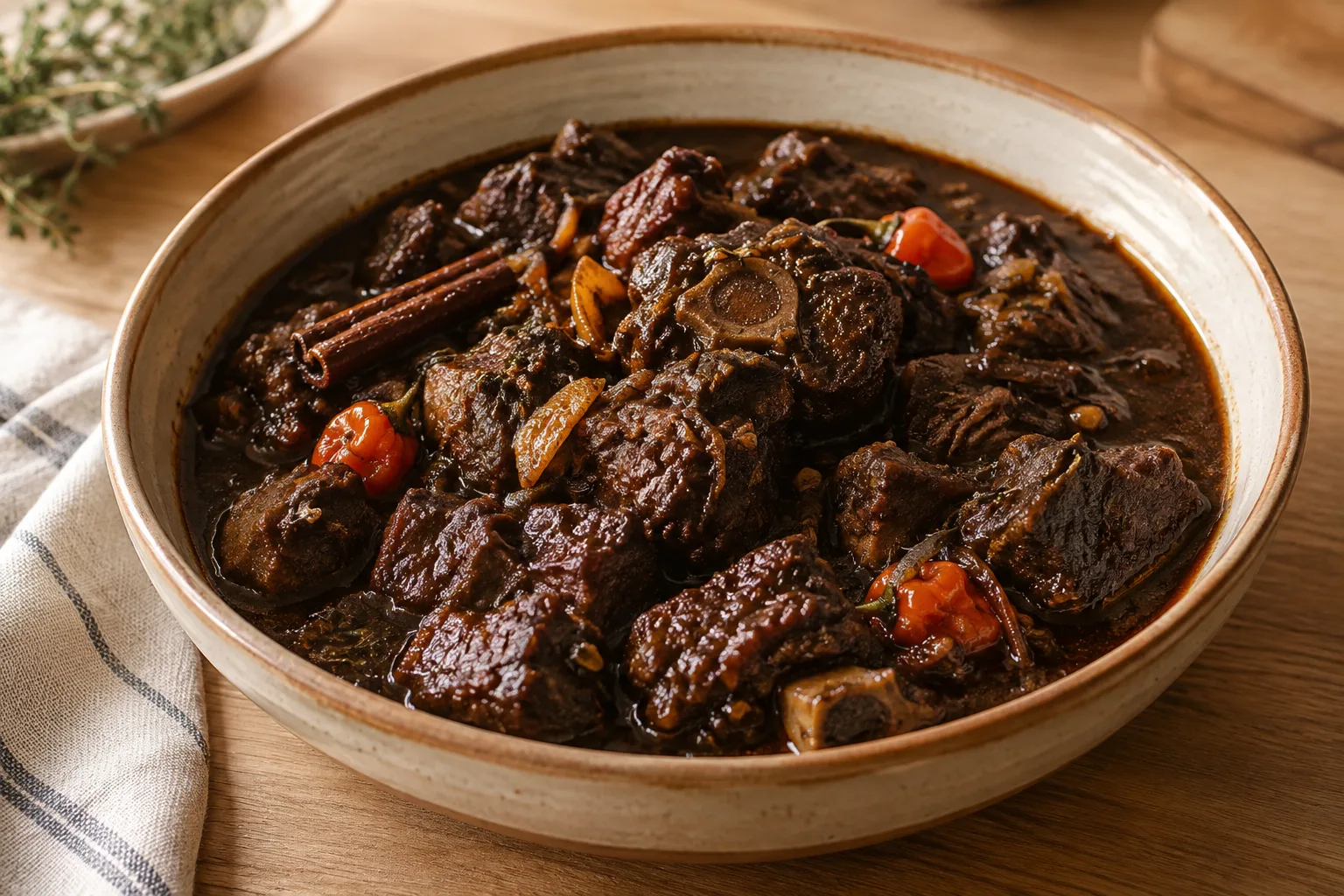
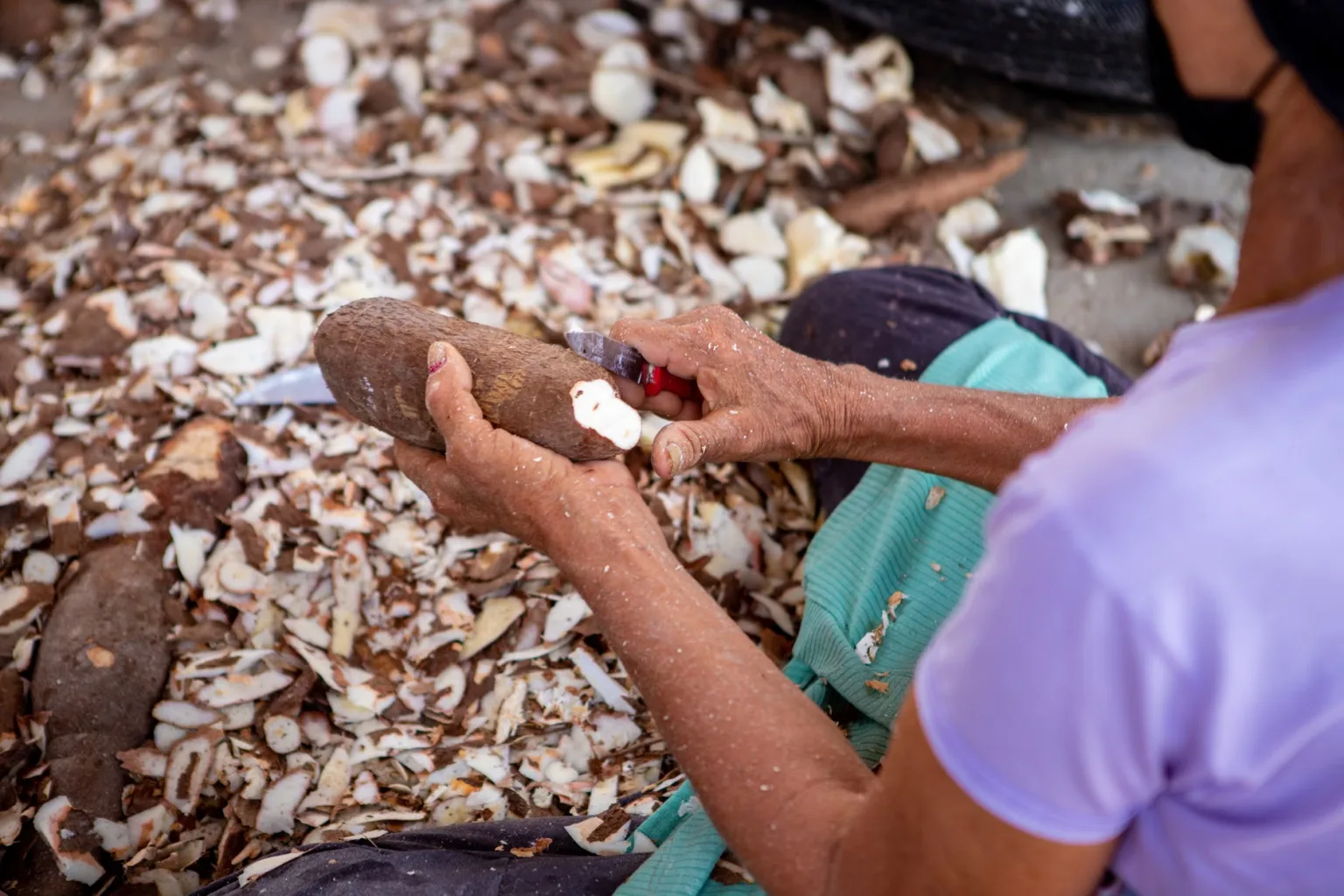
Cassareep is a dark, concentrated liquid condiment most closely associated with Guyanese pepperpot. It is made by reducing, through cooking, liquid obtained during the traditional processing of bitter cassava. It is not simply untreated cassava juice, nor is it browning sauce: its source and flavor are different. Products can vary in intensity and seasoning, so one bottle may not taste exactly like another. In pepperpot, cassareep contributes color and a characteristic flavor base; it is more than an ingredient used just to darken a stew.
When to use it
Use cassareep when making Guyanese pepperpot or when you want a stew to have some of that dish’s characteristic color and flavor. It can also be added to other slowly cooked meat stews, although the result will not necessarily be pepperpot. Because the flavor is concentrated and products vary, begin with a modest amount and taste before adding more. Do not confuse it with browning sauce: browning sauce can add color, but it does not reproduce cassareep’s flavor or culinary role.
How to use it
Add cassareep to a stew or pepperpot as part of the cooking liquid, then stir to distribute its color and flavor. In pepperpot, it goes with meat and may be combined with ingredients such as hot peppers, cinnamon, and cloves. It can also be used in a meat marinade before slow cooking; adjust the amount to the concentration of the product. Commercial versions vary, so taste and adjust rather than assuming every bottle has the same intensity. Do not replace it with browning sauce if you expect an equivalent result.
Flavour and texture
Cassareep is dark and concentrated. Its flavor may be described as earthy, bitter, sweet-and-sour, smoky, or caramel-like, with differences among products. It gives a stew’s liquid a deep color and distinctive flavor. It is liquid rather than a thick paste, though its concentration can make it seem dense.
How to choose it
Look for prepared, labeled cassareep rather than trying to make it from unprocessed bitter cassava. Commercial bottles can differ in intensity and seasoning, so check the label and consider starting with a small amount in a recipe. Do not buy browning sauce expecting it to be the same ingredient: it can darken a dish, but it does not replace cassareep’s characteristic flavor.
Storage
Follow the storage directions on the product label and keep the container closed as directed. Cassareep’s dark color and concentrated appearance do not by themselves tell you how it should be stored; consult the product instructions rather than assuming it can be kept at room temperature.
Substitutions
Browning sauce can add color, but it is not cassava-based and does not reproduce cassareep’s flavor or role in pepperpot. If cassareep is unavailable, the more accurate choice is to omit it and accept a different character in the dish rather than present browning sauce as an equivalent substitute.
Common mistakes
A common mistake is treating cassareep as interchangeable with browning sauce: both can darken a dish, but they do not have the same flavor or role. Another is assuming every bottle has the same intensity. Add it gradually, taste the stew, and adjust; do not treat it as untreated cassava juice.
Safety and allergens
Use prepared cassareep labeled as a food product and follow its package directions. Do not improvise its production from unprocessed bitter cassava; prepared cassareep is the practical choice for home cooking.
Culinary uses
- Dark, concentrated seasoning for Guyanese pepperpot
- Flavor and color component in slow-cooked meat dishes
Recommended techniques
- Stir into the cooking liquid of a stew or pepperpot
- Add to a meat marinade before slow cooking
Pairs well with
- Meat, including beef, pork, or lamb
- Hot peppers, cinnamon, and cloves
Frequently asked questions
What is cassareep made from?
It is made from liquid obtained during the traditional processing of bitter cassava, then reduced by cooking into a dark, concentrated condiment.
Is cassareep the same as browning sauce?
No. Browning sauce can darken food, but it is not made from cassava and does not reproduce cassareep’s flavor or role.
How do you use cassareep?
Stir it into stews, especially Guyanese pepperpot, or use it in a meat marinade. Add it gradually because intensity varies by product.
Ingredient allergens
Allergen listThere are no verified associations for these ingredients yet.
Sources and review
Automatically researched, cross-checked and validated content. Sources consulted:
- Client Challenge doi.org/10.2307/jj.27939689.16
- Historical Origins of Food Preservation - National Center for Home Food Preservation nchfp.uga.edu/resources/entry/historical-origins-of-food-preservation
- Kitchen Companion: Your Safe Food Handbook ucanr.edu/sites/default/files/2020-09/336322.pdf
- Repositorio Digital Universidad De Las Américas: Aplicación de métodos de cocción en carne de borrego para la preparación de platos en cocina de autor dspace.udla.edu.ec/handle/33000/10431
- Cooking: low temperature or sous-vide at the right temperature? insights.ehl.edu/cuisson-basse-temperature-sous-vide
- 3 Types of Cooking Methods and the Foods That Love Them | CIA www.ciachef.edu/blog/3-types-cooking-methods-foods-love/
- What Is a Saucier — and Why Is This an Essential Restaurant Kitchen Role? | Institute of Culinary Education www.ice.edu/blog/what-is-a-saucier
- ¿Qué es el casareep? El ingrediente del pepperpot de Guyana – Guyanese Swag guyaneseswag.com/es/blogs/guyanese-edit/what-is-cassareep-guyana?srsltid=AYCX9vJxeG-LZo8P7om…
- Pepperpot guyanés: Hechos fascinantes al descubierto www.remitly.com/blog/es/cultura-y-estilo-de-vida/platosnacional-pepperpot-datos-fascinantes-…