- Category
- Baking
- State
- Dry
- Usual unit
- g
What it is
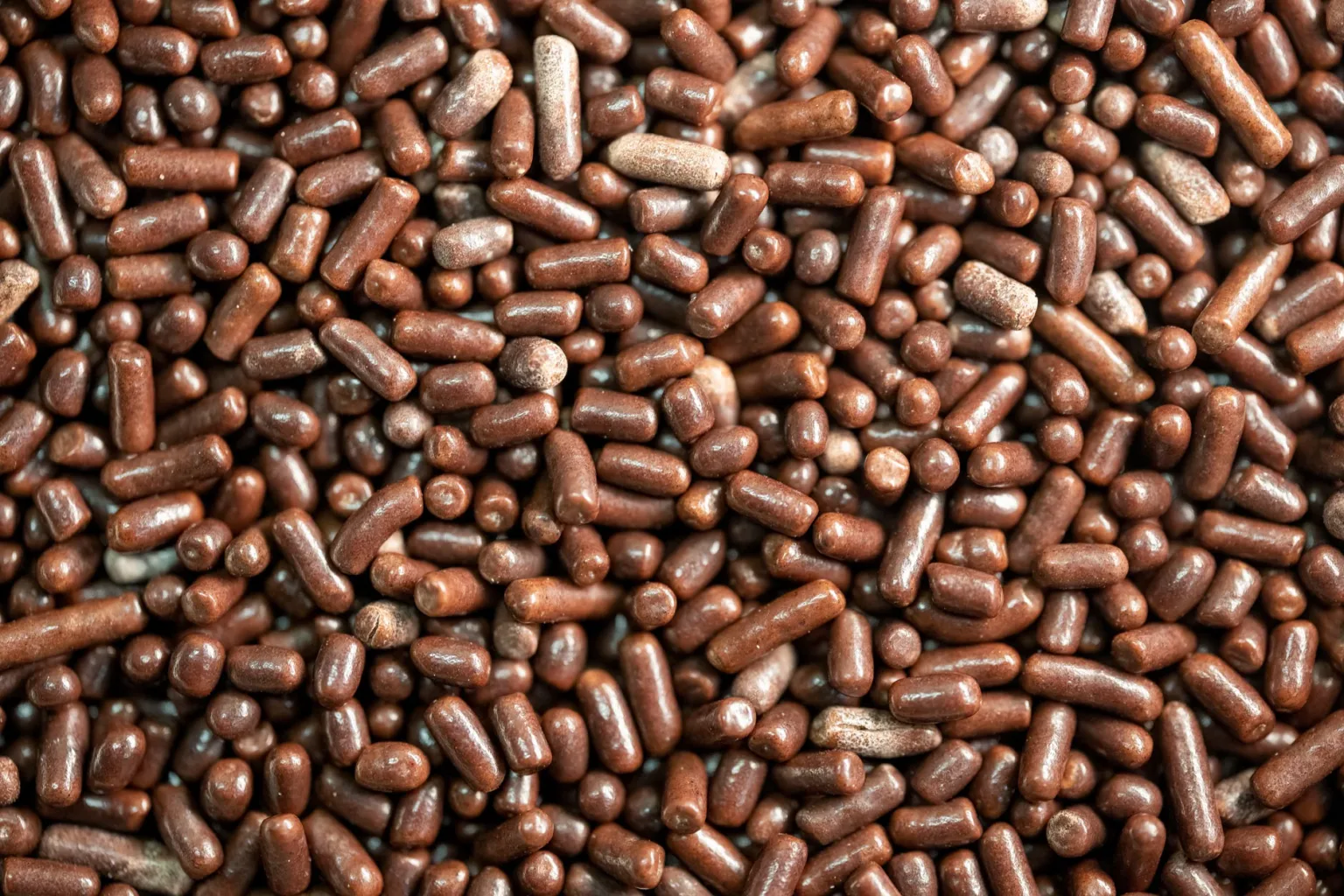
Chocolate sprinkles are small, often elongated pieces or shavings made for decorating sweet foods and adding texture. Commercial products may be made with chocolate, cocoa, sugar, and vegetable fats or cocoa butter; some formulas also include milk powder, emulsifiers, flavorings, or glazing agents. Ingredients are not the same in every product. Sprinkles come in fine and thicker forms, as well as colored versions and mixtures. As a result, their flavor, sweetness, firmness, and tendency to soften or melt can vary.
When to use it
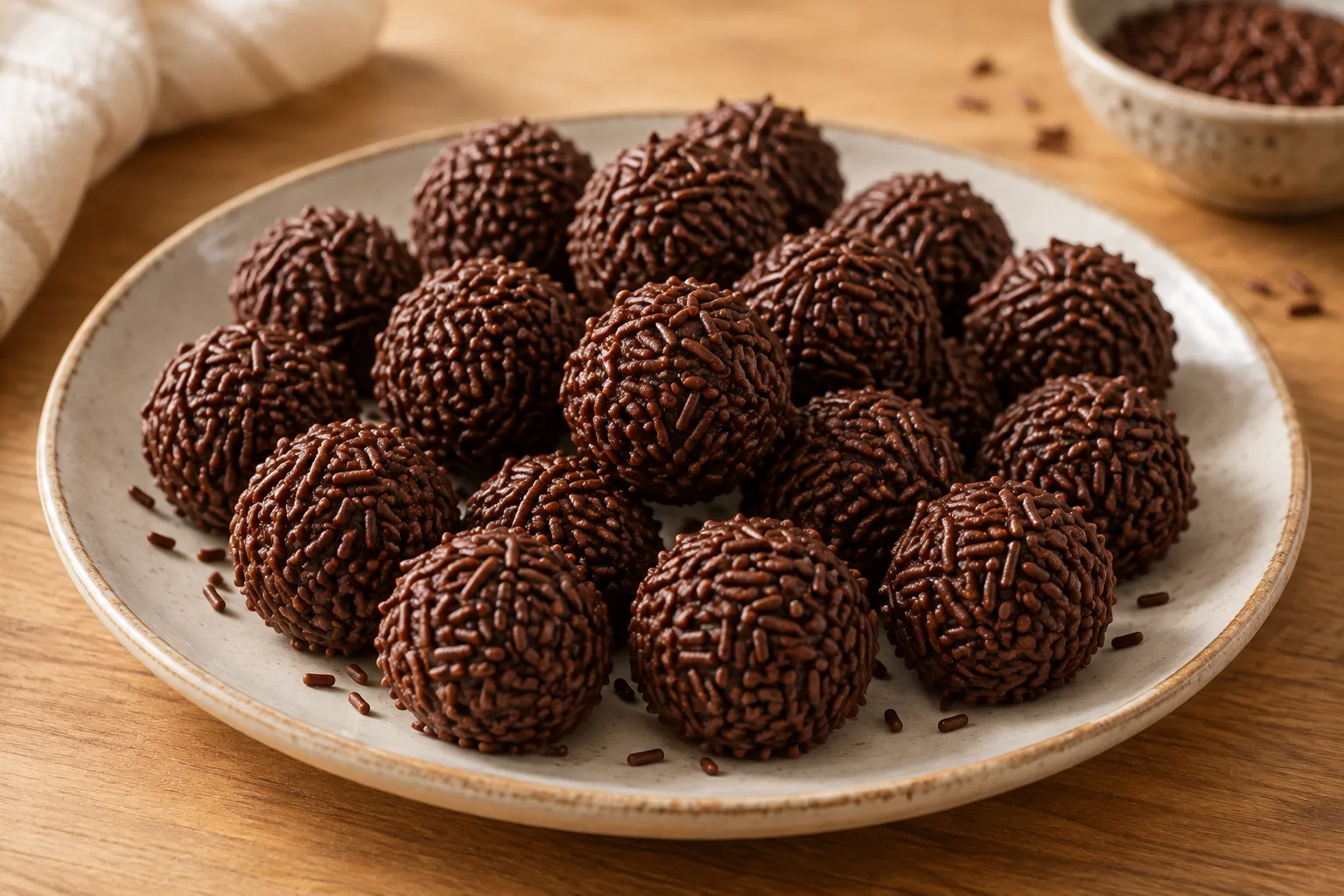
Use chocolate sprinkles when you want a visible finish and a contrast in texture without making a separate topping. They can go on cakes, cupcakes, cookies, doughnuts, ice cream, frozen yogurt, and some custards; they can also be scattered over crepes, waffles, or hot drinks. Fine sprinkles spread easily, while thicker ones make a more noticeable decoration. On a dry surface they may not adhere well, so a coating or icing can help hold them in place.
How to use it
Scatter the sprinkles over a dessert and spread them evenly, or place them in a defined area as decoration. To help them stick, add them to a coating, icing, or another moist, tacky layer rather than expecting them to hold on a dry surface. Use them on cakes, cupcakes, cookies, doughnuts, ice cream, or frozen yogurt; they can also be mixed into batters or hot drinks when that suits the result you want. Add them near the end if you want them to remain distinct as a topping. Moisture can soften them or affect their appearance, so avoid leaving them on wet creams longer than needed.
Flavour and texture
Flavor depends on the amount and type of cocoa, sugar, and fat in the product. Some varieties taste sweeter and milder, while others have a more pronounced cocoa flavor. Sprinkles usually add a noticeable texture, but their firmness can change when they meet moisture or heat. Fine pieces make a more subtle finish; thicker ones are more prominent.
How to choose it
Read the ingredient list to see whether the product contains chocolate or cocoa and to identify milk or other ingredients you may need to avoid. Choose the size for the task: fine sprinkles are useful for scattering, while thicker ones stand out more as decoration. If flavor or shape retention matters, compare the product descriptions and ingredients. Check that the package closes securely and that the product looks as expected.
Storage
Keep sprinkles in a tightly closed container in a dry place, protected from moisture, to help preserve their aroma and prevent clumping. Follow the package directions, which may differ by formula. Avoid heat if you want them to keep their shape. If the product becomes damp, its texture and appearance may change.
Substitutions
For a similar finish, use fine chocolate shavings or thicker chocolate sprinkles, depending on the size and texture you want. Shavings tend to give a less regular decoration, while thicker sprinkles are more noticeable. An alternative may melt or behave differently on cream, so consider whether it suits the surface and the result you want.
Common mistakes
Do not expect sprinkles to stay on a dry surface without help; a coating or icing can hold them in place. Do not assume every product has the same ingredients, flavor, or resistance to moisture. Adding them well in advance to a moist cream can change their texture and appearance. Check the label before serving them to someone who needs to avoid particular ingredients.
Safety and allergens
Check the ingredient and allergen information on the package because formulas vary and some products include milk powder. Follow the manufacturer's storage directions and keep the product dry.
Culinary uses
- Dessert decoration
- Sweet topping and texture accent
Recommended techniques
- Sprinkle over a finished dessert
- Mix into batters or warm drinks
Pairs well with
- Whipped cream and vanilla
- Berries, orange, coffee, or nuts
Frequently asked questions
How can I make chocolate sprinkles stick to a dessert?
Scatter them over a coating or icing, which gives them a surface to cling to. They may fall off easily when placed on dry food.
Can I mix chocolate sprinkles into batter or a hot drink?
Yes. They can be mixed into batters and hot drinks, although heat may soften or melt them and change their texture.
Do all chocolate sprinkles contain milk?
Not necessarily. Ingredients vary by product, and some may include milk powder. Always check the ingredient list and allergen information.
Ingredient allergens
Allergen listThere are no verified associations for these ingredients yet.
Estimated nutrition
- Fat
- 25 g
- Saturates
- 25 g
- Carbohydrate
- 75 g
- Sugars
- 50 g
- Fibre
- 0 g
- Protein
- 0 g
- Salt
- 0 g
Sources and review
Automatically researched, cross-checked and validated content. Sources consulted:
- ¿Por qué la muerte es origen de miedos y tabúes? doi.org/10.64628/aao.fccyk3qj3
- The Essential Glossary of Cooking Terms for the Culinary Arts - Escoffier www.escoffier.edu/blog/culinary-arts/the-essential-glossary-of-cooking-terms-for-the-culinar…
- Washington State Food Access English-Spanish Glossary wpcdn.web.wsu.edu/wp-snaped/uploads/sites/2/2025/10/Food-Access-Spanish-Glossary.pdf
- Measuring Palatability as a Linear Combination of Nutrient ... digitalcommons.murraystate.edu/cgi/viewcontent.cgi?article=1148&context=faculty
- Will Reheating Food Make It Safe If You Forget to Refrigerate It? | UNL Food | Nebraska food.unl.edu/article/will-reheating-food-make-it-safe-if-you-forget-refrigerate-it/
- Healthy Cooking | Holyoke Community College www.hcc.edu/about/news-events-and-media/news-stories/healthy-cooking-sp24
- Fideo de chocolate: análisis y comparativa de los mejores para decorar tus dulces doncaramelo.es/fideo-de-chocolate/
- El cacao: historia, variedades y usos en la gastronomía - facilisimo.com facilisimo.com/cocina/el-cacao-historia-variedades-y-usos-en-la-gastronomia_2619280.html
- El origen de un alimento: el chocolate - Diario de Gastronomía: Cocina, vino, gastronomía y recetas gourmet diariodegastronomia.com/origen-alimento-chocolate/
- Fideos de chocolate - Wikipedia, la enciclopedia libre es.wikipedia.org/wiki/Fideos_de_chocolate