- Category
- Bread and dough
- State
- Dry
- Usual unit
- g
What it is
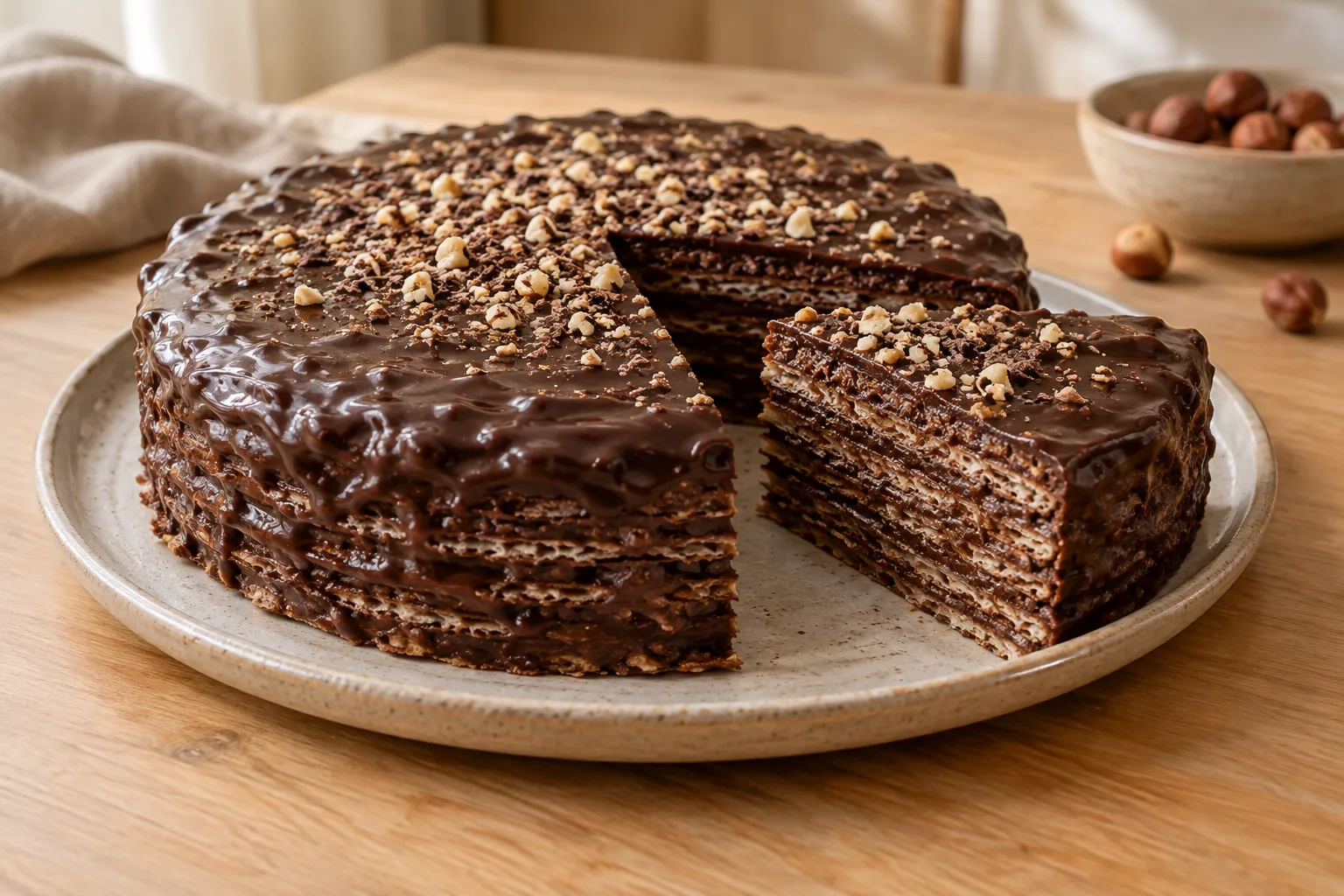
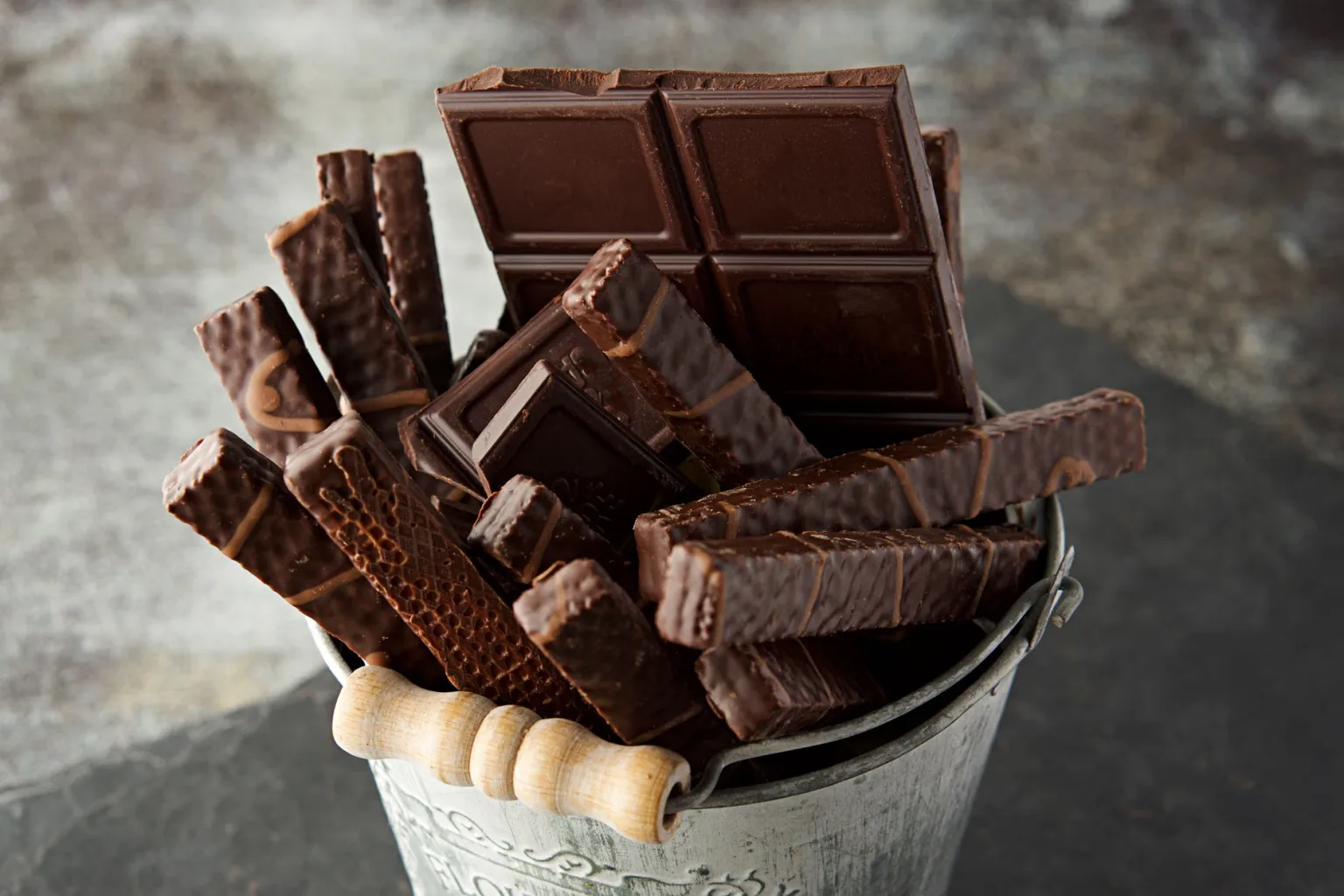
Chocolate wafers are thin, crisp bakery or confectionery products, and the name can refer to more than one style. Some are light wafers flavored with chocolate or paired with a chocolate coating; others are thin cookies made with cocoa. Their thickness, sweetness and ingredients therefore vary. Traditional wheat wafers are described as thin and crisp, while chocolate-cookie recipes may include flour, cocoa, sugar, butter and milk. Check the package to identify the specific style and ingredients. Chocolate wafers are commonly enjoyed on their own or with other sweet foods, and they can also provide a crisp element in a dessert. Treat the product label, rather than the name alone, as the best guide to its composition.
When to use it
Use chocolate wafers when you want a delicate crisp contrast in a snack or dessert, or an easy accompaniment for coffee or tea. They also work alongside ice cream, spreads or jam, and can add texture as a base or finishing element. Choose the format for the result you want: a light wafer may suit serving or layering, while a thin cocoa cookie gives a more cookie-like bite. If you want the wafers to stay crisp, add them shortly before serving, especially when they will touch a moist cream or other wet accompaniment.
How to use it
Serve them whole as a snack or alongside coffee or tea. For a quick dessert, pair them with ice cream, a spread or jam; serve the accompaniment separately so people can choose how much to add. You can also layer wafers with cream or crumble them over a dessert for a crisp contrast. Some wafer products are offered as canapé bases or as a crunchy finishing touch for savory dishes, but check that the product's flavor and shape suit the dish. Before using a particular variety in a baked preparation, check its package directions, since ingredients and formats differ.
Flavour and texture
The flavor brings together cocoa or chocolate notes and the sweetness of the particular recipe, but the chocolate intensity varies by product. The defining texture is thin and crisp; some versions are light wafers, while others eat more like cookies. Contact with ice cream, cream or other moist accompaniments can soften the crispness, so assemble or serve the dessert shortly before eating if you want to preserve the contrast.
How to choose it
Compare the product style and format: the name may mean a chocolate-flavored wafer or a thin cocoa cookie. Read the ingredient and allergen information on the package, since recipes vary and may include ingredients such as wheat or milk. For a light accompaniment, look for a wafer format; for a more cookie-like bite, choose a thin cocoa-based cookie. Check that the package is the flavor and variety you intend to buy, and use its label to confirm the ingredients.
Storage
Keep wafers in an airtight container and protect them from moisture to help preserve their crisp texture. A chocolate-cookie recipe specifies a closed container for storage, but shelf life differs among products, so follow the date and directions on the package. Once opened, reseal the packet carefully or transfer the wafers to a suitable container. Keep them away from ice cream or cream until serving, since moisture can soften them.
Substitutions
If chocolate wafers are unavailable, serve plain wafers with a chocolate spread on the side, or use another thin, crisp cookie and serve chocolate separately. The result will not be identical: cocoa intensity, sweetness and texture may change. For a layered dessert, choose an alternative that is thin and firm enough to support the filling.
Common mistakes
Do not assume every chocolate wafer has the same recipe: the name can describe flavored wafers or cocoa cookies. Avoid assembling them too early with moist ingredients if crispness matters. When serving someone with an allergy, do not rely on the product name alone; check the package ingredients and allergen information.
Safety and allergens
Check the package to identify the ingredients and allergens in the specific product. Do not serve a product showing visible spoilage or with damaged packaging, and follow the manufacturer's storage directions.
Culinary uses
- snack crujiente
- acompañamiento o elemento de textura para postres
- base o soporte para preparaciones dulces y saladas
Recommended techniques
- servir enteras como acompañamiento
- intercalar en capas con cremas
- desmenuzar para aportar textura
- usar como base crujiente
Pairs well with
- café o té
- helado
- cremas para untar
- mermelada
Frequently asked questions
Are chocolate wafers always cocoa cookies?
No. The name can refer to a chocolate-flavored wafer or a thin cookie made with cocoa. Check the package ingredients and product format.
What can I serve with chocolate wafers?
They can be paired with coffee or tea, ice cream, a spread or jam. They can also add a crisp element to a dessert.
How can I help keep chocolate wafers crisp?
Store them in an airtight container, keep them away from moisture, and add wet accompaniments shortly before serving. Follow the package directions as well.
Ingredient allergens
Allergen listThere are no verified associations for these ingredients yet.
Estimated nutrition
- Fat
- 24.1 g
- Saturates
- 6.9 g
- Carbohydrate
- 69 g
- Sugars
- 44.8 g
- Fibre
- 0 g
- Protein
- 3.45 g
- Salt
- 0.34 g
Sources and review
Automatically researched, cross-checked and validated content. Sources consulted:
- ¿Por qué la muerte es origen de miedos y tabúes? doi.org/10.64628/aao.fccyk3qj3
- Chocolate - Wikipedia, la enciclopedia libre es.wikipedia.org/wiki/Chocolate
- 21 Seminarios de panadería y pastelería | Culinary Institute Lenotre culinaryinstitute.edu/es/seminarios-practicos/21-seminarios-de-panaderia-y-pasteleria/
- o_67a5b6babd88db84 www.wakehealth.edu/-/media/wakeforest/clinical/files/food-service/spanish_adult_menu.pdf?la=…
- I Found Bugs in My Cereal, Pasta or Cake Mix. What Do I Do? | Rutgers Cooperative Extension extension.rutgers.edu/food-safety/bugs-in-my-cereal
- Para la ciudadanía www.aesan.gob.es/para-la-ciudadania
- Buñuelos | Culinary Tourism Fall 2018 openlab.citytech.cuny.edu/krondlhmgt4989f18/2018/12/16/bunuelos-2/
- Cómo hacer un pedido www.stonybrookmedicine.edu/sites/default/files/unrestricted%20spanish%20online.pdf
- The middle of everything by Kathryn Sukalich dr.lib.iastate.edu/bitstreams/eb063243-aebc-4d86-b72b-4c2a9fcbc1b3/download
- Obleas Xacobleas y mucho más: xacobleas.es/
- El religioso origen de las obleas - Funtastyc www.funtastyc.es/blog/origen-de-las-obleas/?srsltid=AYCX9vIvTH1AMmDWsopaTrCkTDJ416EgyzYaTG_l…
- Obleas de chocolate caseras - Revista Mia miarevista.okdiario.com/recetas/postres/6037.html
- - YouTube www.youtube.com/watch?v=jUIesAbRSsc