- Category
- Vegetables
- State
- Fresh
- Usual unit
- tablespoon
What it is
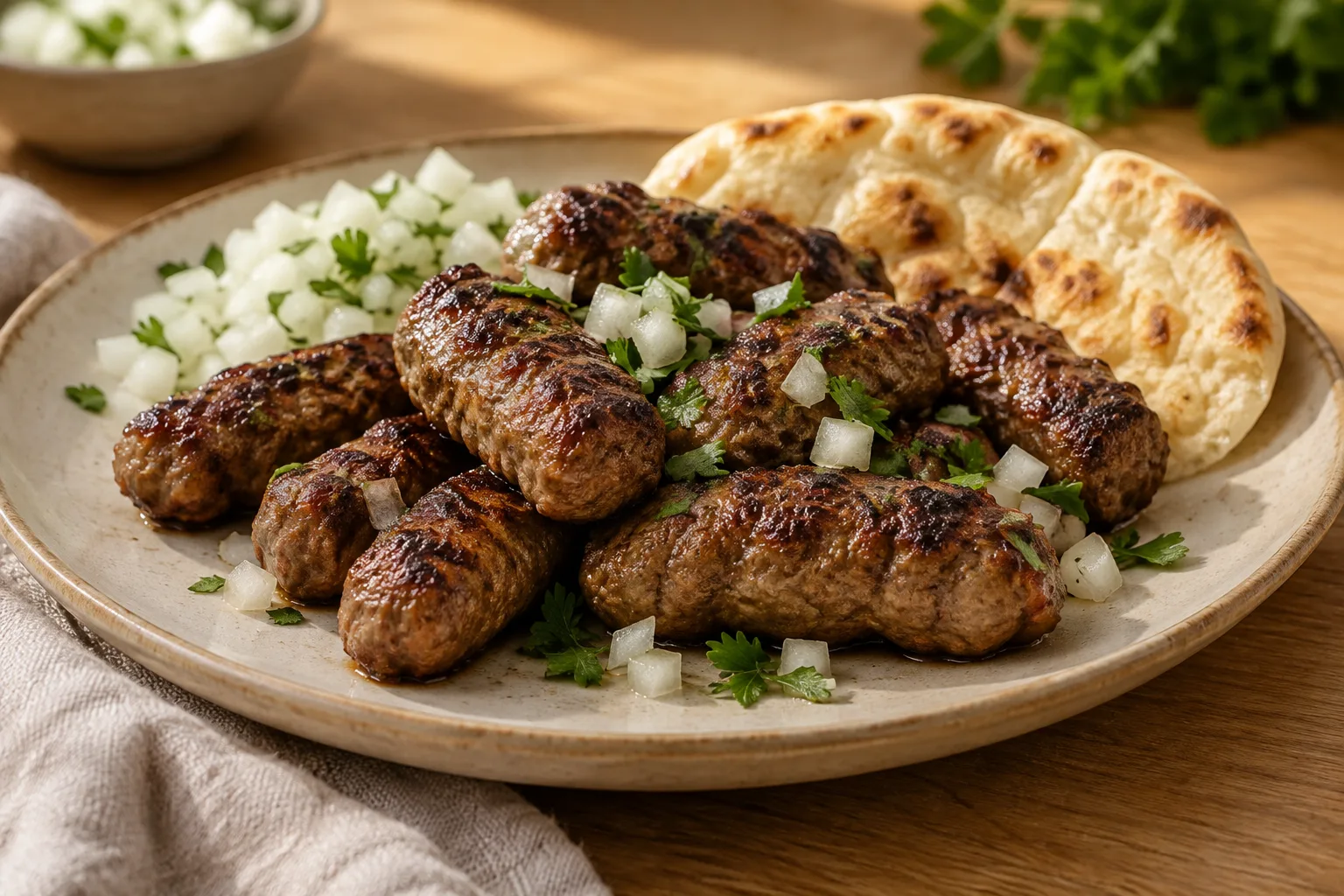
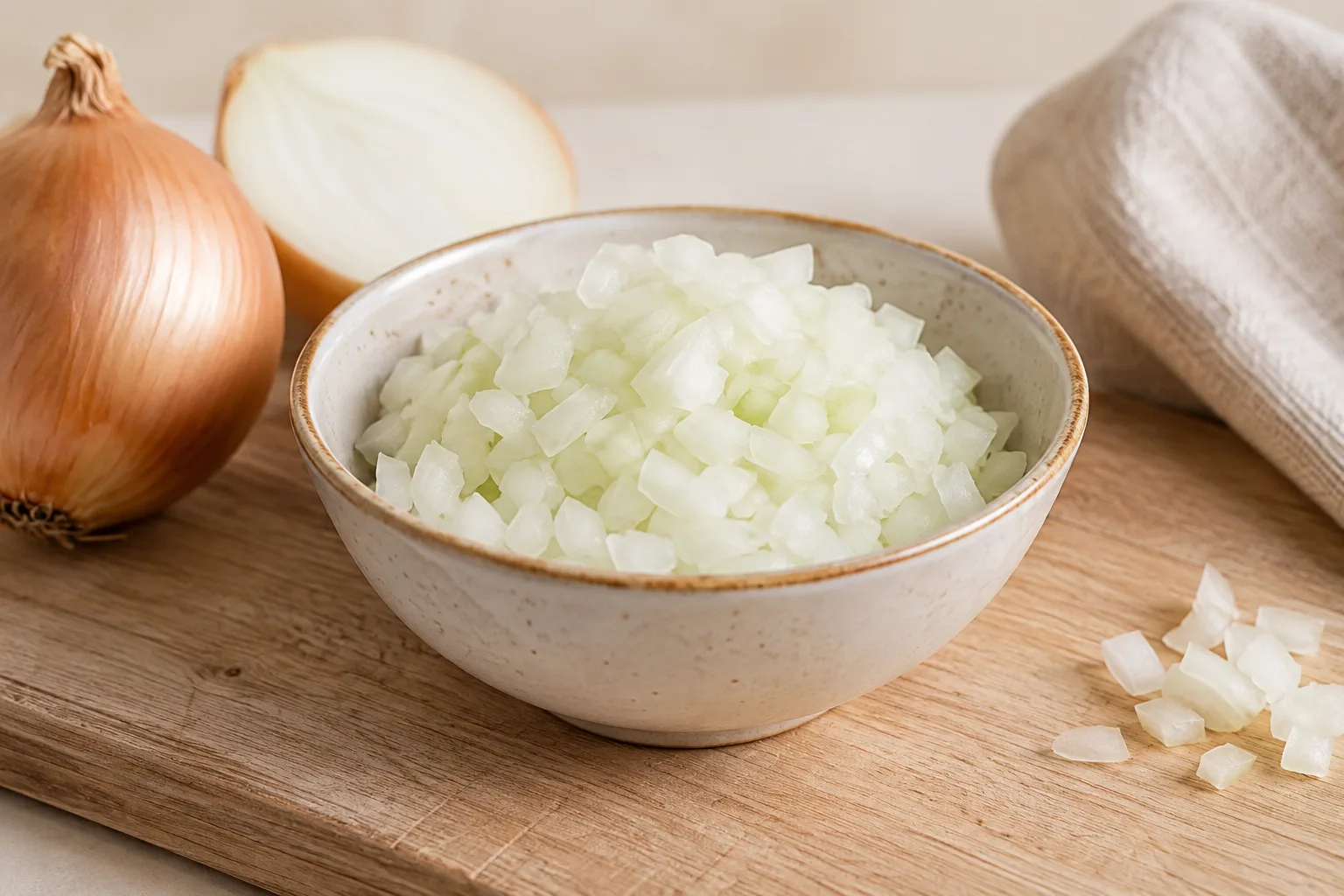
Chopped onion for serving is fresh onion cut into small pieces and offered raw as a topping or side. It is not a separate variety, but a way of preparing ordinary onion to add just before eating. The cut can be adjusted: small dice spread easily over a dish, while slightly larger pieces make a crunchier bite. White, red or yellow onion can be chosen to suit the desired flavor and appearance. Red onion is used in raw preparations such as tacos, ceviche and pico de gallo. Chopped onion can also be scattered over finished enchiladas or served alongside other foods. As a fresh ingredient, it contrasts with cooked dishes such as soups and stews, and serving it separately lets each person choose how much to add.
When to use it
Use it when you want a fresh, slightly sharp accent added just before serving, rather than onion cooked with the other ingredients. It suits tacos, ceviche, pico de gallo and salads, where raw onion adds color and texture. It can also be sprinkled over enchiladas or served alongside soups and stews. Choose a fine dice if you want the pieces to spread across the dish, or a larger cut if you want a more noticeable crunch. Red onion is a common choice for raw dishes, though other onions can also supply the onion flavor you want.
How to use it
Remove the dry outer skin and cut the onion into small, even pieces with a clean knife. Choose the size to suit the dish: a fine dice blends more easily into a salsa or spreads neatly over a plate, while larger pieces stand out as a topping. Add it raw at the end, just before serving, so its fresh texture and characteristic flavor remain noticeable. Use it on tacos, ceviche, pico de gallo, salads or enchiladas, or serve it on the side so each person can choose how much to add. If its flavor is too strong, try chopped scallion or finely chopped shallot for a milder onion note. Wash fresh produce as appropriate and keep hands and utensils clean while preparing it.
Flavour and texture
Raw onion has a distinctive flavor that can be sharp and slightly pungent; its character varies by variety. Chopped, it provides small crunchy bites and a fresh note that contrasts with mild or cooked ingredients. White onion is described as crisp, while red onion is often used raw in fresh dishes. Cut size also affects the experience: small pieces distribute the flavor across a dish, while larger ones make the texture more pronounced. Choose the variety and cut to suit the balance you want.
How to choose it
Choose a fresh onion in good condition and select a variety that suits the dish. Red onion adds color to raw preparations such as tacos, ceviche or pico de gallo; white onion is described as crisp and can suit dishes where you want a distinct texture. For a milder flavor, consider scallion or shallot. Buy what you need and chop only the amount you plan to serve. Consider both the flavor you want and the appearance you want the garnish to add.
Storage
Keep the onion whole until you are ready to prepare it, and chop only the amount you plan to serve. Chopped onion is enjoyed as a fresh ingredient, so cutting it close to serving time is a practical way to keep its crisp texture. If using onion that has already been cut, follow its package directions and local food-safety guidance. Do not assume one storage rule applies to every prepared product; check any specific instructions provided with it.
Substitutions
Chopped scallion can replace ordinary onion when you want a milder onion accent; it is used raw and can also finish some dishes. Finely chopped shallot is another alternative with a milder, aromatic flavor. These options change the character and appearance of the topping, so adjust the amount to taste and to the dish. Both provide an onion note but will not exactly reproduce the texture or look of ordinary chopped onion.
Common mistakes
Do not treat a raw garnish as if it were onion cooked into the recipe: adding it at the end preserves more of its fresh, crisp character. Avoid cutting pieces much larger than intended if you want them to distribute evenly. Do not assume every variety tastes the same; onion flavor and texture vary by type. If you do not want the onion to dominate, serve it separately or start with a small amount.
Safety and allergens
Treat cut onion as fresh produce: wash it as appropriate, use clean hands and utensils, and follow official food-safety guidance for handling it.
Culinary uses
- Raw garnish
- Fresh finishing accent
Recommended techniques
- Finely chop
- Serve raw
Pairs well with
- Tacos, ceviche and pico de gallo
- Enchiladas, soups and stews
Frequently asked questions
Is chopped onion for serving added raw?
Yes. It is used as a raw garnish and is usually added at the end, just before serving, so its flavor and texture stand out.
What dishes go well with chopped onion?
It can accompany tacos, ceviche, pico de gallo, salads and enchiladas, or be served alongside soups and stews.
What can I use for a milder flavor?
Try chopped scallion or finely chopped shallot. Both provide a milder onion character, although they change the topping’s appearance and texture.
Ingredient allergens
Allergen listThere are no verified associations for these ingredients yet.
Sources and review
Automatically researched, cross-checked and validated content. Sources consulted:
- Client Challenge doi.org/10.2307/j.ctvndv9t9.22
- The Essential Glossary of Cooking Terms for the Culinary Arts - Escoffier www.escoffier.edu/blog/culinary-arts/the-essential-glossary-of-cooking-terms-for-the-culinar…
- La cebolla, ese humilde ingrediente tan fundamental | Gastronosfera www.gastronosfera.com/tendencias/la-cebolla-ese-humilde-ingrediente-tan-fundamental
- La cebolla, ingrediente básico en la cocina | Recetas Nestlé www.recetasnestle.com.ar/escuela-de-sabor/ingredientes/cebolla
- Tipos de cebolla y su utilización en la cocina | Blog Bernad Refrigeración www.josebernad.com/tipos-de-cebolla-mas-comunes-y-su-utilizacion-en-la-cocina/
- MF3659S Spanish: Cooking for One or Two, Fact Sheet bookstore.ksre.ksu.edu/download/cooking-for-one-or-two-fact-sheet-spanish_MF3659S
- La cebolla, la base de la gastronomía española - Enrique Romay eromay.com/la-cebolla-la-base-de-la-gastronomia-espanola/
- Sabores de nuestras tierras/recipes - 2025 | Agricultura y Recursos Naturales ucanr.edu/site/agricultura-y-recursos-naturales/sabores-de-nuestras-tierras/recipes-2025
- Food & Nutrition | Colorado State University Extension foodsmartcolorado.colostate.edu/ensalada-de-garbanzos/
- Para la ciudadanía www.aesan.gob.es/para-la-ciudadania
- Recetas - Expanded Food and Nutrition Education Program efnep.tamu.edu/recipessp/
- Chayote with Corn & Chiles (LCH) | CSU Northridge w2.csun.edu/wic/lets-cook-healthy/video-recipes/side-dishes/chayote-corn-chiles