- Category
- Herbs and spices
- State
- Dry
- Usual unit
- stick
What it is
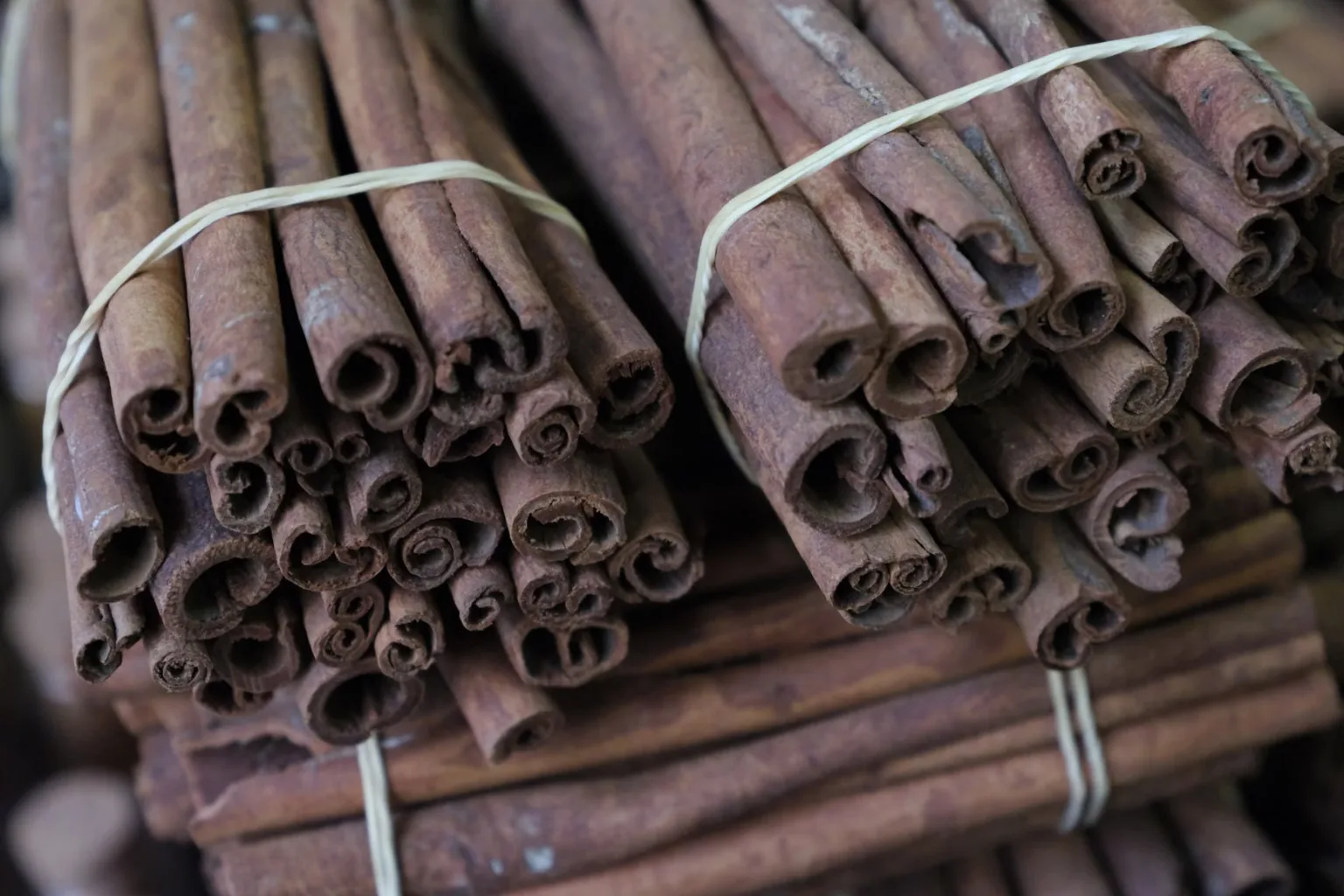
Cinnamon sticks are pieces of dried bark from trees in the Cinnamomum genus, rolled into tubes or layers. Used as a spice, they add aroma rather than a soft or powdery texture: a stick can steep in a cooking liquid and be removed before serving. Appearance and intensity vary by type. Ceylon cinnamon is often made of thin, delicate layers and has a gentler profile, while cassia types are generally thicker and more assertive. Because of these differences, sticks that look different can contribute noticeably different flavors to the same recipe.
When to use it
Choose cinnamon sticks when you want the spice to infuse gradually and be easy to remove before serving. They work well in milk, hot drinks, syrups, fruit compotes, rice pudding, and other cooked desserts. A stick can also add an aromatic background to some savory dishes. Choose a gentler type when the other flavors are delicate, or a more assertive type when you want cinnamon to stand out. The best choice depends on the variety available and the flavor you want in the finished dish.
How to use it
Add a whole stick to the liquid or dish you want to flavor and let it infuse as the food cooks. Find and remove it before serving: the bark is not meant to be eaten like ground spice. In a drink, milk, or syrup, leave the stick in while heating and remove it when the aroma is strong enough for your taste. You can also cook it with fruit for a compote or add it to rice pudding. If a recipe needs cinnamon distributed throughout the mixture, use ground cinnamon instead of a whole stick.
Flavour and texture
Cinnamon sticks bring a warm, sweet, spicy aroma, with strength that varies by type. Some have a gentler, more delicate profile; others are more robust and pungent. The dried bark is firm and softens during infusion, but remains fibrous. Remove it before serving, and do not expect it to behave like ground cinnamon.
How to choose it
Look for dry sticks with a recognizable aroma and no visible signs of moisture. Color, thickness, and layering vary by type, so there is no single appearance that describes every cinnamon stick. If the package names the variety, use that information to anticipate its flavor: Ceylon is usually more delicate, while cassia is generally more intense. A closed package helps keep moisture away.
Storage
Keep cinnamon sticks in a tightly closed container in a dry place, protected from light and heat. Avoid leaving them near cooking steam or damp areas, and close the container after each use. Do not use sticks that show signs of moisture or have an unusual smell. Storing them whole and dry helps preserve their aroma; refrigeration is not necessary.
Substitutions
Ground cinnamon can replace a stick when you do not need to remove the spice from the dish, but the powder will remain mixed in and change the appearance and texture. Add it gradually and adjust to taste, since types of cinnamon differ in intensity. Another type of whole cinnamon can also work, though its aroma may be milder or stronger.
Common mistakes
Do not treat a cinnamon stick as interchangeable with ground cinnamon: a stick infuses and is removed, while powder blends into the dish. Avoid leaving the stick in a serving, since the bark is tough and fibrous. Also, do not assume every type has the same strength; adjust the amount to the stick and the dish.
Safety and allergens
Remove the stick before serving and check that no pieces of bark remain in the portion. Use cinnamon as a culinary ingredient and follow any different directions on the package.
Culinary uses
- Aromatic seasoning for sweet dishes and drinks
- Warm spice for selected savory dishes
Recommended techniques
- Infuse in hot liquid, then remove before serving
- Simmer with fruit, milk, or syrup to release aroma
Pairs well with
- Apple and pear
- Milk, chocolate, and citrus peel
- Meat dishes and spiced drinks
Frequently asked questions
Do you eat cinnamon sticks?
They are mainly used to infuse flavor and are removed before serving; the bark is tough and fibrous.
Can I use ground cinnamon instead of a stick?
Yes. Ground cinnamon will stay mixed into the dish rather than being removable, so add it gradually.
Do all cinnamon sticks taste the same?
No. Type makes a difference: Ceylon is generally more delicate, while cassia is usually more intense.
Ingredient allergens
Allergen listThere are no verified associations for these ingredients yet.
Estimated nutrition
- Fat
- 0 g
- Saturates
- 0 g
- Carbohydrate
- 0 g
- Sugars
- 0 g
- Protein
- 0 g
- Salt
- 0 g
Sources and review
Automatically researched, cross-checked and validated content. Sources consulted:
- Client Challenge doi.org/10.2307/jj.27939689.16
- UNIVERSITY OF CINCINNATI etd.ohiolink.edu/acprod/odb_etd/ws/send_file/send?accession=ucin1122310471&disposition=inlin…
- Canela - Wikipedia, la enciclopedia libre es.wikipedia.org/wiki/Canela
- Canela www.mapa.gob.es/es/ministerio/servicios/informacion/canela_tcm30-102887.pdf
- Conoce más sobre la canela, tipos y recetas | Recetas Nestlé www.recetasnestle.com.ve/escuela-de-sabor/coccion-y-tecnica/canela
- Conoce más sobre la canela, tipos y recetas | Recetas Nestlé www.recetasnestle.com.co/blog-del-sabor/ingredientes/canela
- Aplicación de las especias: Anís, mostaza, vainilla, cardamomo, canela y jengibre en doce recetas con productos autóctonos del Ecuador | OpenAlex openalex.org/W2338930815
- Canela en Rama: Análisis y Comparativa de las Mejores Opciones para Tus Dulcesաժողով doncaramelo.es/canela-rama/