- Category
- Dairy and eggs
- State
- Fresh
- Usual unit
- g
What it is
Comté is a French cheese protected by a European Union designation of origin and associated with a defined area of Bourgogne-Franche-Comté. It is made from cow’s milk and traditionally sold in large wheels that are matured before sale. Its paste is firm and pressed, and the curds are cooked during cheesemaking. Not every wheel is identical: color and aromas can vary with the season of production and the conditions of cheesemaking and maturation. Hazelnut is a characteristic note, though the balance of milky, toasted and nutty flavors can differ. Comté is sold as a wheel or in portions; for cooking, it can be purchased grated or grated at home.
When to use it
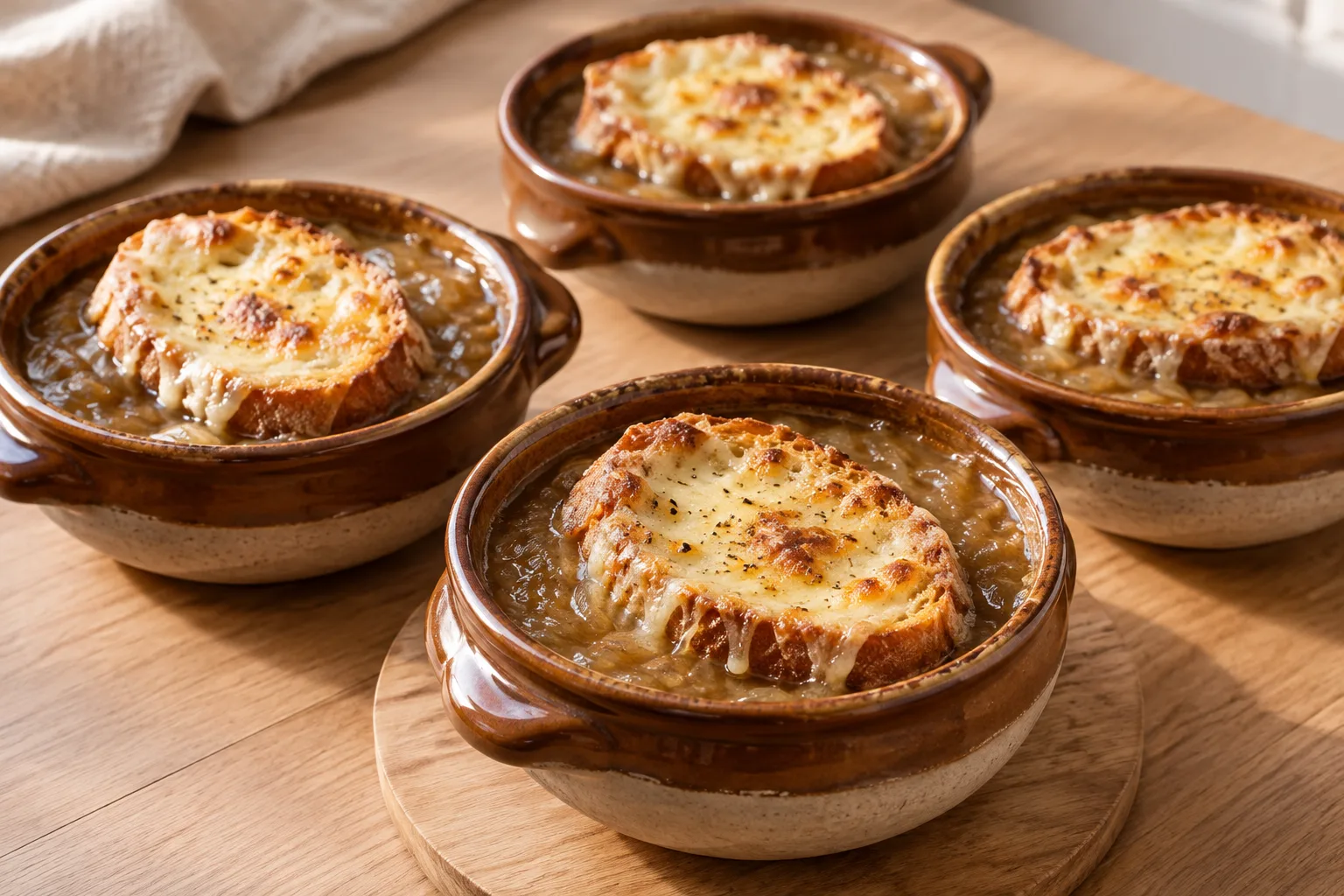
Choose Comté when you want a distinctive cheese to serve on a board, enjoy with bread or add to a hot dish. Its ability to melt makes it useful in preparations such as fondue, soufflé, croque monsieur, onion soup, gougères and some quiches. Grated cheese is easy to distribute through a dish or combine with other ingredients; slices or chunks work for sandwiches and snacks. Because the flavor and color can vary from one wheel to another, choose a piece suited to the result you want and taste a little before seasoning the dish.
How to use it
To serve Comté on its own, cut it into portions and pair it with bread or simple ingredients that will not overwhelm its flavor. For cooking, grate it just before use or slice it thinly so it distributes and melts more evenly. Add it to fondue, soufflé, croque monsieur, onion soup, gougères or quiche; it can also be used in a gratin. In hot mixtures, add the cheese gradually and stir to encourage an even texture, avoiding sudden or excessive heat. The amount depends on the recipe and on the intensity of the cheese: taste before adding more salt, since the cheese already contributes flavor and saltiness.
Flavour and texture
Comté has a firm paste and can feel supple when sliced. Its flavor is often associated with hazelnut, but wheels can differ in color and aroma according to production season and maturation. In hot dishes, its melting quality can produce an even, stretchy texture when the cheese is incorporated carefully. Do not assume every piece will have the same intensity: taste it before deciding how much to use or which ingredients to pair with it.
How to choose it
Check that the product is identified as Comté and, if the protected designation matters to you, look for the relevant PDO labeling. Choose a whole piece, portion or grated cheese to suit your intended use; grating it at home gives you control over the size and lets you use it freshly prepared. Wheels can vary in color and aroma, so a difference in shade alone is not a reliable measure of quality. Check the date and condition of the packaging and follow the seller’s or label’s storage instructions.
Storage
Store Comté according to the package or seller’s instructions, and keep it refrigerated if its label says to do so. After opening, rewrap it or place it in a clean, closed container to protect it from moisture and odors from other foods. Avoid leaving it unwrapped on the counter for extended periods: suitable conditions depend on the type of cheese and how it is packaged, as well as on quality. If the product or packaging shows unusual changes, follow applicable food-safety guidance and do not eat it if you are unsure.
Substitutions
Gruyère and Emmental are useful alternatives when a recipe calls for Comté, especially when the cheese needs to melt. The result will change because each cheese has its own flavor and behavior. Start with the same quantity specified in the recipe and taste before adjusting the salt. In a cheese-board serving, the substitution will be more noticeable; choose according to the flavor and texture you want rather than expecting an exact match.
Common mistakes
Do not assume every piece of Comté has the same color or intensity; variation is normal. In hot dishes, avoid adding all the cheese at once to a very hot mixture, as it may melt unevenly. Grate it to suit the recipe and taste before adding extra salt. Do not leave it unwrapped beside strong-smelling foods, since it can absorb odors.
Safety and allergens
Comté is made from milk and is not suitable for people with a milk allergy. Check the label for other ingredients or cross-contact warnings. Follow the package’s refrigeration and storage instructions; do not assume a firm or aged cheese can be kept unrefrigerated.
Culinary uses
- Queso de mesa
- Queso para fundir y gratinar
Recommended techniques
- Rallar para incorporarlo a platos calientes
- Fundir suavemente en sopas, salsas o preparaciones de queso
Pairs well with
- Pan
- Cebolla
- Patatas
- Manzana
Frequently asked questions
Does Comté cheese melt well?
Yes. Its melting quality makes it useful in dishes such as fondue, soufflé, croque monsieur and some quiches. Grate or thinly slice it and heat it gently to help it incorporate evenly.
What does Comté taste like?
It can have hazelnut notes and other aromas that vary between wheels. Its color can vary too, and production season is one factor behind that variation.
What can I use instead of Comté?
Gruyère or Emmental can work as alternatives, particularly in recipes where the cheese is melted. Their flavor and texture will not be exactly the same, so taste the dish before adjusting its seasoning.
Ingredient allergens
Allergen listThere are no verified associations for these ingredients yet.
Sources and review
Automatically researched, cross-checked and validated content. Sources consulted:
- Client Challenge doi.org/10.2307/jj.27939689.16
- WHC Food Blog Archives - Walnut Hill College www.walnuthillcollege.edu/category/whc-food-blog/
- Comté DOP - Agricultura y Desarrollo Rural - Comisión Europea agriculture.ec.europa.eu/farming/geographical-indications-and-quality-schemes/geographical-i…
- French Cheeses with Culinary Applications | Institute of Culinary Education www.ice.edu/blog/french-cheeses-with-culinary-applications
- Center for Dairy Research | Cheese Safety/Storage cdr.wisc.edu/cheese-safety-storage
- FRENCH COOKING | Ecole des 3 Ponts www.3ponts.edu/tag/french-cooking/
- Las mejores recetas con queso Comté - La Casa de los Quesos lacasadelosquesos.com/las-mejores-recetas-con-queso-comte/
- Comté - Wikipedia, la enciclopedia libre es.wikipedia.org/wiki/Comt%C3%A9
- El Queso Comté | La Boulette www.laboulette.com/blog/el-queso-comte
- **Comparativa de quesos AOC Comté: los mejores y cómo elegir el más destacado** laovejaquebala.es/aoc-comte/
- Todo sobre el Comté - Queso Comté quesocomte.es/a-proposito-del-comte/
- Food allergen labelling and information requirements technical guidance - GOV.UK www.gov.uk/government/publications/food-allergen-labelling-and-information-requirements-tech…