- Category
- Fish and seafood
- State
- Fresh
- Usual unit
- unit
What it is
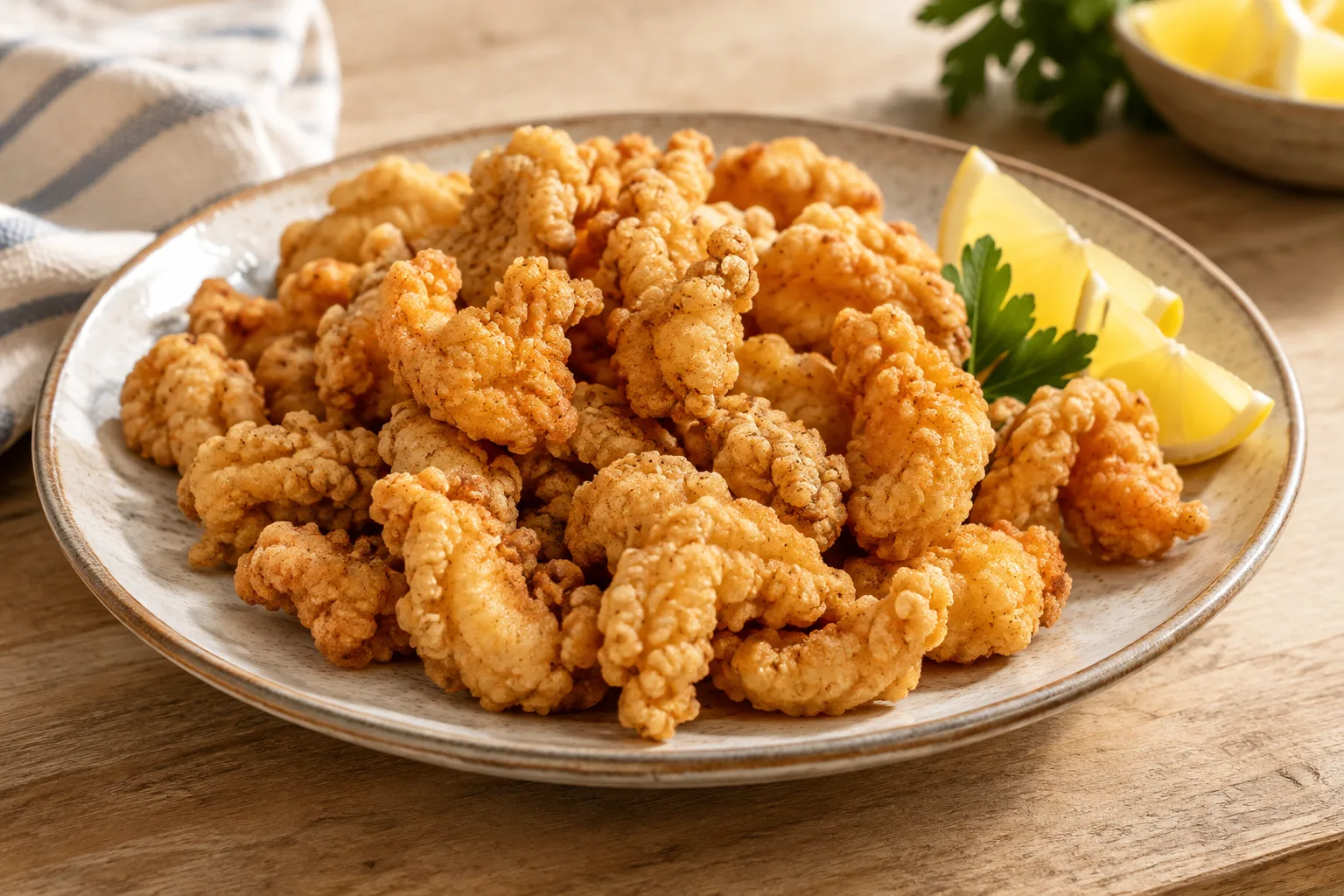
Conch meat is a marine food product known by that common name. Marine gastropods are a broad group, and not every snail found in nature is edible, so a common name is no substitute for reliable product identification or labeling. Snail meat in general is described as firm and somewhat chewy, with a fairly neutral flavor that takes on the aromas of other ingredients. These are broad culinary observations about edible snails, not a guarantee about any particular conch species, cut or product form.
When to use it
Use it when you want a firm-textured marine ingredient that can be served with a sauce or aromatic seasoning. It can be added to a seasoned preparation when the product is labeled for consumption and the directions suit its form. The available information does not establish a cooking time specific to conch meat or show that all species can be treated alike. If the product is not clearly identified or is not sold as food, do not use it as an ingredient.
How to use it
Before cooking, check that the product is labeled for consumption and follow the preparation directions on its packaging or from the seller. If it is cleaned and ready to cook, add it to a seasoned seafood preparation; if it needs cleaning or other preparation, do not guess—look for instructions specific to that product. Snail meat is generally described as firm and able to take on the flavors of other ingredients, so garlic, herbs and spices can complement it. Frying is among the preparations documented for snails, but the available information does not provide safe times or temperatures for every conch product.
Flavour and texture
Snail meat in general is described as fairly neutral in flavor and able to take on seasonings. Its texture is described as firm and slightly chewy, with a broad comparison to squid or mussels. Species, cut, processing and preparation can change the result; this general description does not guarantee the texture of any particular conch product.
How to choose it
Choose a product clearly labeled for consumption and check its species identification, product state, and preparation and storage directions. Some marine gastropods are eaten and others are not, so do not gather or buy wild specimens without reliable identification. If a seller cannot clarify what the product is or how it should be handled, choose an option with complete information.
Storage
The available information does not establish a specific storage duration or temperature for conch meat. Follow the package label and local official seafood-handling guidance, including any directions for refrigeration, freezing or thawing. Keep the product in suitable packaging until use, and do not judge safety by smell or appearance alone.
Substitutions
Squid can be an alternative when you want a firm, slightly chewy texture. Mussels offer another marine option, though their texture and cooking behavior differ. Neither is an exact replacement for conch meat. Adapt the preparation to the chosen product and follow its handling directions.
Common mistakes
Do not assume every marine snail is edible or that one technique or cooking time works for every product called conch. Avoid buying a product without clear identification or directions. Do not automatically transfer preparation instructions for land snails to a marine mollusk.
Safety and allergens
Use only conch meat marketed for consumption, check the product identification, and follow its label along with local official seafood guidance. The available information does not provide species-specific storage or cooking instructions; do not eat wild specimens without reliable identification.
Culinary uses
- Main ingredient in seafood dishes
- Firm-textured component for seasoned preparations
Recommended techniques
- Frying
- Adding to a seasoned preparation
Pairs well with
- Garlic and herbs
- Spices and aromatic seasonings
Frequently asked questions
What does conch meat taste like?
Snail meat in general is described as fairly neutral in flavor and able to take on seasonings. Species and processing can affect the result.
What is its texture like?
It is generally described as firm and slightly chewy, with a broad comparison to squid or mussels. The actual texture depends on the product and preparation.
Can I gather conch and cook it?
Do not do so without reliable species identification and confirmation that the specimen is intended for consumption. Not every wild gastropod is edible.
Ingredient allergens
Allergen listThere are no verified associations for these ingredients yet.
Estimated nutrition
- Fat
- 1.79 g
- Saturates
- 0 g
- Carbohydrate
- 2.68 g
- Sugars
- 0 g
- Fibre
- 0 g
- Protein
- 17 g
- Salt
- 0.54 g
Sources and review
Automatically researched, cross-checked and validated content. Sources consulted:
- ¿Por qué la muerte es origen de miedos y tabúes? doi.org/10.64628/aao.fccyk3qj3
- A four-chapter translation, from English into Spanish, of ... scholarspace.manoa.hawaii.edu/bitstreams/804d4e68-c6b7-4127-b37c-a2594b482f0f/download
- Caracoles (gastronomía) - Wikipedia, la enciclopedia libre es.wikipedia.org/wiki/Caracoles_(gastronom%C3%ADa)
- Historia de los caracoles en la alimentación más 22 formas de hacerlos - Historia de la Cocina y la Gastronomía www.historiacocina.com/es/historia-de-los-caracoles
- Caracoles – Mi Culinaria miculinaria.wordpress.com/tag/caracoles/
- Politeness and social interaction in study abroad conservancy.umn.edu/server/api/core/bitstreams/e13a11f1-fa31-4f2b-a794-5bdfbb4e2609/content
- Antología Poética Volumen 1: Feria Internacional del Libro ... academicworks.cuny.edu/cgi/viewcontent.cgi?article=1000&context=msi_pubs
- HOMOEROTICISM AND SPECULAR TRANSGRESSION ... kb.osu.edu/bitstreams/a0f93ece-5269-5d68-9b40-50f5953077fc/download
- ¿Son los caracoles comestibles una fuente de carne sostenible? | FoodUnfolded www.foodunfolded.com/es/articulo/son-los-caracoles-comestibles-una-fuente-de-carne-sostenibl…
- Food allergen labelling and information requirements technical guidance - GOV.UK www.gov.uk/government/publications/food-allergen-labelling-and-information-requirements-tech…