- Category
- Grains, flour and pasta
- State
- Dry
- Usual unit
- g
What it is
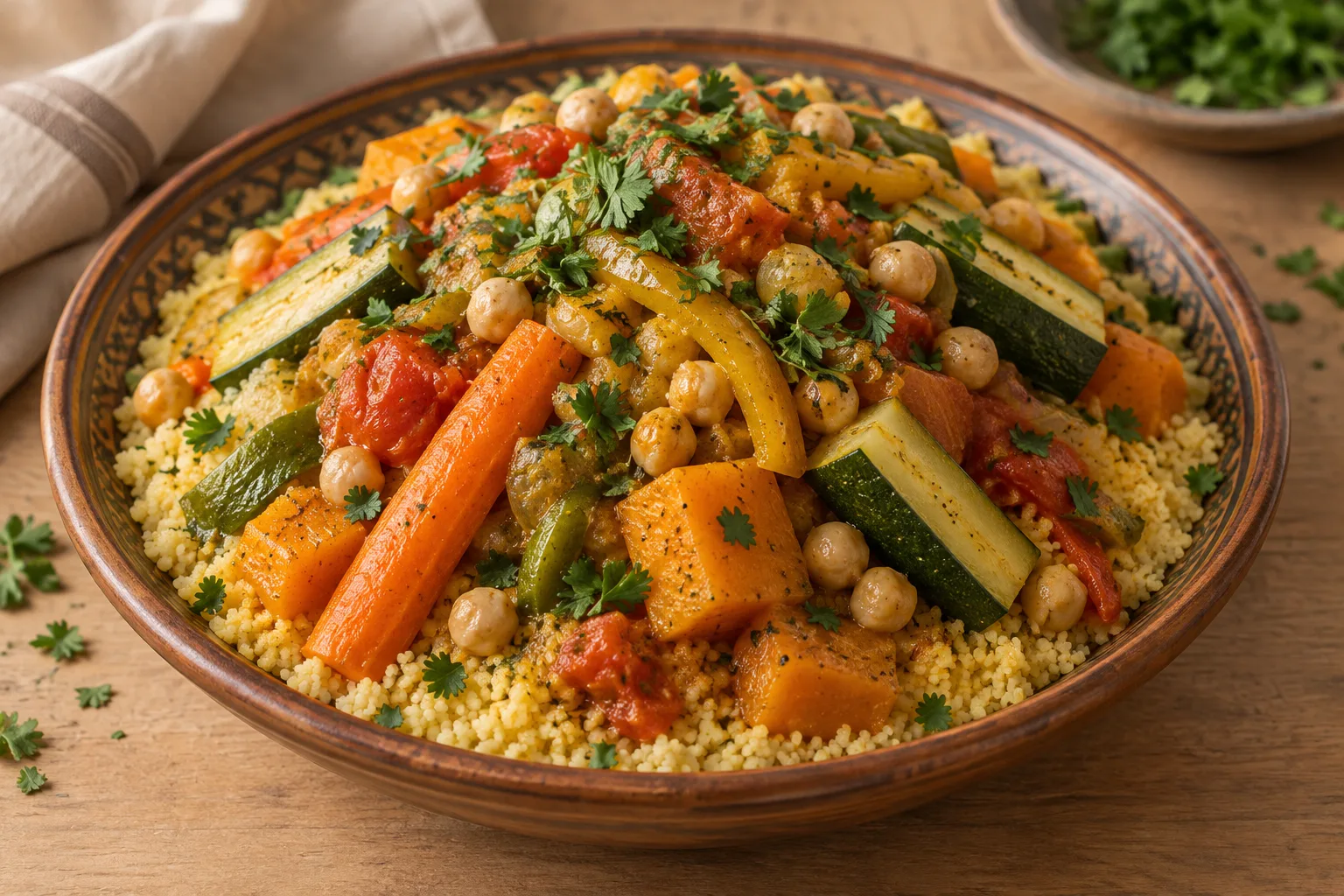
Couscous semolina is a granular wheat product used to make couscous. It helps to distinguish dry semolina from couscous that has already been processed or cooked: some commercial products are ready to hydrate, while traditional preparation can involve steaming. Processing, grain size and shape can vary, so the package is the practical guide to identifying and preparing the particular product. Couscous can be served as a base or side and added to salads and fillings. Because this presentation is made from wheat, it contains gluten cereals.
When to use it
Use it when you want a grain-based side for vegetables, pulses, meat, poultry or fish, or an ingredient for salads and fillings. Couscous can take the place of rice, pasta or potatoes as a side in some meals, depending on the dish. Before cooking, check whether the product is instant or needs a different method: grain size and product type affect how it behaves. If you are cooking for someone avoiding gluten, do not choose wheat couscous as a substitute, since it is a wheat product.
How to use it
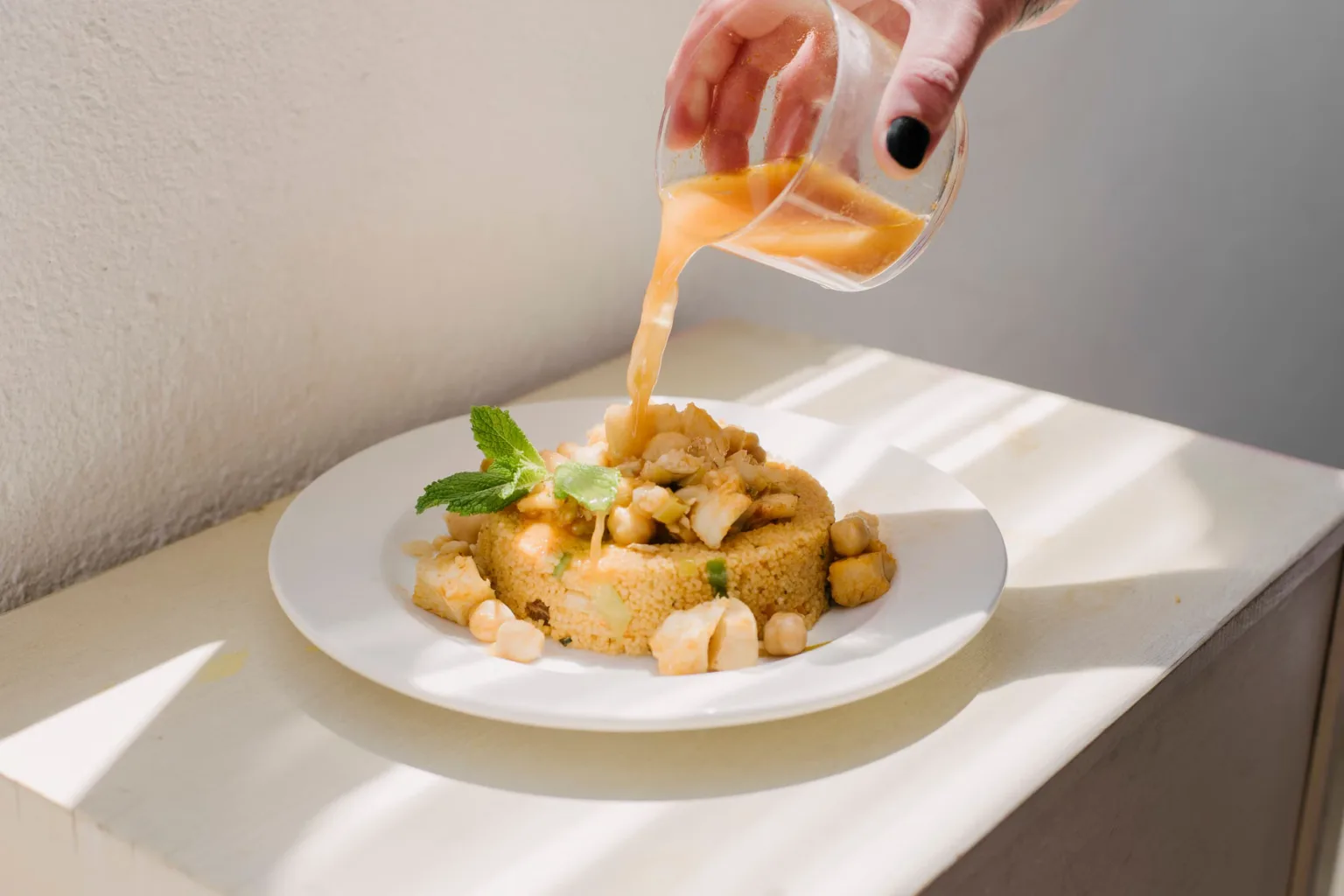
Start by reading the package directions because preparation depends on the product. For the instant couscous method described in the supplied material, heat water or stock, remove it from the heat, then add the semolina and cover it so the grains absorb the liquid. Fluff or separate the grains with a fork afterwards. Serve it with vegetables, pulses, meat, poultry or fish, or fold it into a salad with vegetables and herbs. For a filling, add it after preparation. Do not assume every variety uses the same liquid amount or resting time; follow the directions for the specific product.
Flavour and texture
Dry semolina has small, granular pieces. Once hydrated, couscous is tender and can be loose when the grains are separated. Its flavour is described as neutral or mildly nutty, so it takes on the character of stock, herbs, spices and accompanying ingredients. Grain size and preparation affect the finished texture; larger grains can have a firmer bite.
How to choose it
Check the product name and ingredient list, especially when someone needs to avoid an allergen. The word couscous can refer to products with different grain sizes and processing; small, large and pearl-style products may not cook in the same way. Read the package directions before buying so the required preparation and grain size suit your dish. Wheat couscous contains gluten cereals.
Storage
Store the product according to the directions on its own package, which are the relevant guide for that specific presentation. Keep its label available so you can check ingredients and preparation instructions when needed. The available evidence does not establish a shelf life or specific after-opening conditions, so do not assume a fixed storage period; follow the manufacturer's directions.
Substitutions
As a side, rice or cooked potatoes can fill a similar role in a meal, but their texture and preparation differ. Choose according to the dish and prepare the substitute using its own method; it will not reproduce couscous's loose grain texture exactly. Neither option should be treated as an equivalent swap in every recipe. If avoiding gluten, check the chosen substitute's label as well.
Common mistakes
Do not assume all couscous semolina is prepared the same way: some products are hydrated off the heat, while others may need another method. Avoid applying the liquid amount or resting time from a recipe for a different product. Follow the package and gently separate the grains with a fork after hydration. Do not mistake wheat couscous for a gluten-free option; it contains gluten cereals.
Safety and allergens
This wheat presentation contains gluten cereals. If you have an allergy or intolerance, check the ingredients and allergen information for the specific product; labels matter because product composition can vary.
Culinary uses
- Base o guarnición para platos salados
- Ingrediente para ensaladas y rellenos
Recommended techniques
- Hidratar con agua o caldo caliente según las instrucciones del envase
- Separar los granos hidratados con un tenedor
Pairs well with
- Verduras y garbanzos
- Carnes, aves o pescados
Frequently asked questions
Does couscous semolina contain gluten?
The wheat presentation contains gluten cereals. Check the specific product label and do not use it as a gluten-free alternative.
Are semolina and prepared couscous the same thing?
Not exactly. Semolina is the dry starting product; prepared couscous consists of grains that have been processed and hydrated or cooked.
How do I prepare instant couscous?
Follow the package. In the instant method described in the supplied material, add it to hot water or stock off the heat, cover to hydrate, then separate the grains with a fork.
Ingredient allergens
Allergen listDocumented presence
-
Cereals containing gluten
Couscous semolina
Estimated nutrition
- Fat
- 2.68 g
- Saturates
- 0 g
- Carbohydrate
- 69.6 g
- Sugars
- 5.36 g
- Fibre
- 3.6 g
- Protein
- 14.3 g
- Salt
- 2.23 g
Sources and review
Automatically researched, cross-checked and validated content. Sources consulted:
- ¿Por qué la muerte es origen de miedos y tabúes? doi.org/10.64628/aao.fccyk3qj3
- Etiquetado de sustancias que causan alergias e intolerancias alimentarias www.aesan.gob.es/seguridad-alimentaria/informacion-alimentaria/etiquetado-sustancias
- ¿Qué es el cuscús y cómo se cocina? | Recetas Nestlé www.recetasnestle.com.co/blog-del-sabor/ingredientes/cocinar-con-cuscus
- Cuscús: origen, variedades, recetas y otras curiosidades www.sientemarruecos.viajes/magazine/cuscus-cous-cous/
- Cuscús ecológico (sémola de trigo): qué es, propiedades y recetas www.distribucionesballester.es/blog/cuscus-ecologico-de-semola-de-trigo-que-es-y-recetas/
- Cómo cocinar cous cous de guarnición, receta fácil y tradicional de cuscús marroquí www.directoalpaladar.com/recetas-de-pasta/como-hacer-cous-cous-para-guarnicion-receta-tradic…
- Allergen guidance for food businesses - GOV.UK www.gov.uk/government/publications/allergen-guidance-for-food-businesses/allergen-guidance-f…
- Including allergens on food information | Oxford City Council www.oxford.gov.uk/food-safety/including-allergens-food-information
- El cuscús, kesksu o seksu, se dice a la vez de la sémola de trigo preparada al vapor y por metonimia del plato típico de Marruec... scholar.google.com.pk/scholar?_x_output_type_b6db407c4_=embedded_pdf&btnI=1&cluster=17437742…
- Qué es y cómo se prepara el cuscús www.afuegolento.com/articulo/que-es-como-se-prepara-cuscus/14/
- El cuscús, que antiguamente se llamaba alcuzcuz es el plato más típico y representativo de la gastronomía de Marruecos artesliberales.uai.cl/assets/uploads/2018/04/cocina-marroqui.pdf
- Has buscado Suero ⋆ Larousse Cocina laroussecocina.mx/?s=Suero
- La cultura culinaria andaluza, cruce de varias culturas mediterráneas | OpenAlex openalex.org/W4396783211
- Triticum - Wikipedia, la enciclopedia libre es.wikipedia.org/wiki/Triticum
- Recetas de cuscús: Delicias exóticas para los mejores chefs www.nestleprofessional.es/noticias/recetas-cuscus