- Category
- Herbs and spices
- State
- Dry
- Usual unit
- tablespoon
What it is
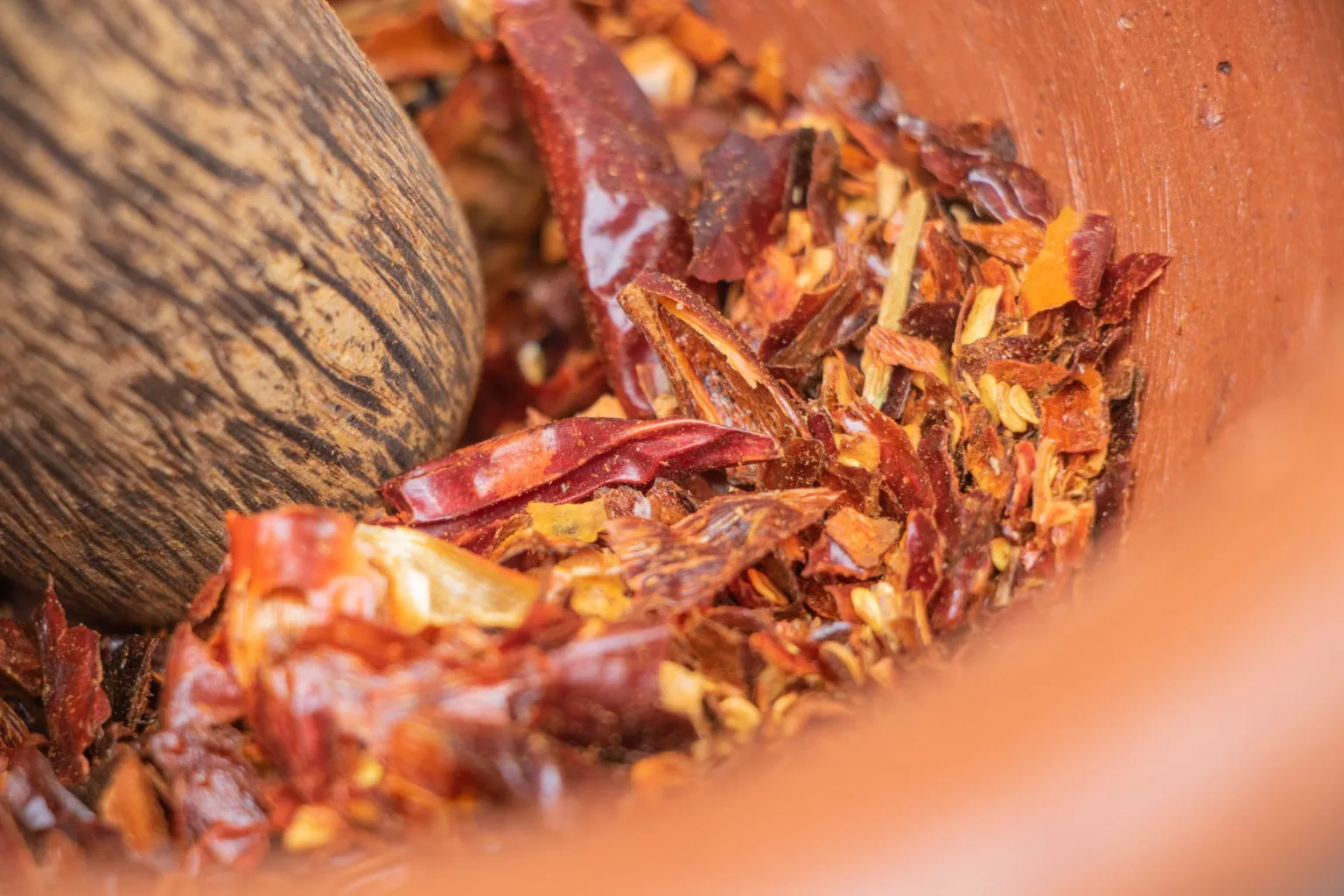
Crushed red pepper is a dry seasoning presented as small pieces or particles, but the name alone does not identify one unique variety. Culinary descriptions distinguish different peppers by flavor, aroma, and form; some products called “pepper” also come from different plants. The package label is therefore the practical way to identify the specific product. Once you know the variety, you can use it as a seasoning in an amount suited to its intensity. Do not infer from its color alone whether it is Piper pepper, chile, or another red spice.
When to use it
Use it when you want a peppery or aromatic accent and the variety named on the package suits the recipe. Pepper is used in dishes such as stews, sauces, roasts, pickled preparations, and salads, but red crushed seasonings do not all have the same flavor or intensity. If you do not know the variety, start with a small amount and taste before adding more. For delicate dishes, choose a clearly identified seasoning with a suitable profile; for robust dishes, select it according to the flavor you want.
How to use it
Read the full product name and ingredient list to identify the variety and check the manufacturer’s directions. Begin with a small amount and increase gradually after tasting; this makes it easier to control intensity without masking other flavors. If the identified product is suitable for cooking, stir it into a sauce or stew so its flavor can blend in. You can also add it near the end for a more direct aroma if the package does not say otherwise. Use it sparingly in salads and dressings. Do not automatically replace it with chile, black pepper, or another seasoning based only on color or the word “pepper.”
Flavour and texture
Flavor and heat depend on the variety and how finely it is crushed. Descriptions of familiar peppers include intense and aromatic, mild, or fresh profiles, but these do not apply to every product called crushed red pepper. The crushed form provides small particles that disperse through a dish; particle size can vary between products. Check the label and taste a small amount before deciding how much to add to a recipe.
How to choose it
Choose a package that clearly identifies the variety or ingredient instead of relying only on a generic name such as “crushed red pepper.” Check the ingredient list, product form, and any information about intensity or use. Peppers and other red seasonings can differ in botanical source and flavor, so do not assume they are interchangeable. Make sure the package is intact and follow the manufacturer’s directions.
Storage
Store the product according to the package directions, since suitable conditions can vary with the variety and form. As general guidance for spices, a culinary reference describes keeping them in tightly closed containers in a dark, dry place. Close the package after use, and avoid transferring it if doing so could separate the seasoning from its identification or product information. Follow any product-specific instructions from the manufacturer.
Substitutions
Choose a substitute only after confirming the variety in the package; color and name alone are not enough. The closest option is another product clearly labeled as the same variety. If the ingredient is identified, the same seasoning in whole or ground form may also work, but the amount may need adjusting because the form differs. There is no universal replacement that guarantees the same flavor or heat.
Common mistakes
A common mistake is treating all crushed red peppers as one ingredient or assuming they are chile flakes without checking the label. It is also easy to add too much before learning its intensity, or to replace it with another seasoning merely because the color looks similar. Identify the contents first, start with a small amount, and adjust after tasting.
Safety and allergens
Read the label and follow the manufacturer’s directions for use and storage. If you cannot identify the product, do not use it when the variety or heat level is essential to the dish.
Culinary uses
- Seasoning for adding peppery flavor to dishes
- Aromatic accent, with intensity depending on the variety and grind
Recommended techniques
- Check the ingredient label and begin with a small amount, then adjust gradually
- Add to a sauce or stew during cooking, or near serving when a more noticeable aroma is desired
Pairs well with
- Stews and sauces, when the labeled variety suits the recipe
- Salads and dressings, used sparingly and according to the product’s flavor
Frequently asked questions
Is crushed red pepper always chile?
The name alone does not establish that. Check the ingredient list and package description to identify the variety.
What dishes can it be used in?
Pepper is used in stews, sauces, roasts, and salads. Choose a product that suits the dish and begin with a small amount.
How can I substitute for it?
The most reliable choice is a product labeled as the same variety. If you do not know what the package contains, a specific substitute cannot be recommended reliably.
Ingredient allergens
Allergen listThere are no verified associations for these ingredients yet.
Estimated nutrition
- Fat
- 0 g
- Saturates
- 0 g
- Carbohydrate
- 0 g
- Sugars
- 0 g
- Protein
- 0 g
- Salt
- 0 g
Sources and review
Automatically researched, cross-checked and validated content. Sources consulted:
- Client Challenge doi.org/10.2307/jj.27939689.16
- La pimienta. Curiosidades y usos en la cocina de la reina de las especias www.abc.es/recetasderechupete/la-pimienta-curiosidades-y-usos-en-la-cocina-de-la-reina-de-la…
- Pimienta: origen, tipos, propiedades y usos en la cocina bonviveur.com/es/noticias/pimienta
- Pimienta- Gastronomía - Región de Murcia Digital www.regmurcia.com/servlet/s.Sl?r=ReP-20127-DETALLE_REPORTAJESPADRE&sit=c%2C543%2Cm%2C2719
- Gastronomía de México - Wikipedia, la enciclopedia libre es.wikipedia.org/wiki/Gastronom%C3%ADa_de_M%C3%A9xico
- La guía práctica para un buen maridaje - Industrias Espadafor S.A. espadafor.es/guia-para-un-buen-maridaje/
- Técnicas para potenciar el sabor de las especias en platos especiaselexplorador.com/tecnicas-para-potenciar-el-sabor-de-las-especias/
- Para la ciudadanía www.aesan.gob.es/para-la-ciudadania
- Cómo usar especias y condimentos para mejorar tus platos munozypujante.com/como-usar-especias-y-condimentos-para-mejorar-tus-platos/
- La pimienta - La Despensa de Cercedilla ladespensadecercedilla.com/la-pimienta/
- Desarrollo de una nueva propuesta gastronómica con base en el uso de palmito en recetas de sal y dulce | OpenAlex openalex.org/W2588337870
- Especias I: Intro y tipos de pimienta - Nutricion y Cocina nutricionycocina.es/especias-tipos-de-pimienta/
- - YouTube www.youtube.com/watch?v=QoT7pPjgdjw
- Maridajes para pimienta en Norteamérica ✓ basmatic.com/maridaje/pimienta/norteamerica