- Category
- Herbs and spices
- State
- Dry
- Usual unit
- teaspoon
What it is
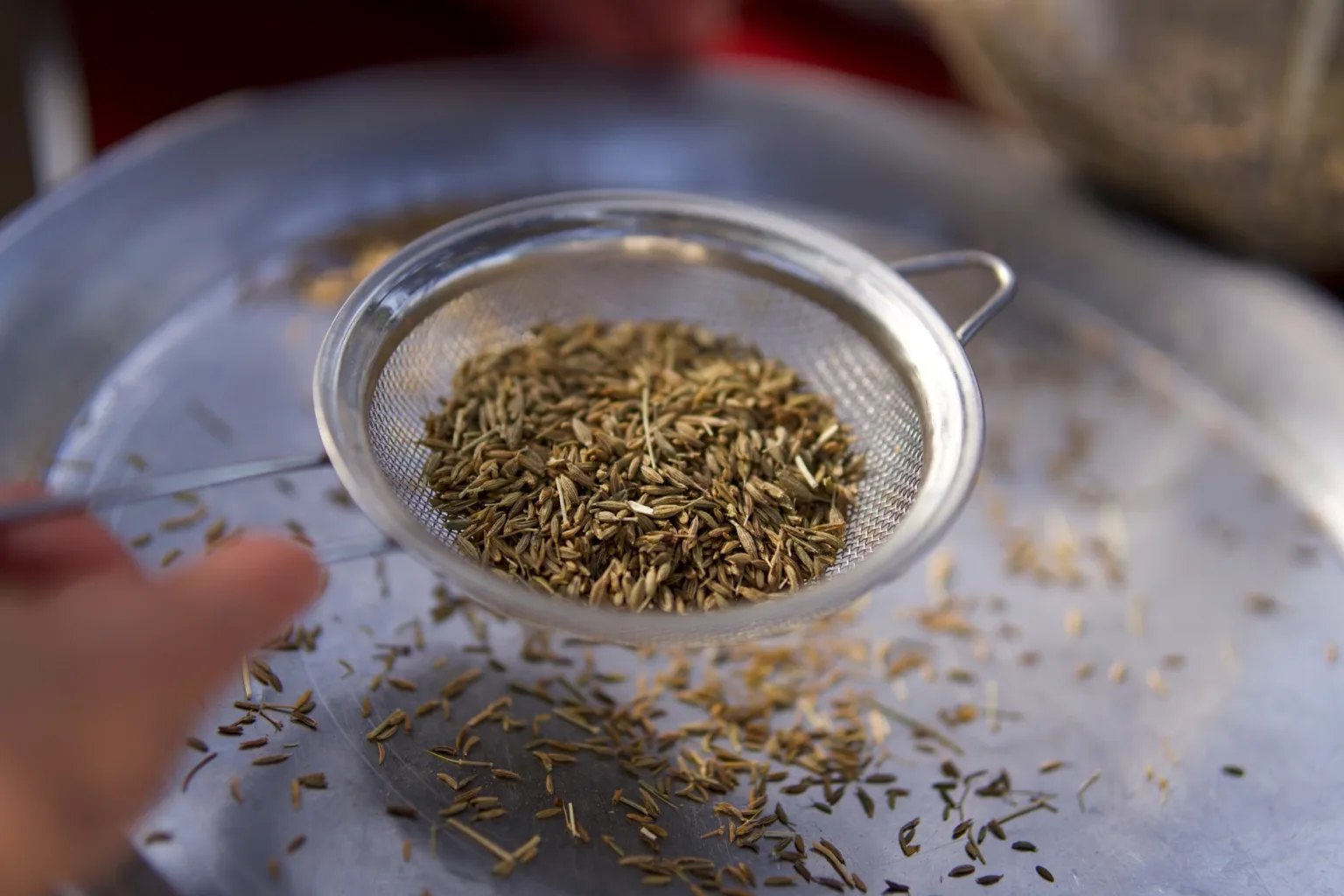
Culinary cumin comes from the dried seeds of Cuminum cyminum, a plant in the Apiaceae family. The seeds are usually narrow, elongated and ridged, and are sold whole or ground. This profile refers to common cumin; it is distinct from nigella, which is also called black cumin in some contexts. Whole seeds retain their shape and give small bursts of aroma; lightly toasting and grinding them makes their flavour easier to distribute through a dish. The ingredient name mentions sahawiq, but the information available here does not verify a specific use of cumin in that preparation. The guidance below therefore describes general culinary uses of cumin rather than a particular traditional recipe.
When to use it
Use cumin when you want to add a warm, earthy and slightly bitter note to savoury food without necessarily making it the dominant flavour. Whole seeds suit longer cooking, liquids and aromatic bases; ground cumin blends more readily into sauces, marinades and spice mixtures. It can complement legumes, vegetables, rice and meat dishes. Because its aroma is assertive, begin with a small amount and adjust after tasting. No particular season is specified for this dry pantry spice, which can be used as needed.
How to use it
Add whole seeds directly to a dish, or briefly toast them in a dry pan to intensify their aroma. Remove them once fragrant and avoid letting them become too dark. For a more even distribution, let them cool briefly, then grind or crush them just before use. Ground cumin blends readily into sauces, spice pastes, marinades and slow-cooked dishes, but too much can overpower other ingredients. Start with a small amount and increase gradually after tasting. Whole seeds add texture and release their aroma more slowly. Cumin pairs well with legumes, vegetables, rice, garlic and coriander. The available evidence does not establish a specific amount or method for sahawiq; use cumin in it only if the recipe you follow calls for it.
Flavour and texture
Cumin has a penetrating aroma and a warm, earthy, slightly bitter flavour with a somewhat pungent edge. The whole seeds are firm and ridged; toasting makes their aroma more pronounced, while grinding helps them blend evenly. Their flavour is concentrated enough to be noticeable in small amounts, so add it gradually and taste as you go.
How to choose it
Choose whole seeds or ground cumin according to the texture and ease of blending your recipe needs. Look for a food-grade, well-sealed package and dry, intact seeds with a recognisable aroma. Whole cumin is convenient if you want to grind it just before cooking. Check the label to confirm that the product is common cumin, not nigella or another seed with a similar name.
Storage
Keep cumin in an airtight container in a cool, dry place, away from heat and strong odours. Protecting it from moisture helps keep the seeds dry. Whole seeds can be ground as needed; keep ground cumin tightly sealed and avoid leaving the container open near a cooker or steam.
Substitutions
For a finer texture, replace whole seeds with ground cumin and add it gradually. If you only have whole seeds, lightly toast and crush them to use in place of ground cumin. These are changes of format: the cumin flavour remains, but the texture and the way its aroma spreads through the dish will differ.
Common mistakes
Adding too much cumin at the start can mask other flavours. Toasting the seeds until they scorch can also spoil their aroma; heat them only until fragrant. Do not confuse common cumin with nigella, which is also called black cumin and is a different seed.
Safety and allergens
Use cumin seeds labelled for food use and follow the package directions. Do not substitute essential oil for the seeds: they are different products, and the oil is not a direct culinary replacement.
Culinary uses
- Seasoning for sauces, dips and spice mixtures
- Aromatic accent for legumes, vegetables, rice and meat dishes
Recommended techniques
- Toast whole seeds briefly in a dry pan to bring out their aroma, taking care not to scorch them.
- Grind or crush the seeds shortly before use for a more immediate, even flavour.
- Add whole seeds to cooking liquids or dishes where a gradual release of aroma is wanted.
Pairs well with
- Legumes, including lentils and chickpeas
- Garlic and coriander
- Rice and cooked vegetables
- Meat dishes, including lamb
Frequently asked questions
Should I use whole or ground cumin?
It depends on the dish. Whole seeds add texture and release their aroma gradually; ground cumin blends in readily. You can also toast and grind whole seeds just before using them.
Can I toast cumin seeds?
Yes. Heat them briefly in a dry pan until fragrant. Watch them closely so they do not scorch, and let them cool slightly before crushing or grinding.
Is there a confirmed cumin method for sahawiq?
The available information does not confirm a sahawiq-specific quantity or technique. Follow the recipe you are using; this profile describes general uses for cumin.
Ingredient allergens
Allergen listThere are no verified associations for these ingredients yet.
Sources and review
Automatically researched, cross-checked and validated content. Sources consulted:
- Romanica Olomucensia : «¿Qué pinga es esto?». Usos disfemísticos en el español de Cuba doi.org/10.5507/ro.2021.007
- Client Challenge doi.org/10.2307/j.ctvndv9t9.22
- Cuminum cyminum - Wikipedia, la enciclopedia libre es.wikipedia.org/wiki/Cuminum_cyminum
- Cómino: qué es y para que sirve | JUST SPICES® www.justspices.es/blog/todo-sobre-la-cocina/glosario-de-especias/comino-que-es-y-para-que-si…
- Propiedades y beneficios del Comino - Trevijano www.trevijano.com/ingredientes/comino/
- Semillas de nigella, ajenuz o comino negro: ¿qué es y cómo usar esta especia en la cocina? www.directoalpaladar.com/ingredientes-y-alimentos/semillas-nigella-ajenuz-comino-negro-que-c…
- ¿Para qué sirve el comino en la cocina? | Recetas Nestlé | Recetas Nestlé www.recetasnestle.com.ar/escuela-de-sabor/coccion-y-tecnica/para-que-sirve-el-comino-en-la-c…
- Comino, la especia que aporta profundidad y carácter | Alveus www.alveus.eu/es/blog/comino/
- Comino - Región de Murcia Digital www.regmurcia.com/servlet/s.Sl?r=ReP-20047-DETALLE_REPORTAJESPADRE&sit=c%2C543%2Cm%2C2719
- Comino | Gastronomía & Cía www.gastronomiaycia.com/comino/
- - YouTube www.youtube.com/watch?v=HaJXodHpaFQ
- El Origen del Comino: Un Viaje por el Mediterráneo desde Egipto hasta – Puerto de Oriente puertodeoriente.es/blogs/noticias/el-origen-del-comino-un-viaje-por-el-mediterraneo-desde-eg…
- Diseñan un método rápido para analizar las propiedades saludables del comino negro - Instituto de Agricultura Sostenible www.ias.csic.es/disenan-un-metodo-rapido-para-analizar-las-propiedades-saludables-del-comino…
- Comino en Polvo para que No Gastes Más - YouTube www.youtube.com/watch?v=a6uZFWYzWt0