- Category
- Oils and fats
- State
- Liquid
- Usual unit
- ml
What it is
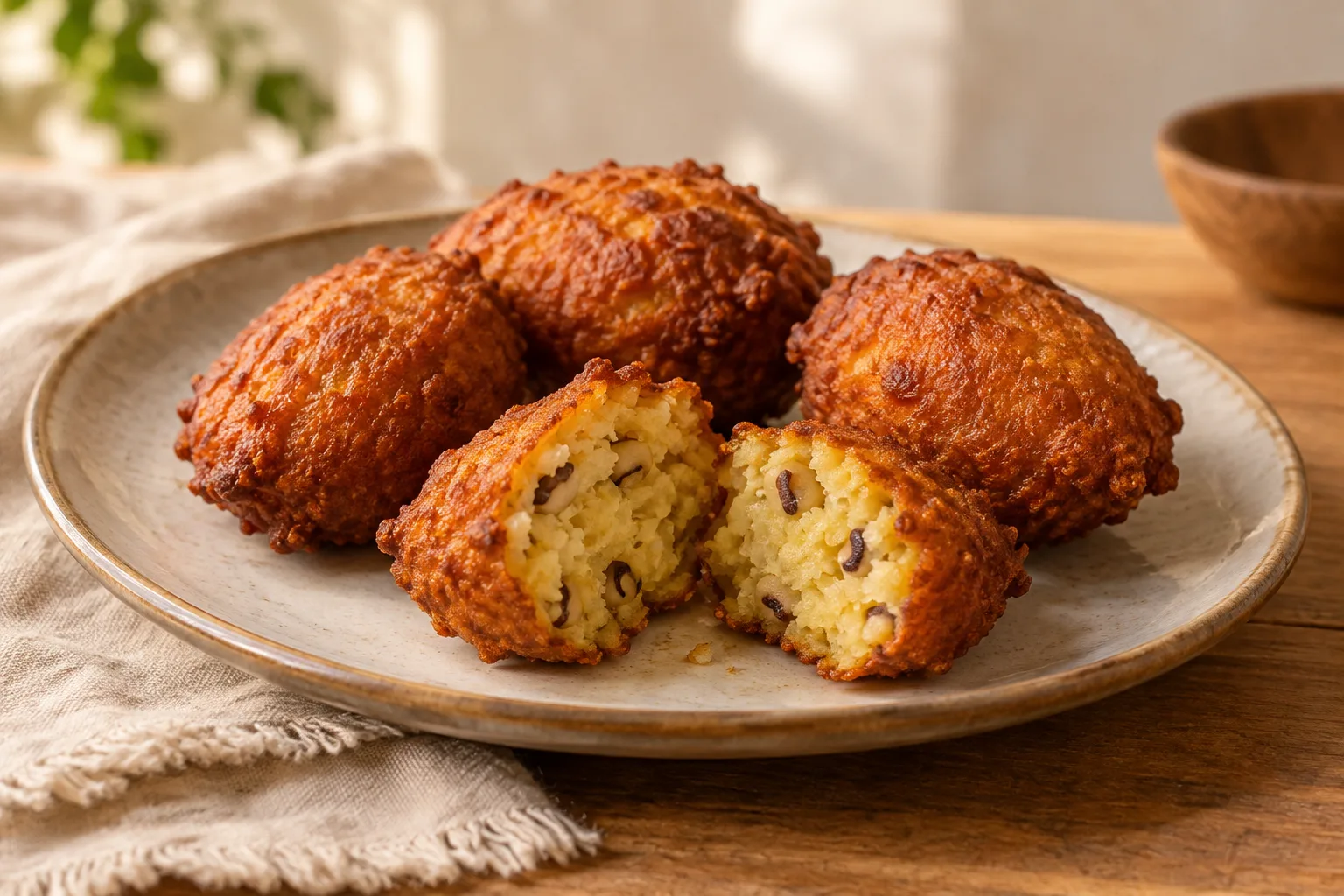
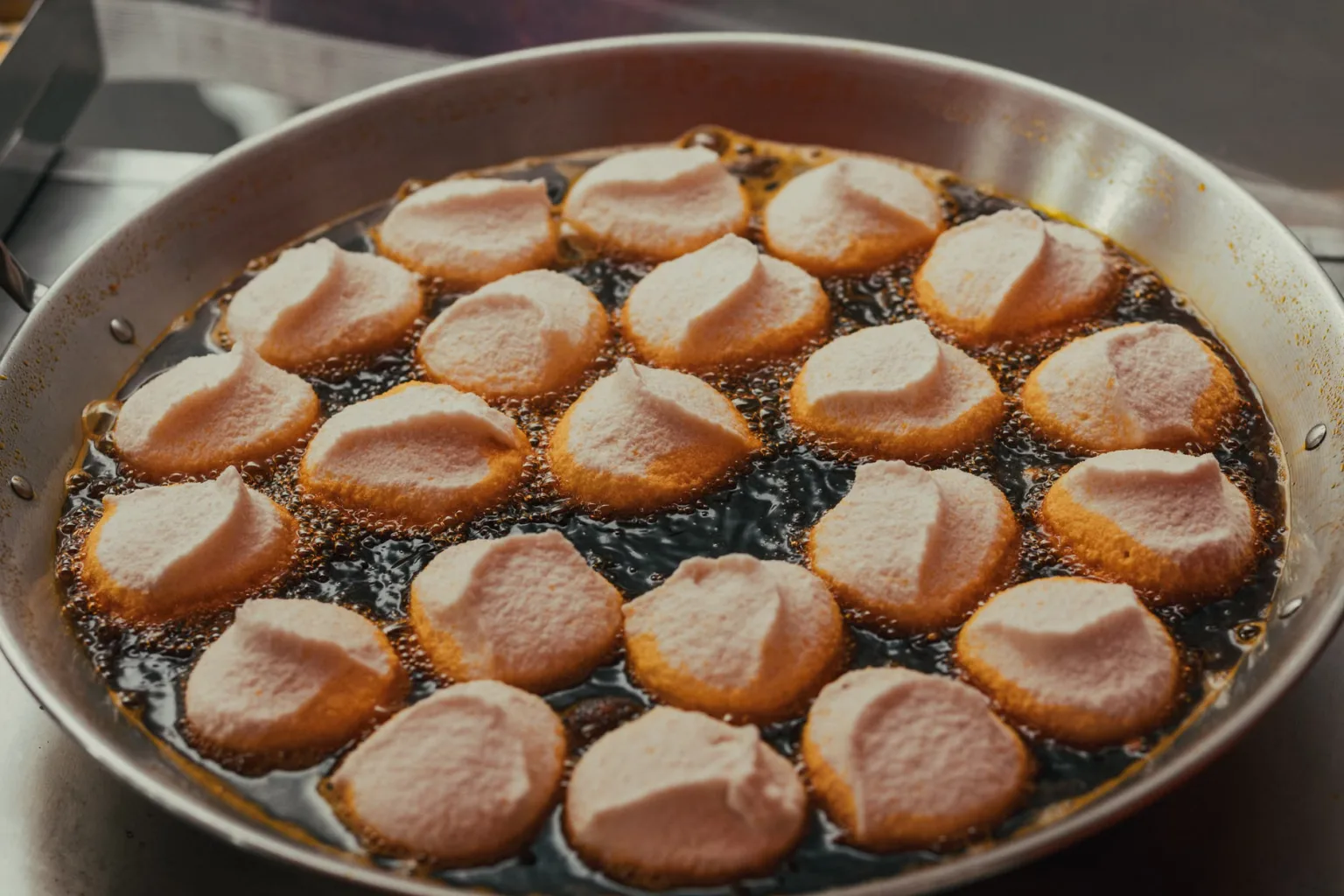
Dendê oil is a palm oil associated with the fruit of the dendezeiro palm. It is a characteristic ingredient in Bahian cooking. Acarajé illustrates its role: the batter is made from black-eyed peas and fried in dendê oil. In this context, the oil contributes orange color and some of the fritter’s flavor. It is useful to distinguish cooking batter in oil from adding oil to the batter itself. In the preparation described, the batter is made separately and dendê serves as the frying medium.
When to use it
Use it when making Bahian-style acarajé and you want the frying oil associated with the fritter’s characteristic color and flavor. It is relevant for frying portions of black-eyed-pea batter. Do not automatically add it to the batter mixture: in the preparation described, the batter is made separately and the dendê is heated for frying. If you are considering a substitute in another recipe, no alternative with the same profile is confirmed here.
How to use it
For acarajé, prepare the black-eyed-pea batter separately. Heat enough dendê oil in a pan or pot for frying; shape portions of batter and cook them in the oil until golden, turning them carefully. Drain the fritters and, if desired, open and fill them with vatapá. A mixture of tomato, onion, and cilantro is described as a fresh accompaniment. In this preparation, the oil is the cooking medium, not an ingredient mixed into the batter. No universal temperature or cooking time is specified here: follow your recipe and handle hot oil carefully.
Flavour and texture
When used to fry acarajé, dendê contributes some of the characteristic flavor and helps give the fritters an orange color. The oil is liquid before heating; the finished food’s texture depends on the batter and frying, not on the oil alone. The available information does not establish its intensity, aroma, or smoke point in more detail. Avoid assuming those qualities when adapting a recipe, and check the product label when you need product-specific information.
How to choose it
Look for a product clearly labeled dendê oil or cooking palm oil. Check that the package is intact and read the label to confirm it is the product you need. The available information does not specify grades, brands, refining methods, or sensory quality standards; do not rely on qualities that are not stated on the label. If a recipe calls for dendê’s particular color and flavor, do not automatically treat another fat as equivalent.
Storage
Follow the storage directions on the package and keep it closed when not in use. The available information does not establish a specific shelf life, storage temperature, or special storage conditions for this oil. Do not use a product that shows unusual signs of deterioration, and keep water out of the container. For product-specific storage instructions, follow the label.
Substitutions
No direct substitute has been confirmed that reproduces the color and flavor dendê contributes to acarajé. Changing the oil may change the result even if the batter and frying technique remain the same. If you do not have dendê, consult a recipe that explicitly names a suitable alternative for that preparation; do not assume any oil will produce an equivalent result.
Common mistakes
A key mistake is confusing the frying oil with an ingredient in the batter. In the preparation described, black-eyed-pea batter is made separately and fried in dendê. Also avoid assuming that another oil will give the same color and flavor. Handle hot oil carefully, keep water out of the frying oil, and follow the safety directions in your recipe and on the package.
Safety and allergens
Hot oil may splash. Handle it carefully, keep water away from the frying oil, and follow the recipe and package instructions. No additional product-specific warning is established here.
Culinary uses
- Medio de fritura para acarajé
- Aporta color y parte del sabor a preparaciones de cocina bahiana
Recommended techniques
- Freír
- Calentar como medio de cocción
Pairs well with
- Acarajé de alubia carilla o feijão-fradinho
- Acarajé relleno de vatapá y acompañado de tomate, cebolla y cilantro
Frequently asked questions
Is dendê oil mixed into acarajé batter?
Not in the preparation described: the batter is made separately and the oil is used to fry the portions.
What does dendê contribute to acarajé?
During frying, it contributes orange color and some of the fritter’s characteristic flavor.
Can I replace it with another oil?
No direct substitute that reproduces its color and flavor is confirmed here. Another fat may change the result.
Ingredient allergens
Allergen listThere are no verified associations for these ingredients yet.
Sources and review
Automatically researched, cross-checked and validated content. Sources consulted:
- Qué es eso llamado epistemología, para qué sirve, por qué es inexcusable para la universidad y para la paz | Reencuentro. Análisis de problemas universitarios doi.org/10.24275/uamxoc-dcsh/reencuentro/202386-14
- - YouTube www.youtube.com/watch?v=NGs4QSgoK1I
- pressure rucore.libraries.rutgers.edu/rutgers-lib/44747/TXT/3/
- Cómo hacer acarajé, el bocado frito más típico de Bahía www.directoalpaladar.com/recetas-de-aperitivos/como-hacer-acaraje-bocado-frito-tipico-bahia
- DE BERNAT METGE A FRANCISCO DE QUEVEDO. “EL ... drum.lib.umd.edu/bitstreams/5c1f501b-e575-4989-af92-8c210b88e393/download
- la sátira política en fray gerundio (1837-1842) de modesto etd.ohiolink.edu/acprod/odb_etd/ws/send_file/send?accession=osu1153961390&disposition=inline
- ACEITE DE DENDE – Puntocuc Market www.puntocucmarket.com.ar/blogs/tipsgourmet/aceite-de-dende?srsltid=AYCX9vIF9KPlclEElJOIjya2…