- Category
- Fruit
- State
- Dry
- Usual unit
- g
What it is
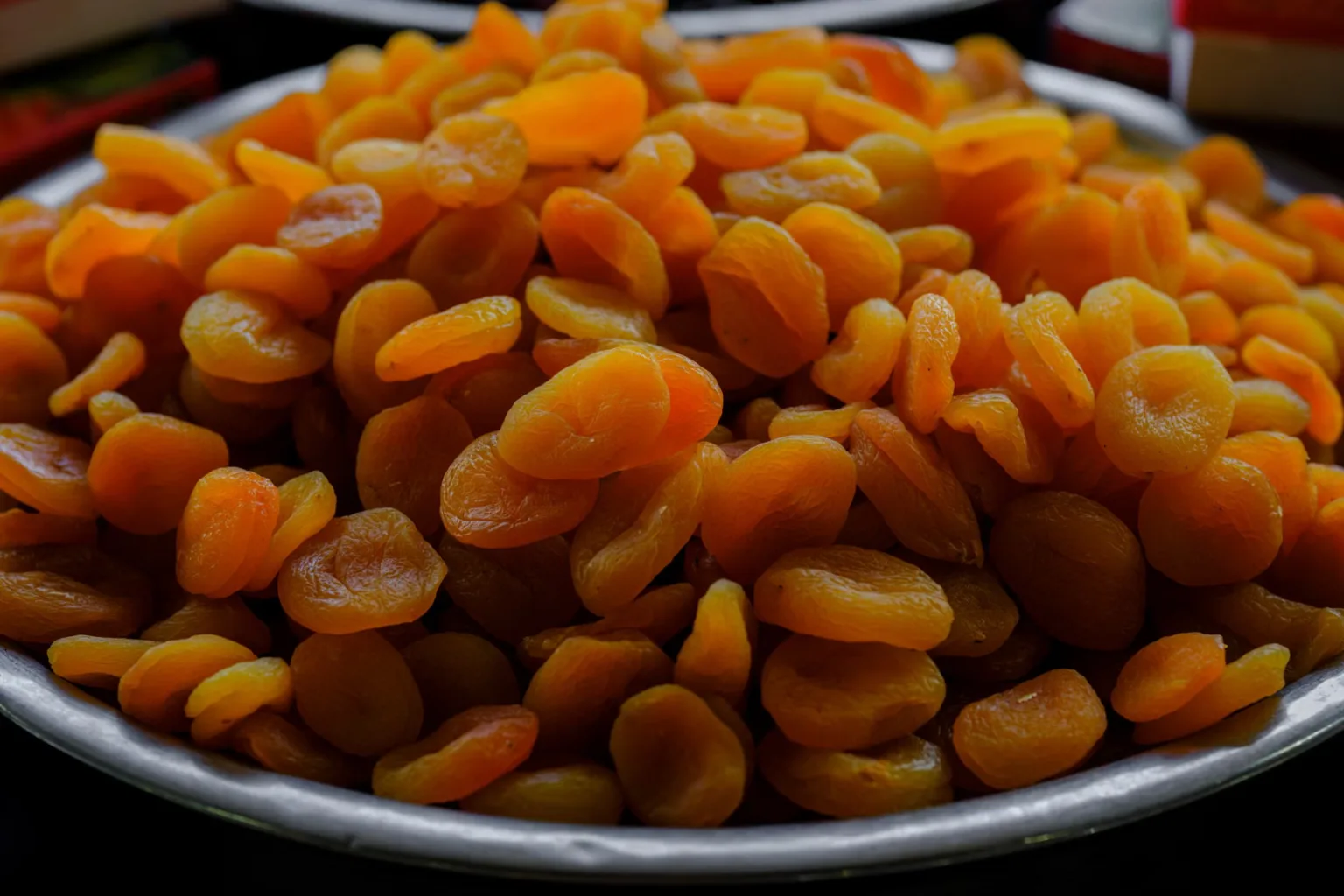
Dried apricots are apricot fruits that have been dried to reduce their moisture. They retain the fruit’s sweet character and are sold whole, chopped, diced, or as paste; their appearance and texture vary with the product and how it was made. Some products are natural and others are sulfur-treated, so check the label if you want a particular kind. They are ready to use in many preparations and do not need to be cooked before eating. Their chewy texture and sweetness make them useful in both sweet recipes and some savory dishes.
When to use it
Use dried apricots when you want fruity sweetness and a chewy bite, or when you need fruit that is convenient to keep in the pantry. They work as a snack and in cereal, yogurt, chopped salads, breads, and desserts. They can also add a sweet contrast to savory or spiced dishes. Choose whole pieces when you want to serve them as they are or cut them to size; diced apricots are handy for distributing through a mixture or dough. If they are too firm for your recipe, soften them before use.
How to use it
Check the package and separate the pieces before using them. Eat dried apricots as they are, or cut them with a knife to add to cereal, yogurt, salads, breads, and desserts. For an even distribution in dough, chop them into small pieces; if they stick to the knife or each other, separate them with clean hands. If a recipe needs a softer texture, soak them briefly and drain them before adding, keeping in mind that the liquid can change the moisture of the dish. In savory recipes, start with a small amount and adjust to the sweetness you want. Follow package directions for any product-specific preparation.
Flavour and texture
Their flavor is sweet and fruity, with the concentrated taste characteristic of dried fruit. The texture is usually flexible and chewy, though it varies: some pieces are tender, while others are firmer or drier. Whole apricots give larger bites; diced or chopped pieces are easier to distribute through dough, cereal, and salads. Variety, cut, and processing can affect color and texture, so not every product will look or feel the same.
How to choose it
Choose a format to suit your recipe: whole pieces for serving or cutting, diced fruit for mixtures, and paste for preparations that need a uniform texture. Check that the package is intact and read the ingredient list and product description; both natural and sulfur-treated options are sold. Consider the appearance and texture described on the package, as color and firmness vary among products. If you need to avoid a particular ingredient, do not infer the contents from color—check the label.
Storage
Keep dried apricots in a tightly closed package or a clean, airtight container in a cool, dry place, and follow the package directions. Avoid leaving them exposed to air or moisture, as their texture may change or they may dry out. Reseal the package after each use and check the fruit before eating. There is no single storage period that applies to every package; use the date and storage directions provided by the manufacturer.
Substitutions
Raisins or other dried fruit can replace dried apricots in cereal, breads, and mixtures, but they will change the flavor and size of the pieces. Fresh apricots may work where the recipe can accommodate extra moisture and a less concentrated texture; adjust the amount and preparation to suit the dish. No substitute exactly matches the sweetness and chew of dried apricots, so taste and adjust.
Common mistakes
Do not assume all dried apricots have the same color, texture, or ingredients: products include natural and sulfur-treated versions and several formats. Avoid adding a large amount to a recipe before tasting for sweetness, especially in a savory dish. If you soak them, drain them and account for the added moisture. Do not leave an opened package unsealed or disregard its storage directions.
Safety and allergens
Follow the package directions and inspect the fruit before eating. Do not eat it if the package is damaged or the contents show unusual signs of spoilage. Check the label for ingredients and any product-specific warnings.
Culinary uses
- Dulce concentrado para aperitivos y meriendas
- Ingrediente para repostería, cereales y platos salados
Recommended techniques
- Picar para incorporar a masas, cereales o ensaladas
- Remojar brevemente para ablandar antes de añadir a una preparación
Pairs well with
- Almendras y otros frutos secos
- Yogur, cereales y preparaciones especiadas
Frequently asked questions
Do dried apricots need to be cooked before eating?
No. They can be eaten as they are or added directly to cereal, yogurt, salads, and other preparations.
How can I soften firm dried apricots?
Soak them briefly and drain them before use. Keep in mind that they may add moisture to a recipe.
Are all dried apricots the same?
No. They are sold whole, chopped, diced, or as paste, and products may be natural or sulfur-treated. Check the label to choose the kind you need.
Ingredient allergens
Allergen listThere are no verified associations for these ingredients yet.
Estimated nutrition
- Fat
- 0 g
- Saturates
- 0 g
- Carbohydrate
- 62.2 g
- Sugars
- 54 g
- Fibre
- 8.1 g
- Protein
- 2.7 g
- Salt
- 0.07 g
Sources and review
Automatically researched, cross-checked and validated content. Sources consulted:
- Client Challenge doi.org/10.2307/jj.27939689.16
- Comité Científico aesan.gob.es/dam/jcr:3c94ae83-1384-420c-96c1-0c2aa6f1544e/comite_cientifico_34.pdf
- pressure rucore.libraries.rutgers.edu/rutgers-lib/44747/TXT/3/
- Measuring Autogenic Recharge over a Karst Aquifer Utilizing ... digitalcommons.usf.edu/cgi/viewcontent.cgi?article=4271&context=kip_articles
- Daily Reflector, May 17, 1963 - ECU Digital Collections digital.lib.ecu.edu/89352
- DISS FINAL 4.04.11 - DukeSpace - Duke University dukespace.lib.duke.edu/server/api/core/bitstreams/7df2fcc8-10d3-4dc0-8cec-0053ee630fe5/conte…
- the science of sound: recording technology and the literary scholarsbank.uoregon.edu/server/api/core/bitstreams/f5a5c7e7-2966-43b6-9b61-affb854ee22a/con…
- Cat's Den Karaoke Song List By Artist www.brescia.edu/wp-content/uploads/Karaoke-Catalog-By-Artist.pdf
- ¿Qué Son Los Damascos?: Origen, Usos Y Beneficios Guía 2024 campograndeperu.com/damascos/?srsltid=AYCX9vLl3LAM6wLSwP_Wb2I2gyvYHpAQeu8zvTIAkbGDfr8ZpztoIX…
- Orejones - Nova Terra Foods novaterrafoods.com/orejones-es/
- Albaricoque, una fruta para el verano propiedades y beneficios - LIBBYS libbys.es/blog/habitos-saludables/albaricoque-una-fruta-para-el-verano/8519
- Prunus armeniaca - Wikipedia, la enciclopedia libre es.wikipedia.org/wiki/Prunus_armeniaca
- Damascos secos – NUTFRUIT – Plant-Based Power ar.nutfruit.org/informacion-nutricional/damascos-secos/