- Category
- Herbs and spices
- State
- Dry
- Usual unit
- unit
What it is
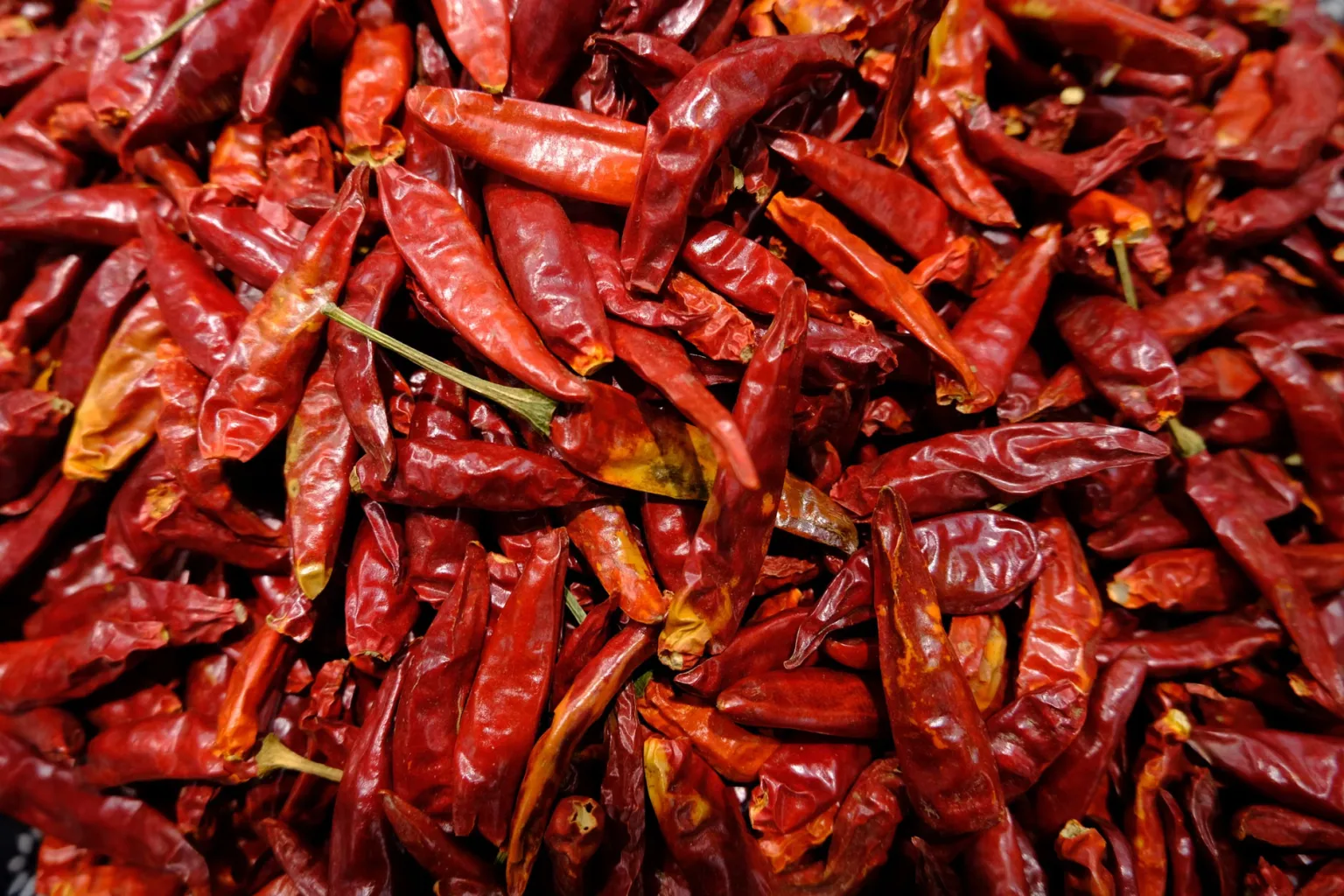
Dried chili is the fruit of a hot pepper that has been dehydrated for use as a spice. Chili, guindilla and ají are regional names, and the product does not necessarily refer to one single variety. It may be sold whole or ground. Its heat and aroma depend on the type of pepper, so one chili may not be as hot as another. In cooking, it seasons food with heat and pepper aroma and can be used in dishes such as pasta, fish, vegetables and salads. It is not the same as dried ñora pepper: ñora is described as aromatic and sweet rather than hot, and gives a different culinary result.
When to use it
Use dried chili when you want to add heat and aroma to a dish, such as pasta, fish, vegetables or a salad. It can also be used to flavour oil. Since chilies differ in heat, and dried chili may not have the same intensity as its fresh counterpart, add a little at a time and taste before adding more. If you want colour and aroma without heat, consider dried ñora, keeping in mind that its flavour is different and it will not provide chili heat.
How to use it
Add the chili whole or break it up so its heat can season the dish; remove it before serving if you do not want to eat it. It can also be used to flavour oil: one culinary suggestion combines dried chilies with oil and other aromatics, but that recipe's quantities and resting period should not be treated as general preservation advice. Start with a small amount and adjust to taste because varieties differ in heat. It can season pasta, fish, vegetables and salads. If you want flavour without heat, dried ñora has a different profile and should not be treated as an exact equivalent.
Flavour and texture
Its defining feature is heat, along with the aroma of pepper. Intensity varies by variety and may differ from that of a fresh chili. Dried, it is generally used as a seasoning, whole or broken up so it can contribute to a dish. Do not assume every chili has the same heat level: start with a small amount and adjust to your taste.
How to choose it
Choose a product clearly labelled as dried chili or dried hot pepper, and check whether it is sold whole or ground. Names vary by region and do not always identify a single variety, so heat can differ from one product to another. If you want a particular level of heat, do not assume all dried chilies are equally hot; add a small amount and taste before adding more.
Storage
Keep dried chili in a closed container in a dry place. Avoid exposing it to moisture, which can affect a dehydrated product. Check its appearance and aroma before use, and follow any storage instructions on the product label.
Substitutions
Fresh chili can replace dried chili when you want heat, but it may not have the same intensity; adjust the amount by tasting. Dried ñora can be useful when you want aroma and colour without heat, but it has a different flavour and does not replace chili's heat.
Common mistakes
Do not add a large amount all at once: varieties can differ in heat. Also, do not confuse dried chili with dried ñora, which is not hot and gives a different result. If using a whole chili, remember that you can remove it before serving so that no one bites into it unexpectedly.
Safety and allergens
Heat can vary considerably between varieties. Start with a small amount and add more only after tasting the dish. For packaged products, check the label for ingredients and storage instructions.
Culinary uses
- Spice and seasoning for adding heat and a distinctive pepper aroma
- Ingredient for seasoning pasta, salads, fish and vegetables
Recommended techniques
- Add whole or broken into a dish to season it
- Infuse in oil to flavour the oil
Pairs well with
- Pasta
- Fish
- Vegetables
- Salads
Frequently asked questions
Does dried chili always have the same heat?
No. Varieties differ, and their heat can vary. Begin with a small amount and adjust after tasting.
What dishes can I use it in?
It can season pasta, fish, vegetables and salads, and it can also be used to flavour oil.
Is dried ñora the same as dried chili?
No. Dried ñora is described as aromatic and non-hot, and it gives a different result.
Ingredient allergens
Allergen listThere are no verified associations for these ingredients yet.
Sources and review
Automatically researched, cross-checked and validated content. Sources consulted:
- Qué es la punción seca y para qué la usan los fisioterapeutas doi.org/10.64628/aao.5vsjmghj5
- Etiquetado de sustancias que causan alergias e intolerancias alimentarias www.aesan.gob.es/seguridad-alimentaria/informacion-alimentaria/etiquetado-sustancias
- Guindilla: Botánica, cultura y sabor en una Especia | Alveus www.alveus.eu/es/blog/guindilla-origen-y-tipos/
- Guindilla: qué es, beneficios y usos en la cocina de este pimiento picante bonviveur.com/es/noticias/guindilla
- Guindilla: qué es, beneficios, usos en la cocina y variedades de este pimiento picante www.directoalpaladar.com/ingredientes-y-alimentos/guindilla-que-beneficios-usos-cocina-varie…
- - YouTube www.youtube.com/watch?v=KhR4OC2lzPI
- LIMÓN Y PIMENTÓN: Guindillas secas limonypimenton.blogspot.com/2011/09/guindillas-secas.html
- Gastromimix: La guindilla gastromimix.blogspot.com/2009/09/la-guindilla.html
- Propuesta de aplicación de técnicas de elaboración de pasta con especias dulces en preparaciones de cocina de autor | OpenAlex openalex.org/W2935162661
- Guindilla en la cocina, ¿la utilizas? - Recetas La Masía www.recetaslamasia.es/utilizais-la-guindilla-en-la-cocina/
- Llámalo chile, guindilla o ají: tipos de este pimiento y cómo cocinar con ellos | Gastronosfera www.gastronosfera.com/tendencias/llamalo-chile-guindilla-o-aji-tipos-de-este-pimiento-y-como…
- Food Allergies | FDA www.fda.gov/food/nutrition-food-labeling-and-critical-foods/food-allergies
- Centre for Food Safety www.cfs.gov.hk/english/food_leg/food_leg_lgfa.html
- Food Allergy Labeling Laws: International Guidelines for Residents and Travelers - PMC pmc.ncbi.nlm.nih.gov/articles/PMC10169132/
- RISK ASSESSMENT OF FOOD ALLERGENS - IRIS iris.who.int/server/api/core/bitstreams/6c71a3db-88b8-4fcd-a807-f5220eb4fc34/content
- Food allergen labelling and information requirements technical guidance - GOV.UK www.gov.uk/government/publications/food-allergen-labelling-and-information-requirements-tech…