- Category
- Herbs and spices
- State
- Dry
- Usual unit
- g
What it is
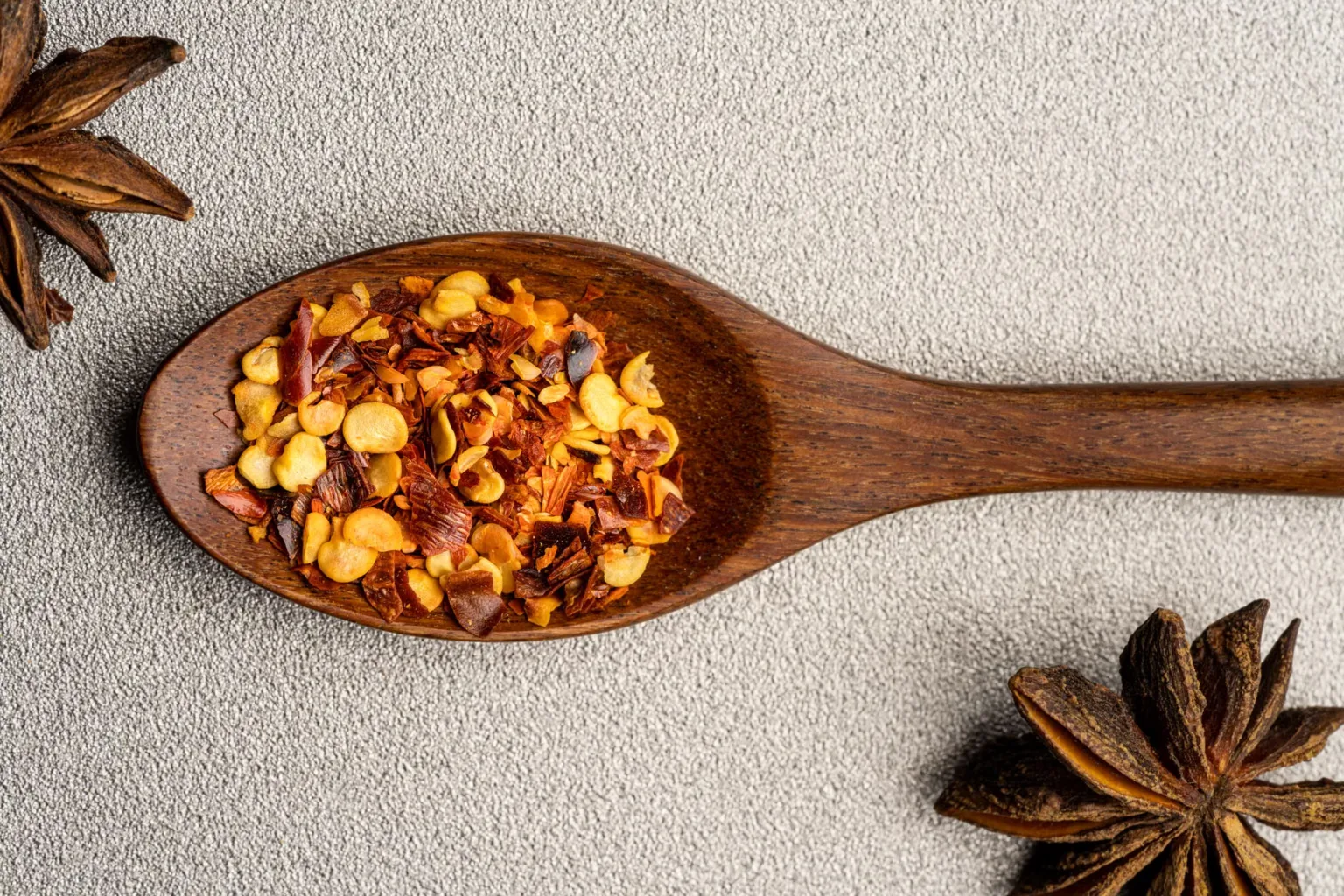
Dried ginger flakes are dehydrated ginger in small pieces, rather than fresh root or necessarily a finely ground spice. They come from the rhizome of Zingiber officinale, a member of the ginger family, Zingiberaceae. Drying gives ginger a more concentrated profile than fresh ginger, although the exact flavor and texture depend on the cut and product. The flakes can be added to a dish or used to infuse a liquid. There is no universal conversion amount established here for flakes, ground ginger and fresh ginger, so adjust the quantity to the recipe and the flavor you want.
When to use it
Choose these flakes when you want to add warm, aromatic pungency without relying on fresh ginger. They work in soups, stews, curries, marinades and stir-fries, as well as in cookies, cakes and spiced drinks. They are particularly convenient in recipes that can accommodate dried spices or allow their flavor to infuse into liquid. If you do not want pieces in the finished dish, steep and remove them, or grind them if the product is suitable. Start with a small amount: strength can vary between products.
How to use it
Stir the flakes into soups, stews, curries, marinades or baking mixtures so they are distributed throughout. In a drink or other liquid preparation, steep them and remove them before serving if you prefer not to have pieces in the cup. For a more even texture, grind them before use if they are dry enough to mill. Some forms of dried ginger benefit from soaking, but no specific soaking time or rehydration ratio is established here for flakes; follow package directions if available and judge by their texture. Taste as you go and add more gradually, since ginger can readily dominate a dish.
Flavour and texture
The flavor is warm, aromatic and pungent, with a note that can suggest citrus and a slight sweetness. Its strength depends on the product and how it is used. Dry flakes have more texture than fine powder and may remain noticeable if added without soaking or grinding.
How to choose it
Look for a product clearly labelled dried ginger flakes and check that the package is sealed and shows no visible moisture. The available evidence does not establish an ideal flake size, color or strength; cut and appearance can vary. If possible, choose a package whose label lists ingredients and provides usage guidance.
Storage
Keep the flakes in an airtight container in a dry place away from light and heat. Prevent moisture from entering the container and close it after each use to help preserve its aroma. Follow any storage directions on the package, and discard the product if it shows clear signs of dampness or deterioration.
Substitutions
Ground dried ginger can replace flakes, but the texture changes and the powder may disperse more quickly. Grated or minced fresh ginger also adds flavor, but it contains more moisture and has a different character. No fixed conversion is established here: start with a small amount and adjust after tasting.
Common mistakes
Adding a large amount at once can make the flavor overpowering. It is also easy to overlook that flakes may leave a noticeable texture in the dish. Begin with a little, taste as you cook, and steep and remove the flakes or grind them if you do not want pieces.
Safety and allergens
Use clean, dry utensils and containers, and keep moisture out of the package. If you have a known food allergy, check the label and manufacturer’s information to confirm the ingredients and any cross-contact information.
Culinary uses
- Aromatic seasoning for savory dishes
- Warm, pungent flavoring for baked goods and drinks
Recommended techniques
- Add to soups, stews, curries, marinades or stir-fries
- Steep in a liquid or rehydrate before adding, adjusting to the product’s texture
Pairs well with
- Garlic and onion
- Cinnamon, cloves and nutmeg
- Lime or lemon
- Soy sauce and sesame
Frequently asked questions
Can I use the flakes straight from the package?
Yes. Add them to a dish that will cook, or steep them in a liquid. Start with a little and check whether you like the finished texture.
Are flakes the same as ground ginger?
Not exactly. Both are dried forms, but flakes have distinct pieces while ground ginger blends in differently. Adjust the amount and method to suit the recipe.
How should I store them?
Keep them in an airtight container in a dry place away from light and heat. Prevent moisture from getting in and follow any specific package directions.
Ingredient allergens
Allergen listThere are no verified associations for these ingredients yet.
Sources and review
Automatically researched, cross-checked and validated content. Sources consulted:
- Romanica Olomucensia : «¿Qué pinga es esto?». Usos disfemísticos en el español de Cuba doi.org/10.5507/ro.2021.007
- El jengibre en la cocina asiática dragonimperial.es/el-jengibre-en-la-cocina-asiatica/
- Jengibre: qué es, propiedades, beneficios y cómo se toma bonviveur.com/es/noticias/jengibre
- Jengibre, más que una especia: usos, formatos y qué puede aportar a tu bienestar margavilan.substack.com/p/jengibre-mas-que-una-especia-usos
- El jengibre desde una perspectiva profesional | Alveus www.alveus.eu/es/blog/jengibre-planta-medicinal/
- Todo lo que necesitas saber sobre el jengibre | American Diabetes Association diabetesfoodhub.org/es/blog/todo-lo-que-necesitas-saber-sobre-el-jengibre
- Todo lo que debes saber sobre el jengibre | Recetas Nestlé www.recetasnestle.com.ec/escuela-de-sabor/tips/aprende-sobre-jengibre
- El jengibre como alimento. Principales usos del jengibre en la cocina: – Botanical-online www.botanical-online.com/alimentos/jengibre-como-cocinar
- Jengibre deshidratado: propiedades y usos somoscorbera.com/blog/jengibre-deshidratado-propiedades-beneficios/?srsltid=AYCX9vKIY7y9W921…
- Conoce los beneficios del jengibre Guía completa | IFEMA MADRID www.ifema.es/noticias/alimentacion-bebidas/beneficios-usos-jengibre
- Maridajes para jengibre en Latinoamérica ✓ basmatic.com/maridaje/jengibre/latinoamerica
- - YouTube www.youtube.com/watch?v=8H0C44cFvz0
- Cómo cocinar con jengibre www.directoalpaladar.com/ingredientes-y-alimentos/como-cocinar-con-jengibre