- Category
- Herbs and spices
- State
- Dry
- Usual unit
- unit
What it is
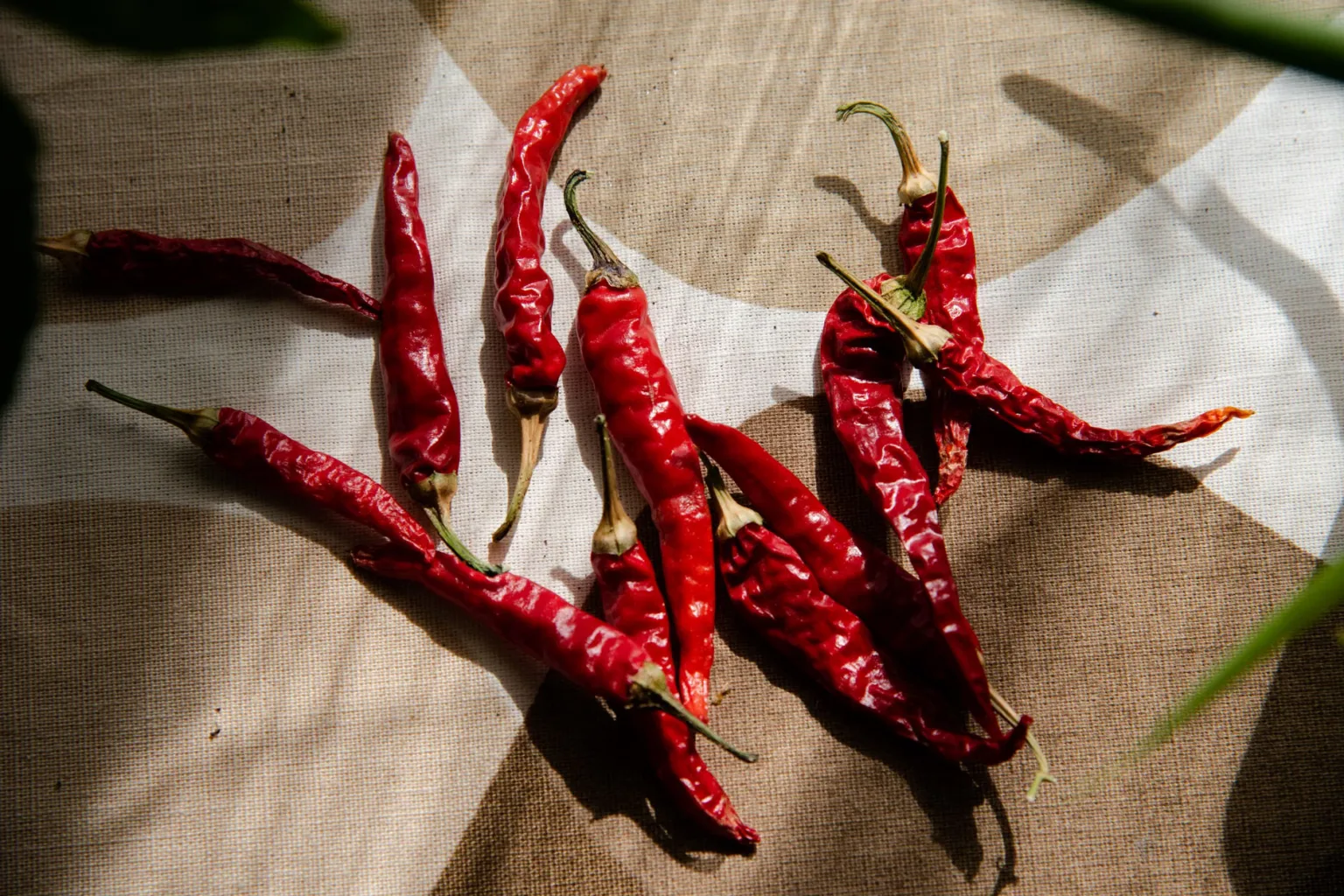
Dried hot red chile is a dehydrated chile fruit used as a spice. The name can refer to different chiles, so it does not identify one specific variety or a fixed level of heat. Removing water through drying concentrates flavor and helps extend keeping quality compared with fresh chile. Depending on the variety, the fruit can differ in size, color, aroma, taste, and pungency. Some reddish dried chiles have fruitier or more acidic notes, while other profiles can be quite different. It is commonly sold whole and can be used as is, toasted, or rehydrated for sauces and other dishes.
When to use it
Use it when you want to add chile flavor and heat, rather than heat alone. It suits sauces, marinades, stews, and moles, and can be combined with moist ingredients to make a thick sauce. Because the name does not specify a particular variety, the heat and aroma may differ from one chile or product to another. Start with a small amount and taste before adding more. If a recipe depends on the distinctive flavor of a named chile, generic dried hot red chile may not reproduce it exactly.
How to use it
You can add the chile whole to a dish or prepare it for a sauce. To develop its aroma, toast it briefly and carefully; avoid burning it, as excessive toasting can damage its flavor. To soften it and make blending easier, rehydrate it in hot water. You can then remove the seeds and veins if you want to moderate the heat or reduce bitter notes, and blend the chile with moist ingredients such as tomato. Add it gradually because intensity varies by type. You can also crumble or grind it when a recipe calls for smaller pieces of dried chile.
Flavour and texture
The concentrated flavor may be fruity, acidic, earthy, or sweeter, depending on the variety; the heat is not consistent either. When dry, the fruit is often wrinkled, with a texture that can be brittle or flexible depending on its condition. Rehydrating softens it and makes it easier to blend. Color can range from red or orange to darker shades. These differences are normal among dried chiles and do not, by themselves, establish an exact level of heat.
How to choose it
Check that the product is identified as dried chile and, when possible, look for the variety name on the package: “hot red” alone does not define a precise flavor profile. Choose a product that looks dry, with no visible moisture and a recognizable aroma. Dried chiles can vary substantially in color, shape, heat, and flavor, so do not assume that two packages are interchangeable. If the level of heat matters to your recipe, begin with a small amount and adjust as you go.
Storage
Drying is used to extend the chile's keeping quality, but specific storage conditions and shelf life depend on the product and are not established here. Follow the package directions and keep the chile dry. Avoid introducing moisture into the package. If the product shows changes that make its condition uncertain, follow the manufacturer's food-safety guidance rather than trying to restore it.
Substitutions
Another dried chile may work, but it will not necessarily be an exact substitute: varieties differ in heat, aroma, acidity, and sweetness. Adjust the amount gradually and taste the dish. Red chile flakes can also add heat, although their texture and flavor may change the result. Fresh chile is not a direct equivalent to dried chile because its flavor and water content differ.
Common mistakes
Do not assume that all dried red chiles have the same heat, or replace a named variety with another without adjusting the amount. Toasting the chile too much can harm its flavor. Adding a large amount all at once can also overwhelm a dish; add it gradually and taste. If you plan to rehydrate it for blending, allow it to soften enough for the texture you want.
Safety and allergens
Heat can vary considerably. Add chile gradually and taste the dish before increasing the amount. For home-canning recipes, use a tested preservation recipe and do not change its ingredient proportions or ingredients on your own.
Culinary uses
- Adds heat and chile flavor to sauces and stews
- Contributes color, aroma, and depth to marinades and braises
- Can be rehydrated and blended into sauces
Recommended techniques
- Toast briefly and carefully before use
- Rehydrate in hot water, then remove seeds and veins if desired
- Blend rehydrated chiles with moist ingredients for sauces
Pairs well with
- Tomato
- Pork and poultry
- Beans
- Garlic
Frequently asked questions
Do all dried red chiles have the same heat?
No. The name can cover different varieties, and heat, aroma, and flavor vary with the type of chile.
Do I need to rehydrate it before using it?
Not always. You can use it dry as a recipe directs; rehydrating it in hot water is useful when you want to soften and blend it into a sauce.
Can I substitute red chile flakes?
Yes, they can add heat, but they will not necessarily provide the same flavor or texture. Start with a small amount and adjust to taste.
Ingredient allergens
Allergen listThere are no verified associations for these ingredients yet.
Estimated nutrition
- Fat
- 5.81 g
- Saturates
- 0.81 g
- Carbohydrate
- 69.9 g
- Sugars
- 41.1 g
- Fibre
- 28.7 g
- Protein
- 10.6 g
- Salt
- 0.23 g
Sources and review
Automatically researched, cross-checked and validated content. Sources consulted:
- Tipos de Chiles Secos Mexicanos: Características y Usos abarrotes.es/blog/chiles-secos-mexicanos-caracteristicas-y-usos/
- Salsa Picante de Jícama (Spanish) - National Center for Home Food Preservation nchfp.uga.edu/how/can/canning-salsa/spicy-jicama-relish-spanish/
- "ALIGN=CENTER>LES TROIS MOUSQUETAIRES -- Los tres mosqueteros" people.duke.edu/~garci/garcitextos/ingles/MITCHELL-M/TRANSLATE/GONE-WIND-III.HTM
- Contenido / Table of Contents ageconsearch.umn.edu/record/261531/files/Complete%20PDF16.pdf
- Para cocineros en Europa: 12 chiles mexicanos básicos y sus sustitutos – La Condesa lacondesabarcelona.com/chiles-mexicanos-basicos/
- Tipos de chile: cuáles son y cómo usar cada uno sin cocinar a ciegas www.abc.es/recetasderechupete/tipos-de-chile-cuales-son-y-como-usar-cada-uno-sin-cocinar-a-c…
- Salsa picante con quínoa y chile serrano seco | Revista Científica Quántica doi.org/10.56747/rcq.v1i2.31
- Capsicum annuum - Wikipedia, la enciclopedia libre es.wikipedia.org/wiki/Capsicum_annuum
- - YouTube www.youtube.com/watch?v=z58qdJRiIfc
- GENERAL VERTICAL FILES library.unm.edu/cswr/docs/general-vertical-files.pdf
- Chimayo Red o “chile sagrado” | Gastronomía & Cía www.gastronomiaycia.com/chimayo-red-o-chile-sagrado/amp/
- Guía 2025 de chiles secos mexicanos: nombres, niveles de picor y marid – Mayoreo Online mayoreo.online/blogs/news/guia-2025-de-chiles-secos-mexicanos-nombres-niveles-de-picor-y-mar…