- Category
- Herbs and spices
- State
- Dry
- Usual unit
- tablespoon
What it is
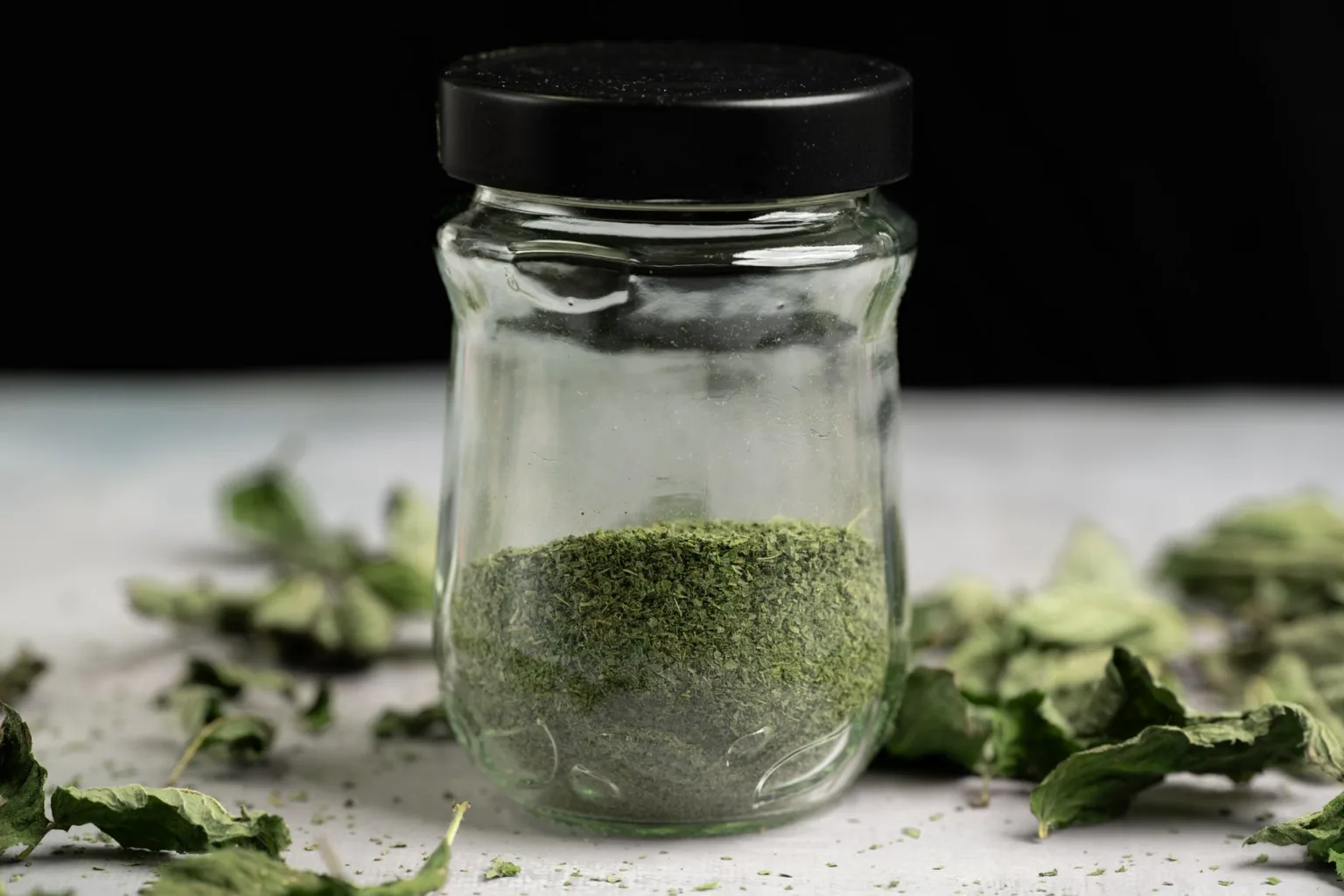
Dried mint is an aromatic mint herb that has been dehydrated for use as a seasoning. It may be sold as whole leaves, crumbled leaves, or a more finely ground product. Drying changes the herb’s aroma and texture compared with fresh leaves, and the exact result depends on the variety and processing. It is used for its aroma rather than as an exact replacement for the appearance or texture of fresh mint. The name “mint” covers different herbs, so products sold as dried mint may vary in their specific aroma and intensity.
When to use it
Use dried mint when you want a minty herbal note without adding fresh leaves. It can go into infusions, yogurt sauces, dressings, marinades, soups, stews, and meat seasonings. It can also complement vegetables, salads, fruit, and some desserts. Moist preparations give the dried herb a chance to release its aroma, but it can also be mixed into dry seasoning blends. Since dried and fresh mint do not have identical flavor or texture, begin with a small amount, taste, and add more if needed.
How to use it
Crumble the leaves between your fingers if you want to distribute them more evenly and release their aroma. For an infusion, steep the herb in hot liquid and adjust the amount and steeping to suit your preference; strain it if you do not want leaf pieces. Stir it into sauces, dressings, or marinades and allow the flavor to blend with the other ingredients. In soups and stews, add it gradually and taste before serving. For salads, vegetables, fruit, or desserts, combine it with the other ingredients first and check that the mint does not overpower them. There is no universal fresh-to-dried conversion, so adjust to the recipe and your taste.
Flavour and texture
Its aroma is commonly herbal, fresh, and minty, although intensity and specific notes vary by product. Dried leaves are light and brittle; once hydrated, they soften but do not regain the texture of freshly picked leaves. A noticeable aroma is a useful practical sign of sensory freshness.
How to choose it
Choose a product clearly labeled as dried mint and check that the package is intact. If possible, look for a recognizable herbal aroma and leaves that are not damp or clumped together. Dried mint may be sold whole, crumbled, or ground; choose a form that suits steeping, mixing into a sauce, or adding to a seasoning blend.
Storage
Follow the storage directions on the package and keep the product from becoming damp. Close the container between uses and use a clean, dry utensil to take out what you need. Do not use the herb if it has become damp or has visible mold. A universal shelf life cannot be stated without knowing the product and its packaging.
Substitutions
Fresh mint can replace dried mint, but the swap is not exact: aroma, texture, and water content differ. Add the alternative gradually and taste as you go. Other dried mints may work in some dishes, though the aroma can change; the result depends on the variety and recipe.
Common mistakes
Adding a large amount at the start can make the minty aroma dominate. Do not assume dried and fresh mint can be exchanged in equal quantities or provide the same texture. Avoid using damp or visibly moldy leaves, and taste the dish before adjusting the seasoning.
Safety and allergens
Use clean, dry utensils and avoid using damp herb or any with visible mold. Check the product label for specific handling directions; no additional ingredient-specific warning is available here.
Culinary uses
- Aromatic seasoning
- Herbal infusion ingredient
- Flavoring for sweet and savory dishes
Recommended techniques
- Steeping in hot liquid
- Mixing into sauces, dressings, and marinades
- Adding to cooked dishes during preparation or near the end
Pairs well with
- Lamb and other meats
- Yogurt, lemon, and olive oil
- Vegetables, salads, and fruit
- Chocolate and cold or hot drinks
Frequently asked questions
Is dried mint the same as fresh mint?
No. Dried mint has a different texture and aroma, though it can replace fresh mint in some recipes if you adjust the amount to taste.
What can I cook with dried mint?
Use it in infusions, sauces, dressings, marinades, stews, meat dishes, vegetables, salads, fruit, and some desserts.
How can I tell whether dried mint still has aroma?
Check its fragrance before use. Strength varies by product; do not use it if it is damp or shows visible mold.
Ingredient allergens
Allergen listThere are no verified associations for these ingredients yet.
Sources and review
Automatically researched, cross-checked and validated content. Sources consulted:
- The Essential Glossary of Cooking Terms for the Culinary Arts - Escoffier www.escoffier.edu/blog/culinary-arts/the-essential-glossary-of-cooking-terms-for-the-culinar…
- Qué es la punción seca y para qué la usan los fisioterapeutas doi.org/10.64628/aao.5vsjmghj5
- Gastronomía de México - Wikipedia, la enciclopedia libre es.wikipedia.org/wiki/Gastronom%C3%ADa_de_M%C3%A9xico
- Vamos a Conservar Alimentos: El secado de las plantas medicinales y aromáticas extension.psu.edu/vamos-a-conservar-alimentos-el-secado-de-las-plantas-medicinales-y-aromati…
- La hierbabuena en la cocina: cómo combinarla | Naturarla | Arla www.arlafoods.es/alimentacion/la-hierbabuena-en-la-cocina/
- Revista del comité científico de la aecosan número 24 aesan.gob.es/dam/jcr:979384c0-5bd9-46d4-a29e-ccf5876c769c/RCC_24.pdf
- Contests and Awards - WCU of PA www.wcupa.edu/arts-humanities/poetry/contestawards.aspx
- Hierbabuena, la más aromática www.afuegolento.com/articulo/hierbabuena-mas-aromatica/873/
- **Hierbabuena seca: análisis y comparativa de los mejores vinos y bebidas alcohólicas con toque herbal** oganyo.es/hierbabuena-seca/
- Ingredientes que maridan con hierbabuena ✓ basmatic.com/maridaje/hierbabuena