- Category
- Fish and seafood
- State
- Dry
- Usual unit
- g
What it is
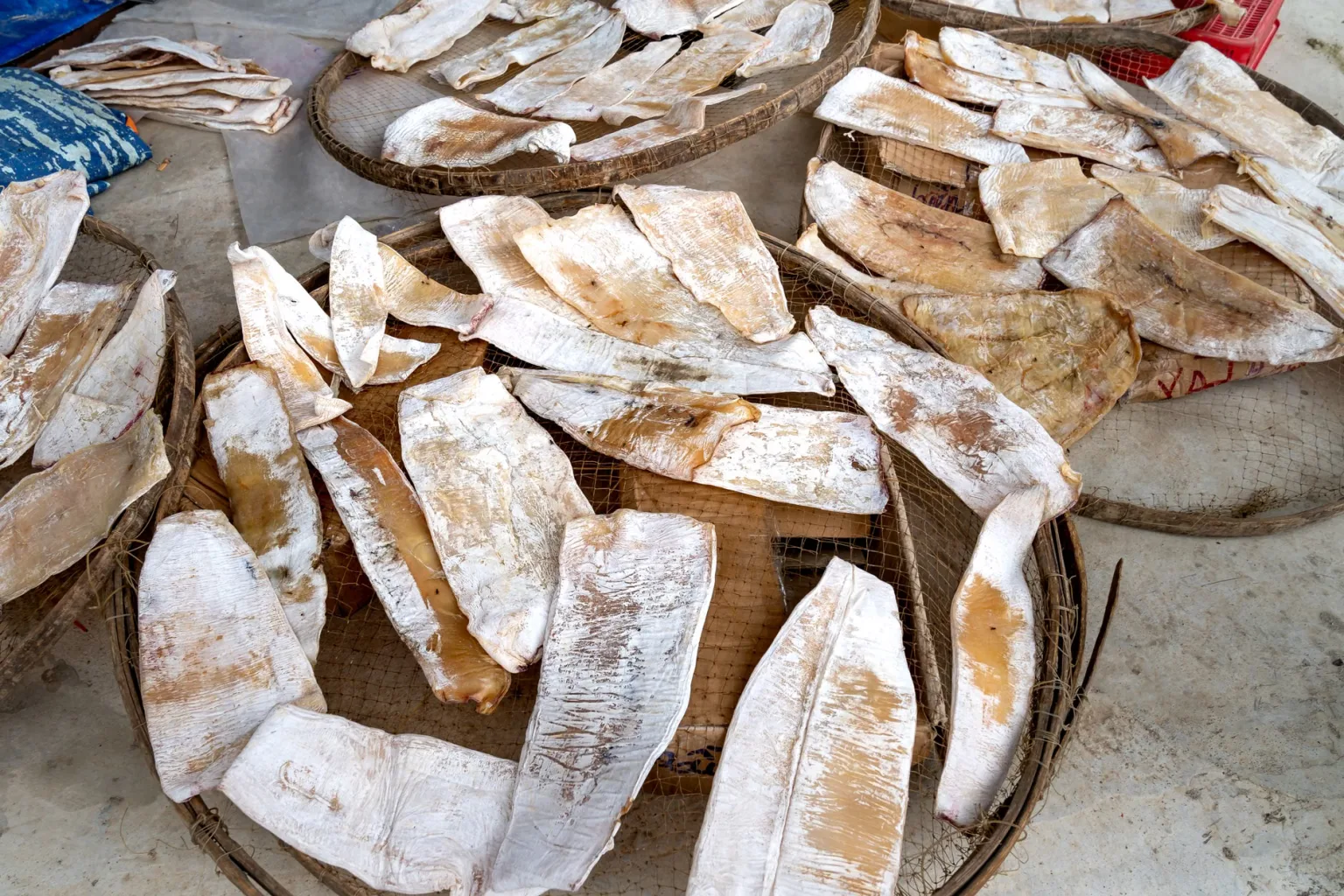
Dried salted cod is cod preserved by salting and drying. The loss of moisture and the curing process make it different from fresh cod and from cod sold already desalted. It is sold as pieces, loins or smaller cuts, and thickness affects how long soaking takes. Before cooking it as a main fish ingredient, it is usually rinsed and soaked in water, with the water changed several times. Once prepared, it has a more pronounced cured flavor than fresh fish; the final intensity depends on the cut and soaking. Do not mistake dried salted cod for a product labelled desalted and ready to cook.
When to use it
Choose dried salted cod when you want the distinctive cured flavor used in traditional dishes and have time to soak it in advance. It works in stews, bean dishes, croquettes, omelettes, scrambled preparations and fritters; thicker loins can also be served as the centerpiece, such as baked or cooked in sauce. Small pieces and flakes are convenient when the fish will be shredded or mixed with other ingredients. If you need to cook straight away, buy cod that is already desalted and follow the package directions.
How to use it
Rinse off surface salt and place the fish in a container with plenty of water. Keep it cold while soaking and change the water several times; the required time depends on the thickness and cut, so there is no single duration for every piece. Drain and taste a small piece before cooking. If it is still too salty, continue soaking in fresh water. Once desalted, add it to stews, bake it, or flake it for croquettes, omelettes, scrambled dishes and fritters. Reduce or omit added salt until you have checked the result. If the product is already desalted, do not soak it again unless the package says to.
Flavour and texture
Salting gives the fish a more intense, cured flavor than fresh cod. After soaking, the flesh is rehydrated and can separate into flakes; the result depends on the cut, thickness and degree of desalting. Thick pieces can be served whole, while flakes and small pieces are easy to work into fillings, omelettes and stews. Residual salt may be noticeable, so taste before seasoning the dish.
How to choose it
Check that the package clearly identifies the product as dried salted cod and distinguishes it from desalted or fresh cod. Choose the cut for the dish: thick pieces suit whole portions, while smaller pieces or flakes are convenient for shredding and mixing. Check that the package is intact and follow the seller’s or manufacturer’s storage directions. If you want to skip soaking, look for a product labelled desalted and ready to cook.
Storage
Store the dried product according to its package directions; the available information describes salted cod as suitable for a cool, dry place. Do not apply that advice to cod that has already been desalted. After soaking, drain it, keep it refrigerated and cook it promptly; the available information does not support one universal storage duration. Follow any more specific package instructions, and discard the product if the package is damaged or it shows unusual signs.
Substitutions
Already-desalted cod is the closest substitute: it avoids the soaking step, but may taste less intense, so adjust the salt in the recipe. Another firm white fish can work in stews or fritters, although it will not reproduce the cured flavor or behave exactly like cod. Adjust seasoning and check the texture as it cooks.
Common mistakes
Do not cook dried salted cod without first checking its saltiness; most uses require soaking. Do not assume one soaking time works for every cut: thick pieces and flakes desalinate differently. Avoid salting the dish from the outset, and do not soak a product that is already desalted unless the package instructs you to.
Safety and allergens
Cod is fish and may cause a reaction in people with a fish allergy. Keep it cold during soaking and use clean utensils; refrigerate it once desalted and follow the package instructions. Do not use a product with damaged packaging or an unusual appearance or smell.
Culinary uses
- Pescado curado para platos tradicionales
- Ingrediente principal o desmigado para guisos, frituras y rellenos
Recommended techniques
- Remojar en agua para desalar, con cambios de agua
- Cocer en guisos, hornear o desmenuzar una vez desalado
Pairs well with
- Patatas, tomate, pimientos y cebolla
- Garbanzos, aceitunas, ajo y aceite de oliva
Frequently asked questions
Does dried salted cod always need soaking?
For most recipes, yes: rinse and soak it with several water changes before cooking. Check the salt level, since the cut and thickness affect the result.
How long should I soak it?
There is no single time for every piece. It depends on thickness and cut; change the water and check the taste before cooking.
Can I substitute already-desalted cod?
Yes. It is a convenient option when you do not have time to soak the salted product. Adjust the recipe’s salt and follow the package storage instructions.
Ingredient allergens
Allergen listThere are no verified associations for these ingredients yet.
Estimated nutrition
- Fat
- 2.37 g
- Saturates
- 0.46 g
- Carbohydrate
- 0 g
- Sugars
- 0 g
- Fibre
- 0 g
- Protein
- 62.8 g
- Salt
- 17.58 g
Sources and review
Automatically researched, cross-checked and validated content. Sources consulted:
- Client Challenge doi.org/10.2307/jj.27939689.16
- Bacalao salado o desalado: qué corte elegir | Yubero Gourmet yuberogourmet.es/bacalao-salado-o-desalado-que-corte-elegir/
- Agencia Española de Seguridad Alimentaria y Nutrición www.aesan.gob.es/
- Migas - Wikipedia, la enciclopedia libre es.wikipedia.org/wiki/Migas
- Comité Científico aesan.gob.es/dam/jcr:3c94ae83-1384-420c-96c1-0c2aa6f1544e/comite_cientifico_34.pdf
- ¿Por qué el mar es salado? doi.org/10.64628/aao.gqqdwagtm
- Bacalao: Qué es, y Como Hacer Ricas Recetas de Bacalao www.cocinadominicana.com/recetas-bacalao-como-cocinar
- lemmas.txt downloads.cs.stanford.edu/nlp/data/CoNLL17_Parser_Models/Spanish/Spanish-Parser/lemmas.txt
- Evolución del léxico culinario desde 1932 a 1972 | OpenAlex openalex.org/W2291578502
- ¿Te gusta lo salado?: Conoce los secretos detrás de la historia del bacalao, platillo cotizado en Nochebuena - Infobae www.infobae.com/mexico/2023/12/24/te-gusta-lo-salado-conoce-los-secretos-detras-de-la-histor…
- Bacalao Fresco vs Desalado vs Salado: guía 2026 | Bacalalo bacalalo.com/blogs/bacalao/bacalao-fresco-vs-desalado-vs-salado-skrei-comparativa-2026?srslt…
- Bacalao seco y bacalao fresco: diferencias, usos y cuándo elegir cada uno - El Blog de EsdeMercado blog.esdemercado.com/bacalao-seco-vs-bacalao-fresco/
- - YouTube www.youtube.com/watch?v=TbQt_lsVVys
- Cómo hacer bacalao seco en casa | Umami Madrid www.umami-madrid.com/2012/05/25/como-hacer-bacalao-seco-casero/
- Food allergen labelling and information requirements technical guidance - GOV.UK www.gov.uk/government/publications/food-allergen-labelling-and-information-requirements-tech…