- Category
- Fruit
- State
- Dry
- Usual unit
- g
What it is
Dried shredded coconut is made from the white flesh of the coconut, which is dried and shredded. It is sold in fine, medium, and coarse cuts, and products can differ in fat content and processing: some are natural, while others are toasted or sweetened. As a result, different packages may behave differently in a recipe. Fine shreds blend readily into batters and fillings; larger cuts give a more noticeable texture as a topping or in cereals. Check the ingredient list and product description to see which kind you have.
When to use it
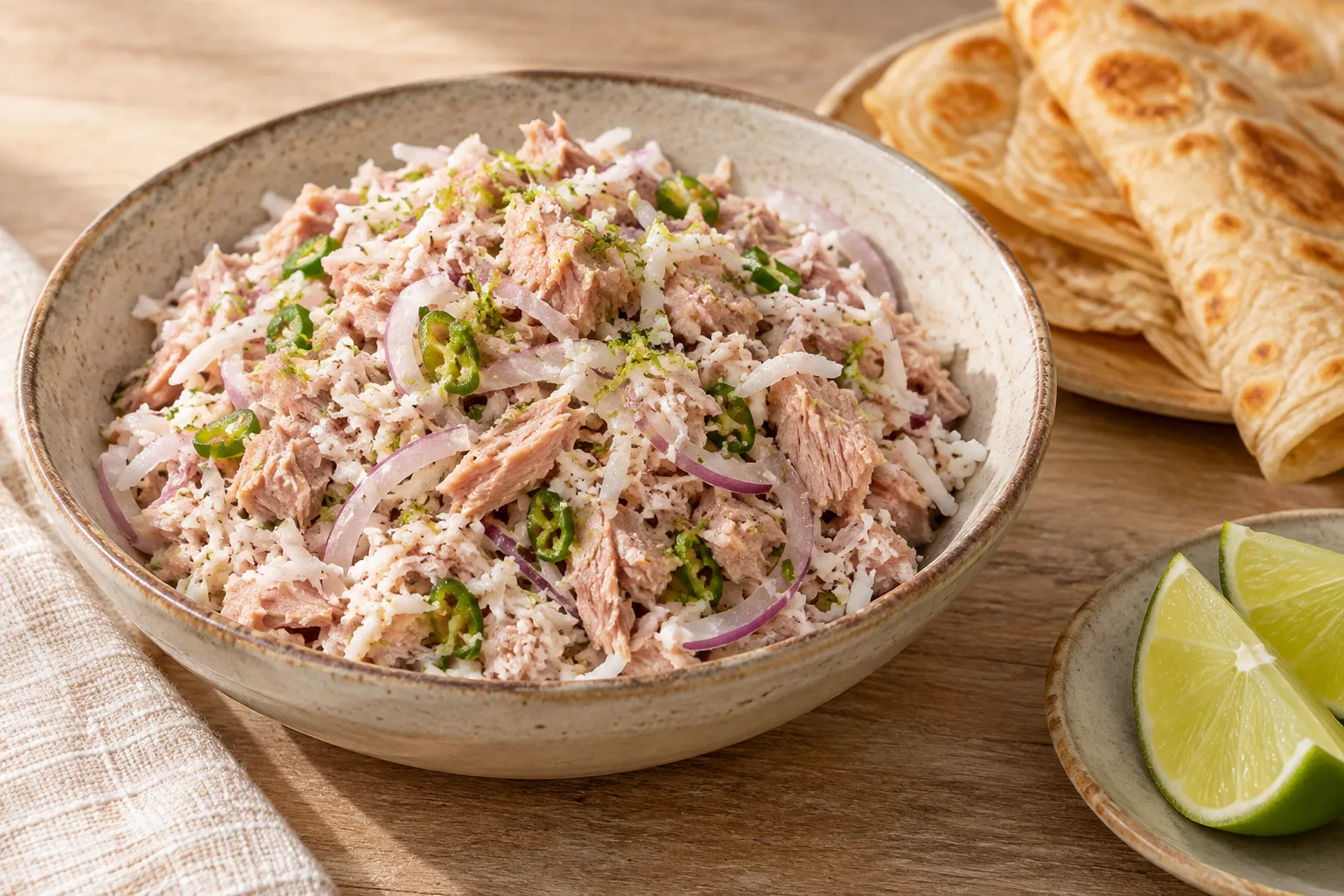
Use it when you want coconut flavor and a fibrous texture in baked goods, fillings, cereals, or snacks. It can also be added to savory preparations such as rice, salads, stews, and sauces. Choose a cut to suit the result: fine shreds blend more readily into batters and fillings, while medium or coarse shreds can stand out as a topping or in crunchy mixes. If a recipe calls for sweetened, toasted, or specifically higher- or lower-fat coconut, check that the package matches those requirements.
How to use it
Add it directly to batters, fillings, cereals, snacks, or sauces, using the amount specified by your recipe. You can also sprinkle it over a dish for visible texture. Choose fine shreds when you want an even distribution and a coarser cut when you want the strands to be more noticeable. Some products are toasted or sweetened, so check the package before using them, particularly when you need to control sweetness or toasted flavor. If substituting fresh grated coconut, remember that it may be juicier and you may need to adjust the recipe’s liquids. Follow the package instructions for storage.
Flavour and texture
It has a distinctive coconut flavor and a dry, fibrous, crumbly texture. Shred size affects how noticeable the strands are: fine shreds blend in more, while coarse shreds provide more bite. Products may be natural, toasted, or sweetened, so flavor and behavior vary with processing and the package specification.
How to choose it
Choose the shred size for the intended use: fine for batters and fillings, and medium or coarse for toppings, cereals, or snacks. Check whether the product is natural, toasted, or sweetened, and read the ingredient list. Fat content and specifications can vary between products, so check the label when your recipe depends on them.
Storage
Store dried shredded coconut according to the package instructions, since recommended storage and shelf life depend on the specific product. After opening, close the package as directed on the label and avoid leaving the coconut exposed to moisture. If the package does not give clear instructions, consult the manufacturer’s product information before storing it for an extended period.
Substitutions
Fresh grated coconut can replace dried shredded coconut, but it may be juicier, so you may need to reduce other liquids. Toasted shredded coconut can also work when its flavor suits the recipe. Check the cut and whether the product contains added sugar, as these differences affect the result.
Common mistakes
Do not assume every product is interchangeable: cut, fat content, and processing can vary. Avoid replacing dried coconut with fresh coconut without accounting for its juicier texture. Using a sweetened or toasted version without considering the change can also affect the balance of a recipe.
Safety and allergens
Check the ingredient list and package directions, especially if you need to avoid added ingredients or have a food allergy. Coconut can cause allergic reactions in some people. Follow the manufacturer’s storage instructions.
Culinary uses
- Adds coconut flavor and texture to baked goods and desserts
- Provides a textural topping or ingredient in cereals, snacks, sauces, and savory dishes
Recommended techniques
- Mix into batters, fillings, cereals, or sauces
- Sprinkle over dishes as a topping
- Toast, if the product is suitable for that use
Pairs well with
- Cakes, biscuits, pastries, and other baked goods
- Cereals and snack mixes
- Rice, salads, stews, and sauces
Frequently asked questions
What recipes can use dried shredded coconut?
It can be mixed into baked goods, fillings, cereals, snacks, and sauces, or used in savory dishes such as rice, salads, and stews.
Which shred size should I choose?
Fine shreds usually blend more readily into batters and fillings. Medium or coarse shreds give a more noticeable texture in toppings, cereals, and snacks.
Can I substitute fresh grated coconut?
Yes, but fresh coconut may be juicier. Take that into account and adjust the recipe’s liquids if needed.
Ingredient allergens
Allergen listThere are no verified associations for these ingredients yet.
Estimated nutrition
- Fat
- 35.5 g
- Saturates
- 31.5 g
- Carbohydrate
- 47.7 g
- Sugars
- 43.2 g
- Fibre
- 4.5 g
- Protein
- 2.88 g
- Salt
- 0.66 g
Sources and review
Automatically researched, cross-checked and validated content. Sources consulted:
- Client Challenge doi.org/10.2307/jj.27939689.16
- The Essential Glossary of Cooking Terms for the Culinary Arts - Escoffier www.escoffier.edu/blog/culinary-arts/the-essential-glossary-of-cooking-terms-for-the-culinar…
- El coco rallado: Historia, Curiosidades y Usos ruca.es/el-coco-rallado-historia-curiosidades-y-usos/
- Propiedades del Coco Rallado | Beneficios y Contradicciones frutossecoshernandez.es/coco-rallado-propiedades/
- Aceite de coco y otros derivados | Recetas Nestlé www.recetasnestle.com.ec/escuela-sabor/trucos-caseros/derivados-del-coco
- - YouTube www.youtube.com/watch?v=hYw-YVGXatQ
- Quédate en casa y cocina: Menú semanal (jueves) www.cordonbleu.edu/madrid/quedate-en-casa-y-cocina-menu-semanal-jueves/es
- Coco rallado deshidratado | Especificaciones | Cardassilaris www.cardassilaris.com/es/dried-fruits/desiccated-coconut
- 4 Derivados del coco para tu cocina – Casa Perris casaperris.com/blogs/general/4-derivados-del-coco-para-tu-cocina?srsltid=AYCX9vL20jyy-j_xn2j…