- Category
- Grains, flour and pasta
- State
- Dry
- Usual unit
- cup
What it is
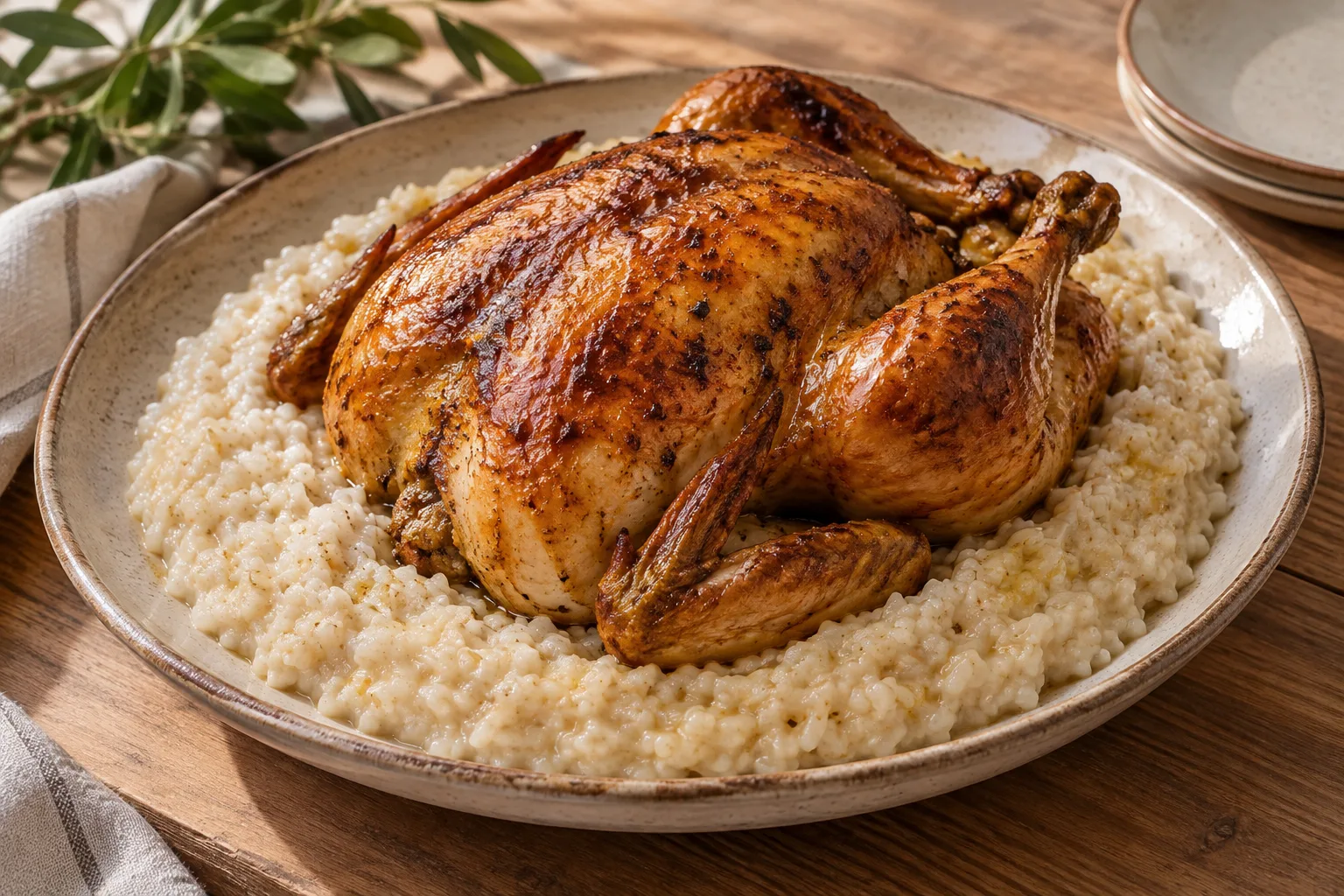
In the available evidence, Egyptian rice is a recipe name rather than a sufficiently precise designation for a particular rice variety, grain size or agricultural origin. The documented preparations are not all the same. One version softens onion in butter, adds rice, then cooks it with broth, crushed tomato and chosen spices, with cilantro highlighted as an option. Another preparation, called mashi, cooks rice with seasoned minced meat and finishes it with nuts such as pine nuts, almonds and pistachios. The name can therefore refer to different styles of dish. When buying the ingredient, look for dry rice and check the type on the package if the recipe specifies one; the word “Egyptian” alone does not identify the grain or its characteristics.
When to use it
Use it when a recipe calls for a rice preparation of this kind and provides directions for the combination. It can form the base of a dish with onion, tomato, broth and spices, or a more substantial preparation with minced meat and nuts. Choose the rice to suit the particular recipe: the available information does not establish one grain type for every version. If the package or recipe names a variety, follow that guidance. The name alone also does not establish a season for use or guarantee the same result across different recipes.
How to use it
Start by reading the recipe and the package directions, because the name does not define one specific variety or method. For a simple version, brown onion in butter, add the rice and stir briefly; then add broth mixed with crushed tomato and the chosen spices, cover and cook until the liquid is absorbed. Another version cooks minced meat with cinnamon, nutmeg, salt and pepper, adds water and rice, and finishes the dish with toasted nuts. These are different preparations, not steps that must necessarily be combined. Adjust the liquid and cooking method to the specific rice you use and to its package instructions.
Flavour and texture
Flavor and texture depend on the rice selected and the ingredients in each preparation; the name does not promise one defining profile. In one version, onion and butter provide a savory base, while tomato, broth and spices season the rice. Another combination includes seasoned meat and toasted nuts, with warm notes of cinnamon and nutmeg. There is not enough evidence to assign Egyptian rice a characteristic grain, aroma or cooked texture.
How to choose it
Buy dry rice in an intact package and check the label for the grain type and cooking directions. The name “Egyptian rice” alone does not confirm a particular variety or origin. If you are following a specific recipe, choose the rice it names; if it does not specify one, expect results to vary with the product. Also check that the package has no visible moisture or damage.
Storage
Keep dry rice in a closed package or a clean, dry container, protected from moisture. Follow any storage instructions on the label. The name “Egyptian rice” does not indicate a special shelf life, and the available evidence does not establish a product-specific storage period. Once opened, keeping the rice tightly closed helps prevent it from becoming damp or picking up odors from other foods.
Substitutions
The available evidence identifies neither a direct substitute nor one definitive variety of Egyptian rice. If a recipe calls for a particular rice type, choosing that type is the most reliable approach. If you decide to use a different rice, check its package directions and adapt the liquid and cooking method to that product; do not assume the quantities or result will be identical. The documented preparations also differ in their other ingredients, but changing those accompaniments is not the same as substituting the rice.
Common mistakes
A common mistake is treating “Egyptian rice” as though it always means one variety or one universal recipe. The available preparations differ in ingredients and method, so choose one version and follow it rather than combining directions without adjustment. Do not assume every rice needs the same amount of liquid or cooking time either: check the package and adapt the method to the rice you have.
Safety and allergens
Keep dry rice protected from moisture and follow the package and recipe directions. Check the labels of added ingredients, especially if making a version with nuts.
Culinary uses
- Base for a cooked rice dish
- Carrier for broth, tomato and spices
- Ingredient in rice dishes with meat and nuts
Recommended techniques
- Toast the rice briefly in butter or oil before adding liquid
- Cook covered with broth and tomato until the liquid is absorbed
- Cook rice with seasoned minced meat and fold in toasted nuts
Pairs well with
- Tomato and broth
- Cilantro and other chosen spices
- Minced beef or lamb
- Pine nuts, almonds and pistachios
Frequently asked questions
Is Egyptian rice a specific rice variety?
The available evidence does not identify it as one specific variety. The name is associated with different rice preparations.
What ingredients appear in these preparations?
One version combines onion, butter, rice, broth, tomato and spices. Another includes rice, minced meat, seasoning and nuts.
Can I use any type of rice?
There is not enough information to say that all rice types are interchangeable. Use the type named by the recipe and check the package directions.
Ingredient allergens
Allergen listThere are no verified associations for these ingredients yet.
Sources and review
Automatically researched, cross-checked and validated content. Sources consulted:
- ¿Por qué la muerte es origen de miedos y tabúes? doi.org/10.64628/aao.fccyk3qj3
- Client Challenge doi.org/10.2307/jj.27939689.16
- Vinagre - Wikipedia, la enciclopedia libre es.wikipedia.org/wiki/Vinagre
- Agencia Española de Seguridad Alimentaria y Nutrición www.aesan.gob.es/
- Desarrollo de un pan de masa madre rico en GABA y péptidos ... diposit.ub.edu/bitstreams/c65d2e73-d41c-4715-b8e0-cc85adfa9c24/download
- Historia de la gastronomía de España - Wikipedia, la enciclopedia libre es.wikipedia.org/wiki/Historia_de_la_gastronom%C3%ADa_de_Espa%C3%B1a
- Propuesta de aplicación de técnicas de elaboración de pasta con especias dulces en preparaciones de cocina de autor | OpenAlex openalex.org/W2935162661
- Café & Menta: Receta #16: Arroz egipcio cafeymenta.blogspot.com/2016/05/receta-16-arroz-egipcio.html
- Mashi (Arroz Egipcio) - Grupo Gastronómico El Almirez www.google.com/goto?url=CAESZwHrOzAVZvhzKsVPxuW_ZGa4xOaXQPQIzqIrM2hSjN2cVmKbwwXAm5dy1ZK-JtOX…
- El cáñamo (Cannabis sativa L.): usos tradicionales e interés de sus semillas en alimentación y salud | OpenAlex openalex.org/W3170339604