- Category
- Meat
- State
- Fresh
- Usual unit
- g
What it is
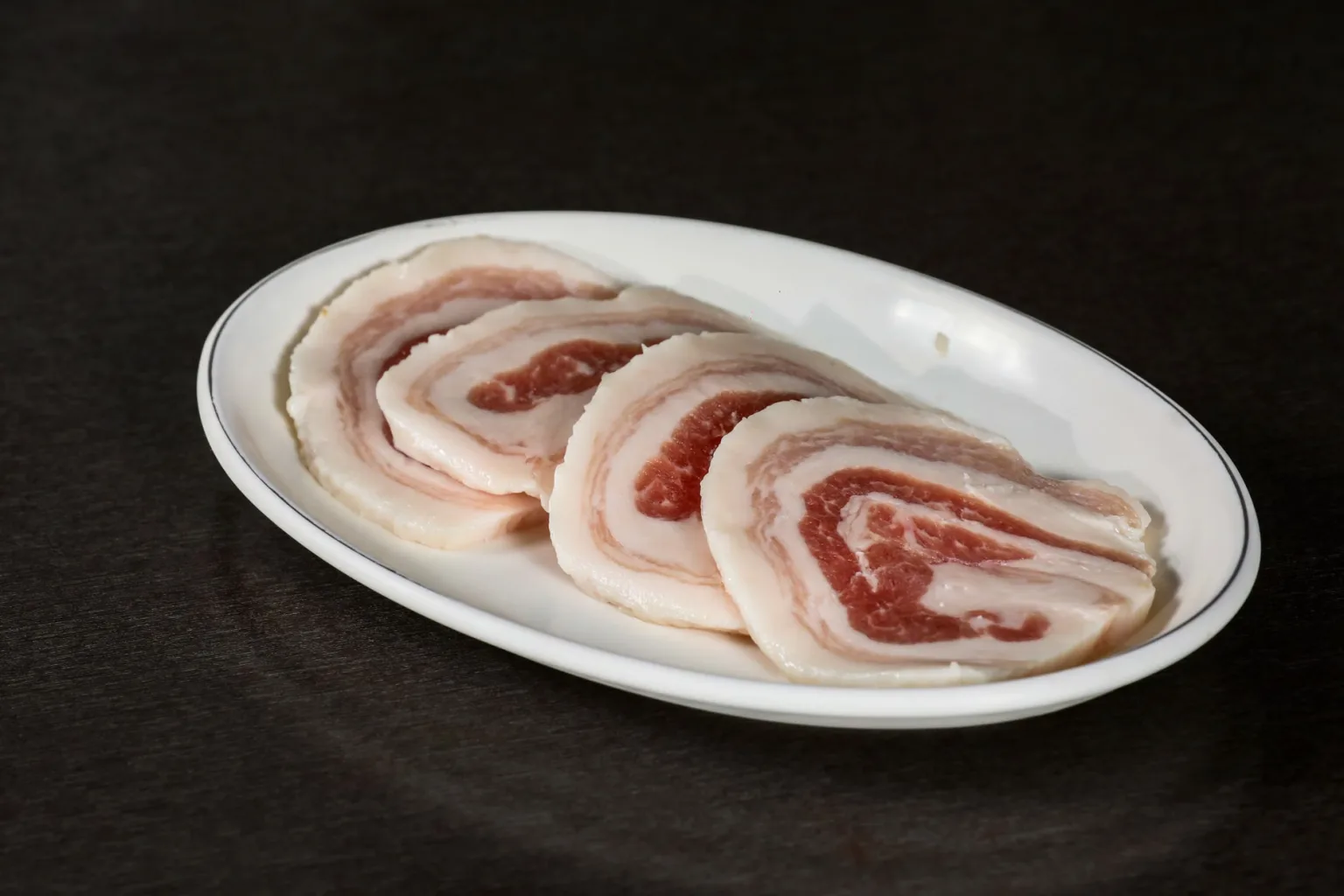
Fatty pork is a general description for pork with a noticeable amount of visible or interspersed fat; it does not identify one particular cut or a fixed fat ratio. It may be sold as a piece or ground, and the amount of fat varies with the cut and the product. In cooking, the fat can enrich a meat mixture and be part of sausage preparations, while the lean portion provides the meat structure. Before cooking, check whether the fat is distributed through the meat or concentrated in visible areas. This profile refers to fresh pork, not to rendered lard on its own or to a cured product.
When to use it
Choose fatty pork when a recipe calls for a mixture of pork meat and fat, such as sausage or another ground-meat preparation that needs that component. It can also be used in cooked dishes when the cut and fat level suit the intended result. If a recipe specifies lean meat, a very fatty piece may change the texture and leave more fat in the finished dish. If it calls for added pork fat, do not assume that every fatty cut replaces it in the same proportion. Check the product description and adjust the mixture to the specific recipe.
How to use it
Keep the pork refrigerated until preparation, and work with clean hands, utensils and surfaces. For a sausage mixture, grind or mix it as the recipe directs and season with suitable amounts of salt and pepper; cook the finished product according to reliable instructions for that preparation. When pan-frying, some fat may render, so do not automatically add extra cooking fat before checking how the pork behaves. For a stew or braise, use the cut as directed by the recipe and adjust liquid and cooking to that specific preparation rather than assuming all cuts behave alike. Wash surfaces and utensils that have touched raw meat before using them again.
Flavour and texture
The balance of lean meat and fat affects the richness and texture of a dish. Fat may melt during cooking and contribute a rich, unctuous quality, while the lean portions retain the texture of meat. The result depends on the cut, piece size and cooking method, so the general label “fatty pork” does not promise one uniform flavor or texture.
How to choose it
Look for a label that clearly identifies pork and, if available, the cut. Check how much fat is visible and how it is distributed to see whether the product suits your recipe: a cut with visible fat is not necessarily the same as separated fat or a defined fat ratio. Choose an intact package and keep it cold while shopping and transporting it. If a recipe requires a particular amount of fat, check the product details rather than relying on a broad name alone.
Storage
Treat pork as perishable: keep it refrigerated and follow the storage directions and date on the package. Avoid leaving it at room temperature while preparing other ingredients. If you will not use it soon, pork can be frozen; for longer-term preservation, use a tested method suitable for meat, since preservation methods are not interchangeable. After handling raw pork, wash hands, cutting boards, utensils and surfaces with soap and water.
Substitutions
A mixture of rabbit meat and rabbit fat has been used in place of pork meat and fat in a sausage preparation, though the result may differ. Another documented approach for lean game meat is to add pork fat before grinding. Neither is a universal one-for-one replacement: follow the recipe’s proportions and consider how much lean meat and fat each product contributes.
Common mistakes
Do not assume that every cut described as fatty contains the same proportion of fat or can directly replace separated fat. Avoid adding oil or other fat automatically before seeing how much the pork releases during cooking. Another common lapse is neglecting to clean up after handling raw meat or leaving it unrefrigerated while preparing other ingredients.
Safety and allergens
Keep pork refrigerated, use clean hands and utensils, and wash surfaces after contact with raw meat. Cook the product according to official instructions appropriate to the specific preparation; there is no single temperature provided here that applies to every form of pork.
Culinary uses
- Meat for sausages and other ground-meat preparations
- Fat component that can enrich meat mixtures and cooked dishes
Recommended techniques
- Pan-frying
- Braising or stewing
- Grinding and mixing for sausage
Pairs well with
- Salt and pepper
- Broth or cooking liquid
Frequently asked questions
Is fatty pork the same as lard?
Not necessarily. Fatty pork means meat with visible or interspersed fat; lard is rendered, separated fat.
Can fatty pork be used for sausage?
It can be included in sausage mixtures. Use the meat-to-fat balance specified by the recipe.
Can I freeze fatty pork?
Pork can be frozen. Follow the package directions and use clean food-handling practices.
Ingredient allergens
Allergen listThere are no verified associations for these ingredients yet.
Sources and review
Automatically researched, cross-checked and validated content. Sources consulted:
- The Essential Glossary of Cooking Terms for the Culinary Arts - Escoffier www.escoffier.edu/blog/culinary-arts/the-essential-glossary-of-cooking-terms-for-the-culinar…
- Supervivencia Básica: Alimentos | Servicio de Extensión de OSU extension.oregonstate.edu/es/catalog/em-9331-s-supervivencia-basica-alimentos
- Vamos a Conservar Alimentos: Carnes extension.psu.edu/vamos-a-conservar-alimentos-carnes/
- estandarización de la formulación de hamburguesas de carne ... scholar.uprm.edu/bitstreams/33166108-8a2a-4fde-b253-0af70905c852/download
- La carne de cerdo, pilar de la cocina tradicional – Ibéricos Alhandiga ibericosalhandiga.com/la-carne-de-cerdo-pilar-de-la-cocina-tradicional/
- Healthy Eating Plan for Weight Management med.uc.edu/docs/default-source/mobility-study/healthy-eating-and-physical-activity-plan-(spa…
- Revista del comité científico de la aecosan número 24 aesan.gob.es/dam/jcr:979384c0-5bd9-46d4-a29e-ccf5876c769c/RCC_24.pdf
- Efecto de la sustitución de la carne y grasa de cerdo por la carne y grasa de conejo, en las características físicas y química de la longaniza artesanal, Cobán, Alta Verapaz | Revista Ciencia Multidisciplinaria CUNORI doi.org/10.36314/cunori.v1i1.43
- 3332 - Revista Economia Agraria 13.indb - AgEcon Search ageconsearch.umn.edu/record/97378/files/Schnetler%20et%20al.pdf
- Desarrollo y caracterización fisicoquímica de una torta de ... bdigital.zamorano.edu/bitstreams/7f067517-248b-49b8-a7d9-120e6e39e248/download
- - YouTube www.youtube.com/watch?v=g7RstjKJcUc
- Características de la carne de cerdo - GRUP ALIMENTARI DISTECO disteco.com/caracteristicas-de-la-carne-de-cerdo/