- Category
- Bread and dough
- State
- Fresh
- Usual unit
- unit
What it is
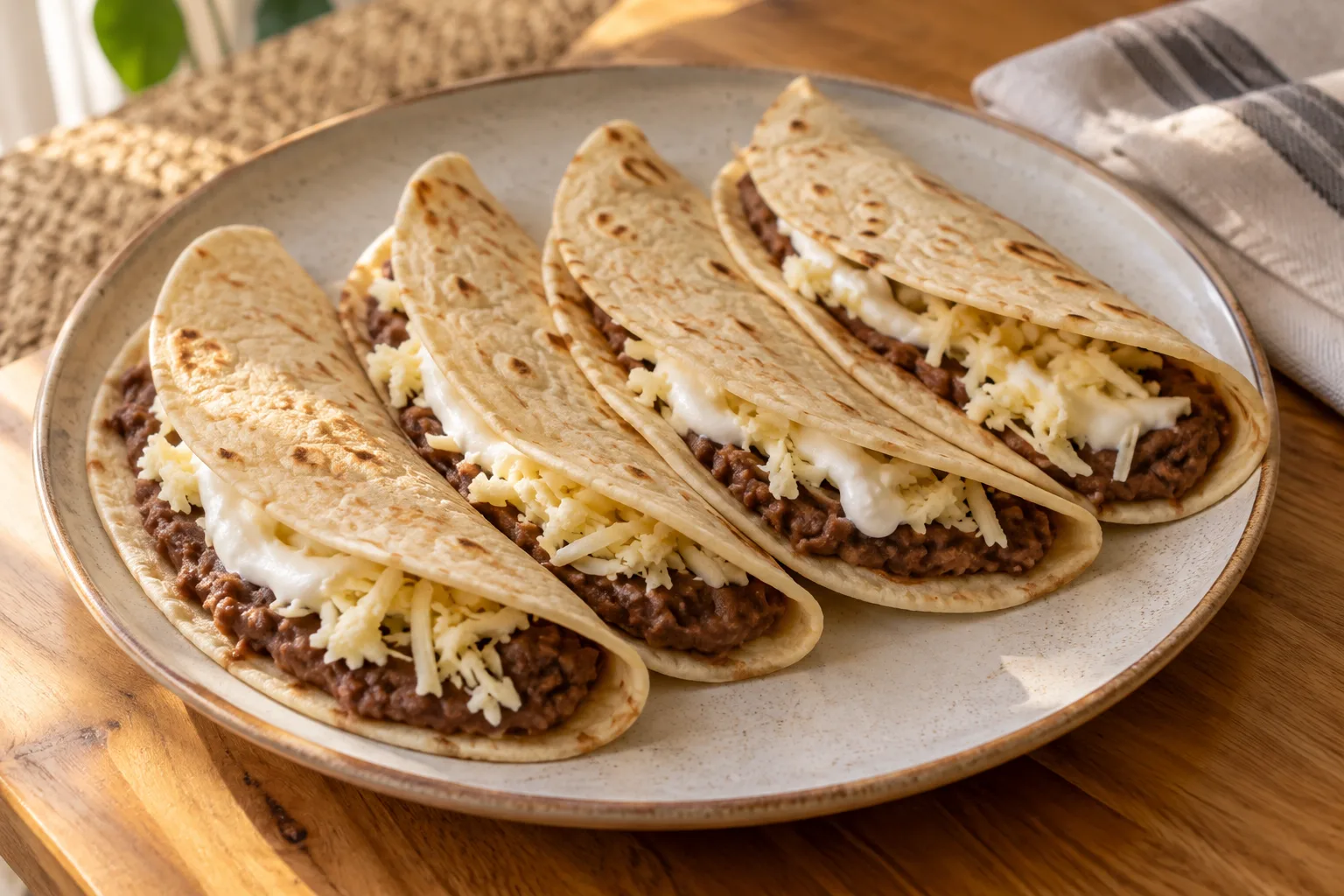
A flour tortilla is a thin, flexible flatbread made mainly from wheat flour. Commercial versions commonly include water, a fat, and salt, while the recipe and additional ingredients differ by product. It is distinct from a corn tortilla: wheat flour gives it a pliable, elastic texture that works well for wrapping fillings. Tortillas also vary in size and thickness. They are sold ready to heat and eat, although the package directions indicate whether a particular product needs any specific preparation. Check the ingredient list to understand the composition of the tortillas you buy, since products are not all made the same way.
When to use it
Choose flour tortillas when you want a flexible wrap that can fold or roll around a filling. They are useful for burritos, wraps, and some quesadillas, and can also accompany a meal in place of bread. Larger tortillas can be convenient for generous fillings, but check the product’s dimensions and flexibility. If you want the flavor or texture of corn, a flour tortilla is not an identical replacement: it behaves differently and can change the result of a dish.
How to use it
Start by checking the package directions, since preparation guidance can vary by product. To serve the tortillas warm, heat them briefly in a skillet or on a griddle, turning them if needed; do not leave them over heat longer than necessary if you want them to stay flexible. Add filling without overloading the tortilla, leaving room around the edges to fold or roll it. For a burrito or wrap, fold in the sides and roll the tortilla around the filling. For a quesadilla, add filling to one half, fold the other half over it, and heat until the outside is browned and the filling is hot. Use clean equipment and follow the product’s preparation instructions.
Flavour and texture
Their flavor is usually mild and gently wheaty, so they work with a range of fillings and seasonings without overpowering them. The characteristic texture is tender and pliable, with enough elasticity to fold or roll. Thickness, size, and ingredients vary between brands and styles, so some tortillas may feel firmer or less flexible than others. Warming can make them easier to roll, while excessive heating can dry them out and make them brittle.
How to choose it
Check that the product is labelled as a flour or wheat tortilla, and read the ingredient list to see what it contains. Some versions use whole-wheat flour, seeds, or other ingredients; do not assume every product has the same recipe. Choose a size that suits your use: a larger tortilla makes it easier to wrap a filling, while a smaller one can suit a lighter portion. Also check the package directions for storage and the date shown on the label, and remember that wheat tortillas contain wheat and gluten.
Storage
Store tortillas according to the package directions and follow the stated date and use instructions. Keep the package closed between uses as directed on the label to help prevent the tortillas from drying out. If the package specifies refrigeration after opening, follow that instruction. There is no single storage period that applies to every brand and package: recipes, packaging, and product directions can differ.
Substitutions
Corn tortillas can replace flour tortillas in some dishes, but their texture is not identical: wheat tortillas are usually more elastic and easier to roll. Choose according to the flavor and structure your recipe needs. Another flexible wheat flatbread may serve a similar purpose in a wrap, although its size and consistency can differ. Check the ingredients of any substitute if wheat or gluten must be avoided.
Common mistakes
Do not assume every flour tortilla has the same size, flexibility, or ingredients. Avoid overfilling one, since it may be difficult to close without tearing or spilling the filling. Do not heat it for too long: it can dry out and lose flexibility. Finally, do not assume a corn tortilla is an identical substitute; its texture and behavior when folded are different.
Safety and allergens
Read the label for ingredients and storage and preparation directions. These tortillas contain wheat and gluten; do not serve them to anyone who needs to avoid those ingredients. Follow any specific storage instructions on the package.
Culinary uses
- Base flexible para wraps, burritos y tacos
- Acompañamiento o envoltura para rellenos salados
Recommended techniques
- Calentar brevemente en una sartén o plancha
- Rellenar y doblar o enrollar
- Dorar en sartén con un relleno, como en una quesadilla
Pairs well with
- Frijoles, verduras y aguacate
- Queso y rellenos de carne o vegetales
Frequently asked questions
Are flour and corn tortillas the same?
No. They are made from different grains and usually differ in texture and flexibility. Wheat flour tortillas are generally easier to roll.
How can I warm flour tortillas?
Warm them briefly in a skillet or on a griddle. Follow the package directions and avoid overheating them so they do not dry out.
Do flour tortillas contain gluten?
Tortillas made with wheat flour contain gluten. Always check the product’s ingredient list and label.
Ingredient allergens
Allergen listThere are no verified associations for these ingredients yet.
Estimated nutrition
- Fat
- 7.84 g
- Saturates
- 1.96 g
- Carbohydrate
- 49 g
- Sugars
- 0 g
- Fibre
- 2 g
- Protein
- 7.84 g
- Salt
- 1.84 g
Sources and review
Automatically researched, cross-checked and validated content. Sources consulted:
- The Essential Glossary of Cooking Terms for the Culinary Arts - Escoffier www.escoffier.edu/blog/culinary-arts/the-essential-glossary-of-cooking-terms-for-the-culinar…
- Evaluación de harina de amaranto como ingrediente antioxidante para la preparación de matrices alimentarias funcionales doi.org/10.35537/10915/162211
- Tortilla de maíz - Wikipedia, la enciclopedia libre es.wikipedia.org/wiki/Tortilla_de_ma%C3%ADz
- How to Make Corn Tortillas From Scratch | Institute of Culinary Education www.ice.edu/blog/how-make-corn-tortillas-scratch
- ¡Manos en la masa! - Berkeley Food Institute food.berkeley.edu/from-the-field/manos-en-la-masa/
- Para la ciudadanía www.aesan.gob.es/para-la-ciudadania
- Corn Tortillas Near Me Locating Traditional Mexican Goodness ~ cms.ncwc.edu cms.ncwc.edu/corn-tortillas-near-me/
- Fortified Corn Flour Tortillas scholarsarchive.byu.edu/cgi/viewcontent.cgi?article=1174&context=facpub&httpsredir=1&referer…
- Tortillas de Trigo: Origen, Curiosidades y Recetas abarrotes.es/blog/tortillas-trigo-origen-curiosidades-recetas/
- - YouTube www.youtube.com/watch?v=Qpr8zCP7T4I
- Tortillas de trigo: ingredientes y composición | Consumer www.consumer.es/alimentacion/tortillas-trigo-ingredientes-y-nutrientes
- Tortilla de maíz y tortilla de harina: ¿cuál es mejor? - Mejor con Salud mejorconsalud.as.com/dieta/nutricion/tortilla-maiz-tortilla-harina-cual-es-mejor/
- La tortilla como identidad culinaria y producto de consumo global www.scielo.org.mx/scielo.php?pid=S1870-39252016000200161&script=sci_arttext
- Food allergen labelling and information requirements technical guidance - GOV.UK www.gov.uk/government/publications/food-allergen-labelling-and-information-requirements-tech…