- Category
- Grains, flour and pasta
- State
- Dry
- Usual unit
- cup
What it is
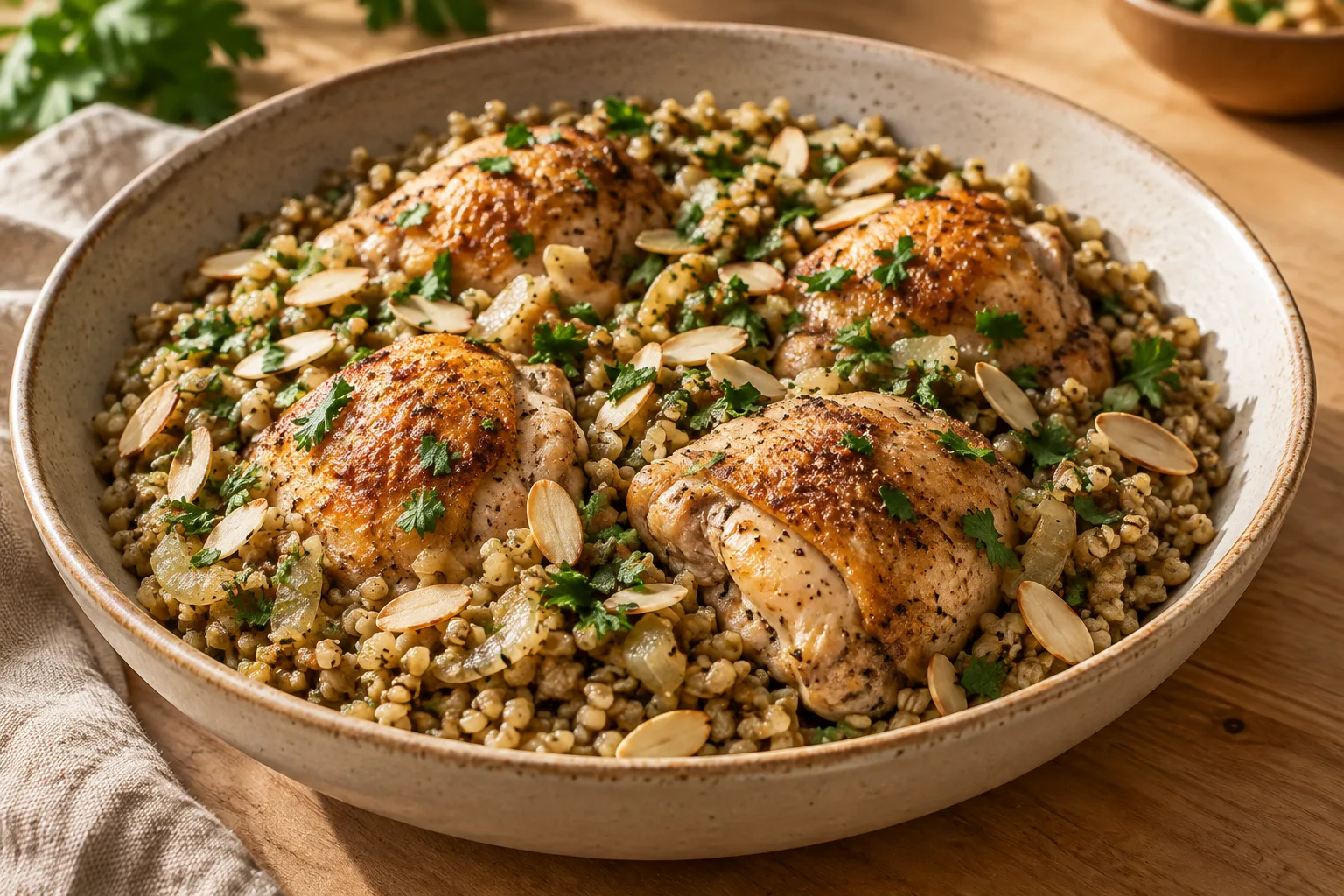
Freekeh, also spelled frikeh or called farik, is made from wheat harvested while still green, before it reaches full maturity. The grain is dried and toasted, then cleaned; it may be sold whole or cracked into different sizes. It is not a separate or wheat-free cereal, but a wheat grain processed in a distinctive way. In the kitchen, freekeh is cooked and used much like rice or quinoa, though its firm texture and toasted, slightly vegetal notes give it a character of its own. Whole and cracked freekeh may behave differently in the pot, so check the package directions rather than assuming every product cooks alike.
When to use it
Choose freekeh when you want a substantial grain for a salad, tabbouleh-style dish, side, soup, or stew. Its toasted character works with vegetables, herbs, tomato, onion, and lentils; it is also used in dishes with chicken or lamb. It can stand in for rice in pilafs and soups, or for quinoa in some salads. Because it is made from wheat, it is not suitable when wheat or gluten must be avoided. If you want a particularly tender result or need to plan the cooking, check whether your product is whole or cracked and follow its package directions.
How to use it
Measure the freekeh and cooking liquid according to the package: water needs and cooking time can differ by grain size and product. As a culinary guide, some recipes use about two parts water to one part freekeh and simmer it until the liquid is absorbed and the grains are tender and separate; this is not a universal rule. For a more pronounced aroma, briefly toast the dry grains in a pan before adding liquid. Once cooked, toss them with vegetables, herbs, tomato, or lentils for a salad; serve as a side, or add them to soups and stews. Taste for doneness and use the package instructions as your primary guide.
Flavour and texture
Freekeh has a toasted, smoky flavor with vegetal notes and, in some descriptions, a hint reminiscent of nuts. Cooked grains stay substantial and firm, with a texture often compared to barley. The exact bite depends on whether the product is whole or cracked. Briefly toasting it before cooking can bring its aroma forward. To keep the grains distinct, avoid cooking them until they fall apart and follow the package guidance for liquid.
How to choose it
Look for freekeh sold whole or cracked, and choose the form that suits your recipe: different sizes may call for different cooking adjustments. Read the package for product-specific directions and check the ingredient information if you need to manage allergens. Do not choose freekeh as a gluten-free grain: it is made from wheat. If you want a distinct, firm bite, consider the grain form and the texture you want rather than relying on the product name alone.
Storage
Freekeh is sold as a dry grain. Keep its packaging and follow the manufacturer’s storage directions, which apply to that particular product. After opening, keeping it closed in a dry place helps protect it from moisture and outside odors. Avoid combining a new purchase with old leftovers, and check the grain’s appearance and smell before cooking. There is no single storage duration that applies to every package; use the label and the producer’s guidance.
Substitutions
Rice can replace freekeh in pilafs, soups, or side dishes, though the toasted flavor and firm texture will differ. Quinoa can work in some salads or as a side. Couscous may suit certain dishes but will not reproduce freekeh’s exact size or bite. Adjust the liquid, cooking, and seasoning to the substitute you choose. These alternatives are not equivalent when a recipe specifically depends on wheat or freekeh’s characteristic flavor.
Common mistakes
Do not assume every freekeh cooks the same way: whole and cracked grains may need different adjustments, so check the package and taste as it cooks. Avoid relying on a fixed liquid ratio without checking the product directions. Another important mistake is treating freekeh as gluten-free; it is made from wheat. Toasting is an optional, brief step to develop aroma, not a replacement for cooking.
Safety and allergens
Freekeh is made from wheat and the available sources describe it as containing gluten. If you need to avoid wheat or gluten, check the product label and contact the manufacturer if you have questions about ingredients or processing.
Culinary uses
- Cooked grain for salads and tabbouleh-style dishes
- Side dish or base for pilafs, soups, and stews
- Alternative to rice or quinoa in selected savory recipes
Recommended techniques
- Simmer in liquid until tender, adjusting to the grain form and package directions
- Briefly toast the dry grains in a pan before cooking to bring out their roasted aroma
- Add cooked freekeh to salads, or use it in soups and stews
Pairs well with
- Onion, tomato, and chicken
- Vegetables, parsley, and preserved lemon
- Lentils and sun-dried tomatoes
- Lamb, almonds, and warming spices
Frequently asked questions
Does freekeh contain gluten?
It is made from wheat and the available sources describe it as containing gluten. Check the label if you need to avoid it.
How long does freekeh take to cook?
It depends on whether the grains are whole or cracked and on the product. Some culinary references give about 20 minutes, but follow the package and check the texture.
How can I serve freekeh?
Use it in salads or tabbouleh-style dishes, as a side, or in soups and stews. It pairs well with vegetables, tomato, herbs, and legumes.
Ingredient allergens
Allergen listDocumented presence
-
Cereals containing gluten
Freekeh
Estimated nutrition
- Fat
- 1.79 g
- Saturates
- 0 g
- Carbohydrate
- 71.4 g
- Sugars
- 0 g
- Fibre
- 1.8 g
- Protein
- 1.79 g
- Salt
- 0 g
Sources and review
Automatically researched, cross-checked and validated content. Sources consulted:
- Client Challenge doi.org/10.2307/jj.27939689.16
- Freekeh: el súper cereal que rivaliza con la quinoa | Gastronosfera www.gastronosfera.com/tendencias/freekeh-el-super-cereal-que-rivaliza-con-la-quinoa
- Freekeh-Lentil Salad with Artichokes and Preserved Lemon | Institute of Culinary Education www.ice.edu/blog/french-recipes/gourmet/freekeh-lentil-salad
- Meal Planning Magic: Part 2 healthlibrary.stanford.edu/content/dam/sm/healthlibrary/documents/ntf-meal-planning2.pdf
- A Recipe for Understanding - CMU Ambassadors - Carnegie Mellon University www.cmu.edu/ambassadors/july-2023/food-cultures.html
- Food Facts | Food and Nutrition | Food Facts | Amherst College www.amherst.edu/campuslife/housing-dining/dining/food-and-nutrition/food_facts
- Food Allergens and Ingredients of Concern | UC Davis Student Housing and Dining Services housing.ucdavis.edu/dining/nutrition/food-allergens-and-ingredients-of-concern/
- ¿Qué es el trigo verde o farik o freekeh? www.sportlife.es/blogs/nutricionydeporte/que-es-el-trigo-verde-o-farik-o-freekeh_205078_102.…
- Freekeh orgánico | Qué es, propiedades y usos | MYPROTEIN™ www.myprotein.es/thezone/suplementos/freekeh-propiedades/
- El freekeh, ¿Qué es y qué lo hace tan especial? – Casa Perris casaperris.com/blogs/alimentacion-saludable/el-freekeh-que-es-y-que-lo-hace-tan-especial?srs…
- 6 beneficios del freekeh para la salud - Mejor con Salud mejorconsalud.as.com/dieta/nutricion/beneficios-freekeh-salud/
- Mycotoxin Prevalence and Microbiological Characteristics of Locally Produced Elected Freekeh Products - PMC pmc.ncbi.nlm.nih.gov/articles/PMC11598610/