- Category
- Vegetables
- State
- Fresh
- Usual unit
- unit
What it is
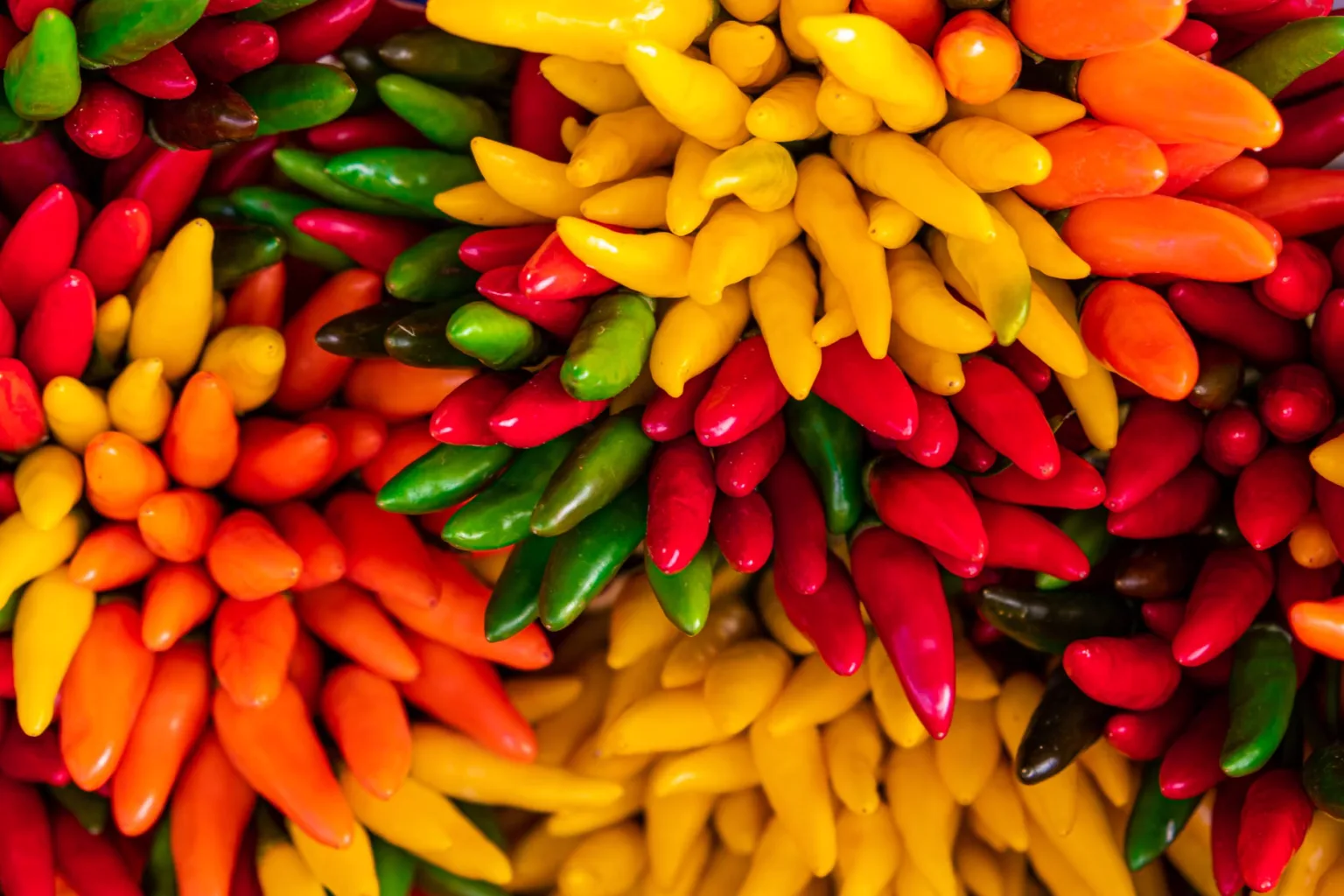
Fresh chilli is a hot pepper from the Capsicum genus, although the name can describe different varieties. The fleshy fruit may become green, yellow, orange, red or purple as it matures. Chilli varieties do not all have the same heat: some are mild, while others are intense. It is used fresh, sliced or chopped, to add flavor and warmth to a dish. The inner pale ribs and seeds are commonly removed when a milder result is wanted.
When to use it
Use fresh chilli when you want to add heat and a fresh pepper note to a recipe, such as a sauce, stew, lentil or bean dish, pasta, meat preparation or salad. Since heat varies by variety and fruit, begin with a small amount and adjust after tasting. A fresh chilli can also accent tapas or small plates, where a little adds color and a noticeable kick without needing to dominate the other flavors.
How to use it
Wash the chilli, then slice or chop it to suit the texture you want. For a milder result, remove the inner pale ribs and seeds before cutting; keep them if you want a stronger kick. Add it to sauces, stews, legumes, pasta, meat dishes or salads, tasting before adding more because heat is not consistent. You can also briefly toast it in a dry pan before using, or add it fresh when you want to retain more of its crisp character.
Flavour and texture
Fresh chilli combines a fresh, vegetal flavor with heat that ranges from mild to intense depending on the variety. Its flesh is crisp and fleshy when raw; cooking softens it and blends it into a dish. Color also varies with variety and maturity, from green to yellow, orange, red or purple.
How to choose it
Choose chillies that look fresh and firm, without visibly wilted or damaged areas. Color alone does not indicate heat: varieties with different colors can have different levels of heat. If you want a mild or especially hot result, check the variety when it is identified. If you do not know the chilli, start with a small amount and taste before adding more.
Storage
Keep fresh chillies from being crushed and check them before use; discard any that show clear deterioration. The available evidence does not establish a storage life or a specific temperature for this ingredient. For reasonable quality, follow any instructions on the package or from the place of purchase, and avoid storing them where they may be crushed by heavier foods.
Substitutions
You can substitute dried chilli or another fresh variety, such as jalapeño. Heat changes between varieties and forms, so an equal amount will not necessarily give the same result. Start with less than the recipe calls for and adjust after tasting; a milder variety can still add flavor and color with less heat.
Common mistakes
Adding too much chilli at the start can let heat overwhelm the other flavors. Do not assume that color predicts intensity or that all varieties are equally hot. To moderate the result, remove the inner pale ribs and seeds; if the chilli is unfamiliar, try a small amount before adding it to the full dish.
Safety and allergens
Heat varies considerably between varieties. Start with a small amount and taste the dish before adding more, so you can adjust it without letting the chilli dominate.
Culinary uses
- Adds heat and a fresh pepper flavor to dishes
- Provides color and a lively accent in sauces, stews, pasta, salads and tapas
Recommended techniques
- Slice or chop and add to a dish; remove the inner ribs and seeds for a gentler result
- Briefly toast in a dry pan to bring out aroma
Pairs well with
- Lentils and beans
- Pasta, sauces, meat dishes and salads
Frequently asked questions
Do all fresh chillies have the same heat?
No. Some varieties are mild and others are intense, and color alone does not tell you how hot one will be. Add a little and taste.
How can I make fresh chilli less hot?
Remove the inner pale ribs and seeds before chopping, and use a small amount. The variety still affects the final heat.
What dishes can I use fresh chilli in?
Try it in sauces, stews, legumes, pasta, meat dishes, salads and tapas. Adjust the amount to suit the heat you want.
Ingredient allergens
Allergen listThere are no verified associations for these ingredients yet.
Sources and review
Automatically researched, cross-checked and validated content. Sources consulted:
- ¿Por qué la muerte es origen de miedos y tabúes? doi.org/10.64628/aao.fccyk3qj3
- Client Challenge doi.org/10.2307/jj.27939689.16
- The Essential Glossary of Cooking Terms for the Culinary Arts - Escoffier www.escoffier.edu/blog/culinary-arts/the-essential-glossary-of-cooking-terms-for-the-culinar…
- Guindilla: Botánica, cultura y sabor en una Especia | Alveus www.alveus.eu/es/blog/guindilla-origen-y-tipos/
- Guindilla: qué es, beneficios y usos en la cocina de este pimiento picante bonviveur.com/es/noticias/guindilla
- Comité Científico aesan.gob.es/dam/jcr:3c94ae83-1384-420c-96c1-0c2aa6f1544e/comite_cientifico_34.pdf
- Lesson 4A – Semillas: Elementary Spanish I pressbooks.uiowa.edu/elementary-spanish-i/chapter/lesson-4a/
- Guindilla: qué es, beneficios, usos en la cocina y variedades de este pimiento picante www.directoalpaladar.com/ingredientes-y-alimentos/guindilla-que-beneficios-usos-cocina-varie…
- Capsicum annuum - Wikipedia, la enciclopedia libre es.wikipedia.org/wiki/Capsicum_annuum
- Propuesta de aplicación de técnicas de elaboración de pasta con especias dulces en preparaciones de cocina de autor | OpenAlex openalex.org/W2935162661
- Elaboración de pastas artesanales con ocho tipos de harinas y su aplicación en nuevas recetas | OpenAlex openalex.org/W2197804739
- Guindillas frescas como contrapunto: análisis y comparativa de quesos y embutidos con toque picante laovejaquebala.es/guindillas-frescas/
- Cómo utilizar las guindillas - Gallina Blanca www.gallinablanca.es/trucos/como-utilizar-las-guindillas/