- Category
- Meat
- State
- Fresh
- Usual unit
- unit
What it is
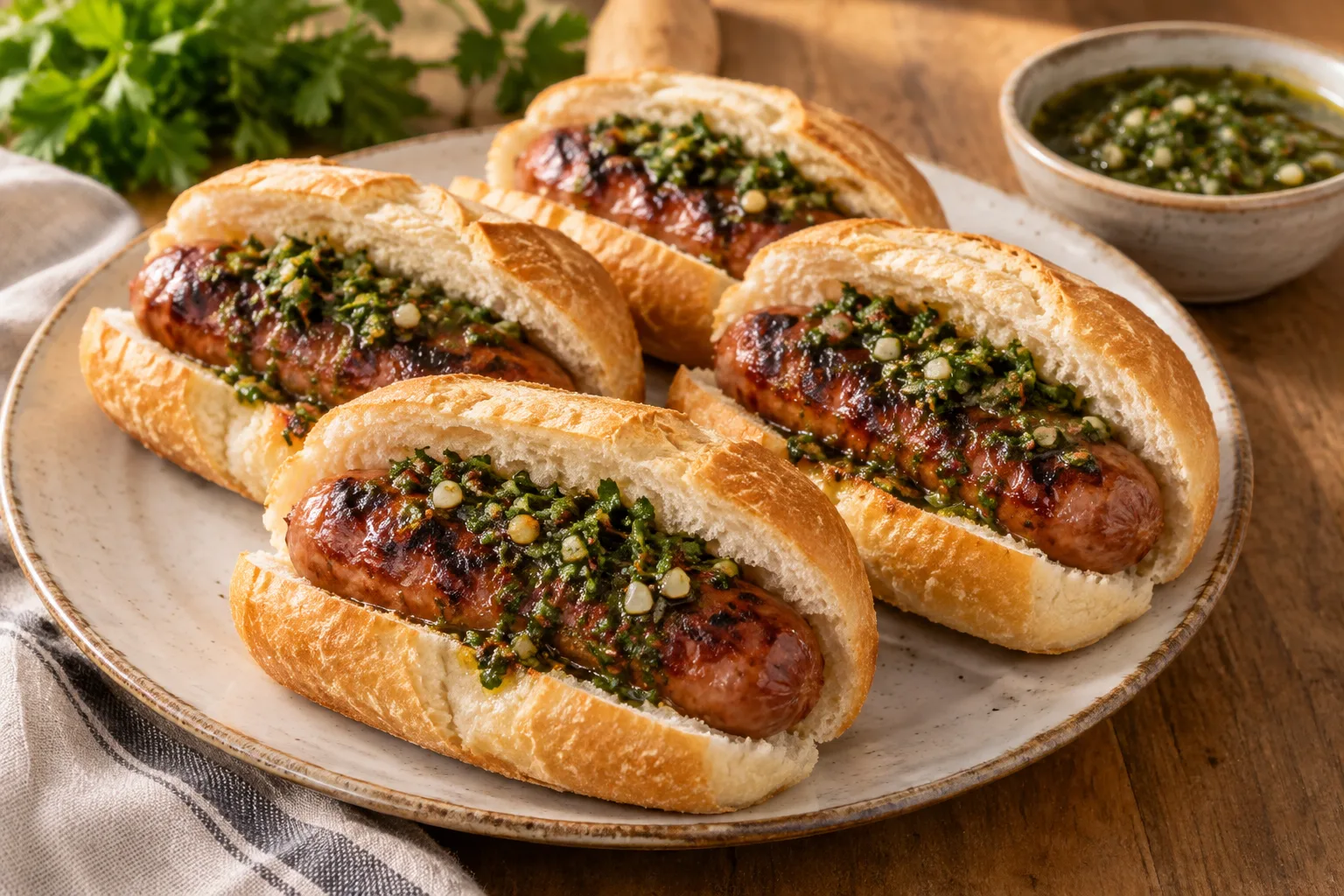
Fresh chorizo is a sausage made from seasoned minced meat and fat packed into a casing, without the curing process associated with dried chorizo. “Fresh” matters: this is not simply a softer version of a ready-to-eat sausage, but a product that should be cooked before eating. The mixture commonly includes pork, salt, paprika and other seasonings, although ingredients and heat levels can vary between products. Its texture is usually moist and pliable, and its spiced flavor works both as a main ingredient and as a way to bring character to a hot dish. Always check the particular product’s label: a red appearance does not tell you whether the sausage has been cooked or cured.
When to use it
Choose fresh chorizo when you want a tender sausage to bring flavor and juiciness to a dish that will be cooked. It can be served as part of a meal after cooking, or used in stews, potato dishes and recipes with eggs. It is a better fit than cured chorizo when a recipe calls for a soft texture and a sausage that cooks with the other ingredients. If you want slices to eat without cooking, fresh chorizo is not the right choice; look for a product labelled as cured and ready to eat. Do not decide by color or heat level: check the product name and package directions.
How to use it
Keep fresh chorizo refrigerated and follow the storage and cooking directions on its package. Cook it before eating; do not treat it like cured chorizo that is ready to eat. Cook whole links in a pan or on a grill, roast them, or add them to a stew. You can also crumble the sausage and cook it as part of a hot dish, for example with potatoes or eggs. Choose the method to suit the shape of the sausage and the recipe, and follow the manufacturer’s instructions. When adding it to a dish with other ingredients, plan the cooking order so the chorizo cooks properly and its spiced flavor is distributed without overwhelming the dish. Do not use its red color alone as a sign that it is cooked: paprika can color the meat before cooking.
Flavour and texture
Its flavor is usually savory and spiced, with paprika and other seasonings whose intensity depends on the recipe. Heat levels are not uniform and can vary between products. Before cooking, the sausage is tender, pliable and moist; when cooked, it remains juicy and adds flavor to the dish. The proportions of meat, fat and seasoning also differ by product.
How to choose it
Look for a label that clearly identifies the product as fresh chorizo, and check its storage and cooking directions. Commercial recipes can vary in seasonings, heat, shape and casing, so check the ingredient list if you need to know the exact composition. Do not assume it is ready to eat because it is red, sausage-shaped or looks cooked. Choose a sound, refrigerated package and follow the date and directions shown on it.
Storage
Keep fresh chorizo refrigerated and follow the package directions and dates. The available information distinguishes fresh chorizo from cured chorizo and says that fresh chorizo should be kept refrigerated; do not store it as though it were a cured sausage that is stable at room temperature. After opening, follow the manufacturer’s specific instructions. No universal home-storage duration is established here, so do not invent a time limit or apply one from a different kind of chorizo.
Substitutions
A fresh sausage with a similar texture can play a comparable role, but its flavor and seasoning will differ; adjust the rest of the recipe to suit the product. Cured chorizo can bring chorizo flavor, but it is firmer and more concentrated and does not automatically reproduce the juiciness or cooking behavior of fresh chorizo. Do not assume an equivalent amount or cooking time.
Common mistakes
Do not confuse fresh chorizo with cured chorizo: fresh chorizo must be cooked before eating and needs refrigeration. Nor should color or heat level be used to decide whether it is ready to eat. Another mistake is substituting cured chorizo without considering its different texture and stronger flavor; adapt the dish and always follow the product label.
Safety and allergens
Treat fresh chorizo as a product that must be cooked, not as cured sausage ready to eat. Keep it refrigerated and follow the manufacturer’s storage and cooking directions. Specific directions may vary by product and size.
Culinary uses
- Main ingredient in a cooked dish
- Seasoning ingredient that adds savory, paprika-forward flavor
Recommended techniques
- Pan-frying
- Grilling
- Roasting
- Adding to stews
Pairs well with
- Eggs and potatoes
- Stews and pulses
Frequently asked questions
Can fresh chorizo be eaten raw?
Do not treat it as ready to eat: fresh chorizo should be cooked before consumption. Check the package directions.
How can I cook fresh chorizo?
It can be pan-fried, grilled, roasted or cooked in a stew. The suitable method and preparation depend on the product’s shape and directions.
Can fresh and cured chorizo be used interchangeably?
Not directly. Fresh chorizo is tender and is cooked before eating; cured chorizo is firmer and more concentrated. Swapping them changes texture and results.
Ingredient allergens
Allergen listThere are no verified associations for these ingredients yet.
Estimated nutrition
- Fat
- 24.3 g
- Saturates
- 8.57 g
- Carbohydrate
- 1.43 g
- Sugars
- 1.43 g
- Fibre
- 0 g
- Protein
- 20 g
- Salt
- 2.36 g
Sources and review
Automatically researched, cross-checked and validated content. Sources consulted:
- Client Challenge doi.org/10.2307/jj.27939689.16
- Agencia Española de Seguridad Alimentaria y Nutrición www.aesan.gob.es/
- Chorizo - Wikipedia, la enciclopedia libre es.wikipedia.org/wiki/Chorizo
- Chorizo - Conozca las diferentes variedades - BR Spanish Gourmet www.brspanishgourmet.com/es/blog/289-chorizo-conozca-las-diferentes-variedades.html
- El chorizo: historia, tipos y beneficios de un icono de la gastronomía española - Cárnicas Anjos carnicasanjos.com/historia-del-chorizo-tipos-beneficios/
- Food Allergies | FDA www.fda.gov/food/nutrition-food-labeling-and-critical-foods/food-allergies
- Food allergen labelling and information requirements technical guidance - GOV.UK www.gov.uk/government/publications/food-allergen-labelling-and-information-requirements-tech…
- Allergens in food | safefood.vic.gov.au www.safefood.vic.gov.au/allergens-in-food
- ¿Cómo se hace el chorizo? www.campofrio.es/como-se-hace-el-chorizo
- El Chorizo, el embutido artesano protagonista de la gastronomía española embutidosrodriguez.es/chorizo-el-embutido-mas-tradicional/
- EL CHORIZO ESPAÑOL – Consorcio del Chorizo Español chorizoespanol.es/elchorizoespanol/
- - YouTube www.youtube.com/watch?v=0dhCQODReE4
- ¿Cuál es la composición del chorizo? | Embutidos españoles directos.eu/es/blog/cual-es-la-composicion-del-chorizo?srsltid=AYCX9vKSuycsgP8LBZ-zgfwkBKXd9…
- Chorizo fresco vs chorizo curado: diferencias y cómo saber si hay que cocinarlo - El Mercado de Origen www.elmercadodeorigen.com/chorizo-fresco-vs-curado-diferencias-como-saber-si-hay-que-cocinar…
- ¿Qué es el Chorizo y qué Tipos de Chorizo hay en España? www.gastronomicspain.com/blog/es/cual-es-el-chorizo-casero-mas-popular/?srsltid=AYCX9vJm9VSN…