- Category
- Vegetables
- State
- Fresh
- Usual unit
- clove
What it is
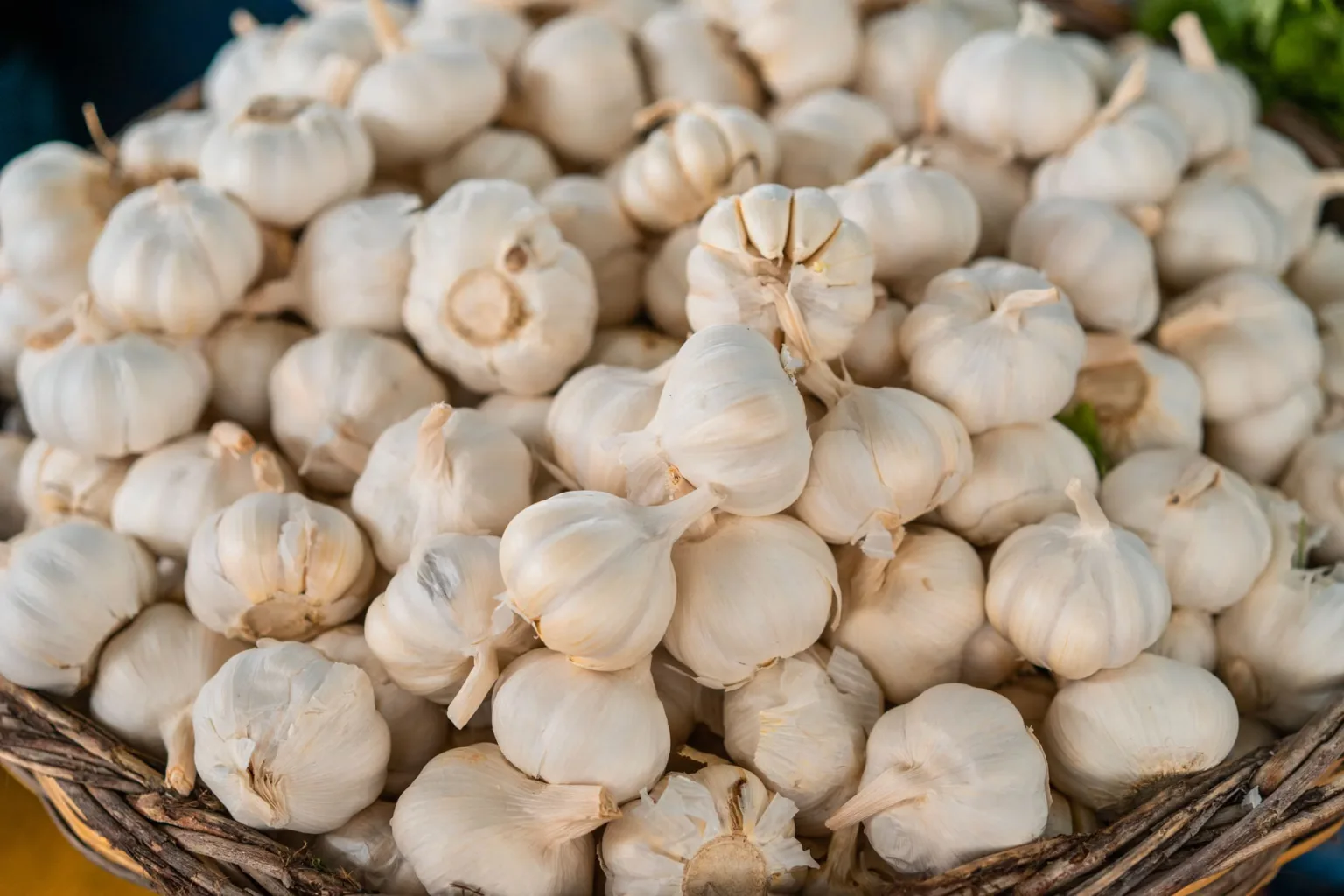
Fresh garlic is a bulb made up of cloves that can be separated for cooking. It is used as a seasoning and as an aromatic base in many preparations. An intact bulb has a less pronounced aroma than peeled and crushed cloves: peeling and crushing garlic makes its aroma stronger. Garlic can be added whole or chopped to stews and used in rice dishes, sauces and marinades. It goes with preparations featuring pork, chicken, beef, rabbit or duck, as well as fish and seafood. Varieties can differ in visible features such as skin color; white and purple garlic are examples. This profile is about fresh garlic, not black garlic, which is a processed product with a different texture and flavor.
When to use it
Use fresh garlic when you want a recognizable aroma and strong savory flavor in a dish. It works in stews and rice dishes, and is also used in sauces and marinades. It can accompany pork, chicken, beef, rabbit or duck, as well as fish and seafood. The way you prepare it changes how its flavor is distributed: a whole clove does not blend into a dish in the same way as a chopped or crushed one. Chop or crush it when you want it distributed through the preparation; use it whole if you want the clove to remain recognizable. Remember that its aroma becomes more pronounced after peeling and crushing.
How to use it
Separate the cloves you need from the bulb and choose how to prepare them for the dish. Add them whole or chop them to distribute garlic through stews, rice dishes, sauces and marinades. For a more pronounced aroma, peel and crush a clove before mixing it with the other ingredients. Fresh garlic seasons preparations with pork, chicken, beef, rabbit and duck, as well as fish and seafood. It can also be part of a sauce or the aromatic base of a stew. The right amount depends on the recipe and on how prominent you want the garlic to be: if you are unfamiliar with the garlic you have, start with a modest amount and adjust the flavor as you prepare the dish. Whole, chopped and crushed garlic do not distribute in the same way. Do not confuse fresh garlic with black garlic, which has different characteristics.
Flavour and texture
Fresh garlic has a strong flavor and characteristic aroma, which becomes more pronounced when a clove is peeled and crushed. The bulb consists of separate cloves that can be used whole, chopped or crushed to distribute their flavor in different ways. Perceived intensity also depends on the preparation and the amount used. Black garlic is different: it has a softer texture and a sweeter, subtler flavor than fresh garlic.
How to choose it
Garlic is sold as bulbs made up of cloves, and varieties include different skin colors, such as white and purple. When choosing it, check that the product is fresh garlic and select a type suited to your recipe. If you want the characteristic aroma of fresh garlic, do not mistake it for black garlic, a processed product with a different texture and flavor. The available information does not establish a buying season or additional specific selection criteria.
Storage
Keep garlic as a bulb until you are ready to prepare the recipe, and separate only the cloves you need. This lets you decide when cooking whether to use them whole, chopped or crushed, depending on how you want their aroma distributed in the dish. For storage directions, follow the product label when available and the official food-safety guidance that applies where you live. No specific shelf life or temperature is given here.
Substitutions
Whole, chopped and crushed forms let you adapt garlic to a preparation, but they do not distribute flavor in the same way. Chopped garlic can be used instead of a whole clove when you want it incorporated into a dish; crushing it releases a more pronounced aroma. There is no universal quantity equivalence among these forms. Adjust its use to the recipe and the prominence you want garlic to have.
Common mistakes
A common mistake is treating whole, chopped and crushed garlic as identical: peeling and crushing a clove makes its aroma more pronounced. Also distinguish fresh garlic from black garlic, which has a different flavor and texture. There is no universal quantity equivalence among the different forms, so adjust the amount to the dish and the intensity you want.
Safety and allergens
Handle fresh garlic using usual food-hygiene practices and follow any directions on the package. Do not use the product if it shows obvious signs of spoilage. No home-preservation process for garlic is specified here.
Culinary uses
- Aromático y sazonador
- Base de sabor para guisos, salsas y adobos
Recommended techniques
- Usar los dientes enteros
- Pelar y picar o triturar para repartir el sabor
Pairs well with
- Arroz, salsas y guisos
- Cerdo, pollo, res, conejo y pato
- Pescados y mariscos
- Adobos
Frequently asked questions
What is the difference between whole and crushed garlic?
Garlic can be used whole or chopped; peeling and crushing a clove makes its aroma more pronounced. The forms therefore do not produce exactly the same result.
What foods pair with fresh garlic?
It is used in stews, rice dishes, sauces and marinades, and pairs with pork, chicken, beef, rabbit and duck, as well as fish and seafood.
Is fresh garlic the same as black garlic?
No. Black garlic is a processed product with a softer texture and a sweeter, subtler flavor than fresh garlic.
Ingredient allergens
Allergen listThere are no verified associations for these ingredients yet.
Estimated nutrition
- Fat
- 0 g
- Saturates
- 0 g
- Carbohydrate
- 33.3 g
- Sugars
- 0 g
- Fibre
- 0 g
- Protein
- 6.67 g
- Salt
- 0.08 g
Sources and review
Automatically researched, cross-checked and validated content. Sources consulted:
- Aceituna - Wikipedia, la enciclopedia libre es.wikipedia.org/wiki/Aceituna
- Client Challenge doi.org/10.2307/jj.27939689.16
- The Essential Glossary of Cooking Terms for the Culinary Arts - Escoffier www.escoffier.edu/blog/culinary-arts/the-essential-glossary-of-cooking-terms-for-the-culinar…
- Vamos a Conservar Alimentos: Raíces comestibles: remolachas, zanahorias, nabos y colinabos extension.psu.edu/vamos-a-conservar-alimentos-raices-comestibles-remolachas-zanahorias-nabos…
- Appendix B: Recipes for Disease Prevention – Culinary Medicine opentextbooks.library.arizona.edu/culinarymedicine/back-matter/appendix-b-recipes/
- Para la ciudadanía www.aesan.gob.es/para-la-ciudadania
- FRESHNESS SEMINAR PRESENTATION Peter Howgate ... seafood.oregonstate.edu/sites/agscid7/files/snic/effective-freshness-measuremnt-webinar-2010…
- Ajo ⋆ Larousse Cocina laroussecocina.mx/palabra/ajo-2/
- Allium sativum L. www.conecte.es/media/com_concibe/files/Tardo_etal2022_IECTBA2Allium%20sativum.pdf
- Ajo - Patrimonio Alimentario patrimonioalimentario.culturaypatrimonio.gob.ec/wiki/index.php?oldid=3050&title=Ajo
- cucumber | UNL Food food.unl.edu/taxonomy/term/617/
- Ajo, versatilidad exquisita foodandtravel.mx/sabores/productos-en-temporada/ajo/