- Category
- Fish and seafood
- State
- Fresh
- Usual unit
- g
What it is
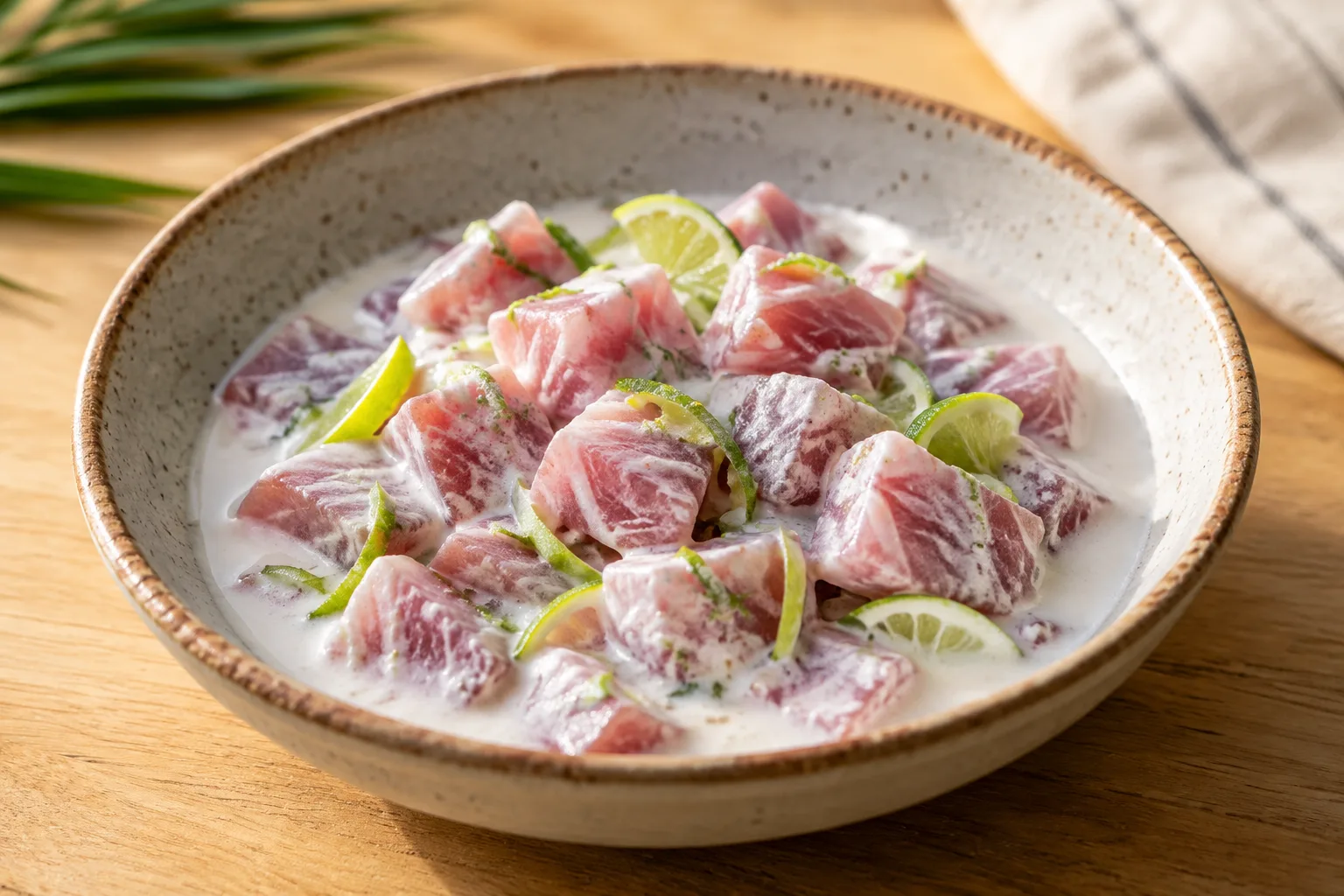
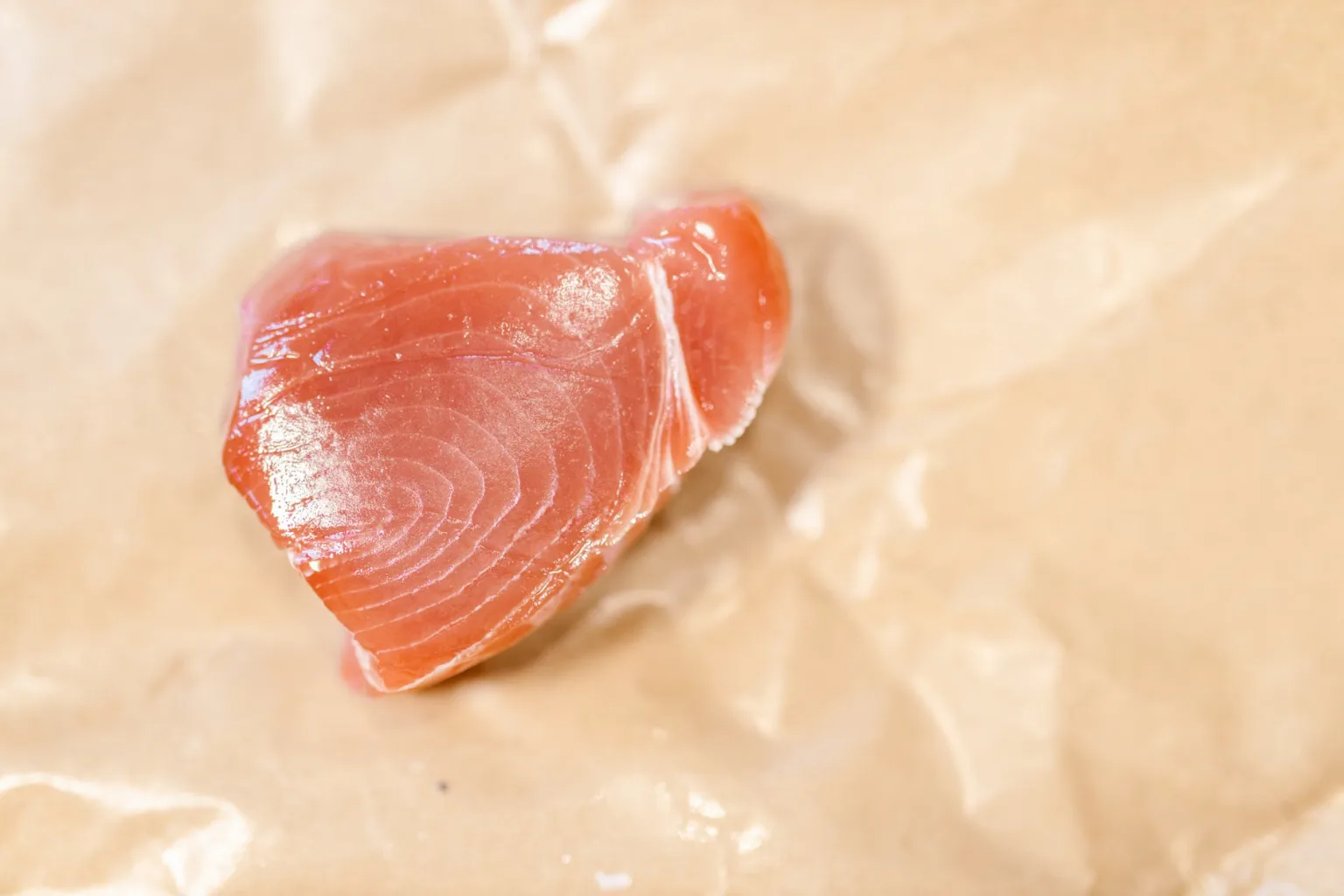
Fresh tuna is the uncanned flesh of fish in the tuna group. The name covers different types of tuna, so color, flavor intensity, and fat content can vary among species and cuts. Its firm flesh suits several uses: cut it into steaks or pieces, sear it briefly in a pan, or cook it through. Fresh tuna is not the same product as canned tuna, which has a different form and use in the kitchen. Boned flying fish is a different fish; the available information does not establish it as equivalent to tuna in flavor, texture, or cooking behavior.
When to use it
Choose fresh tuna when you want a firm fish that can be cut neatly into steaks or pieces. Leaner cuts work well on a griddle or in gentle stews; fattier pieces can be juicier with brief cooking. Species and cuts affect the result, so choose a preparation to suit the piece rather than relying on the word “tuna” alone. For a cooked recipe, another type of tuna may be an option, although its flavor and texture will differ.
How to use it
Keep the fish refrigerated until you are ready to prepare it, and use clean utensils. Remove any remaining bones and cut the flesh into similar-sized pieces to encourage even cooking. Cook steaks on a griddle or grill, or add pieces to a stew. Brief cooking can leave the center less done than the outside; you can also cook the fish through, adjusting the cooking to the cut and thickness. Pair it with soy sauce, ginger, citrus, or sesame, adjusting the seasonings so they complement rather than overwhelm the fish. Follow the storage directions on the package or from the seller.
Flavour and texture
Tuna generally has firm flesh and a pronounced flavor, although color and intensity vary by species and cut. Some pieces are leaner, while others contain more fat and can seem juicier. Bluefin tuna is described as firm, with fat distributed through the flesh; other types can taste milder. Brief cooking keeps the texture more tender, while prolonged cooking can make the flesh seem drier.
How to choose it
Buy tuna from a reliable fish seller and ask which type and cut you are getting. Look for flesh that appears clean and firm, but do not judge it by color alone: color varies among species and cuts. It should smell fresh and marine, not unpleasant or strong. If you have questions about how to use or store the piece, ask the seller and follow the package directions.
Storage
Keep fresh tuna refrigerated and follow the storage instructions on the package or from the seller. Keep it separate from ready-to-eat foods and avoid leaving it at room temperature while preparing other ingredients. Prepare it according to the product directions. If you will not use it soon, ask the seller how to store it; do not assume every piece can be handled in the same way.
Substitutions
Another type of tuna, such as albacore or yellowfin, can work in a similar preparation, although its flavor and texture will not be identical. Swordfish or salmon can replace tuna in some cooked dishes, especially grilled ones, but will change the result. Boned flying fish is a different fish, and the available information does not establish it as a culinary equivalent to tuna.
Common mistakes
Do not confuse fresh tuna with canned tuna or assume that every species and cut has the same fat content or texture. Avoid cooking it for too long if you want juicy flesh; the cut and thickness affect the result. Do not treat boned flying fish as tuna either: it is a different fish, and there is not enough information to say it behaves the same way in a recipe.
Safety and allergens
Tuna is a fish and may cause an allergic reaction in people who are sensitive to it. Follow the storage directions on the package or from the seller, and avoid cross-contact with foods that need to be kept separate.
Culinary uses
- Main protein for cooked fish dishes
- Firm fish for steaks, slices, or cubes
- Ingredient for grilling, pan-searing, or stews
Recommended techniques
- Grill steaks or firm pieces
- Sear briefly in a hot pan or on a griddle
- Add pieces to a stew
- Cook through when a fully cooked preparation is preferred
Pairs well with
- Soy sauce
- Ginger
- Citrus
- Sesame
Frequently asked questions
What cooking methods work well for tuna?
Griddling, grilling, and cooking in a stew suit different cuts. Thickness and the particular piece affect the result, so adjust the cooking rather than applying one fixed time to every piece.
Does every type of tuna have the same texture?
No. Color, flavor intensity, and fat content vary among species and cuts. Choose a technique with the specific piece in mind.
Is boned flying fish the same as tuna?
No. They are different fish. The available information does not establish boned flying fish as equivalent to tuna in flavor, texture, or cooking behavior.
Ingredient allergens
Allergen listDocumented presence
-
Fish
Fresh tuna (or boned flying fish)
Sources and review
Automatically researched, cross-checked and validated content. Sources consulted:
- ¿Por qué la muerte es origen de miedos y tabúes? doi.org/10.64628/aao.fccyk3qj3
- Client Challenge doi.org/10.2307/jj.27939689.16
- El atún, ese gran ingrediente de nuestras cocinas - EN LA COCINA Magazine enlacocina.telemesa.es/cocina/el-atun-ese-gran-ingrediente-de-nuestras-cocinas/
- Todo lo que debes saber sobre pescado: Atún | Recetas Nestlé www.recetasnestle.com.ec/escuela-de-sabor/coccion/todo-sobre-atun
- El atún, un pescado que no da la lata - El Blog de Mariskito mariskito.com/blog/atun-pescado-que-no-da-la-lata/?srsltid=AYCX9vLh1wGLcE8B10TixELpkGkziFu6a…
- Partes del atún: cuáles son y para qué se suelen usar en cocina - La Chanca lachanca.com/partes-del-atun-cuales-son-y-para-que-se-suelen-usar-en-cocina/?srsltid=AYCX9vL…
- Todo lo que tienes que saber para comprar buen atún fresco | Grupo Animal grupoanimal.mx/gastronomia/atun-fresco
- ¿Qué se conoce por atún salvaje? | Peixacasa www.peixacasa.cat/es/blog/atun-rojo-salvaje/?srsltid=AYCX9vJfWdIaJ1A3OdvbjYQzx1iVyjP4F1jT3hO…
- Atún Rojo Salvaje Tendencias y Maridajes Modernos | Blog Gadira productosdealmadraba.com/blog/lo-mas-leido/atun-rojo-salvaje-tendencias-gastronomicas-y-mari…
- Partes del atún: cuáles son y para qué se suelen usar en cocina - La Chanca lachanca.com/partes-del-atun-cuales-son-y-para-que-se-suelen-usar-en-cocina/?srsltid=AYCX9vI…
- Formas de cocinar pescado | Peix a Casa www.peixacasa.cat/es/blog/formas-de-cocinar-pescado/?srsltid=AYCX9vLZawVCic7JIORtsd3cRDf-1nh…
- Managing allergens | Food Standards Scotland www.foodstandards.gov.scot/business-guidance/running-a-food-business/managing-allergens