- Category
- Herbs and spices
- State
- Fresh
- Usual unit
- slice
What it is
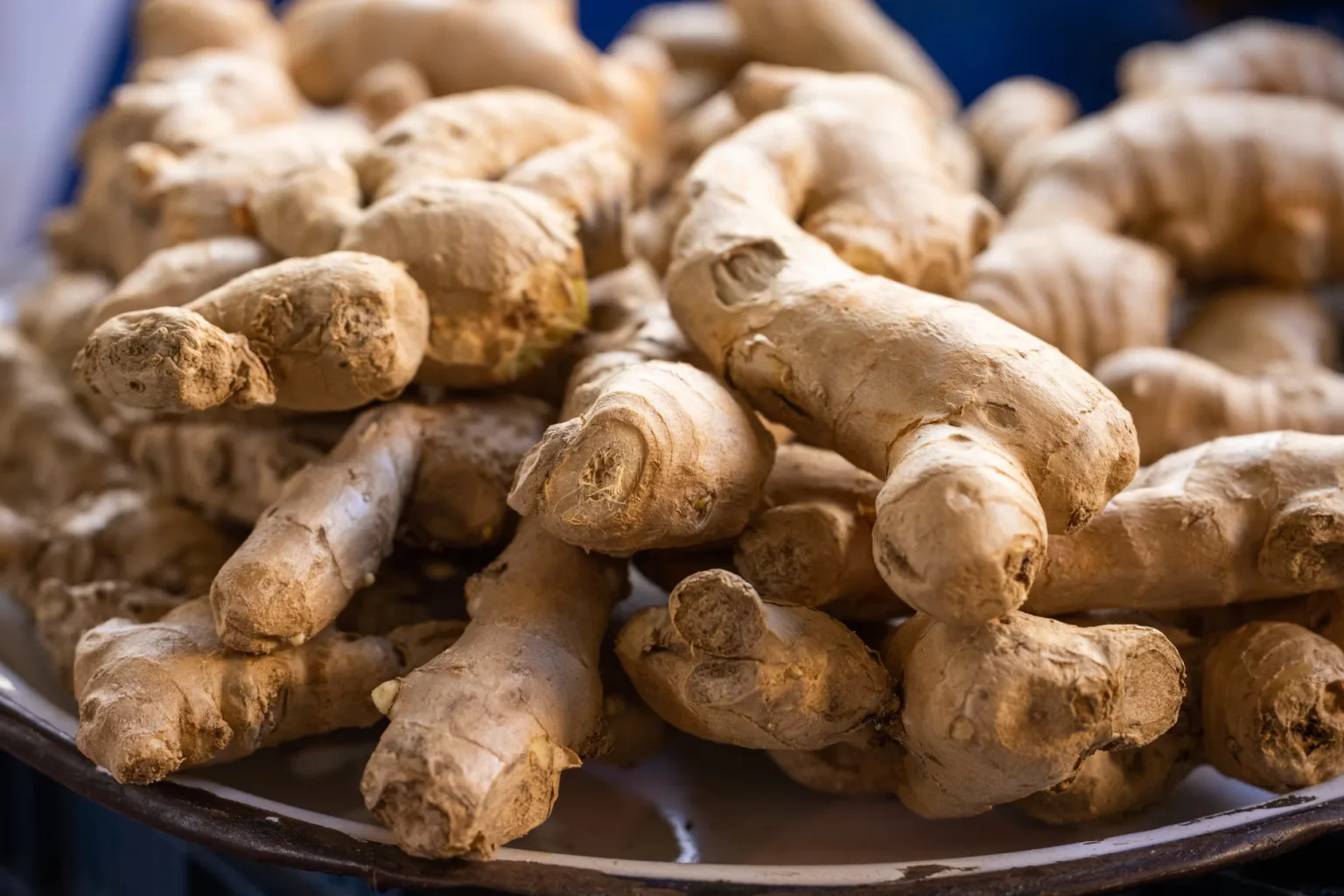
The ginger used in cooking is the fresh rhizome of Zingiber officinale, though it is often called a root. Its flesh is juicy and fibrous, with a pronounced aroma and a clean, warm pungency. Here, “ginger for tare” means fresh ginger used as an aromatic ingredient in tare sauce, not a special botanical type or one fixed recipe. Slice it to infuse a sauce, or chop or grate it to distribute the flavour more directly through the mixture. Its intensity can vary, so it is best added gradually. The cut and preparation affect how prominent the ginger tastes and how much texture it leaves in the sauce.
When to use it
Use it when you want fresh aroma and pungency in tare, a marinade, soup or stir-fry. Thin slices work when you want to perfume a sauce and remove them later; grated or chopped ginger becomes more integrated in the finished dish. It also pairs with garlic, onion, pepper and other spices, and can be used in sweet preparations. Because its flavour can dominate, begin with a small amount and taste before adding more. If the tare is already strongly flavoured or well balanced, add ginger gradually so it does not mask the other ingredients.
How to use it
Brush off surface soil and cut only what you need. For a gentler aroma in tare, add a few thin slices while the sauce warms, then remove them if you do not want pieces in the finished sauce. For a more pronounced flavour, chop, crush or grate the ginger and mix it with the other ingredients. Add a little at a time, taste the sauce and adjust before adding more. Fresh ginger is fibrous, so grating or finely chopping helps distribute it, though it leaves more texture than infusing with slices. There is no universal tare ratio: the right amount depends on the recipe and your preferred intensity. Do not automatically replace fresh ginger with the same amount of ground ginger.
Flavour and texture
Fresh ginger is strongly aromatic, warmly pungent and can have fresh, citrus-like notes. Its flesh is juicy and fibrous. Slices leave a subtler presence if removed, while grated or chopped ginger contributes flavour and texture in each spoonful. Its intensity may be more pronounced as the rhizome matures. Use it sparingly in tare so it complements rather than conceals the sauce’s other flavours.
How to choose it
Choose a firm, substantial piece with no obvious soft areas. Fresh-looking skin and flesh can help when assessing it, though more mature ginger may be harder and stronger in flavour. If you want an easier piece to grate, avoid ginger that feels dry or excessively hardened. Buy an amount you can use, or keep the remainder whole for another preparation.
Storage
Keep fresh ginger clean and free of surface moisture. Store it whole and wrapped in the refrigerator, or freeze it for longer keeping. Once cut, it can dry out and become hard if left exposed to air, so cut only what you need and put the rest away promptly. There is no single storage period that applies to every piece; check its condition before use.
Substitutions
Ground or dried ginger can provide ginger flavour, but it does not exactly reproduce the aroma, freshness or texture of the fresh rhizome, and no conversion ratio is established here. In tare, use it only if that difference suits the result, and add it cautiously. Fresh ginger is not always a direct replacement for ground ginger either, especially when texture matters.
Common mistakes
Adding too much ginger at once can let its pungency and aroma overwhelm the rest of the sauce. Start small, taste and adjust gradually. Another mistake is expecting ground and fresh ginger to behave identically: their aroma and texture differ, and there is no universal substitution ratio. Do not leave cut ginger exposed to air if you are not using it soon; it may dry out and harden.
Safety and allergens
If tare or ginger is sold ready-prepared, check its ingredient list and request allergen information when needed. For prepared or unpackaged food, also ask about ingredients and handling if you have a food allergy. This guide does not establish the composition of commercial products or their cross-contact risk.
Culinary uses
- Aromatic seasoning for sauces, marinades, soups and savoury dishes.
- Fresh, pungent accent for tare and other condiments; add gradually so it does not overpower the other flavours.
Recommended techniques
- Slice thinly to infuse a sauce, or finely chop, crush or grate for a more direct ginger presence.
- Add a little at a time and taste as you go; fresh ginger is aromatic and can be intense.
Pairs well with
- Soy-style sauces, marinades and savoury dishes, where ginger contributes aromatic pungency.
- Garlic, onion, pepper and other spices; ginger is also used with cinnamon, cloves and nutmeg in sweet preparations.
Frequently asked questions
Which cut of ginger works best in tare?
Thin slices can perfume the sauce and be removed; grated or chopped ginger blends in more and adds texture. Choose according to how noticeable you want the ginger to be.
Can I swap ground ginger for fresh ginger?
It can provide ginger flavour, but the result will differ in aroma and texture. No universal conversion is established here, so add it gradually.
How should I store leftover ginger?
Keep it whole, clean and free of surface moisture, wrapped in the refrigerator, or freeze it. Cut only what you need, since exposed cut ginger can dry out and harden.
Ingredient allergens
Allergen listThere are no verified associations for these ingredients yet.
Sources and review
Automatically researched, cross-checked and validated content. Sources consulted:
- Client Challenge doi.org/10.2307/j.ctvndv9t9.22
- Etiquetado de sustancias que causan alergias e intolerancias alimentarias www.aesan.gob.es/seguridad-alimentaria/informacion-alimentaria/etiquetado-sustancias
- El jengibre en la cocina asiática dragonimperial.es/el-jengibre-en-la-cocina-asiatica/
- Jengibre: qué es, propiedades, beneficios y cómo se toma bonviveur.com/es/noticias/jengibre
- Jengibre, más que una especia: usos, formatos y qué puede aportar a tu bienestar margavilan.substack.com/p/jengibre-mas-que-una-especia-usos
- El jengibre desde una perspectiva profesional | Alveus www.alveus.eu/es/blog/jengibre-planta-medicinal/
- Especia - Wikipedia, la enciclopedia libre es.wikipedia.org/wiki/Especia
- Todo lo que debes saber sobre el jengibre | Recetas Nestlé www.recetasnestle.com.ec/escuela-de-sabor/tips/aprende-sobre-jengibre
- Jengibre, raíz nutritiva y curativa que no puede faltar en tu cocina lagarbancitaecologica.org/jengibre-raiz-nutritiva-y-curativa-que-no-puede-faltar-en-tu-cocin…
- El Jengibre en la cocina, usos y propiedades www.eladerezo.com/la-alacena/jengibre-zingiber-officinale.html
- Food Allergies | FDA www.fda.gov/food/nutrition-food-labeling-and-critical-foods/food-allergies
- Food allergens | Food Safety and Quality | FAO www.fao.org/food-safety/scientific-advice/food-allergens/en
- Centre for Food Safety www.cfs.gov.hk/english/food_leg/food_leg_lgfa.html
- Allergen guidance for food businesses - GOV.UK www.gov.uk/government/publications/allergen-guidance-for-food-businesses/allergen-guidance-f…
- Information on Food Allergy & Intolerance www.sfa.gov.sg/food-safety-tips/food-risk-concerns/food-allergy-intolerance
- Allergen labelling for consumers | Food Standards Australia New Zealand www.foodstandards.gov.au/consumer/labelling/allergen-labelling
- - YouTube www.youtube.com/watch?v=P_DGLWdD9jU