- Category
- Dairy and eggs
- State
- Fresh
- Usual unit
- g
What it is
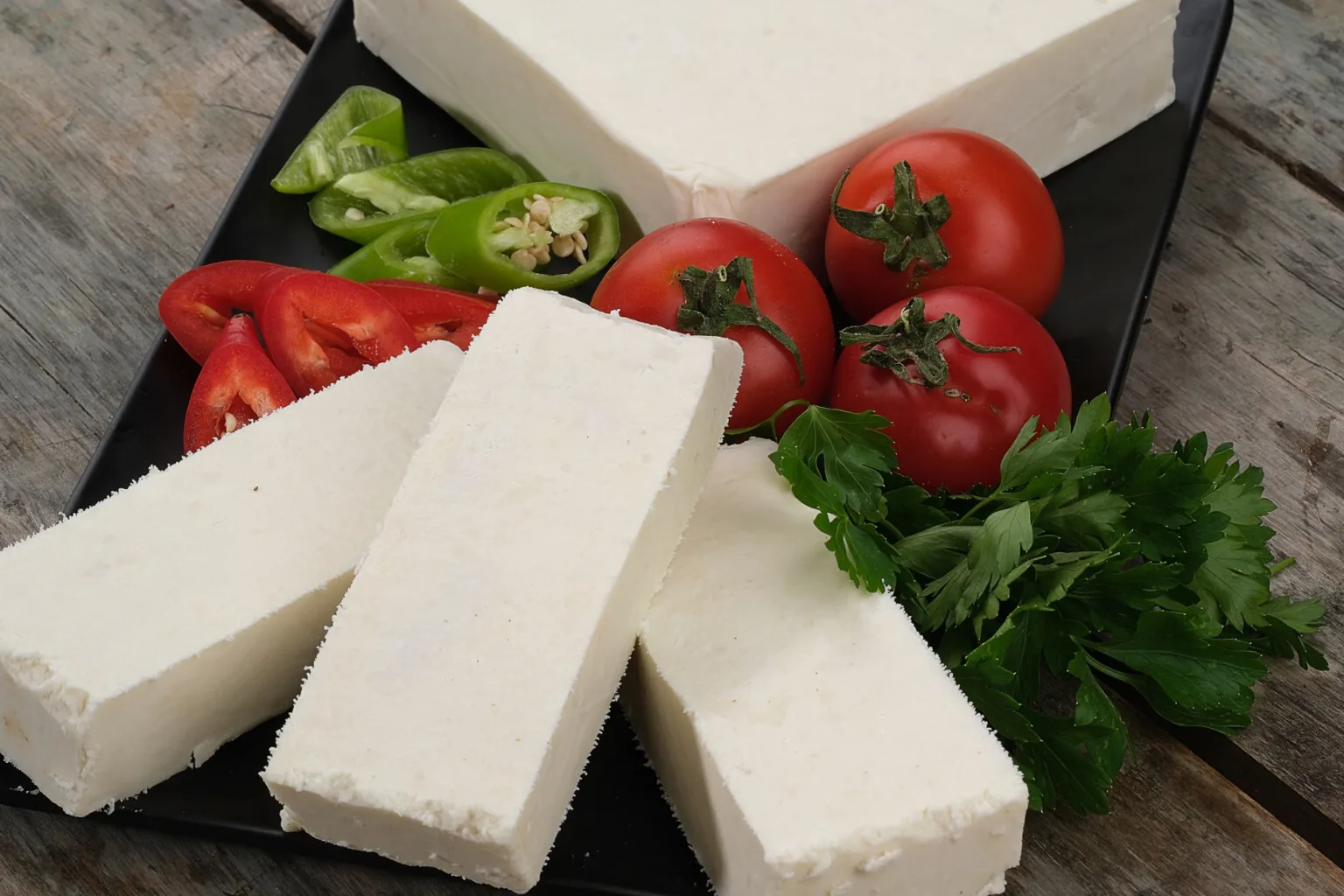
Gjizë is a fresh curd cheese associated with Albanian cooking. It is described as sitting between fresh cheese and curd cheese or cottage cheese in character. The curds can be crumbly and easy to break apart, with a mild, slightly salty taste. Moisture and firmness can vary with the product and how much it has been drained, so gjizë does not always have exactly the same consistency. It can be eaten simply or included in cooked preparations.
When to use it
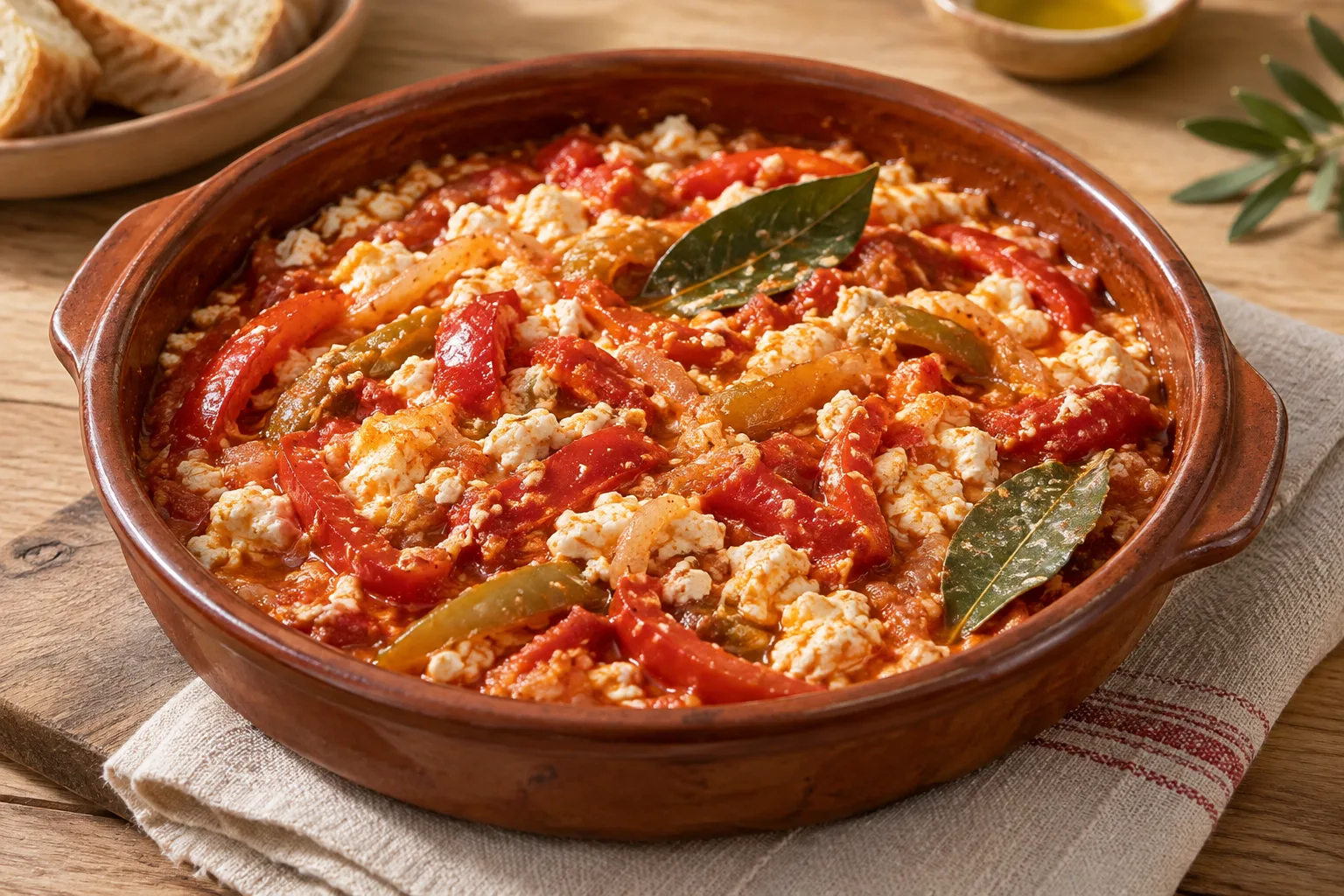
Use gjizë when you want a fresh cheese with a soft dairy flavour and curds that can be crumbled, rather than a completely smooth paste. It works on toast and in fillings such as byrek, and it can be included in Albanian cooked dishes such as fërgesë or stuffed peppers. Consider the texture of the cheese you have: a wetter version may loosen a filling, while a more drained one is easier to crumble and handle.
How to use it
Serve gjizë crumbled on bread or toast, on its own or with a little olive oil; taste before adding salt. For cooking, crumble it and mix it into a filling, or fold it into the other ingredients before heating or baking. It is used in byrek fillings and Albanian vegetable dishes such as fërgesë and stuffed peppers. If the curds are very moist, drain them before adding them to a filling so the mixture does not become overly wet. Adjust seasoning after tasting, since the cheese may already be salty.
Flavour and texture
Gjizë is described as mild and somewhat salty, with a gentle dairy flavour. Its texture is typically curdy and crumbly, though the degree of draining can make it wetter or firmer. There is no single texture shared by every version, so check the particular cheese before choosing how to use it.
How to choose it
Look for a product labelled gjizë and check its ingredient list and package directions. Make sure the container is intact and that the product is refrigerated when required by its label. Moisture and firmness can vary, so choose a texture suited to the dish: a moister cheese for mixing and a more drained one for crumbling or filling.
Storage
Keep gjizë refrigerated and follow the storage directions and date on the package. Once opened, keep it covered and chilled. A recipe for homemade gjizë describes refrigerating it for a few days, but that is not a replacement for the specific instructions on a purchased product.
Substitutions
Ricotta and curd cheese are reasonable alternatives when a recipe calls for gjizë; cottage cheese can approximate its curdy texture. Feta may work in some dishes but can taste saltier. Adjust the seasoning and expect moisture and final texture to differ.
Common mistakes
Do not assume every gjizë has identical moisture, firmness, or saltiness. Tasting before seasoning helps prevent an overly salty filling. It is also not a smooth, aged cheese: its curds can crumble and behave differently when mixed or heated.
Safety and allergens
Gjizë contains milk. Keep it refrigerated and follow the package directions. If you have a milk allergy, do not eat it unless you have confirmed the product is suitable for you.
Culinary uses
- Fresh cheese for serving and spreading
- Crumbled dairy ingredient for fillings and cooked dishes
Recommended techniques
- Crumble into a dish or filling
- Stir into a cooked mixture or bake as part of a dish
Pairs well with
- Bread or toast
- Tomatoes and peppers
Frequently asked questions
What is gjizë similar to?
It is described as a fresh cheese between fresh curd cheese and cottage cheese, with a crumbly curd texture.
How can I eat gjizë?
Serve it crumbled on toast, or use it in fillings and cooked dishes such as byrek or fërgesë.
What can I use instead of gjizë?
Ricotta or curd cheese are close options; cottage cheese can work for its curds. Adjust salt to suit the substitute.
Ingredient allergens
Allergen listDocumented presence
-
Milk and milk products
Gjizë (Albanian fresh curd cheese)
Sources and review
Automatically researched, cross-checked and validated content. Sources consulted:
- ¿Por qué la muerte es origen de miedos y tabúes? doi.org/10.64628/aao.fccyk3qj3
- Client Challenge doi.org/10.2307/jj.27939689.16
- Tipos de queso: Guía completa 2026 - Fotos y maridajes www.dehesadelosllanos.com/tipos-de-queso-guia-completa/
- Maridaje de queso y vino: cómo combinar por intensidad, textura, sal y acidez - El Mercado de Origen www.elmercadodeorigen.com/maridaje-queso-vino-como-combinar-intensidad-textura/
- Eurial Ibérica Tipos de queso: variedades, sabores y usos profesionales eurial.es/tipos-de-quesos-2/
- Un cocinero albanés enseña cómo hacer queso en casa: «Es rico en proteínas y no se derrite al cocinarlo» www.abc.es/bienestar/alimentacion/cocinero-albanes-ensena-queso-casa-rico-proteinas-20260221…
- Fërgesë: origen, ingredientes y alérgenos www.menuella.com/es/food-wiki/fergese
- Gastronomía en Albania: Los Platos Que Debes Probar nomadbee.es/gastronomia-albania/
- Qué comer en Albania: platos típicos de la gastronomía albana viajandodeincognito.com/que-comer-en-albania-platos-tipicos-de-la-gastronomia-albana/
- FERGESË - LA NUEVA COCINA DE OLGUICHI lanuevacocinadeolguichi.blogspot.com/2026/10/fergese.html
- Guía de gastronomía albanesa 2026 | Albania Spirit www.albania-spirit.com/es/guides/guia-gastronomia-albanesa/
- Quesi Fresco: análisis y comparativa de los mejores quesos frescos y embutidos relacionados laovejaquebala.es/quesi-fresco/
- Maridaje con queso fresco: un toque especial para cada bocado-Quesería Artesanal AMECO quesosameco.com/maridaje-con-queso-fresco-un-toque-especial-para-cada-bocado/
- - YouTube www.youtube.com/watch?v=0XmumkJcRrY
- escuela técnica superior de ingeniería agronómica y academica-e.unavarra.es/bitstreams/48ce44fe-28e2-41c0-a043-86c75e26e681/download
- Managing allergens | Food Standards Scotland www.foodstandards.gov.scot/business-guidance/running-a-food-business/managing-allergens