- Category
- Grains, flour and pasta
- State
- Dry
- Usual unit
- g
What it is
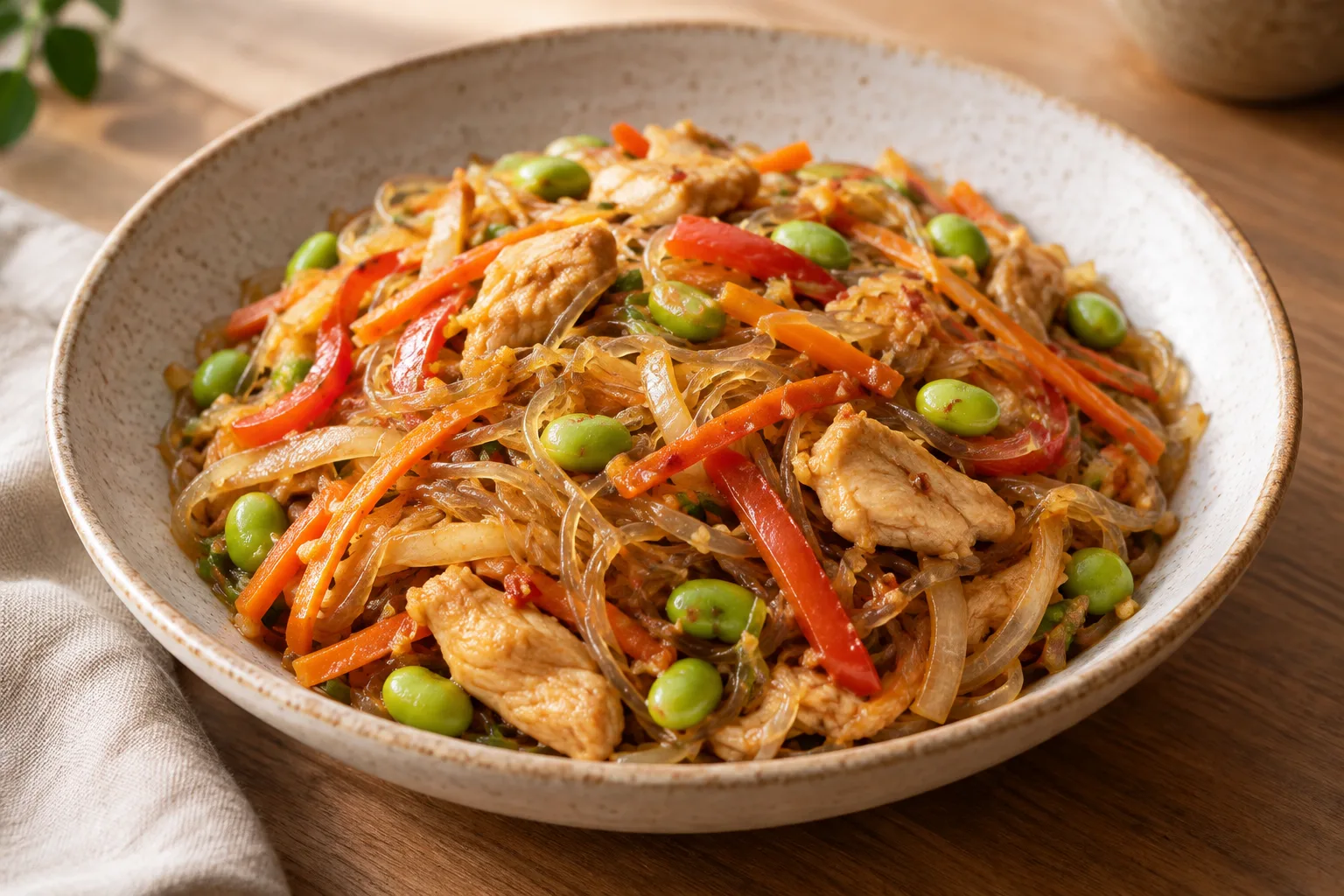
Glass noodles, also called cellophane or crystal noodles, are noodles made mainly from starch and commonly sold dried, often in bundles. Their starch can come from different sources, including mung bean, pea, potato, or sweet potato, so the exact ingredients depend on the product. Once hydrated, they soften and usually become translucent. They are not the same as rice vermicelli: rice vermicelli is made from rice and is generally white or opaque. Glass noodles can also differ in shape, thickness, texture, and preparation method. Check the ingredient list and package directions before cooking rather than assuming that every product behaves alike. Their mild taste makes them a versatile base for broths, sauces, vegetables, and other ingredients.
When to use it
Use glass noodles when you want a flexible noodle base that can be combined with vegetables, herbs, sauces, or protein. They work in soups and broths, quick stir-fries, chilled salads, and some spring-roll fillings. Their translucent appearance sets them apart from rice vermicelli, while their mild flavor lets seasonings take the lead. They are useful in dishes where thin noodles should mix readily with other ingredients or dressing. Preparation depends on the product: some noodles are soaked, while others need brief cooking. Check the package directions and test the texture before adding them to the dish, especially when changing brands or using a different starch.
How to use it
Start by reading the package directions. Depending on the product, glass noodles may need soaking in hot water, resting in freshly boiled water, or brief boiling. Put them in a roomy bowl or pan and use enough water to cover them. Once flexible, drain them well; if the label specifies boiling, follow that method rather than substituting soaking automatically. For a stir-fry, prepare the vegetables and sauce first, then add the rehydrated noodles and toss briefly so they pick up the flavors. For soup, add them when the broth is ready and follow the product's directions. You can also cool them for salads and dress them lightly. Check their texture as they hydrate instead of leaving them in water or on the heat unchecked, since overcooking can make them soft or sticky.
Flavour and texture
Glass noodles have a mild flavor on their own, so they work with broths, dressings, spices, and other ingredients without dominating the dish. When dry, they are thin and rigid; after hydration, they become flexible, slippery, and often translucent. The finished texture can range from springy to soft or somewhat sticky, depending on the starch, thickness, and preparation. Different products should not be assumed to turn out identically. Check for tenderness as they hydrate and drain them when they reach the texture you want.
How to choose it
Look for dried noodles labeled glass, cellophane, crystal, or starch noodles, then check the ingredient list to see which starch is used. Commercial products and recipes may use mung bean, pea, potato, or other starches, which can affect texture and preparation. Check the noodle shape and thickness as well as the package instructions for soaking or cooking. Do not rely on a name alone to distinguish them from rice vermicelli; consult the ingredients if the composition matters for your dish.
Storage
Because glass noodles are commonly sold dried, keep the unopened or opened product in its original packaging, sealed well, or in a clean, dry container, and follow the label. Protect uncooked noodles from moisture and check the package before use. Once rehydrated or cooked, treat them as prepared food rather than as a shelf-stable dried product: refrigerate leftovers in a covered container and follow the manufacturer's storage directions. There is no universal storage duration established here for every variety, so do not infer one from the noodle type alone.
Substitutions
Rice vermicelli can replace glass noodles in some dishes, but it is usually white or opaque and will not have exactly the same appearance or texture. Other starch noodles may also work, although starch source and thickness affect elasticity and preparation. Check the substitute's label and follow its own hydration directions. If a translucent look is important to the dish, rice vermicelli will not give the same visual result.
Common mistakes
Do not assume that every noodle sold as glass noodles uses the same starch or needs the same preparation time. Confusing them with rice vermicelli can change the appearance and texture of a dish. Avoid leaving them in water or over heat longer than directed without checking: they can become too soft, clump, or turn sticky. Drain them well before stir-frying, and use dressing thoughtfully; their mild flavor can be overwhelmed by an overly heavy sauce.
Safety and allergens
Check the ingredient list and follow the package directions, since composition and preparation vary by product. Handle rehydrated noodles as you would other cooked food and refrigerate leftovers in a covered container; no single storage time is established here for every variety.
Culinary uses
- Noodle base for soups and broths
- Base for stir-fries and cold salads
Recommended techniques
- Soaking or rehydrating in water
- Boiling, draining, and briefly stir-frying
Pairs well with
- Crisp vegetables and fresh herbs
- Savory sauces, mushrooms, and meat or seafood
Frequently asked questions
What are glass noodles made from?
They are made mainly from starch, but the starch source varies by product. Check the ingredient list for the specific ingredients.
Are glass noodles the same as rice vermicelli?
No. Glass noodles are starch noodles that often turn translucent when hydrated; rice vermicelli is made from rice and is generally white or opaque.
How long should I soak glass noodles?
There is no single soaking time for every variety. Follow the package directions and check the texture as the noodles hydrate.
Ingredient allergens
Allergen listThere are no verified associations for these ingredients yet.
Estimated nutrition
- Fat
- 0 g
- Saturates
- 0 g
- Carbohydrate
- 88 g
- Sugars
- 0 g
- Fibre
- 4 g
- Protein
- 0 g
- Salt
- 0 g
Sources and review
Automatically researched, cross-checked and validated content. Sources consulted:
- ¿Por qué la muerte es origen de miedos y tabúes? doi.org/10.64628/aao.fccyk3qj3
- llistat 2025 cast (08/04/2026) - Barcelona repositori.upf.edu/bitstreams/a6eb7a57-ce79-4e27-bb35-e80fee4e981f/download
- Nitratos en el Agua Potable extension.psu.edu/nitratos-en-el-agua-potable/
- Verificación de seguridad — Ra. Revista de Arquitectura revistas.unav.edu/index.php/revista-de-arquitectura/article/download/34659/29548/
- Cómo hacer ensalada de fideos celofán - Revista Mia miarevista.okdiario.com/recetas/17214.html
- - YouTube www.youtube.com/watch?v=tum4CfMo258
- Fideo celofán - Wikipedia, la enciclopedia libre es.wikipedia.org/wiki/Fideo_celof%C3%A1n
- Wok de fideos de celofán con verduras - TodoCooking Recetas www.todocooking.com/wok-fideos-celofan-verduras/
- Fideos de celofan salteados con verduras al wok www.hola.com/cocina/recetas/2012032957749/fideos-celofan-verduras/
- FIDEO CELOFÁN CON TERNERA Y SALTEADO DE VERDURAS - MI Cocina y Otras Cosas micocinayotrascosascharyserrano.com/fideo-celofan-con-ternera
- fideos de celofán | CreatiVegan.net creativegan.net/archives/tag/fideos-de-celofan/
- Liangfen (fideos de almidón caseros fresquitos) | CocinaSinReceta.com www.cocinasinreceta.com/recetas/pasta/liangfen/
- Alternativa de Pasta de Cocción Rápida | Fideos Semifermentados Comerciales Fabricados por Wudeli www.xn--rssq37c995a.com/index.php?a=index&aid=182&c=View&m=home