- Category
- Sugar and sweeteners
- State
- Dry
- Usual unit
- g
What it is
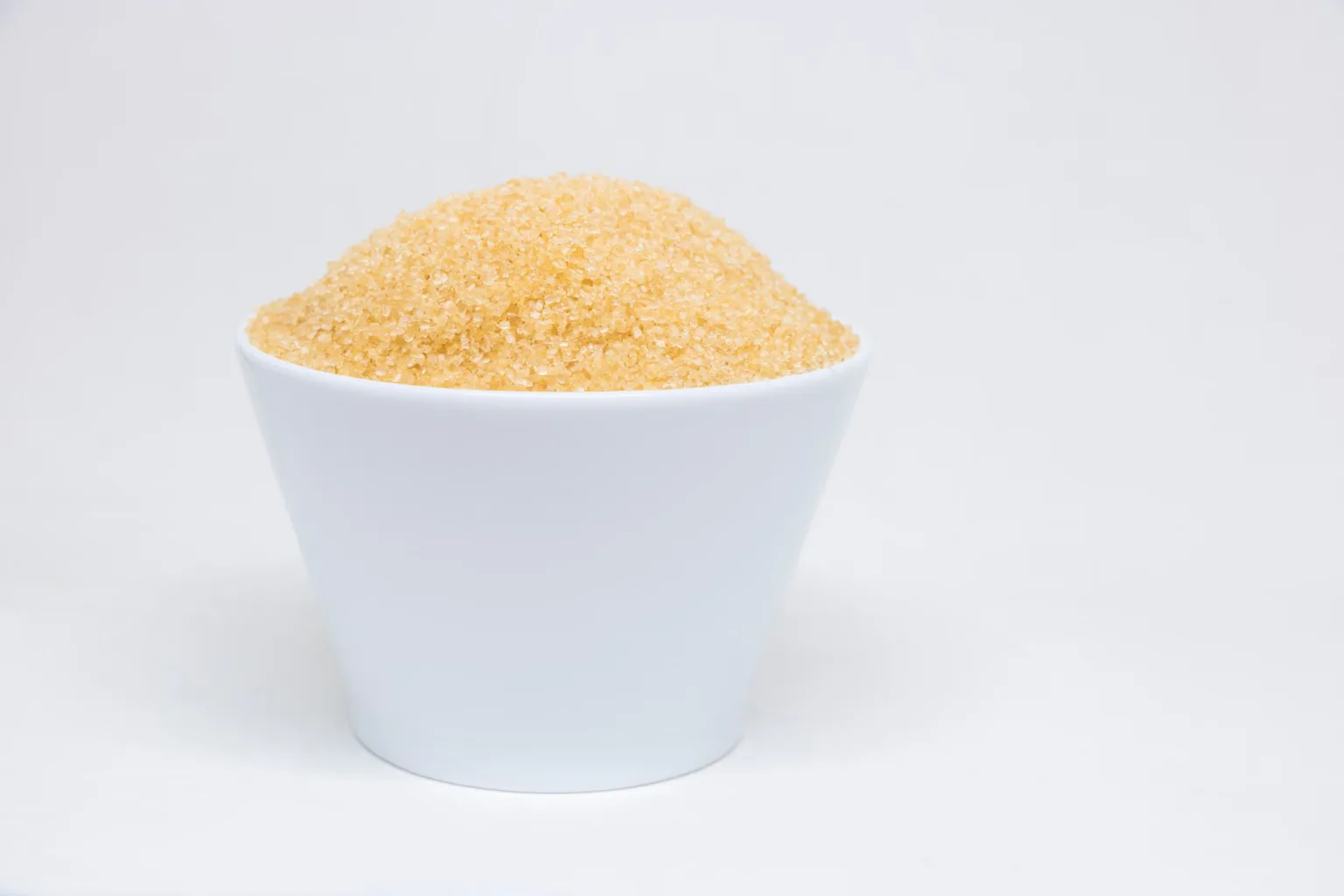
Granulated sugar, also called regular white or table sugar, consists mainly of sucrose and comes as small, visible crystals. It can be made from sugar cane or sugar beet, and crystal size varies between products. It is different from powdered sugar, which has been ground to a fine powder, and from superfine sugar, whose crystals are smaller but still distinct. When a recipe simply calls for “sugar,” granulated sugar is often the standard choice unless another kind is specified. Its crystal form makes it useful for both dissolving in liquids and mixing into many baked preparations.
When to use it
Use it to sweeten drinks and everyday foods, and in baking recipes that call for regular sugar. It is suitable when the mixture can dissolve its crystals or when a little graininess is welcome. In batters, it can be creamed with butter and eggs; it can also be sprinkled over food before baking to help create a crisp surface. When heated, it melts and caramelizes. In savory dishes, a small amount can help balance acidity, but it should not replace careful adjustment of the other flavors.
How to use it
Measure the amount specified in the recipe, especially for baking, where changing the amount or kind of sugar can affect the result. For drinks, stir it in until dissolved; crystals may take longer to disappear in cold liquids. For a creamed batter, follow the recipe’s order and beat the sugar with butter and eggs when instructed. For a crisp topping, sprinkle a moderate amount over the preparation before baking. To make caramel, heat the sugar until it melts and takes on color, watching it closely. Avoid replacing it with powdered sugar or syrup without considering changes to texture and moisture.
Flavour and texture
It adds straightforward sweetness, and its crystals are noticeable to the touch. It dissolves in hot and cold liquids, although the speed depends on temperature, stirring and crystal size. In batters, it can contribute to a tender texture or crisp edges depending on the recipe; when melted and caramelized, it develops color and a characteristic flavor.
How to choose it
Choose a tightly closed, dry package with no visible moisture. The crystals should look loose, although their size may vary by brand. Check that you are buying granulated sugar rather than powdered, superfine or another variety if the recipe requires a particular texture. If the package lists additional ingredients, take them into account before using the product in a precise recipe.
Storage
Keep the sugar in a clean, tightly closed container in a dry place, protected from moisture. Moisture can make crystals clump and harder to measure. Keep the package away from liquids and use a dry utensil. If a recipe requires a very fine texture or a product without added ingredients, check the label before using it.
Substitutions
Superfine sugar can work when faster-dissolving crystals are useful, but its grain size differs. Powdered sugar is much finer, and some products contain starch, so it is not a direct replacement in every recipe. Honey and maple syrup are liquids: they can add moisture and change consistency, so use them only in recipes that can accommodate those changes.
Common mistakes
Do not confuse granulated sugar with powdered sugar: their particle sizes and behavior differ. Do not assume every substitute can be exchanged in the same amount; syrups add liquid, and powdered sugar may contain starch. When making caramel, do not take your attention away while the sugar heats, because its color and state change quickly.
Safety and allergens
Keep the product dry and the package closed, and follow recipe instructions when handling hot mixtures. Hot, melted sugar can cause burns; do not touch it while it is cooking.
Culinary uses
- Sweetens drinks and foods
- Helps create texture and color in baked goods
- Melts and caramelizes in heated preparations
- Can balance acidity in savory dishes
Recommended techniques
- Dissolve in hot or cold liquids
- Cream with butter and eggs
- Sprinkle over food before baking for a crisp finish
- Heat until melted and caramelized
Pairs well with
- Hot and cold drinks
- Butter and eggs in creamed mixtures
- Acidic ingredients in savory preparations
Frequently asked questions
Is granulated sugar the same as powdered sugar?
No. Granulated sugar has visible crystals; powdered sugar is ground into a fine powder and may contain starch.
Does granulated sugar dissolve in cold drinks?
Yes, although it usually takes longer than in a hot liquid. Stirring helps the crystals dissolve.
Can I use granulated sugar to make caramel?
Yes. When heated, it melts and caramelizes. Watch it as it cooks and avoid touching the melted sugar, which can cause burns.
Ingredient allergens
Allergen listThere are no verified associations for these ingredients yet.
Estimated nutrition
- Fat
- 0 g
- Saturates
- 0 g
- Carbohydrate
- 100 g
- Sugars
- 100 g
- Protein
- 0 g
- Salt
- 0 g
Sources and review
Automatically researched, cross-checked and validated content. Sources consulted:
- ¿Por qué la muerte es origen de miedos y tabúes? doi.org/10.64628/aao.fccyk3qj3
- Client Challenge doi.org/10.2307/jj.27939689.16
- Del blanco a la panela: los 19 tipos de azúcar más comunes, en qué se diferencian y cómo usarlos en cocina www.directoalpaladar.com/ingredientes-y-alimentos/blanco-a-panela-19-tipos-azucar-comunes-qu…
- Tipos y variedades de Azúcar que encontrarás en el mercado, apuntes. - Cocina y Aficiones www.cocinayaficiones.com/tipos-variedades-azucar-mercado-apuntes/
- Panela - Wikipedia, la enciclopedia libre es.wikipedia.org/wiki/Panela
- El azúcar: Origen, transformación y papel en la repostería | ecoledepatisserie-boutique® www.google.com/goto?url=CAES_QEB6zswFQC_lzdwVmWTJ6h-qoydKU4ZXOx8Ppaqck_5kz79rZWWgOg9LG0rjuXY…
- Picarón - Wikipedia, la enciclopedia libre es.wikipedia.org/wiki/Picar%C3%B3n
- Conoce los tipos de azúcar en la repostería | Recetas Nestlé www.recetasnestle.com.ec/escuela-de-sabor/tips-de-recetas/tipos-azucar
- Azúcar Glass: Análisis y Comparativa de las Mejores Opciones para Tus Dulces aliciascake.es/azucar-glss/
- - YouTube www.google.com/goto?url=CAESZgHrOzAVUJxmWWNgEpZLej7zIR3HWsbSCYRWfLGLkdJOZefmYH46k4qY841kSZkc…