- Category
- Dairy and eggs
- State
- Fresh
- Usual unit
- g
What it is
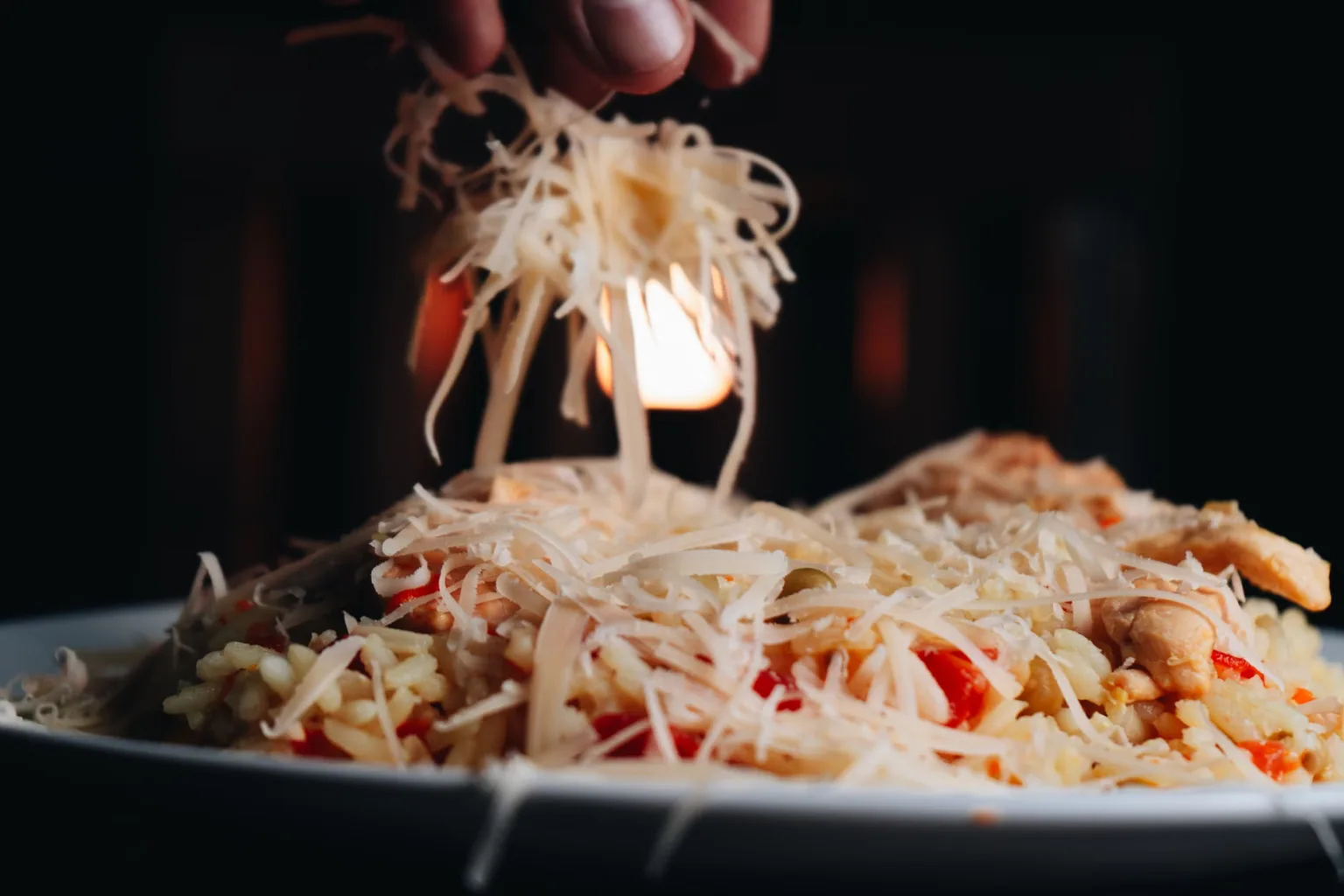
Queso Paraguay is a fresh cheese associated with Paraguayan cooking. It is described as firm but somewhat crumbly, with a mild, slightly salty flavor and a white to ivory-white color. In grated form, it is convenient for distributing through doughs and other preparations. Traditional versions are made with cow’s milk, rennet and salt. Characteristics can vary among producers and individual products, so check the label of the cheese you buy rather than assuming every version is identical.
When to use it
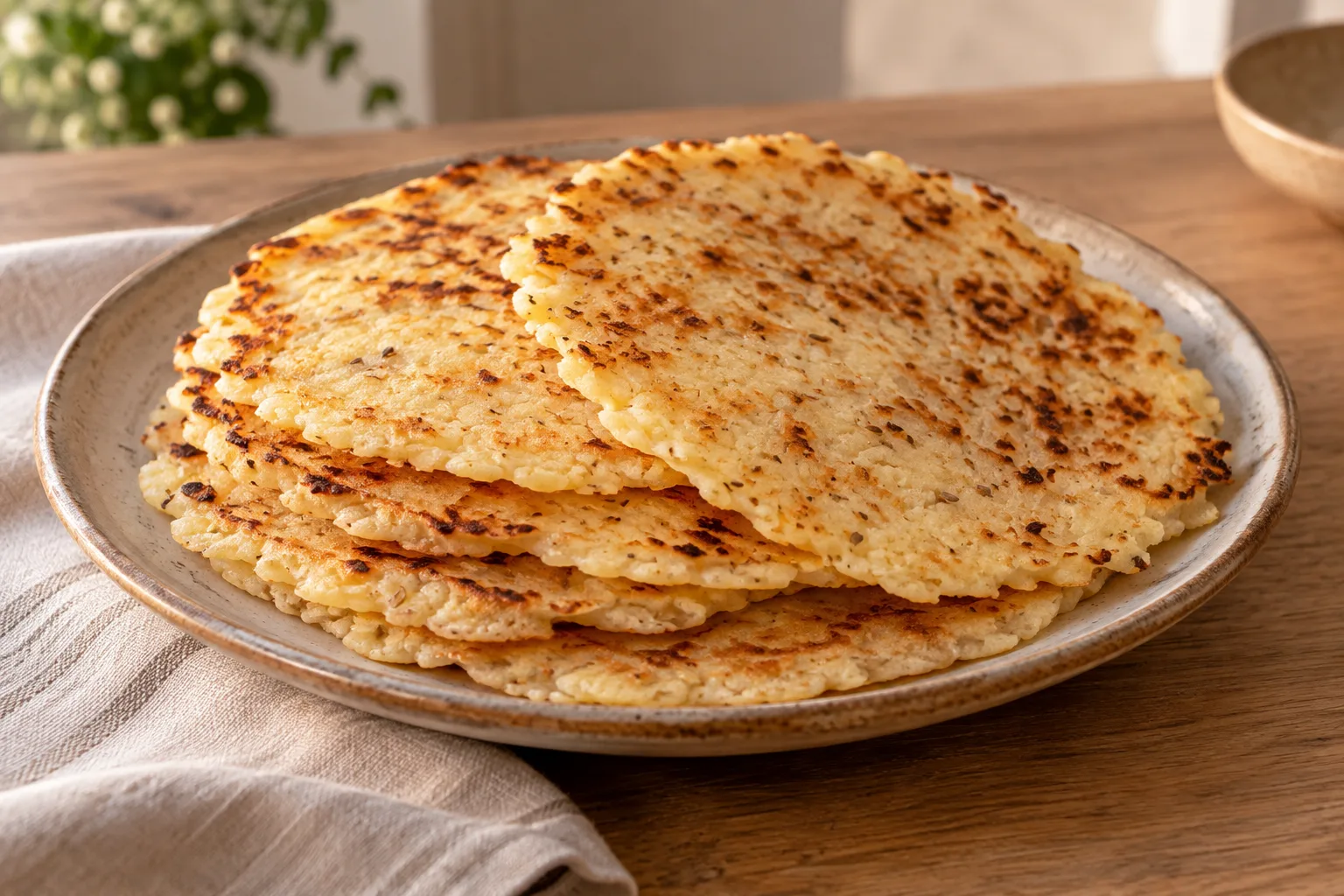
Use it when you want to add cheese to Paraguayan preparations such as chipa, sopa paraguaya, mbejú, empanadas or tortillas. It can also be served on its own in cubes or slices, or included in breakfast and snack meals with bread, cassava or mate cocido. Its described mild, slightly salty character suits recipes where you want a noticeable but not necessarily dominant cheese flavor. Adjust the amount to the recipe and the particular product.
How to use it
Stir the grated cheese into the dough or mixture for your chosen recipe and distribute it evenly. It is associated with chipa, sopa paraguaya, mbejú, empanadas and tortillas; follow the proportions and method of the recipe you are making, since there is no single universal quantity for every Paraguayan cheese. You can also serve it uncooked in cubes or slices with bread or cassava, or alongside mate cocido. Check the package for product-specific directions.
Flavour and texture
The cheese is described as mild and slightly salty, with a firm yet somewhat crumbly texture. Its color is generally white to ivory-white. Grating makes it convenient to mix into preparations; the exact result depends on the moisture and texture of the particular cheese. Do not assume that every commercial product has identical saltiness or consistency.
How to choose it
Look for a product identified as Queso Paraguay, and check that it is grated if that is the form you need. Read the label for ingredients, package condition and storage directions. Paraguayan cheese is generally described as fresh, firm and somewhat crumbly, but appearance and texture may differ among producers. Choose a product that suits the dish you plan to make.
Storage
Follow the package’s storage directions, especially after opening. Queso Paraguay is described as fresh, but the available product information does not establish one universal storage period or set of conditions for every version. Do not assume a specific shelf life; refer to the label on the product you have and follow its instructions.
Substitutions
No exact substitute for grated Paraguayan cheese is established here. If you need an alternative, look for a fresh cheese with a mild flavor and a firm, slightly crumbly texture, and adjust the amount to your recipe. The flavor and consistency may differ, so a substitute cannot be expected to reproduce the original ingredient exactly.
Common mistakes
Do not assume every grated cheese will give the same flavor and texture: Paraguayan cheese is described as mild, slightly salty, firm and somewhat crumbly. Avoid treating one quantity as universal across recipes. If you change the cheese or its form, adjust the amount and check the package directions.
Safety and allergens
Contains milk. Follow the package’s storage and use directions, particularly after opening.
Culinary uses
- Cheese ingredient for traditional Paraguayan baked goods and savory dishes
- Table cheese served in pieces or slices
Recommended techniques
- Grate or crumble and mix into a preparation
- Fold into dough or batter for baking
Pairs well with
- Bread
- Cassava (mandioca)
- Mate cocido
Frequently asked questions
What does Paraguayan cheese taste like?
It is described as mild and slightly salty; the exact flavor can vary by product.
What dishes use it?
It is used in chipa, sopa paraguaya, mbejú, empanadas and tortillas. It can also be served with bread, cassava or mate cocido.
How should I store it?
Follow the package’s storage directions. No single storage period is specified for every product.
Ingredient allergens
Allergen listThere are no verified associations for these ingredients yet.
Estimated nutrition
- Fat
- 27.8 g
- Saturates
- 15.4 g
- Carbohydrate
- 13.9 g
- Sugars
- 0.07 g
- Fibre
- 0 g
- Protein
- 28.4 g
- Salt
- 4.5 g
Sources and review
Automatically researched, cross-checked and validated content. Sources consulted:
- ¿Por qué la muerte es origen de miedos y tabúes? doi.org/10.64628/aao.fccyk3qj3
- Client Challenge doi.org/10.2307/jj.27939689.16
- The Essential Glossary of Cooking Terms for the Culinary Arts - Escoffier www.escoffier.edu/blog/culinary-arts/the-essential-glossary-of-cooking-terms-for-the-culinar…
- Queso Paraguay: tradición, identidad y sabor nacional – Quesos Rody rody.com.py/feria-de-queso-este-domingo/
- Elaboración de pastas artesanales con ocho tipos de harinas y su aplicación en nuevas recetas | OpenAlex openalex.org/W2197804739
- lemmas.txt downloads.cs.stanford.edu/nlp/data/CoNLL17_Parser_Models/Spanish/Spanish-Parser/lemmas.txt
- - YouTube www.youtube.com/watch?v=0YZsYQC_YIY
- Chipa - Wikipedia, la enciclopedia libre es.wikipedia.org/wiki/Chipa
- Cocina Rica - Cómo se prepara el queso Paraguay www.cocinarica.com.py/prepara-queso
- Recetas para comer fuera de casa: Lasaña de verduras al pesto www.cordonbleu.edu/madrid/recetas-para-comer-fuera-de-casa-lasana-verduras-pesto/es
- Food allergen labelling and information requirements technical guidance - GOV.UK www.gov.uk/government/publications/food-allergen-labelling-and-information-requirements-tech…