- Category
- Herbs and spices
- State
- Powdered
- Usual unit
- pinch
What it is
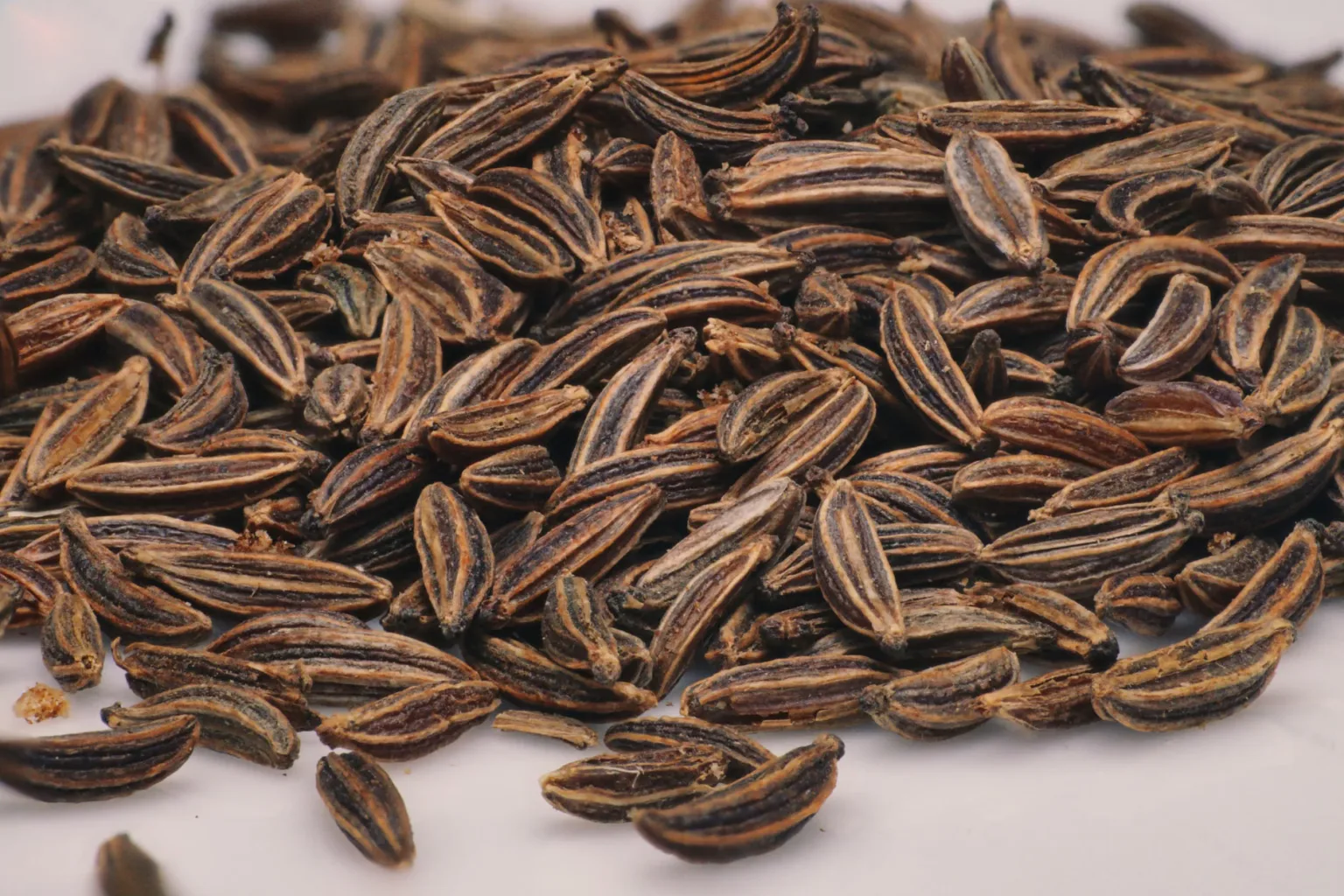
Ground caraway is the powdered form of caraway, an aromatic spice identified as Carum carvi. The small dry parts used as a spice are fruits, although they are commonly called seeds. Caraway can be confused with cumin by name, but they are different ingredients with distinct flavor profiles. Its aroma combines anise-like notes with warm, earthy and slightly citrusy nuances. Because it is ground, it mixes readily into doughs, sauces, marinades and spice blends, distributing its flavor more evenly than whole caraway. Its aroma is pronounced, so starting with a pinch and adjusting to taste is a practical approach.
When to use it
Choose ground caraway when you want its aroma spread evenly through a dish rather than distinct whole pieces in each bite. It can be added to bread dough, spice blends, soups and sauces, as well as marinades and stews. It works particularly well with cabbage preparations such as sauerkraut, and can also accompany potatoes, cheese and meat. Its anise-like, spiced profile differs from that of ordinary cumin: swapping the two automatically can noticeably change a dish. If you are unfamiliar with its intensity, begin with a small amount and taste before adding more.
How to use it
Stir ground caraway directly into dough, sauce, marinade or a spice blend when you want its flavor distributed evenly. For a cooked dish, add it as a seasoning and mix thoroughly so the flavor does not collect in one spot. In bread and other doughs, incorporate it with the wet or dry ingredients as the recipe directs. In sauces, stews or cabbage dishes, start with a pinch and taste before adding more, since its aroma can stand out. Do not assume it can replace cumin in equal measure: the two taste different. Fennel or anise may work in some dishes when you want an anise-like note, but each changes the result.
Flavour and texture
Ground caraway has a warm, spiced aroma with notes reminiscent of anise and fennel, along with slight citrusy and earthy nuances. It is not the same as cumin, even though the ingredients may be confused by name or by the appearance of whole fruits. As a powder, it mixes easily and distributes its flavor more evenly than whole caraway. Its pronounced aroma means even a small quantity can be noticeable in a dish.
How to choose it
Check that the package identifies the spice as caraway or Carum carvi, especially when following a recipe translated from another language where cumin may be confused with caraway. Choose the ground form when you want the flavor to blend evenly into doughs, sauces, marinades or spice blends. Check the product information and packaging to confirm you are buying the form you want and that the container is properly closed. If you use it only occasionally, a smaller amount may be practical.
Storage
Keep ground caraway in an airtight container, away from light, moisture and heat. Close the package after each use and avoid storing it beside steam or a heat source. Ground spice loses its aroma faster than whole caraway, so choose an amount that suits how often you cook with it. Follow any storage directions on the package and discard the product if its appearance or smell changes unusually.
Substitutions
Fennel or anise can provide an anise-like note in some recipes, but neither is an exact replacement for caraway: they may taste sweeter or more distinctly anise-like. Use them sparingly and expect a different result. Ordinary cumin is not an identical substitute either; its profile is more earthy, warm and intense. The best choice depends on the dish and the flavor you want to retain.
Common mistakes
Do not confuse caraway with cumin: they are different spices, and switching one for the other can substantially change a dish. Fennel and anise are not exact replacements either; they share some aromatic notes but have different profiles. Avoid adding a large amount all at once. Caraway is pronounced, and it is easier to adjust the flavor gradually.
Safety and allergens
If you have a food allergy, check the ingredient list for the specific product and ask the manufacturer or seller if its information is unclear. Products can differ in composition, and ground caraway may be sold in a blend; do not assume every package contains only this spice.
Culinary uses
- Seasoning for breads, doughs and baked goods
- Aromatic seasoning for sauces, marinades, stews and spice blends
Recommended techniques
- Mix into dough, sauces or marinades so the flavor is evenly distributed
- Add to stews and other cooked dishes as a seasoning
Pairs well with
- Cabbage and sauerkraut
- Bread, potatoes, cheese and meat
- Onion, garlic and olive oil
Frequently asked questions
Is ground caraway the same as ground cumin?
No. Caraway and cumin are different spices with different flavor profiles. Caraway has anise-like and slightly citrusy notes, while cumin is generally more earthy, warm and intense.
What can I use ground caraway in?
Add it to bread dough, sauces, marinades, spice blends and stews. It also pairs well with cabbage dishes, potatoes, cheese and meat.
How should I store ground caraway?
Keep it in an airtight container away from light, moisture and heat. Ground caraway loses its aroma faster than whole caraway.
Ingredient allergens
Allergen listThere are no verified associations for these ingredients yet.
Sources and review
Automatically researched, cross-checked and validated content. Sources consulted:
- Client Challenge doi.org/10.2307/jj.27939689.16
- Potencial de crecimiento de especias no tradicionales en Argentina | OpenAlex openalex.org/W7204293610
- Curry - Wikipedia, la enciclopedia libre es.wikipedia.org/wiki/Curry
- Etiquetado de sustancias que causan alergias e intolerancias alimentarias www.aesan.gob.es/seguridad-alimentaria/informacion-alimentaria/etiquetado-sustancias
- Alcaravea | PAPRIMUR paprimur.es/productos/alcaravea/
- Maridajes para alcaravea en Sur de Europa ✓ basmatic.com/maridaje/alcaravea/sur-de-europa
- Allergies - Food Safety - European Commission food.ec.europa.eu/food-safety/campaign-2026/allergies_en
- Food Allergies | FDA www.fda.gov/food/nutrition-food-labeling-and-critical-foods/food-allergies
- RISK ASSESSMENT OF FOOD ALLERGENS - IRIS iris.who.int/server/api/core/bitstreams/6c71a3db-88b8-4fcd-a807-f5220eb4fc34/content
- **ALCARAVEA (Carum carvi)** botplusweb.farmaceuticos.com/Documentos/2010/8/18/44119.pdf
- Alcaravea - cocinaconmarco.com cocinaconmarco.com/ingredient/alcaravea/
- - YouTube www.youtube.com/watch?v=8OLOZyGKfU0