- Category
- Herbs and spices
- State
- Powdered
- Usual unit
- teaspoon
What it is
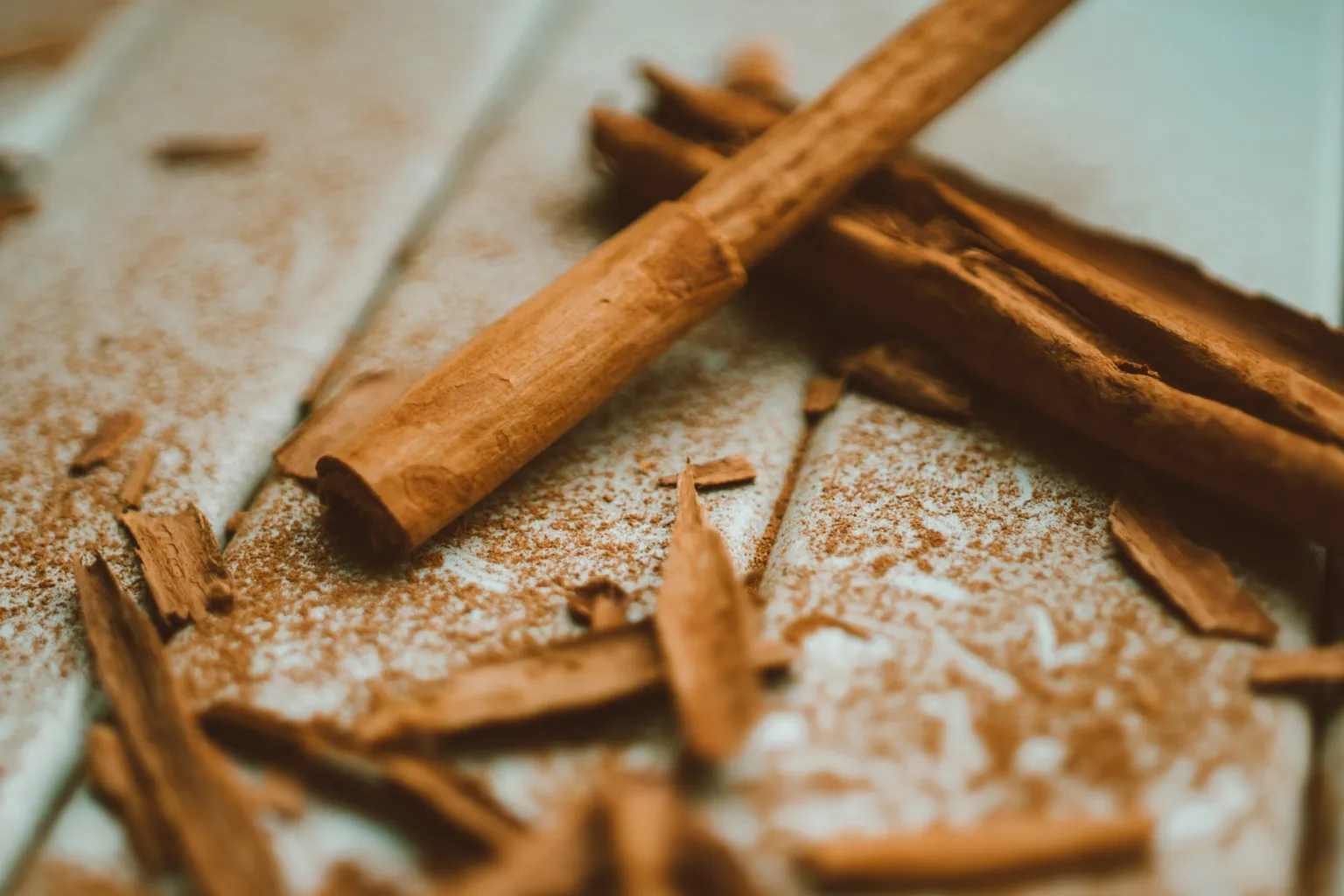
Ground cinnamon is the dried, finely milled bark of trees in the genus Cinnamomum. As a powder, it is convenient for dough because it can be mixed directly with the ingredients rather than removed after steeping. The name cinnamon covers varieties with different flavor profiles: some taste gentler and more delicate, while others are more assertive and spicy. The aroma and character of a dough can therefore vary with both the type of cinnamon and the amount used. In this profile, “ground cinnamon for the dough” means the powdered spice added before baking, not a spice blend or prepared dough.
When to use it
Use it when you want its aroma distributed throughout a sweet dough, such as cake, cookies, sweet breads, or spiced pastry. It also pairs well with fruit desserts and chocolate, and can stand up to recipes with fuller flavors. A gentler variety may suit a bake where you want other ingredients to remain prominent; a stronger one works when you want cinnamon to be clearly noticeable. Varieties do not taste exactly alike, so begin with the amount specified in the recipe and adjust cautiously in later batches.
How to use it
Measure the amount specified in your recipe and whisk it into the dry ingredients before combining them with the wet ingredients. This helps distribute the spice through the dough and reduces the chance of concentrated patches or small clumps. If the recipe combines spices with flour, sugar, or other dry ingredients, add the cinnamon at that stage. You can also dust a little over a finished dessert or drink, but that is different from incorporating it into dough. If you switch varieties, remember that the flavor may be milder or stronger; do not increase the amount automatically. Avoid breathing in the powder while measuring and clean the work surface after use.
Flavour and texture
Cinnamon brings a warm, sweet, spicy aroma, although its exact profile depends on the variety. Some types are gentle and delicate; others are more intense and slightly peppery. The fine powder blends readily with dry ingredients and can give dough a warm brown tint. Its flavor may stand out in simple recipes and sit alongside pronounced ingredients such as chocolate or nuts.
How to choose it
Choose a package clearly labeled as ground cinnamon, and check the label if you want a particular variety such as Ceylon. It can be difficult to distinguish varieties by appearance once they are powdered, so package information is more useful than color. When possible, select a tightly sealed package with no sign of moisture. A faint or dull aroma may contribute less character to dough; remember that strength also depends on the variety.
Storage
Keep cinnamon in a tightly closed container and follow the package’s storage directions. Keep it dry and avoid leaving the container open while preparing dough. Its aroma may fade during storage, so check it before using it in a recipe where cinnamon is a main flavor. Do not compensate automatically with extra powder if the aroma seems weaker: the result also depends on the variety and the other ingredients.
Substitutions
Ceylon cinnamon can replace cassia, and cassia can replace Ceylon, but the result will not be identical: their profiles can range from gentle to more intense. When changing varieties, start with the recipe’s stated amount and assess the result before adjusting in a future batch. A cinnamon stick does not work in dough in the same way; it is usually used to infuse liquids and then removed, so it is not a direct replacement for the powder in a dough.
Common mistakes
Do not add the powder in one heap to already-mixed dough, as it may remain unevenly distributed. Do not assume every variety has the same strength, or add extra simply because the powder looks pale. Measuring without following the recipe can also make cinnamon overpower other flavors. If a recipe calls for ground cinnamon, do not swap in a stick without changing the method.
Safety and allergens
Use cinnamon sold for food and follow the package directions. Avoid inhaling the powder while measuring, and keep it out of reach of young children during preparation.
Culinary uses
- Flavoring for sweet doughs and baked goods
- Aromatic spice for desserts and drinks
Recommended techniques
- Whisk into the dry ingredients before mixing the dough
- Sprinkle over finished desserts or drinks
Pairs well with
- Apples and other fruit desserts
- Chocolate, nuts, and sweet doughs
Frequently asked questions
When should I add ground cinnamon to dough?
It is usually mixed with the dry ingredients before they are combined with the wet ingredients, helping distribute the flavor evenly.
Do all ground cinnamon varieties taste the same?
No. Varieties can differ in strength and flavor notes; check the label if you want a particular type.
Can I replace ground cinnamon with a cinnamon stick?
Not directly in dough. A stick is generally used to infuse liquids, while the powder is mixed through the dough.
Ingredient allergens
Allergen listThere are no verified associations for these ingredients yet.
Sources and review
Automatically researched, cross-checked and validated content. Sources consulted:
- Qué es eso llamado epistemología, para qué sirve, por qué es inexcusable para la universidad y para la paz | Reencuentro. Análisis de problemas universitarios doi.org/10.24275/uamxoc-dcsh/reencuentro/202386-14
- Todo sobre canela : origen, tipos, usos y beneficios - Spice and Colour www.spiceandcolour.com/todo-sobre-canela-origen-tipos-usos-y-beneficios/
- Canela: Tipos, Usos Funcionales y Propiedades | Alveus www.alveus.eu/es/blog/canela-tipos-y-usos/
- Appendix B: Recipes for Disease Prevention – Culinary Medicine opentextbooks.library.arizona.edu/culinarymedicine/back-matter/appendix-b-recipes/
- Galenic Medicine and Women's Recipes in the Early etd.ohiolink.edu/acprod/odb_etd/ws/send_file/send?accession=akron1744386918268332&dispositio…
- DISEÑO DE UN PRODUCTO ALIMENTICIO PARA EL ... upcommons.upc.edu/bitstreams/e99259de-56b1-479a-ae72-838b6287bd7d/download
- Vamos a Conservar Alimentos: Mermeladas, jaleas y compotas extension.psu.edu/vamos-a-conservar-alimentos-mermeladas-jaleas-y-compotas/
- Evaluación de las Propiedades Físicas, Químicas, ... bdigital.zamorano.edu/server/api/core/bitstreams/b017ef41-d5ab-4122-968b-332f7287a7f1/conten…
- Conoce más sobre la canela, tipos y recetas | Recetas Nestlé www.recetasnestle.com.ec/escuela-de-sabor/tips-de-recetas/canela
- 💥 Usos de la CANELA en REPOSTERÍA - Cómo usarla, trucos y recetas www.lolitalapastelera.com/usos-de-la-canela-en-reposteria/
- Canela: qué es, propiedades, contraindicaciones y usos bonviveur.com/es/noticias/canela
- Canela en Polvo: Análisis, Comparativa y Mejores Opciones para Repostería y Dulces Caseros doncaramelo.es/canela-polvo/