- Category
- Herbs and spices
- State
- Powdered
- Usual unit
- teaspoon
What it is
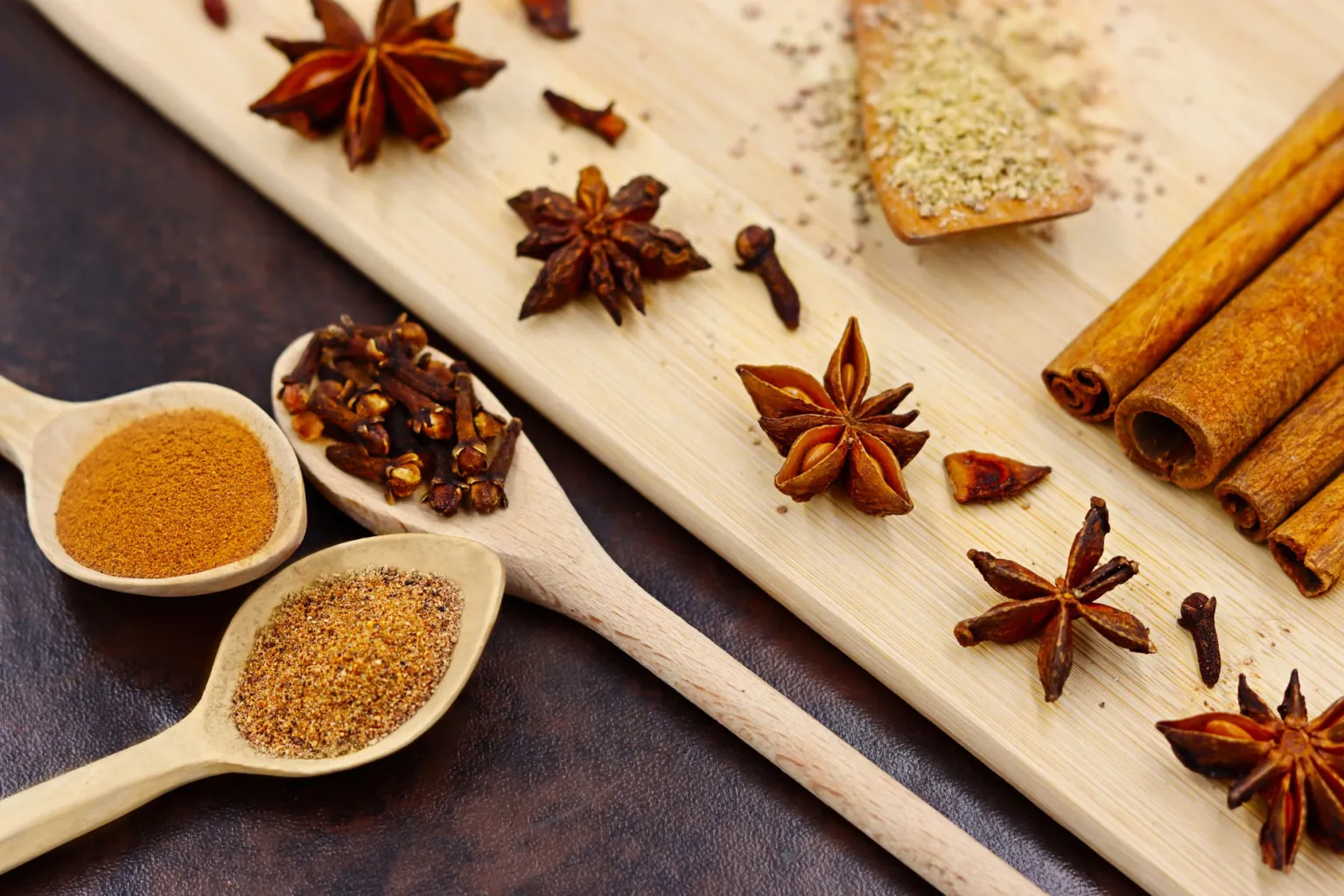
Ground star anise is the dried, milled spice made from the star-shaped fruits of Illicium verum. Unlike whole stars, the powder can be mixed directly into a dish and does not need to be removed before serving. Its aroma is strong, sweet, warm, and distinctly anise-like, with a recognizable licorice note. It appears in both sweet and savory cooking and is also used in blends such as Chinese five-spice powder. Star anise and common anise are different plants, although both have an anise-like character. Ground spice can lose aromatic intensity after milling, so some cooks prefer to grind whole stars just before use.
When to use it
Choose ground star anise when you want its flavor distributed throughout a dish, such as in cookies, breads, sweet doughs, spice mixes, marinades, or sauces. It can also add depth to soups and stews when its anise-like profile suits the other ingredients. For long-cooked dishes, begin with a small amount and adjust after the flavors have had a chance to combine. In drinks, remember that ground spice remains in the liquid, unlike a whole star that can be removed. If you want a more pronounced fresh aroma, grind whole stars shortly before cooking instead.
How to use it
Add the powder gradually and mix it thoroughly into dry ingredients or the base of a sauce or marinade so its flavor is evenly distributed. Its aroma is concentrated, so begin with a pinch or a small portion of the intended seasoning, taste when appropriate, and add more only if needed. For baking, blend it into the flour, sugar, or spice mixture before adding wet ingredients. In stews, soups, and sauces, add it during preparation so it can meld with the dish; because it is ground, it stays in the food rather than being lifted out like a whole pod. It pairs with cinnamon and cloves in sweet recipes, and with ginger, garlic, or soy sauce in savory cooking.
Flavour and texture
The flavor is sweet, warm, and strongly anise-like, with a licorice note and fragrant spice character. The fine powder disperses through a dish, so it is not confined to a piece that can be removed. Strength can vary with the product and how long it has been ground; stars ground shortly before use may have a more noticeable aroma. Too much can mask delicate flavors, so add it carefully.
How to choose it
Look for a sealed package that clearly identifies the product as ground star anise and has a legible date. Check that the powder shows no obvious signs of moisture or contamination and that the package is intact. Because the spice may lose aromatic intensity after grinding, choose an amount you can use while it still has a recognizable anise-like aroma. If you prefer to control the intensity and grind just before cooking, buy whole stars and crush them as needed.
Storage
Follow the storage directions and date on the package, since there is no single shelf life that applies to every product. Keep the package closed between uses and prevent the powder from contacting moisture or damp utensils. If its anise-like aroma has become very faint or the product has unusual changes, do not expect it to flavor a recipe in the same way; check the manufacturer’s instructions as well.
Substitutions
Ground anise seed can provide a related anise-like character, but it is not identical to star anise and may change the result. Chinese five-spice powder is an option only when its cinnamon, clove, and other notes suit the dish. Another choice is to grind whole star anise just before use; this keeps the same ingredient and lets you adjust the amount to the recipe.
Common mistakes
A common mistake is adding too much powder at once: its strong flavor can cover other ingredients. Start with a little and adjust carefully. Do not confuse it with common anise; they are different spices, even though their aromas are related. Do not automatically replace it with five-spice powder either, since that blend adds other flavors and changes the dish’s profile.
Safety and allergens
Use a food product according to its package directions, and do not use it if the package is damaged or the product looks unusual. Ground spice blends into food and cannot be removed like a whole star, so measure it carefully. Do not use preparations or oils that are not labeled as food-grade in recipes.
Culinary uses
- Aromatic seasoning for sweet dishes and baked goods
- Flavoring for savory stews, soups, sauces, and drinks
Recommended techniques
- Stir a small amount of ground spice into a recipe
- Mix into spice blends or marinades
Pairs well with
- Cinnamon, clove, and Sichuan pepper
- Soy sauce, ginger, garlic, pork, and chicken
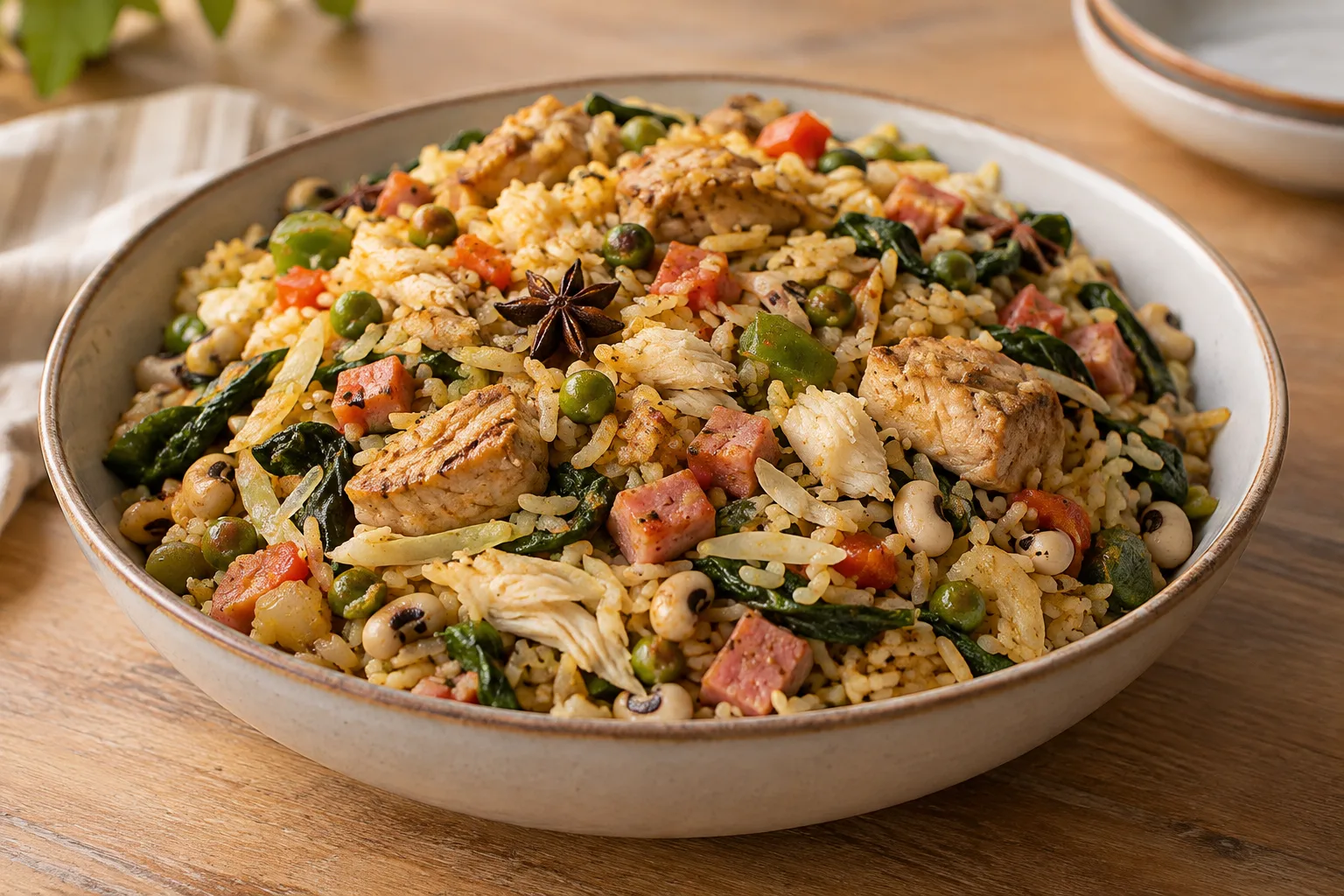
- Rice, milk-based desserts, and warm drinks
Frequently asked questions
Is ground star anise the same as common anise?
No. They come from different plants, although both have an anise-like character. One does not reproduce the other’s flavor exactly.
What dishes can I use it in?
It can flavor cookies, breads, desserts, spice blends, marinades, sauces, soups, and stews. Start with a small amount because its aroma is strong.
Can I replace it with Chinese five-spice powder?
Only if the blend’s additional notes, such as cinnamon, cloves, and other spices, suit the recipe. It is not a flavor-for-flavor replacement.
Ingredient allergens
Allergen listThere are no verified associations for these ingredients yet.
Sources and review
Automatically researched, cross-checked and validated content. Sources consulted:
- Client Challenge doi.org/10.2307/jj.27939689.16
- **Juniperus communis www.mapa.gob.es/ministerio/pags/biblioteca/revistas/pdf_DYC/DYC_2005_83_133_146.pdf
- Aceite de Anís Estrellado doi.org/10.31003/uspnf_m8338_02_02
- Especia - Wikipedia, la enciclopedia libre es.wikipedia.org/wiki/Especia
- Anis estrellado propiedades, usos y recetas fáciles | Cocinatis www.cocinatis.com/como-cocinar/consejos-trucos/anis-estrellado_1_1146013.html
- Conoce el anís estrellado en la cocina | Recetas Nestlé www.recetasnestle.com.ec/escuela-de-sabor/tips/anis-estrellado
- " El amor en los tiempos del cólera -- [Love in the Time of Cholera]" people.duke.edu/~garci/cibertextos/bilingues/GARCIA-MARQUEZ-G/AMOR-TIEMPOS-COLERA/AMOR-TIEMP…
- Propuesta de aplicación de técnicas de elaboración de pasta con especias dulces en preparaciones de cocina de autor | OpenAlex openalex.org/W2935162661
- La cocina técnico conceptual: origen, significado, características y propuesta gastronómica a partir de 25 productos cultivados, en la provincia del Azuay-Ecuador | OpenAlex openalex.org/W66629700
- Anís estrellado | Gastronomía & Cía www.gastronomiaycia.com/anis-estrellado/
- ¿Qué es el anís estrellado y por qué es tan popular? - Consumer Reports www.consumerreports.org/es/salud/que-es-el-anis-estrellado-y-por-que-es-popular-a9767369079/
- Ingredientes que maridan con anís estrellado ✓ basmatic.com/maridaje/anis-estrellado
- Anís estrellado: análisis y comparativa de las mejores opciones asiáticas para cocinar y preparar sushi sukimotril.es/anis-estrellado/
- Infusión de anís estrellado: análisis y comparativa de las mejores opciones para potenciar tu café quemescafeteria.es/infusion-anis-estrellado/
- Anís estrellado | Gastronomía & Cía www.gastronomiaycia.com/anis-estrellado/amp/