- Category
- Dairy and eggs
- State
- Preserved
- Usual unit
- g
What it is
Gruyère is a firm cow’s-milk cheese associated with the Alpine-style, cooked-curd group. In cooking, it is valued for staying cohesive when melted, which makes it useful in fondue and other hot dishes. It is sold in pieces or portions and can be grated, sliced or served in chunks. Flavor and texture are not identical in every piece: they may vary with the product and its maturation. Read the label and choose an intensity that suits the dish rather than assuming every Gruyère tastes the same. The name may also appear on products with differing characteristics and declared origins, so check the package if a particular region or designation matters to you. The cheese can be used simply at the table or incorporated into cooked recipes.
When to use it
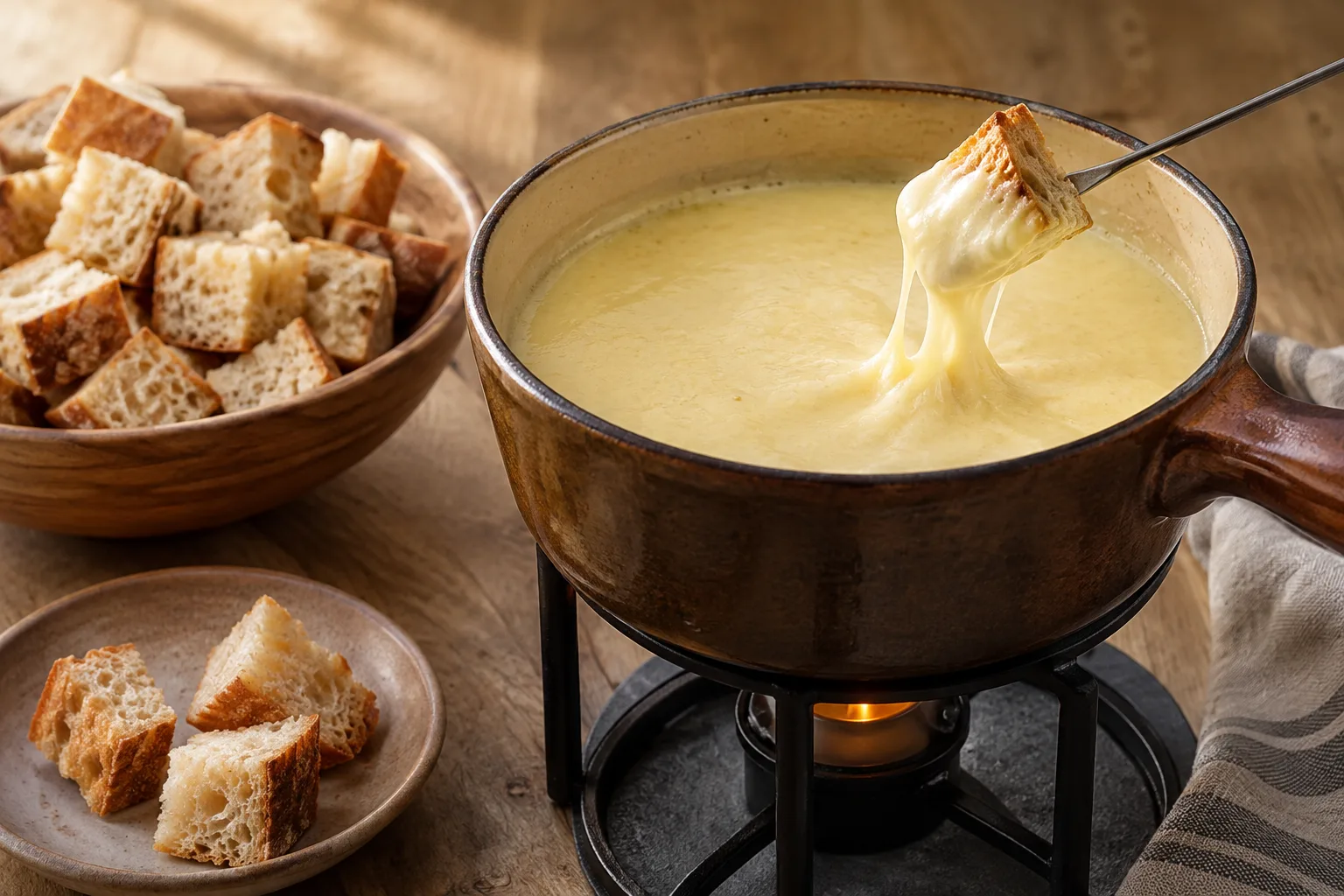
Choose Gruyère when you want a distinctive cheese that melts into a hot dish while retaining an appealing texture. It is suitable for fondue, gratins, onion soup, tartiflette, quiche and pasta sauces. It can also be served on a cheese board or in a sandwich, where its flavor is enjoyed without melting. In recipes with several ingredients, grate or slice it so it distributes evenly and incorporates more readily. If a smooth melted texture is central to the dish, use it as the main cheese or combine it with other Alpine-style cheeses. Adjust the seasoning to the cheese and the mixture you are using.
How to use it
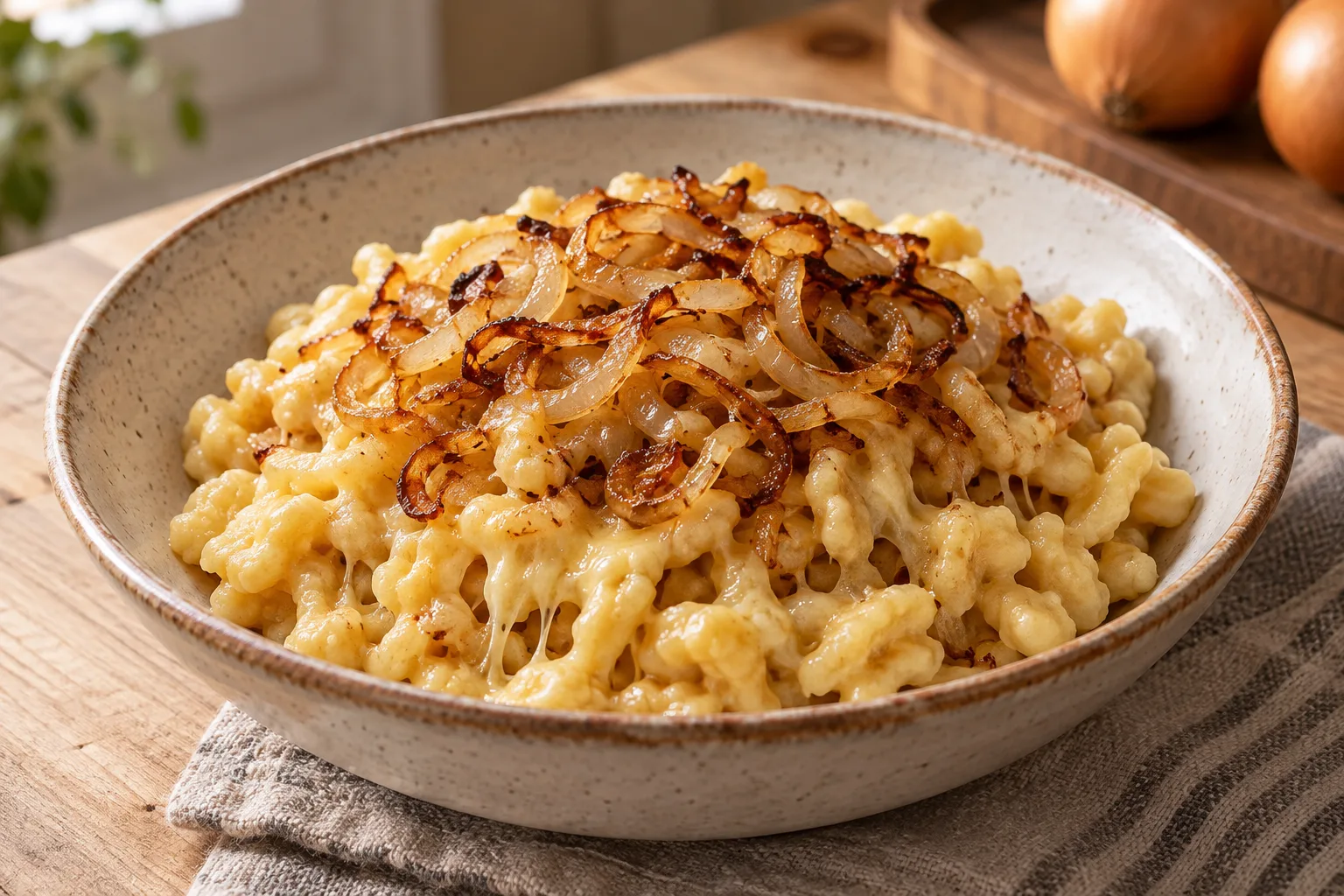
Remove the rind if you do not want to include it, then grate the cheese or cut it into slices or cubes to suit the recipe. For a sauce, add it gradually to a warm base and stir until melted; avoid excessive or prolonged heat, which can affect texture. For a gratin, scatter grated cheese over the dish and heat until melted and browned to your preference. For fondue, follow a balanced recipe and add the cheese gradually, stirring to make an even mixture. You can also fold it into pasta with mushrooms and peas, or serve it sliced with bread. Because individual cheeses vary, taste the dish before adding more salt or other seasoning.
Flavour and texture
Gruyère is a firm Alpine-style cheese with a structure suited to grating, slicing and melting in hot dishes. Descriptions of different examples include mild, sweet and nutty notes, while more mature cheeses can taste more intense. Texture and flavor vary with the particular product and its maturation. Do not assume every piece will have the same strength of flavor or degree of creaminess.
How to choose it
Look for a clearly identified Gruyère and read the package for the product type, declared origin and storage directions. If you plan to make fondue or sauce, choose a firm piece that you can grate just before cooking; for a cheese board, choose an intensity you enjoy and serve it sliced. Flavor can vary with maturation, so the name alone does not tell you exactly how strong it will taste. If a specific geographical designation matters, check that it is expressly stated on the label.
Storage
Store the cheese as directed on its package and observe the date shown there. Once opened, wrap the portion securely or place it in a suitable container to limit exposure to air and odors from other foods, and refrigerate it. Avoid leaving it exposed for extended periods. If its appearance or smell changes unusually, or you are unsure how it has been stored, do not eat it; follow local food-safety guidance.
Substitutions
Comté and Emmental can be alternatives in fondue or gratins because they belong to Alpine-style cheese families used in melted dishes. They are not identical to Gruyère: flavor and texture can change with the cheese and recipe. Add the substitute gradually and taste before adding salt or other seasonings, especially when replacing only part of a blend.
Common mistakes
Do not assume every piece tastes or melts exactly alike: maturation and the individual product matter. Avoid adding the cheese all at once to a sauce or exposing it to excessive heat, which can make the texture less uniform. Do not season by habit; taste the dish before adding more salt.
Safety and allergens
Contains milk. Check the label if you have a milk allergy or intolerance, follow the package’s storage directions, and do not eat cheese with an unusual appearance or smell.
Culinary uses
- Queso para fundir en fondue, gratinados y salsas
- Queso de mesa para servir en tablas o con pan
Recommended techniques
- Rallar o cortar en láminas antes de incorporarlo
- Fundir suavemente en salsa o preparación caliente; gratinar al horno
Pairs well with
- Pan y otros ingredientes de fondue
- Pasta, champiñones y guisantes
- Patatas y preparaciones gratinadas
- Manzana y nueces
Frequently asked questions
Does Gruyère melt well?
Yes. This Alpine-style cheese is used in melted dishes such as fondue, gratins and hot soups. The result depends on the product and how it is heated.
Can I serve Gruyère on a cheese board?
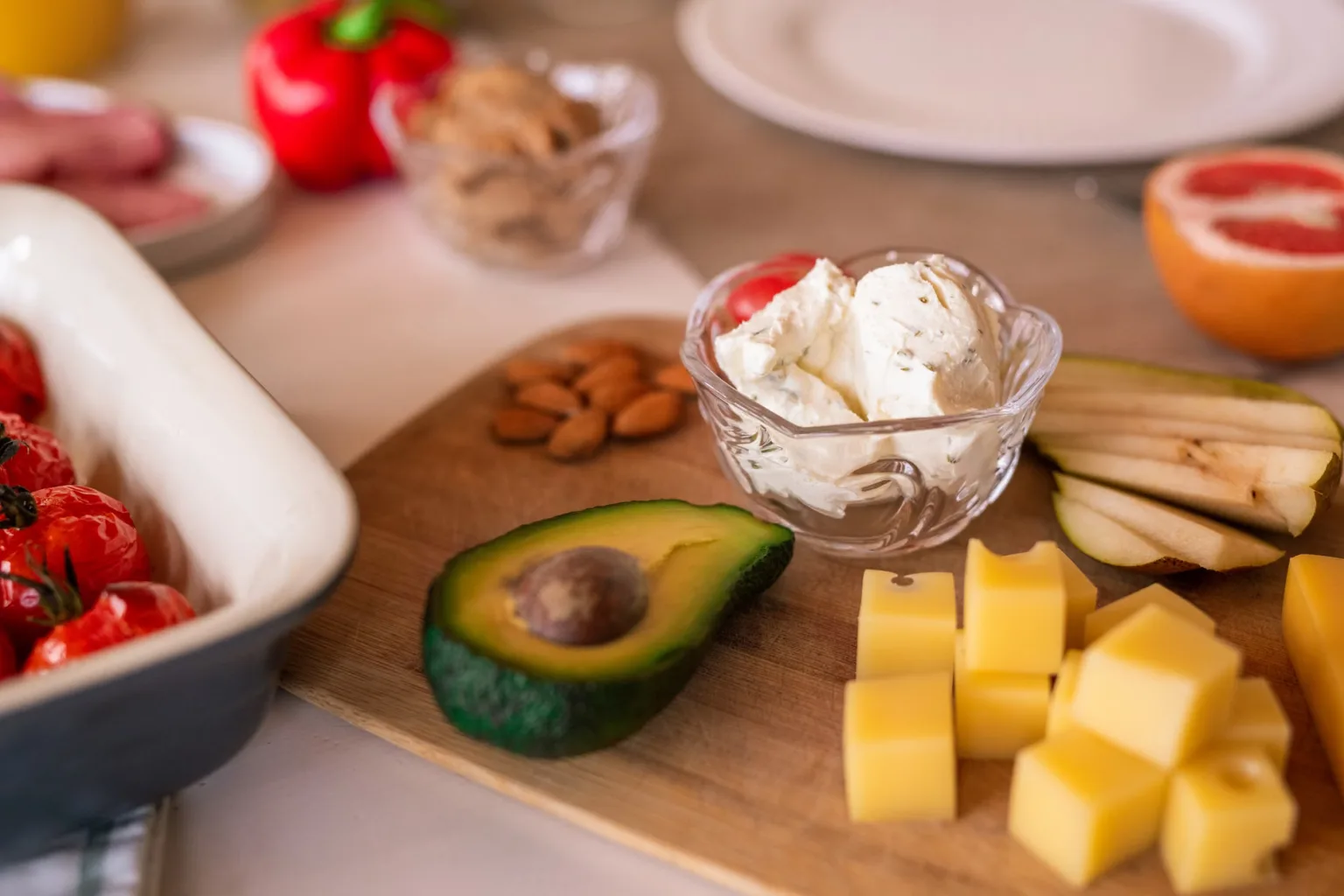
Yes. Serve it in chunks or slices with bread, fruit or nuts. Its flavor varies with the particular cheese and its maturation.
What can I use instead of Gruyère?
Comté or Emmental can work in fondue and gratins, although each gives the dish a different profile. Taste before adjusting the seasoning.
Ingredient allergens
Allergen listDocumented presence
-
Milk and milk products
Gruyère cheese
Sources and review
Automatically researched, cross-checked and validated content. Sources consulted:
- Client Challenge doi.org/10.2307/jj.27939689.16
- A Guide to Cheese: 30 Cheeses You Should Know - Escoffier www.escoffier.edu/blog/culinary-arts/a-complete-guide-to-cheese/
- IBD-AID ALLOWABLE FOODS LIST, BY PHASE www.umassmed.edu/globalassets/nutrition/ibdaid-food-list/foods-list-updated-aug-1.2019.pdf
- Comité Científico aesan.gob.es/dam/jcr:a7c4e553-46f5-4def-9ede-b6d1e19b3948/comite_cientifico_42.pdf
- WHC Food Blog Archives - Walnut Hill College www.walnuthillcollege.edu/category/whc-food-blog/
- Center for Dairy Research | Measuring and Controlling Acidity and… cdr.wisc.edu/controlling-acidity-moisture
- Exploring Different Culinary Uses of Firm Cheeses | Institute of Culinary Education www.ice.edu/blog/exploring-different-culinary-uses-firm-cheeses
- Macaroni & Cheese with Peas and Chanterelles Recipe | CIA Culinary School www.ciachef.edu/blog/macaroni-cheese-with-peas-and-chanterelles/
- El queso Gruyere - La Casa de los Quesos lacasadelosquesos.com/el-queso-gruyere/
- Queso Gruyere Suizo | Historia, Características y Recetas Irresistibles www.elpaladar.es/es/blog/queso-gruyere-suizo-historia-caracteristicas-usos-y-recetas-para-di…
- - YouTube www.youtube.com/watch?v=Yv7mM836fiM
- El Queso Gruyere | La Boulette www.laboulette.com/blog/el-queso-gruyere
- Queso Gruyère – Un Tesoro Culinario de Suiza corkframes.com/es/blogs/noticias/queso-gruyere-un-tesoro-culinario-de-suiza?srsltid=AYCX9vKl…
- Managing allergens | Food Standards Scotland www.foodstandards.gov.scot/business-guidance/running-a-food-business/managing-allergens