- Category
- Herbs and spices
- State
- Fresh
- Usual unit
- bunch
What it is
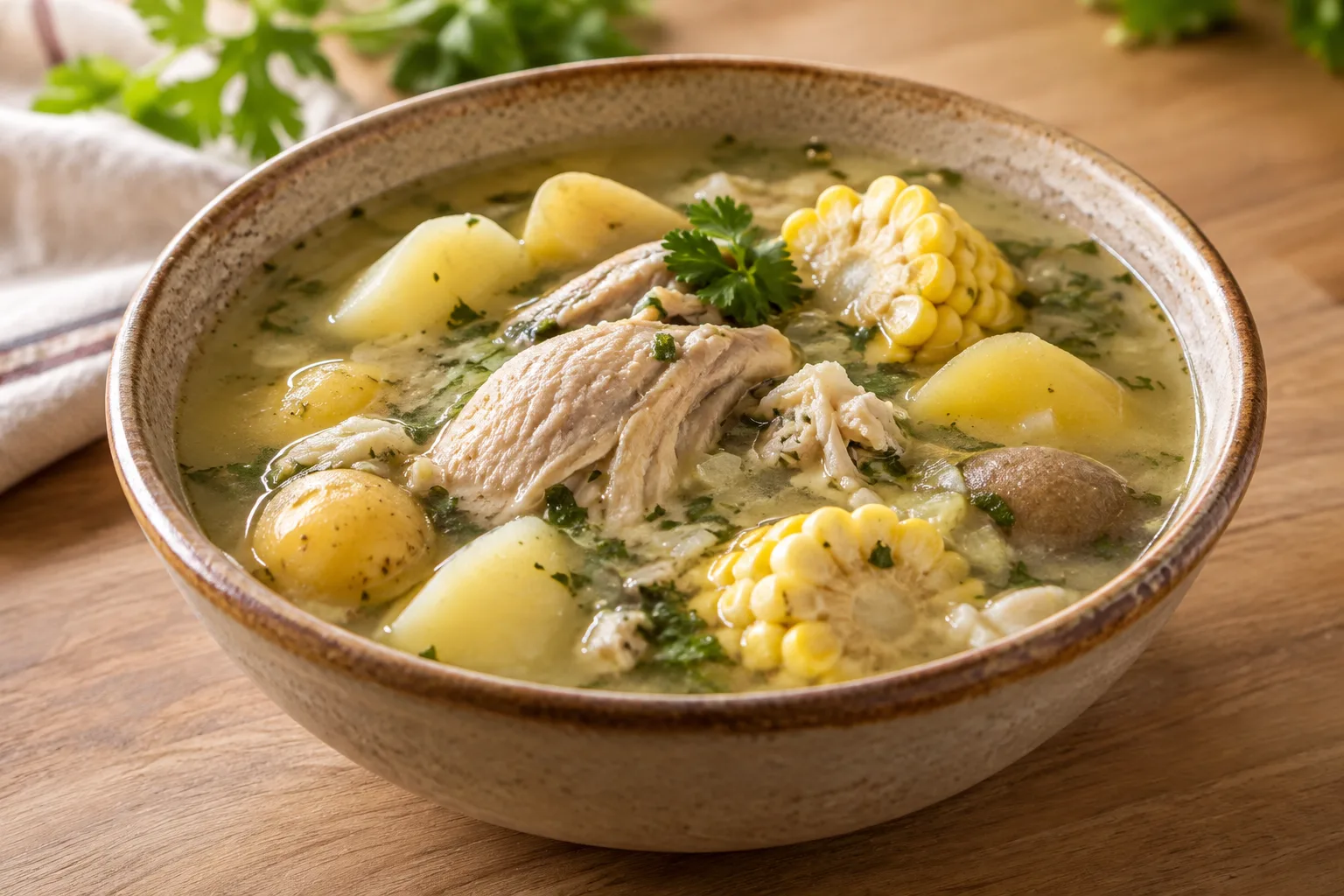
Guascas are an aromatic herb known in Colombia and commonly associated with Galinsoga parviflora. In cooking they are used as a seasoning herb, while the leaves, stems and flowers are also described as edible parts. Their best-known culinary use is in ajiaco, though they also appear in other soups and stews. The leaves can be used fresh or dried for cooking. Common names can differ between places, so check that a product sold as guascas is correctly identified as food.
When to use it
Use guascas when you want an herbal note in soup or stew; their best-known role is in Colombian ajiaco. They have also been used in cold tomato drinks. If a recipe specifies adding them near the end, as in the available description of ajiaco preparation, follow that timing to retain their aromatic presence. Dried leaves are another documented cooking form, but no fresh-to-dried quantity conversion is established here.
How to use it
Inspect the leaves and remove any that are yellow or have lost their aroma. For fresh use, rinse the herb and use the leaves as a culinary seasoning; some culinary descriptions also record stems and flowers being used as vegetables. Add guascas to soups and stews at the stage specified by the recipe; for ajiaco, the available culinary account places them near the end of cooking. Leaves blended with tomato for a cold drink are another documented use. If using dried guascas, adjust the amount to your recipe: there is no general conversion between fresh and dried forms established here.
Flavour and texture
Guascas are described as herbal, mild and earthy, with notes that may suggest nuts or artichoke. The leaves give soups and stews a vegetal herbal character; the effect depends on the form and amount used. There is no single texture for every preparation: fresh and dried leaves behave differently in a pot.
How to choose it
Choose fresh guascas with green stems and leaves that look fresh and have a noticeable aroma. Avoid bunches with yellow leaves or leaves that have lost their aroma. If you buy a bunch with roots, one described option is to keep the stems in water; another is to wrap the sprigs in absorbent paper and place them in a closed bag in the refrigerator.
Storage
For fresh guascas, one described option is to stand rooted stems in a container of water. Another is to wrap the sprigs in absorbent paper and keep them in a closed bag in the refrigerator. The leaves can also be dried and kept for cooking. No storage duration is established here, so check the condition of the herb and follow package directions where provided.
Substitutions
Dried guascas provide another form to use when fresh leaves are unavailable, but no conversion ratio is established here. Leaves, stems and flowers are all documented as edible parts; their effect may differ from one dish to another. No different herb with an equivalent flavour is supported as a substitute.
Common mistakes
Avoid buying yellowing or scentless bunches when you want fresh guascas. Do not assume dried leaves measure like fresh ones: no general conversion is established. Also, do not assume all plant parts and forms are interchangeable; their effect can vary with the dish.
Safety and allergens
Use guascas that are identified and sold for food use. For packaged products, check the label for ingredients and applicable warnings, as product composition can vary.
Culinary uses
- Aromatic herb for soups and stews
- Edible leafy herb or vegetable
Recommended techniques
- Add to soups or stews; in ajiaco, guascas are added near the end of cooking
- Use the leaves fresh or dry the leaves for cooking
Pairs well with
- Tomato, including in a cold tomato drink
- Soups and stews, including Colombian ajiaco
Frequently asked questions
What dishes use guascas?
They are used mainly in soups and stews and are a characteristic herb in Colombian ajiaco. Cold tomato drinks are another documented use.
Can I use dried guascas?
Yes. Drying the leaves for cooking is documented. There is no general quantity conversion for replacing fresh guascas with dried.
How do I choose fresh guascas?
Look for green stems and leaves that appear fresh and have a noticeable aroma. Avoid yellow leaves or leaves that have lost their aroma.
Ingredient allergens
Allergen listThere are no verified associations for these ingredients yet.
Sources and review
Automatically researched, cross-checked and validated content. Sources consulted:
- Alérgenos alimentarios | EFSA www.efsa.europa.eu/es/safe2eat/food-allergens
- Client Challenge doi.org/10.2307/jj.27939689.16
- Etiquetado de sustancias que causan alergias e intolerancias alimentarias www.aesan.gob.es/seguridad-alimentaria/informacion-alimentaria/etiquetado-sustancias
- Métodos de cocción: los tipos secos, húmedos y mixtos www.igi-la.com/blog/metodos-de-coccion-guia/
- Allergies - Food Safety - European Commission food.ec.europa.eu/food-safety/campaign-2026/allergies_en
- Food Allergies | FDA www.fda.gov/food/nutrition-food-labeling-and-critical-foods/food-allergies
- Food allergens | Food Safety and Quality | FAO www.fao.org/food-safety/scientific-advice/food-allergens/en
- Food Allergy Labeling Laws: International Guidelines for Residents and Travelers - PMC pmc.ncbi.nlm.nih.gov/articles/PMC10169132/
- Food allergen portal | Food Standards Australia New Zealand www.foodstandards.gov.au/consumer/foodallergies/food-allergen-portal
- Allergen guidance for food businesses - GOV.UK www.gov.uk/government/publications/allergen-guidance-for-food-businesses/allergen-guidance-f…
- Métodos de cocción vegana: saludables, fáciles y llenos de sabor - Vegana feLiz - veganafeliz.com/metodos-coccion-vegana/
- Recetas fáciles y prácticas - ensumesa www.ensumesa.com/ingrediente/guasca
- - YouTube www.youtube.com/watch?v=A9_PVlPz8Cw
- Galinsoga parviflora - Wikipedia, la enciclopedia libre es.wikipedia.org/wiki/Galinsoga_parviflora
- Guascas: de dónde son, para qué sirven y por qué son clave en la cocina colombiana | noticias HOY www.elespectador.com/la-huerta/guascas-de-donde-son-para-que-sirven-y-por-que-son-clave-en-l…
- ¿Qué es la guasca en el ajiaco? Ingrediente clave cultivado en la sabana de Bogotá | Gastronomía | Caracol Radio caracol.com.co/2024/11/07/que-es-la-guasca-en-el-ajiaco-ingrediente-clave-cultivado-en-la-sa…
- Alimentos típicos de Boyacá, Colombia | OpenAlex openalex.org/W1751322370