- Category
- Fish and seafood
- State
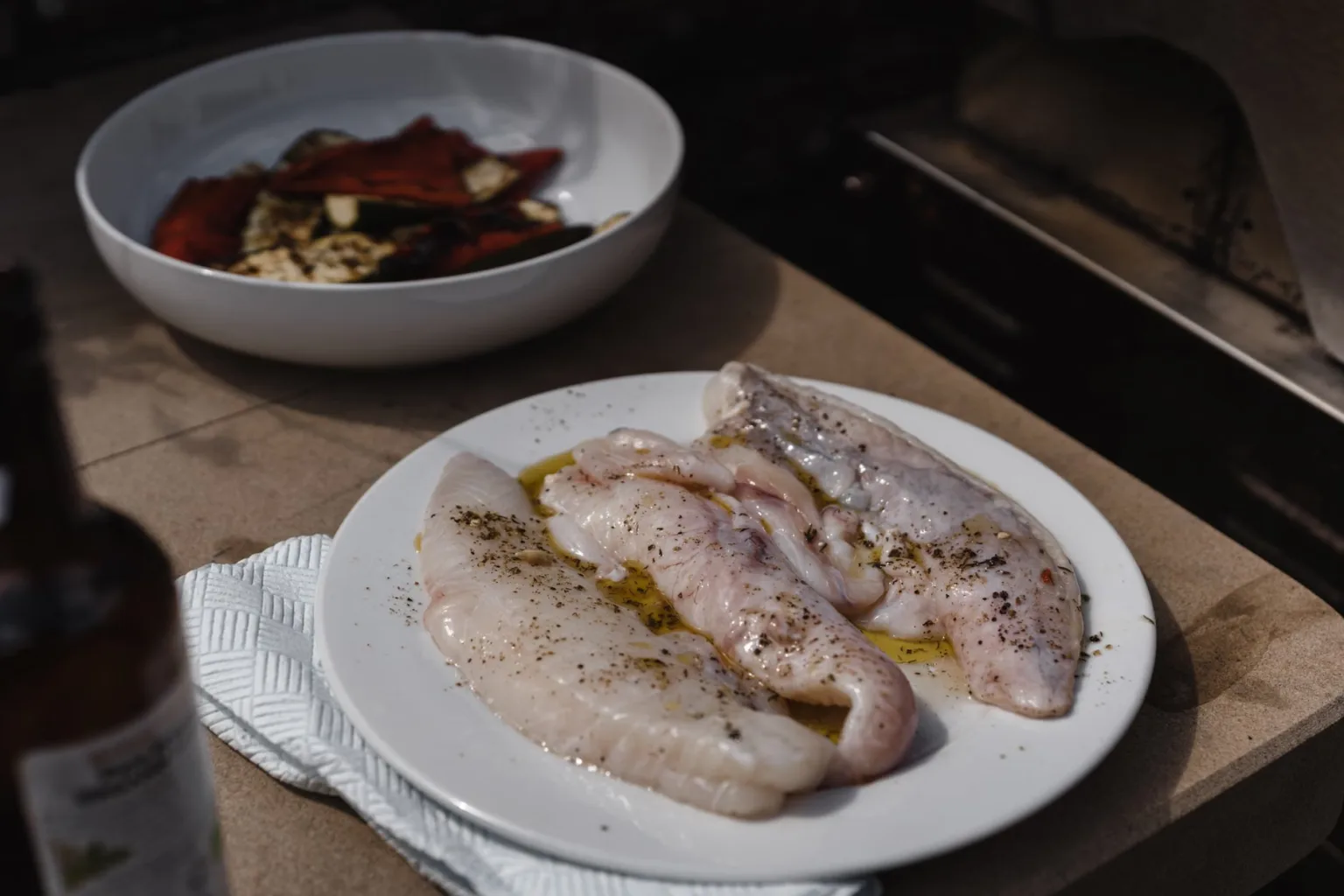
- Fresh
- Usual unit
- g
What it is
Haddock is a marine fish in the Gadidae family. A fillet is a portion cut from the fish; it may be sold with or without skin, and any remaining bones should be checked before cooking. This profile covers fresh fillets. Their thickness, cut, and moisture can vary, so cooking time will not be identical for every piece. Haddock is commonly described as mild in flavor, and its cooked flesh separates into flakes. It is versatile enough for baking, pan-frying, and dishes served with sauces or side dishes. Haddock is a finfish and should be treated as a food allergen. Because fillets vary, use doneness checks rather than relying on a fixed cooking time.
When to use it
Choose haddock fillets when you want a fish portion for a main course, a breaded preparation, or a dish where cooked fish is flaked and mixed with other ingredients. Its mild flavor suits light seasonings such as lemon and dill, as well as a more savory topping of breadcrumbs, garlic, and parsley. Thin pieces may cook quickly, while thicker ones need longer; check the center with a food thermometer rather than relying on the clock alone. Cod or Alaska pollock can stand in for haddock in similar dishes, though differences in thickness and texture may affect the result. Match the cooking method to the cut and serve soon after cooking.
How to use it
Keep the fillets refrigerated until you are ready to prepare them, and do not leave raw fish at room temperature for an extended period. Check for and remove any bones before serving. To bake, place the fillets in a baking dish and add lemon and dill, or top them with breadcrumbs, garlic, and parsley; adjust cooking to the thickness. You can also pan-fry or sauté them in a little oil, turning carefully so the flesh does not break apart. For microwave cooking, use a suitable covered dish and check the center for doneness. A household cooking guideline is to cook fish to 145 °F (63 °C) internally. The flesh often flakes when cooked, but a food thermometer is the more reliable check, especially for thicker fillets.
Flavour and texture
Haddock has a mild white-fish flavor, sometimes perceived as a little more distinctive than that of similar fish. Its flesh separates into flakes and can feel more delicate or firmer depending on fillet thickness and condition. Extended cooking can dry it out, so watch the center and avoid unnecessary extra heat. Lemon and dill complement its restrained flavor, while garlic, parsley, and breadcrumbs add stronger savory notes and texture.
How to choose it
Choose chilled fillets that look moist and bright and have no sour, rancid, or otherwise strong off-odor. The flesh should spring back after gentle pressure; avoid pieces with obvious signs of deterioration. If possible, ask when the fish arrived and where it came from, and whether it was sold fresh or previously frozen. Thickness matters when choosing a cooking method and estimating cooking time. Check the label and inspect the fillet for skin or bones before preparing it.
Storage
Take the fish home and refrigerate it promptly at 40 °F (4.4 °C) or colder. Keep raw fillets wrapped or in a covered container so their juices do not contact other foods, and use them within three days. If you will not cook them within that time, you can freeze them; freezing cannot restore the quality of fish that was already deteriorating, and packaging and thawing affect texture. Thaw in a controlled manner and cook soon afterward. Do not leave fish to thaw for an extended time at room temperature.
Substitutions
Cod is a practical alternative in fillet dishes, although thickness and firmness can differ, so cooking may need adjustment. Alaska pollock can also fill a similar role in mild-flavored or breaded fish recipes. Neither substitute exactly duplicates haddock’s flavor and texture. Adjust cooking to the size of the piece and check the center with a food thermometer.
Common mistakes
Do not judge cooking by minutes alone: the thickness and condition of a fillet affect how long it needs. Avoid overcooking, which can leave the flesh dry, and use a broad spatula to help keep the flakes intact. Do not assume a fillet is bone-free; check before serving. Also, do not leave raw fish unrefrigerated or rely on appearance alone to establish that it is fully cooked.
Safety and allergens
Fish is a food allergen; do not serve haddock to someone with a fish allergy. Keep raw fish refrigerated at 40 °F (4.4 °C) or colder and use it within three days. Cook to an internal temperature of 145 °F (63 °C), checked with a food thermometer. Remove bones before serving and prevent raw fish from contacting ready-to-eat foods.
Culinary uses
- fillet as a main course
- white fish for fish cakes, soups, or fish and chips
Recommended techniques
- baking
- pan-frying or sautéing
- microwaving
Pairs well with
- lemon and dill
- parsley, garlic, and breadcrumbs
Frequently asked questions
What temperature should haddock fillets reach?
As a household guideline, cook fish until the center reaches 145 °F (63 °C), checking with a food thermometer.
How long can raw haddock stay refrigerated?
At 40 °F (4.4 °C) or colder, use it within three days. Freeze it if you will not cook it in that period.
What can I substitute for haddock?
Cod or Alaska pollock can work in similar preparations. Adjust for thickness and check doneness rather than relying on the same cooking time.
Ingredient allergens
Allergen listThere are no verified associations for these ingredients yet.
Estimated nutrition
- Fat
- 0.88 g
- Saturates
- 0.18 g
- Carbohydrate
- 0 g
- Sugars
- 0 g
- Fibre
- 0 g
- Protein
- 18.6 g
- Salt
- 0.17 g
Sources and review
Automatically researched, cross-checked and validated content. Sources consulted:
- ¿Por qué la muerte es origen de miedos y tabúes? doi.org/10.64628/aao.fccyk3qj3
- Sensory and Physical Assessment of Microbiologically Safe ... vtechworks.lib.vt.edu/server/api/core/bitstreams/c95d7167-327b-4f85-94ab-7ff608feed00/conten…
- Preserving Your Catch & Purchase: A Guide to Freezing and Thawing Seafood at Home | NC State Extension Publications content.ces.ncsu.edu/preserving-your-catch-purchase-a-guide-to-freezing-and-thawing-seafood-…
- Healthy Cooking On a Budget: Cooking with Fish | Sargent Choice Nutrition Center www.bu.edu/scnc/2013/03/24/healthy-cooking-on-a-budget-cooking-with-fish/
- Celebrating Feast of the Seven Fishes? Here’s Your Guide to Buying the Best Fish | Institute of Culinary Education www.ice.edu/blog/guide-to-buying-fish
- Dilled Fish Fillets | Eat.Move.Save. | Illinois eat-move-save.extension.illinois.edu/eat/recipes/dilled-fish-fillets
- CAI cooking tips: healthy fish and chips - Montgomery County Community College www.mc3.edu/news/2020/04/culinary-arts-cooking-tips-fish-and-chips
- NUTRITION AND YOU...WHITE FISH fcs.osu.edu/sites/fcs/files/imce/PDFs/SNAP_Ed_newsletter_whitefish-3-1.pdf
- Home Freezing of Fish | Cooperative Extension Service www.uaf.edu/ces/publications/database/food/freezing-fish.php
- Quality Frozen Seafood | Gorton's Seafood participate.salemstate.edu/page.redir?erid=11215166&srcid=26742&srctid=1&target=http%3A%2F%2…
- - YouTube www.youtube.com/watch?v=4T0E3jEEdi4
- Haddock conquinoa.wordpress.com/tag/haddock/
- Haddock for Babies - First Foods for Baby - Solid Starts solidstarts.com/es/foods/haddock/
- Abadejo de Alaska frente a eglefino: sabor, textura y cocina globalseafoods.com/es/blogs/news/pollock-vs-haddock-a-taste-test?srsltid=AYCX9vLOLwtG4nJ4SL0…
- Técnicas culinarias para la cocción de pescado y marisco | Fish Solutions : Pescanova Fish Solutions fishsolutions.pescanova.es/formacion-para-hosteleria/trucos-de-cocina-para-hosteleria/tecnic…
- Food allergen labelling and information requirements technical guidance - GOV.UK www.gov.uk/government/publications/food-allergen-labelling-and-information-requirements-tech…