- Category
- Dairy and eggs
- State
- Fresh
- Usual unit
- g
What it is
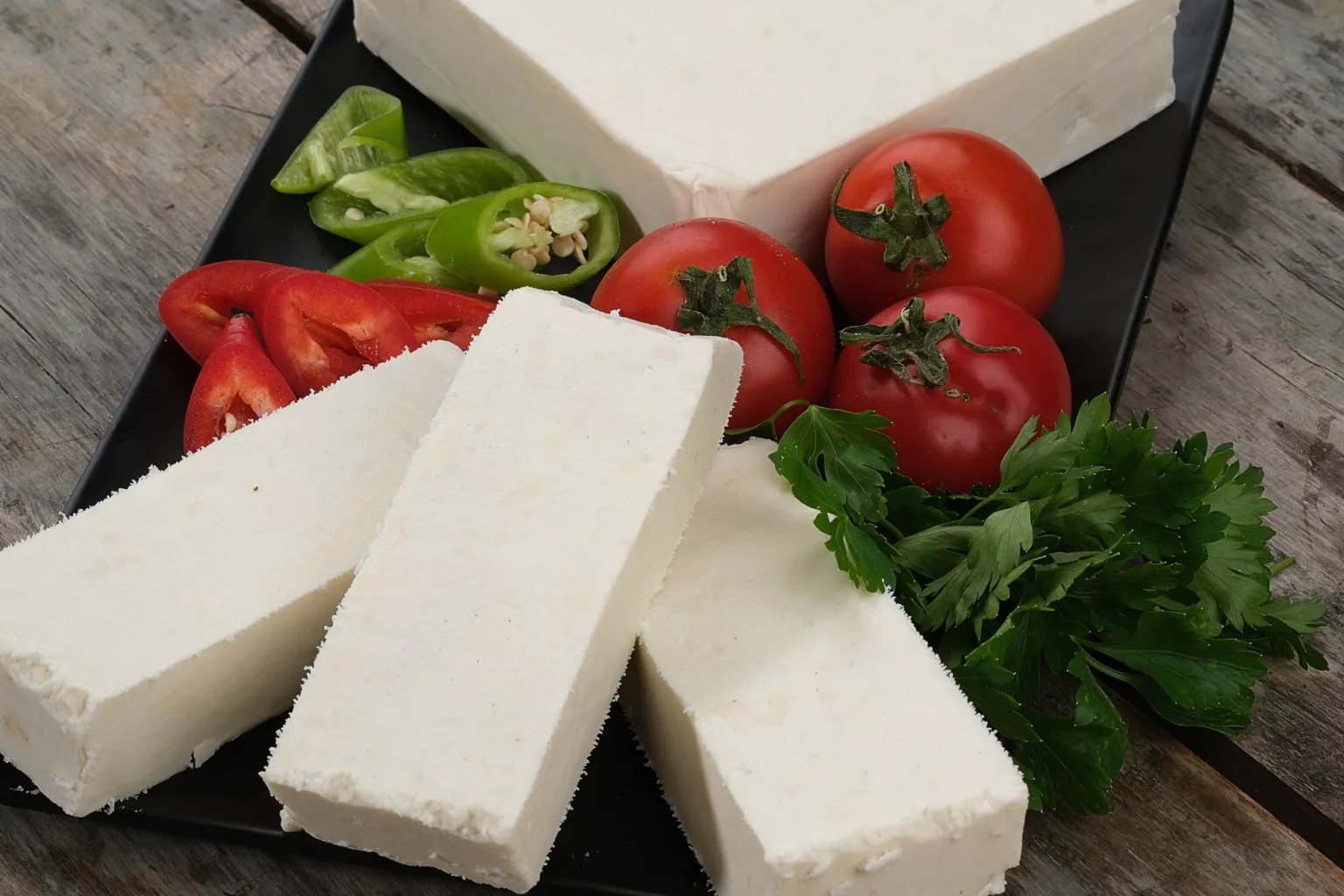
Halloumi is a cheese associated with Cyprus, known for a firm, springy, slightly fibrous texture. It is traditionally made with sheep’s and goat’s milk, although some products also contain cow’s milk; mint or other herbs may be included in some versions. Its useful cooking quality is that it generally holds its shape when heated and can brown in a pan or on a grill, unlike many soft cheeses. Products vary in their milk composition and presentation, so check the label if you need a particular milk type or a herb-free version. Halloumi can be eaten fresh or cooked. Its salty, milky flavor works well with fresh or tangy ingredients, making it suitable for salads, sandwiches, skewers, and simple warm appetizers.
When to use it
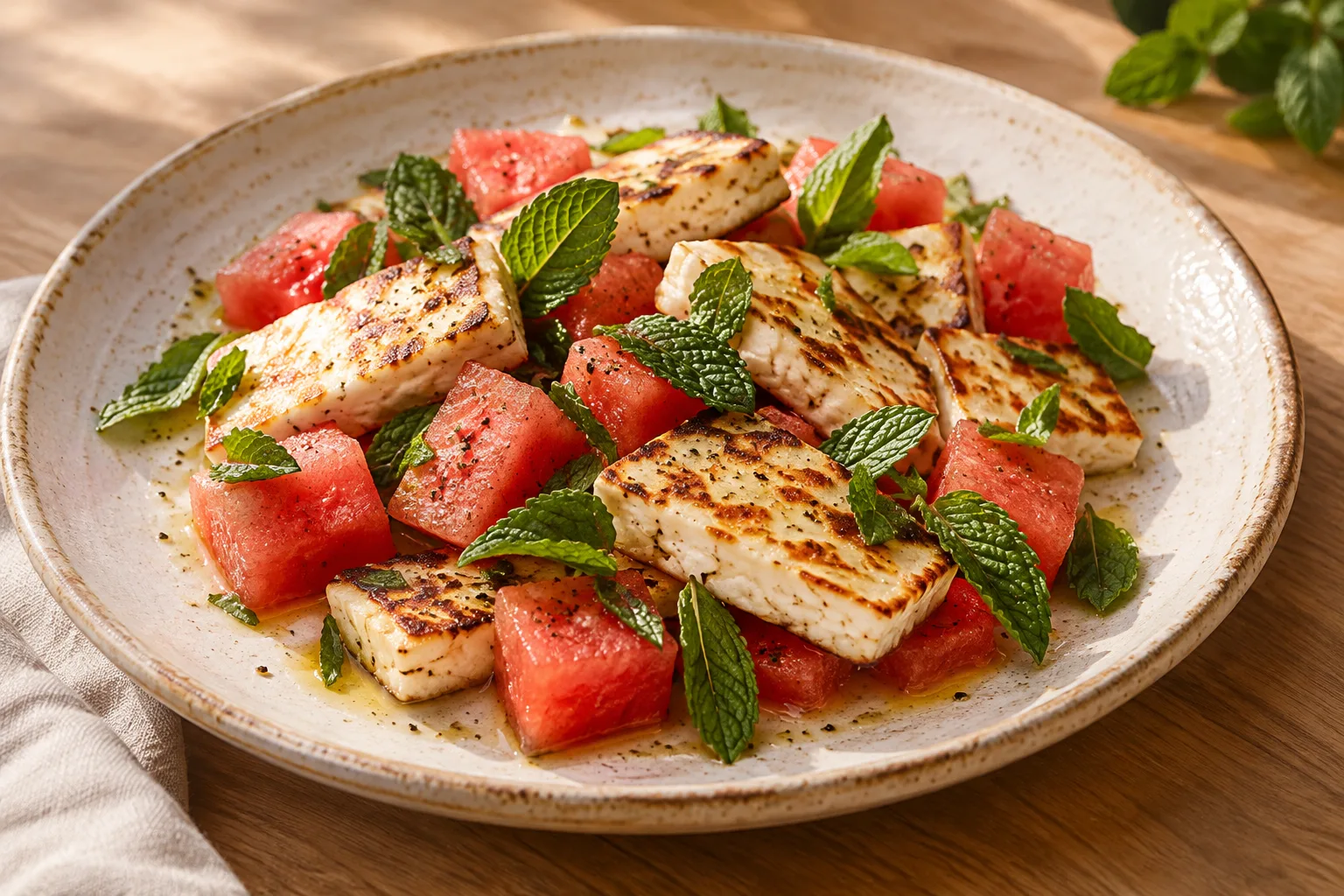
Choose halloumi when you want a cheese that can be browned and served warm without readily falling apart. It works in a warm salad, as a sandwich or wrap filling, or on vegetable skewers. You can also serve small portions as an appetizer or alongside fruit such as watermelon. Taste the cheese before adding salt to the rest of the dish: halloumi is often salty, but the level varies between products. Lemon, mint, and crisp vegetables bring a fresh contrast. It is also useful when you want a substantial, savory element in a meal, but it is not a direct replacement for a cheese meant to melt into a sauce.
How to use it
Cut halloumi into slices or evenly sized pieces so they brown at a similar rate. If the surface is wet, pat it dry, then cook it in a pan, on a griddle, or on a grill until browned on the outside. Leave space between pieces so they make good contact with the hot cooking surface. Serve promptly, while the exterior is golden and the interior remains firm and springy. Add the cooked cheese to salads, sandwiches, wraps, or vegetable skewers, or serve it with lemon and mint. It also pairs with fruit, honey, or pita bread. Taste before seasoning the rest of the dish, since the cheese itself can contribute substantial saltiness and products differ.
Flavour and texture
Halloumi tastes milky and salty, with a firm, springy, slightly fibrous bite. Cooking can give it a browned exterior while it retains its shape; do not expect it to melt like a soft cheese. Saltiness and flavor intensity vary by product.
How to choose it
Check the ingredient label to see which milks are used: alongside sheep’s- and goat’s-milk versions, some halloumi contains cow’s milk. Look for added mint or other herbs if those matter to your recipe, and check how the product is packaged. Choose an intact package and follow its storage directions; formats and product characteristics vary by maker.
Storage
Store halloumi according to the package directions, especially after opening. Some products are packed in brine or vacuum-sealed, but storage methods and shelf life can differ, so do not assume every product should be handled the same way. Reseal it between uses and avoid using cheese from damaged packaging or with unusual changes in smell or appearance.
Substitutions
Paneer can stand in for halloumi in dishes that need a firm cheese for browning, though the flavor will differ. Panela or kasseri may work for grilling, but their texture and cooking behavior may not match exactly. Check that the alternative suits the technique; many cheeses melt more readily than halloumi.
Common mistakes
Do not expect halloumi to melt and flow like mozzarella; it is valued for browning while largely keeping its shape. Taste it before adding salt, and avoid crowding the pan so the pieces can brown against the hot surface. Cut evenly sized pieces to help them cook at a similar rate.
Safety and allergens
Halloumi is a dairy product and contains milk. Follow the package’s storage instructions and use clean utensils and surfaces. If you have a milk allergy, do not eat it unless its labeling and professional advice confirm it is safe for you.
Culinary uses
- Queso para cocinar a la plancha o a la parrilla
- Ingrediente para ensaladas, bocadillos y brochetas
Recommended techniques
- Dorar en sartén o plancha
- Asar a la parrilla
Pairs well with
- Limón y menta
- Ensaladas de verduras, tomate y pepino
- Sandía y otras frutas
- Pan pita y miel
Frequently asked questions
Does halloumi melt when cooked?
It generally holds its shape better than many soft cheeses and browns on the outside. Results depend on the product and cooking method.
Can halloumi be eaten uncooked?
Yes. It can be served fresh, including in sandwiches or with fruit, as well as cooked on a griddle or grill.
What goes well with halloumi?
Lemon and mint add a fresh contrast. Halloumi also works with salads, vegetables, pita bread, watermelon, and honey.
Ingredient allergens
Allergen listDocumented presence
-
Milk and milk products
Halloumi cheese
Estimated nutrition
- Fat
- 24 g
- Saturates
- 16 g
- Carbohydrate
- 0 g
- Sugars
- 0 g
- Fibre
- 0 g
- Protein
- 20 g
- Salt
- 3 g
Sources and review
Automatically researched, cross-checked and validated content. Sources consulted:
- Client Challenge doi.org/10.2307/jj.27939689.16
- Cheese • The Nutrition Source nutritionsource.hsph.harvard.edu/cheese/
- A Guide to Cheese: 30 Cheeses You Should Know - Escoffier www.escoffier.edu/blog/culinary-arts/a-complete-guide-to-cheese/
- Raw Flour and Dough | Food Safety | CDC go.unl.edu/raw-dough
- Incorporating flaxseed (linum usitatissimum) oil into queso ... repository.lsu.edu/cgi/viewcontent.cgi?article=2517&context=animalsciences_pubs
- Test Kitchen: Saag Paneer | Sargent Choice Nutrition Center www.bu.edu/scnc/2018/11/19/test-kitchen-saag-paneer/
- Surprising Ingredients You Can Grill www.ice.edu/blog/summer-grilling-ingredients
- Center for Dairy Research | Measuring and Controlling Acidity and… cdr.wisc.edu/controlling-acidity-moisture
- Wild Rice Summer Salad with Elderberry Balsamic Vinaigrette - Food Product Development Lab | Montana State University www.montana.edu/foodprodevlab/recipes/indigenous_product_recipes/AIF_wild-rice-salad.html
- **Queso Halloumi: Análisis y Comparativa de los Mejores para Cocinar Perfecto** laovejaquebala.es/queso-halloumi/
- El queso Halloumi, delicia chipriota www.directoalpaladar.com/ingredientes-y-alimentos/el-queso-halloumi-delicia-chipriota
- Queso halloumi, un ingrediente que marca la diferencia - Al Wadi Seville www.alwadi.es/queso-halloumi-un-ingrediente-que-marca-la-diferencia/
- Queso halloumi | qué es, tipos y consejos para su uso codinafoods.com/queso-halloumi/
- La Olla Vegetariana: Halloumi.- laollavegetariana.blogspot.com/2013/07/halloumi.html
- Todo lo que hay que saber sobre el queso halloumi www.gastronomistas.com/todo-lo-que-hay-que-saber-sobre-el-queso-halloumi/
- Managing allergens | Food Standards Scotland www.foodstandards.gov.scot/business-guidance/running-a-food-business/managing-allergens