- Category
- Drinks
- State
- Liquid
- Usual unit
- l
What it is
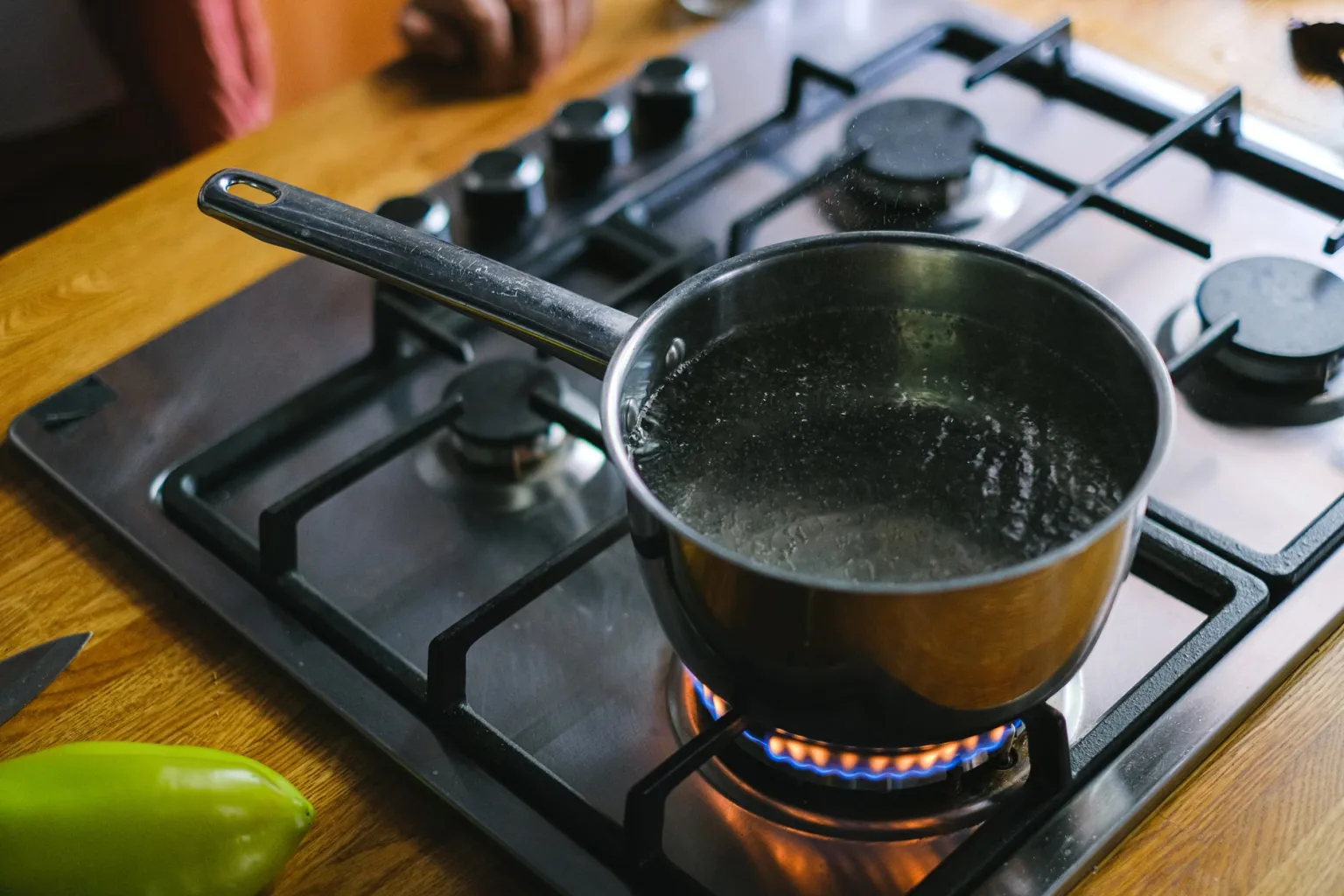
Hot water for broth is water that has been heated and is used as the liquid component of a preparation. It is not broth by itself: broth is made by cooking one or more ingredients, such as vegetables, meat, or fish, in water. In the kitchen, water can be the starting point for a simple preparation or part of a liquid mixture with other ingredients. Heating it before adding it is a practical preparation choice, not a guarantee of extra flavor. The finished broth’s character depends on the ingredients added and how they are cooked.
When to use it
Use it when a recipe calls for hot water or when you need liquid to begin making broth or soup. It can cook vegetables, herbs, and other ingredients, allowing the liquid to become part of the dish. It is also useful when you want to control the contribution of the ingredients separately from the starting liquid. If the liquid itself needs to contribute a defined flavor, consider using broth instead of water. Follow the recipe’s directions for when to add the liquid and how gently or vigorously to cook it.
How to use it
Heat the water in a suitable vessel and add it to the pot at the point specified in the recipe. Add the ingredients that are meant to cook in the liquid, such as vegetables and herbs, then bring the preparation to a boil or keep it at a simmer as appropriate. Water alone is not a finished broth: the ingredients cooked in it give the broth its character. For soups containing rice, pasta, or other additions, follow the recipe’s sequence. Handle hot liquid carefully and avoid splashes.
Flavour and texture
Water on its own does not contribute the aromas of vegetables, meat, fish, or herbs that a broth may have. As ingredients cook in it, the liquid takes on some of the preparation’s character and can form the base of a soup. Its intensity and appearance depend on the ingredients and cooking process; hot water alone does not determine whether the result will be light, concentrated, or aromatic. Choose the starting liquid according to the flavor you want.
How to choose it
Hot water is generally prepared at home rather than bought as a dedicated ingredient. If using bottled water, choose plain drinking water without flavorings so it does not add a taste absent from the recipe. If you want a flavored liquid from the start, compare water with prepared broth and check that the broth suits the dish. Use the quantity specified in the recipe and a vessel appropriate for heating it.
Storage
Heat water when you are ready to use it and avoid leaving it exposed unnecessarily. If you prepare extra and have some left over, follow storage guidance for the preparation in which it was used; storage rules for broth or soup cannot be inferred solely from the fact that water was the starting liquid. Keep the vessel and utensils clean. Hot water does not need to be stored as though it were prepared broth.
Substitutions
You can replace water with prepared broth when you want the liquid to contribute flavor, provided the change suits the recipe. Vegetable broth may work in a soup or vegetable-based preparation. The swap can change the dish’s flavor, so consider the other ingredients and adjust seasoning at the end. Not every recipe will produce the same result after this change.
Common mistakes
A common mistake is expecting hot water to taste like broth on its own. Broth develops when ingredients cook in the liquid. Also avoid swapping water for broth without considering the effect on the recipe’s flavor. Do not add the liquid at a different stage from the one specified or overlook the cooking intensity the ingredients need.
Safety and allergens
Handle hot water carefully and avoid splashes when pouring. Use a stable vessel suitable for heating liquids, and keep hot water out of reach of young children.
Culinary uses
- Líquido de cocción para preparar caldos y sopas
- Base neutra para cocinar o hidratar otros ingredientes
Recommended techniques
- Calentar hasta que hierva o mantener a fuego lento, según la preparación
- Cocer ingredientes en el agua para extraer y reunir sus sabores
Pairs well with
- Verduras, hierbas y especias para caldos
- Arroz, pasta y otros ingredientes que se cuecen en sopa
Frequently asked questions
Is hot water already broth?
No. It can serve as the liquid base; broth is made by cooking ingredients in water.
Can I use prepared broth instead of water?
Yes, if the recipe allows it. Broth contributes a different flavor and may change the result.
What does hot water do in soup?
It serves as the cooking liquid for the ingredients and as a base for the preparation, following the recipe’s instructions.
Ingredient allergens
Allergen listThere are no verified associations for these ingredients yet.
Sources and review
Automatically researched, cross-checked and validated content. Sources consulted:
- Client Challenge doi.org/10.2307/j.ctvndv9t9.22
- The Essential Glossary of Cooking Terms for the Culinary Arts - Escoffier www.escoffier.edu/blog/culinary-arts/the-essential-glossary-of-cooking-terms-for-the-culinar…
- Como hacer caldo de verduras: todos los trucos y aplicaciones www.conasi.eu/blog/colaboradores-especiales/macrobiotica-aida-lirola/como-hacer-caldo/
- Caldo - Wikipedia, la enciclopedia libre es.wikipedia.org/wiki/Caldo
- Sabores de nuestras tierras/recetas - 2024 | Agricultura y Recursos Naturales ucanr.edu/site/agricultura-y-recursos-naturales/sabores-de-nuestras-tierras-recetas-2024
- Agencia Española de Seguridad Alimentaria y Nutrición www.aesan.gob.es/
- La diabetes y la alimentación: Cómo planificar y cocinar comidas sabrosas y saludables | CAES Field Report fieldreport.caes.uga.edu/publications/C1364-08-SP/la-diabetes-y-la-alimentacion/
- Vamos a Conservar Alimentos: Sopas extension.psu.edu/vamos-a-conservar-alimentos-sopas/
- De Compras para la salud: Comidas para una persona ask.ifas.ufl.edu/publication/FS266/pdf
- SCHOLAR OF GLOBAL DISTINCTION Application Template worldview.unc.edu/wp-content/uploads/sites/433/2025/04/2025_Farm-to-Table_CUL283_Burton.pdf
- Tanzania Food Composition Tables | The Nutrition Source nutritionsource.hsph.harvard.edu/wp-content/uploads/2023/09/Tanzania-Food-Composition-Tables…
- - YouTube www.youtube.com/watch?v=uwcf2vEbU_M
- El mundo de los caldos: mucho más que agua, ingredientes y tiempo margavilan.substack.com/p/el-mundo-de-los-caldos-mucho-mas