- Category
- Fruit
- State
- Fresh
- Usual unit
- unit
What it is
Korean pear is an Asian pear, often round in shape and reminiscent of an apple, although its flavor is pear-like. The flesh is generally pale, firm, crisp and very juicy, with mild sweetness and sometimes a slight tart note depending on the variety. The skin can be smooth or somewhat rough, ranging from pale yellow to ochre or brown. Nashi is a name used for different Asian pear varieties, so appearance and flavor are not identical from one fruit to another. It is not simply an apple that tastes like a pear: it is a fruit used both fresh and cooked.
When to use it
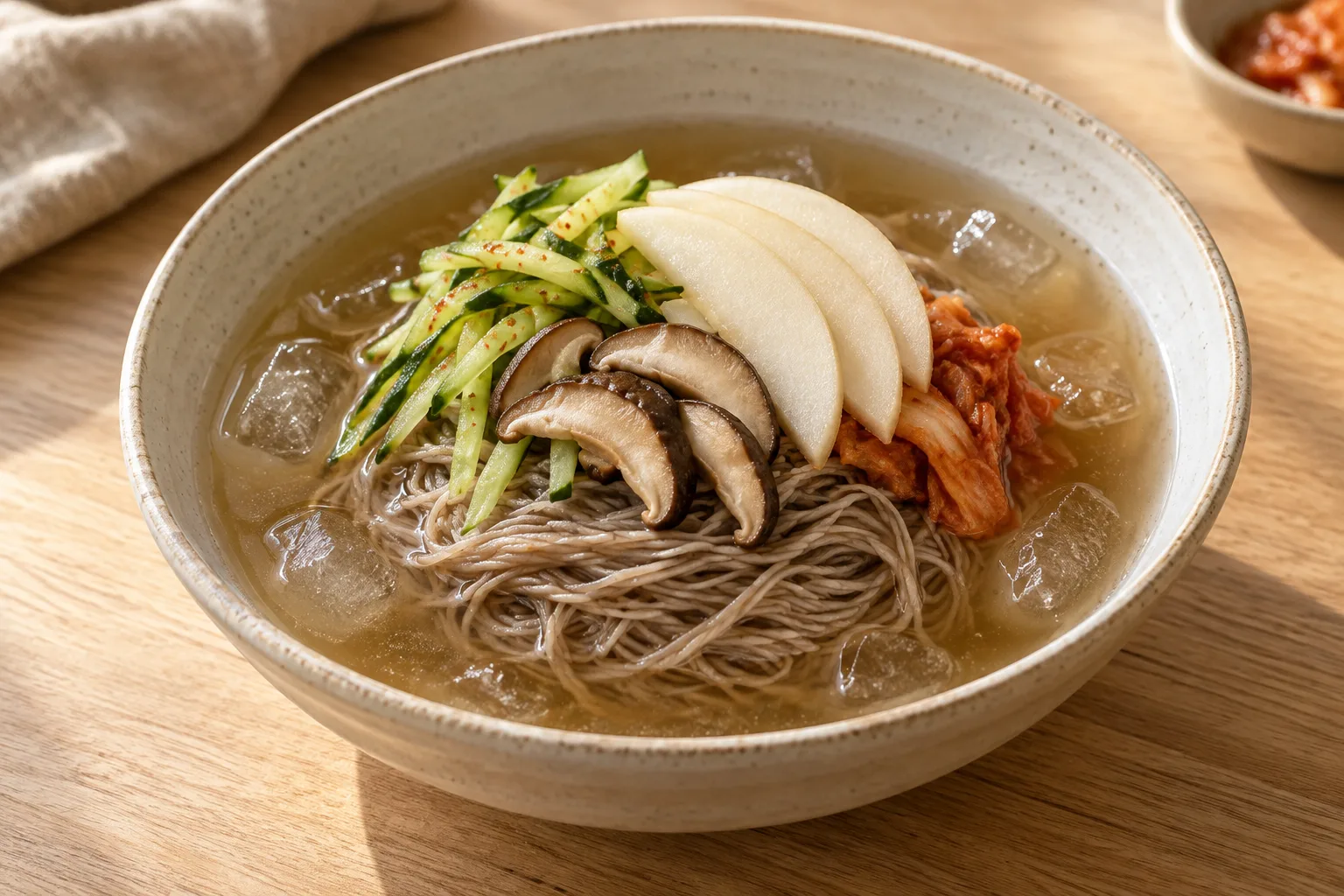
Use it fresh when you want to add juiciness and a pronounced crunch to a snack, fruit salad or vegetable salad. Its firm flesh is also useful in tarts, skewers and baked or cooked dishes where the fruit should hold its shape. In savory food it can bring a sweet, fresh contrast; it pairs particularly well with soy-sauce preparations and beef. Choose a juicy fruit for eating raw, and save firmer fruit for cooking if you want it to keep more of its texture.
How to use it
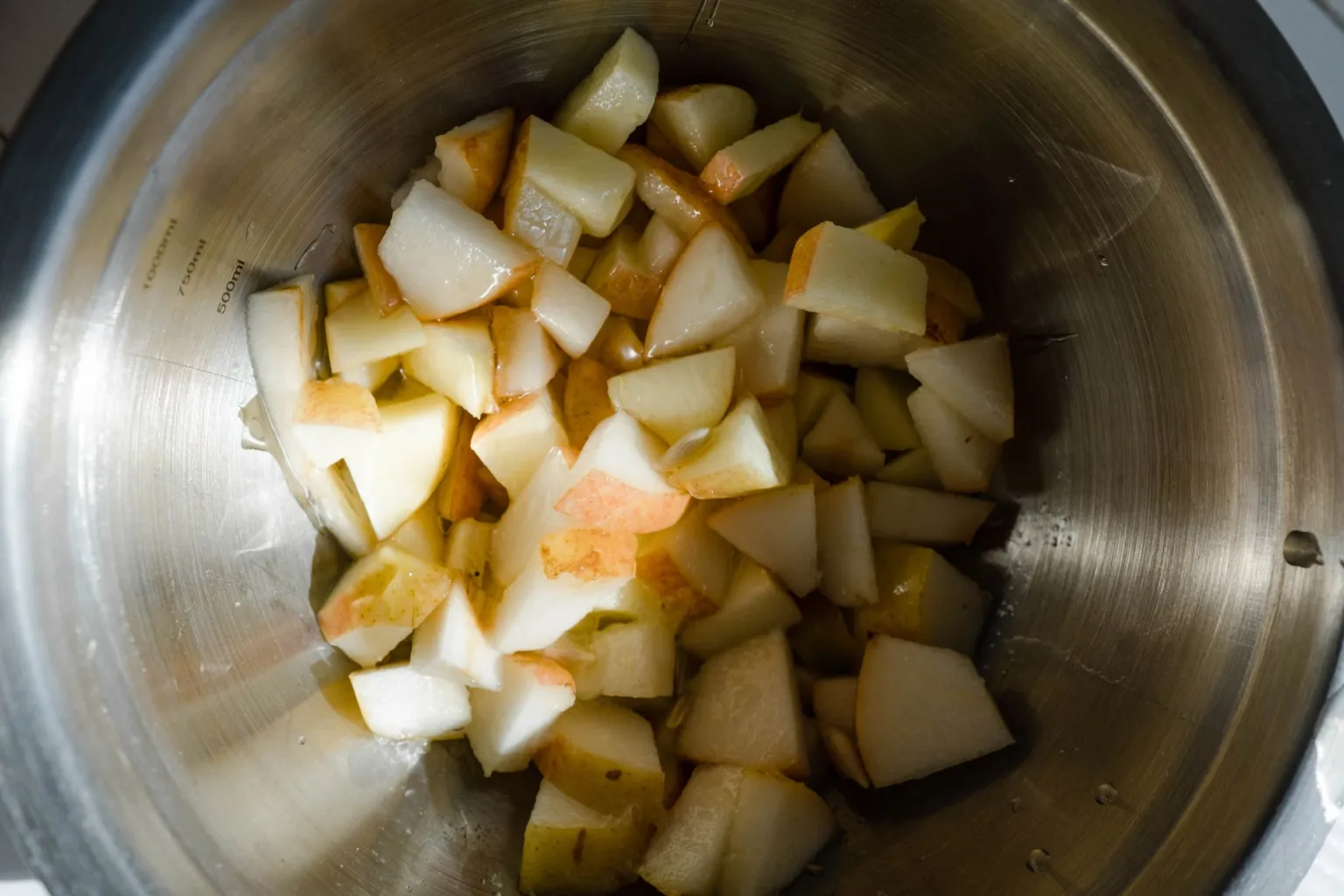
Rinse the pear and eat it whole like an apple, or cut it into wedges or cubes for salads, fruit bowls, yogurt and sandwiches. You can leave the skin on if it is clean and you enjoy its texture; remove the core and seeds as you cut the fruit. To cook it, bake it in tarts or on skewers, poach it gently or sauté it briefly. Its firmness helps it hold its shape, although the result depends on the variety and the size of the pieces. You can also grate or finely chop it into a soy-sauce marinade for meat. Start with a small amount and adjust the sweetness and cooking to suit the dish.
Flavour and texture
Korean pear usually tastes mild, sweet and refreshing, with notes between pear and apple. Its flesh is notably crisp and juicy when raw. Variety and ripeness can change its balance of sweetness, acidity and aroma, so not every fruit tastes the same.
How to choose it
Choose pears without visible spots or damage that feel heavy for their size, a sign they may be juicy. The skin can be yellowish, ochre or brown and smooth or somewhat rough, depending on the variety; color alone does not determine quality. If you can choose, select a firm fruit for cooking and a juicy one for eating fresh.
Storage
Nashi pear can keep for a few days at room temperature and longer in the refrigerator; one culinary reference gives more than two weeks refrigerated, though actual keeping time depends on variety and condition. Store it where it will not be crushed and check its appearance before use. Once cut, cover and refrigerate it, and aim to use it promptly.
Substitutions
A firm European pear can play a similar role in salads or desserts, though it may be softer or less crisp. A juicy apple gives a fresh contrast and firm texture, but its flavor will be more apple-like. Neither alternative exactly reproduces Korean pear’s juiciness and texture; adjust the cut and cooking to suit the fruit you use.
Common mistakes
Do not assume all nashi pears have the same skin, sweetness or texture: there are different varieties. Avoid choosing fruit with visible damage or spots, and do not cook it longer than needed if you want it to hold its shape. In a savory recipe, add the fruit gradually so its sweetness does not overwhelm the dish.
Safety and allergens
Handle the fruit with clean hands and avoid eating fruit that is clearly spoiled. No specific additional warning for this fruit is indicated here.
Culinary uses
- fresh fruit for snacking
- ingredient in sweet and savory dishes
Recommended techniques
- eat raw, sliced or diced
- bake, poach or briefly sauté
Pairs well with
- soft cheeses and yogurt
- soy sauce and beef
Frequently asked questions
Is Korean pear a cross between a pear and an apple?
No. It may look apple-like and has crisp flesh, but it is an Asian pear, not a blend of the two fruits.
Can you eat Korean pear with the skin on?
It can be eaten like an apple. Rinse it before eating, and remove the core and seeds if you prefer.
Can nashi pear be cooked?
Yes. You can bake, poach or briefly sauté it; its firm flesh often helps it keep its shape.
Ingredient allergens
Allergen listThere are no verified associations for these ingredients yet.
Sources and review
Automatically researched, cross-checked and validated content. Sources consulted:
- Client Challenge doi.org/10.2307/jj.27939689.16
- Comité Científico www.aesan.gob.es/dam/jcr:ed009337-0085-4c40-8a9d-4941400ca954/comite_cientifico_35.pdf
- Publications | Food Engineering | Washington State University labs.wsu.edu/barbosa/publications/
- Food Options - Auraria Campus aurariacampus.edu/food-options/
- PERA Defined Benefit (DB) Plan | University of Colorado www.cu.edu/employee-services/benefits-wellness/current-employee/retirement-plans/pera-define…
- Influence of quinoa roasting on sensory and ... dr.lib.iastate.edu/bitstreams/f86c253b-bdc9-4190-b149-cdd659f29f21/download
- The Future of Public Employee Retirement Systems pensionresearchcouncil.wharton.upenn.edu/wp-content/uploads/2015/09/0-19-957334-9-index.pdf
- A study of high solids anaerobic digestion of Bucknell ... digitalcommons.bucknell.edu/cgi/viewcontent.cgi?article=1009&context=masters_theses
- Barry M. Popkin, PhD sph.unc.edu/wp-content/uploads/sites/112/2015/07/Popkin-Barry-M.pdf
- Nashi o pera asiática | Gastronomía & Cía www.gastronomiaycia.com/nashi-o-pera-asiatica/
- ¿Conoces la pera Nashi? Características y usos en la cocina www.directoalpaladar.com/ingredientes-y-alimentos/conoces-la-pera-nashi-caracteristicas-y-us…
- Pera Nashi, cruda (¿orgánica?) | Fundación G+E www.diet-health.info/es/recetas/ingredientes/in/ug2631-pera-nashi-cruda
- Gestión de patrones de consumo alimentario para prevenir y controlar enfermedades no transmisibles en la provincia de Buenos Aires | OpenAlex openalex.org/W4391983821