- Category
- Vegetables
- State
- Fresh
- Usual unit
- unit
What it is
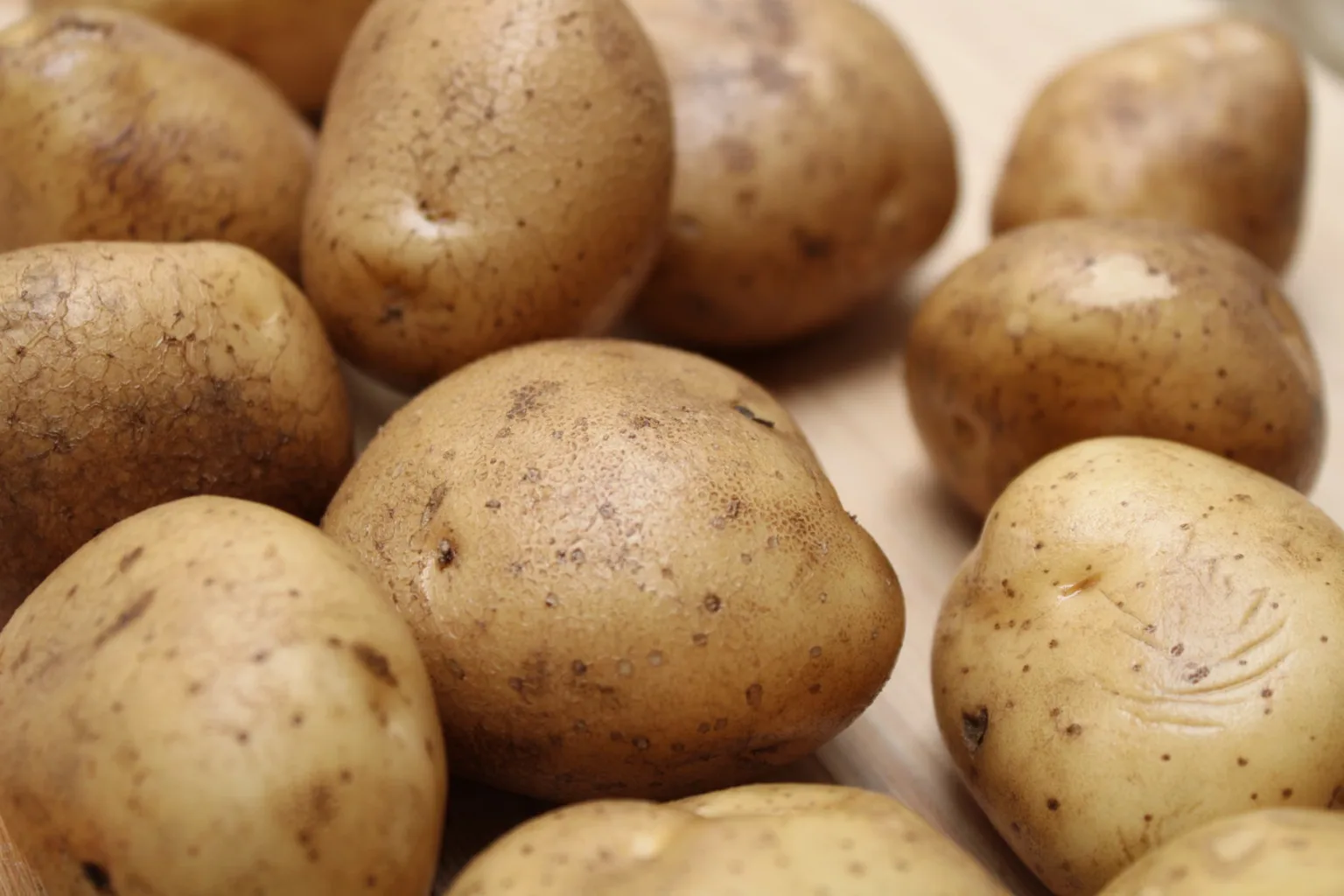
A large potato is a fresh potato of substantial size, belonging to the nightshade family. Size alone does not determine how it will turn out when cooked: varieties differ in texture and in how they respond to heat. Some hold their shape more readily, while others are flourier and break down more easily. Choose a potato for the dish and cooking method rather than relying on size alone. It can be boiled, roasted, fried, steamed or mashed. For salads and stews where defined pieces are desirable, a variety that holds its shape is useful; for mash, a flourier texture may work well. Wash the potato before preparing it.
When to use it
Choose a large potato when you want a piece that is easy to divide into portions or when a dish calls for generously sized pieces. It can be boiled or steamed as a side, roasted for a more substantial preparation, or fried when a crisp surface is wanted. For mash and dishes that benefit from a soft texture, select a variety that tends to break down during cooking. For salads, stews or other dishes where pieces should keep their shape, choose a firmer variety. Since size does not predict texture on its own, check the variety or its intended use when that difference matters to the recipe.
How to use it
Before preparation, wash the fresh potato and gently scrub its surface with a clean vegetable brush under cold running water. Peel or cut it according to the recipe and the result you want. You can boil or steam it for serving in pieces, roast it, fry it, or cook it until tender enough to mash. For salads and stews, choose a variety that holds its shape; for mash, a flourier variety may give a softer result. If the recipe does not specify piece size, cut the pieces evenly to help them cook more uniformly. Serve it with seasonings and other ingredients in the dish, such as onion, pepper, garlic or herbs.
Flavour and texture
Flavor and texture vary by variety and cooking method, so large size alone is not enough to predict the result. Some potatoes remain firm and hold their shape; others are flourier and break down more readily. Cooking can produce tender preparations such as mash or crisp surfaces in some fried preparations. For a suitable result, choose a variety for the dish: a firmer one when you need recognizable pieces, or a flourier one when you want a soft texture.
How to choose it
Choose a potato to suit its intended use and do not rely on size alone. If you need pieces that hold their shape, look for a variety suited to boiling or salads; for mash, a flourier variety may be suitable. Available varieties and their characteristics can differ. If you buy packaged potatoes, check any label information about identity, storage and use. The available evidence does not establish a specific season for large potatoes.
Storage
The available information does not establish storage conditions or a storage duration for fresh potatoes. Follow package directions where provided and applicable local guidance for storing fresh produce. Do not apply directions for storing canned potatoes in jars to a fresh potato: these are different products and processes.
Substitutions
If you do not have a large potato, use several smaller potatoes and adjust the amount to suit the recipe. You can also use another potato variety suited to the same cooking method, bearing in mind that texture and shape retention may differ. Changing varieties can affect the result, particularly in mash, salads and stews.
Common mistakes
Do not assume all large potatoes have the same texture or that size tells you whether a potato will hold its shape when cooked. Choose the variety for the dish: a firmer one for salads or stews with distinct pieces, and a flourier one for mash. Another mistake is skipping the wash before preparing fresh produce; wash the potato and gently scrub its surface with a clean vegetable brush under running water.
Safety and allergens
Before preparation, wash the fresh potato under cold running water and gently scrub it with a clean vegetable brush. Keep hands, surfaces and utensils clean. For packaged products, follow the label's storage and use directions.
Culinary uses
- Base for purées and other soft-textured dishes
- Starchy side dish, served boiled, roasted or fried
- Ingredient for salads and mixed dishes
Recommended techniques
- Boiling
- Roasting
- Frying
- Steaming
- Mashing
Pairs well with
- Onion and pepper in mixed dishes
- Garlic and herbs as seasoning
Frequently asked questions
What can I make with a large potato?
You can boil, roast, fry or steam it, or mash it. Choose a variety based on whether it needs to hold its shape or become soft.
Is every large potato floury?
No. Size alone does not determine texture; different varieties may stay firm or break down more during cooking.
How should I prepare a fresh potato before cooking?
Wash it under cold running water and gently scrub the surface with a clean vegetable brush. Then peel or cut it as the recipe requires.
Ingredient allergens
Allergen listThere are no verified associations for these ingredients yet.
Sources and review
Automatically researched, cross-checked and validated content. Sources consulted:
- En el etiquetado alimentario hay algunas menciones que son obligatorias eletiquetadocuentamucho.aesan.gob.es/obligatoria.html
- Client Challenge doi.org/10.2307/jj.27939689.16
- The Essential Glossary of Cooking Terms for the Culinary Arts - Escoffier www.escoffier.edu/blog/culinary-arts/the-essential-glossary-of-cooking-terms-for-the-culinar…
- Agencia Española de Seguridad Alimentaria y Nutrición www.aesan.gob.es/
- Vamos a Conservar Alimentos: Papas y Batatas (Camote o Papa Dulce) extension.psu.edu/vamos-a-conservar-alimentos-papas-y-batatas-camote-o-papa-dulce/
- GastroWiki - Blog sobre Gastronomía gastroalianza.es/gastrowiki/articulo/variedades-de-patatas-usos-curiosidades-y-nombres
- ¿Cuántos tipos de patata existen? Nombres y usos fruteriasilvestre.com/cuantos-tipos-de-patata-existen/
- Eating Spain: National Cuisine Since 1900 - UKnowledge uknowledge.uky.edu/context/hisp_etds/article/1031/viewcontent/Eating_Spain_National_Cuisine_…
- EFNEP Hispanic Heritage Recipes | Community Nutrition | Extension/College of Agriculture, Health & Natural Resources | University of Connecticut communitynutrition.cahnr.uconn.edu/efnep-hispanic-heritage-recipes/
- Blog - 8 Types of Popular Plating Techniques Aspiring Chefs Can Learn During Their Free Time www.cordonbleu.edu/malaysia/blog-8-types-of-popular-plating-techniques-aspiring-chefs-can-le…
- A Flash in the Pan: Generating Exposure ... - Harvard DASH dash.harvard.edu/server/api/core/bitstreams/a884f6d4-9249-4376-87bd-0ce743b06a87/content