- Category
- Vegetables
- State
- Fresh
- Usual unit
- unit
What it is
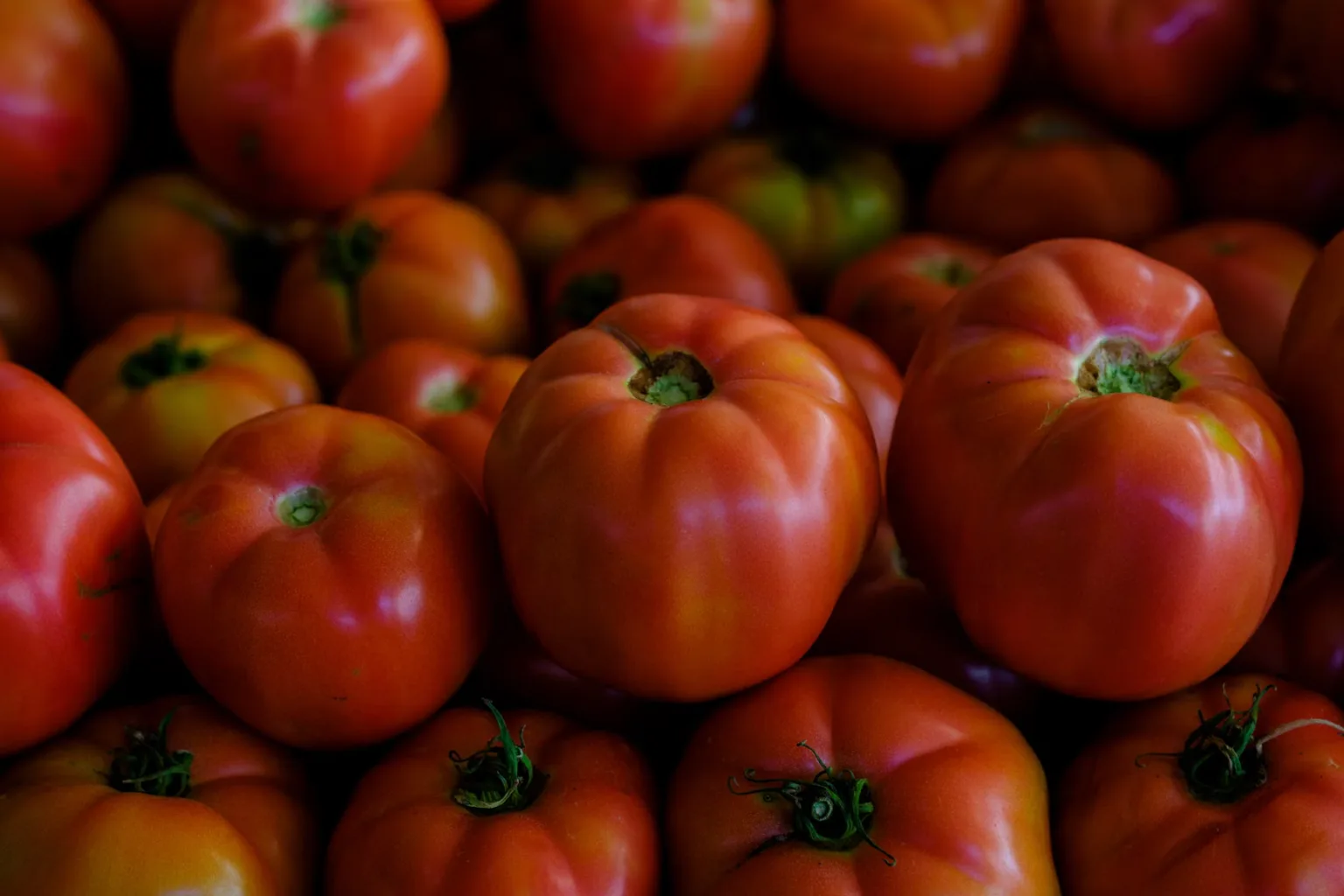
A large ripe tomato is the fresh fruit of the tomato plant, commonly used as a vegetable in cooking. Size, colour and texture depend on variety and ripeness: large tomatoes do not all have the same flesh or balance of sweetness and acidity. Their juiciness makes them suitable for slices or chunks, while grating, blending or cooking incorporates them into sauces, sofrito and cold soups. Here, “large” describes a useful size for cooking, not a single botanical variety.
When to use it
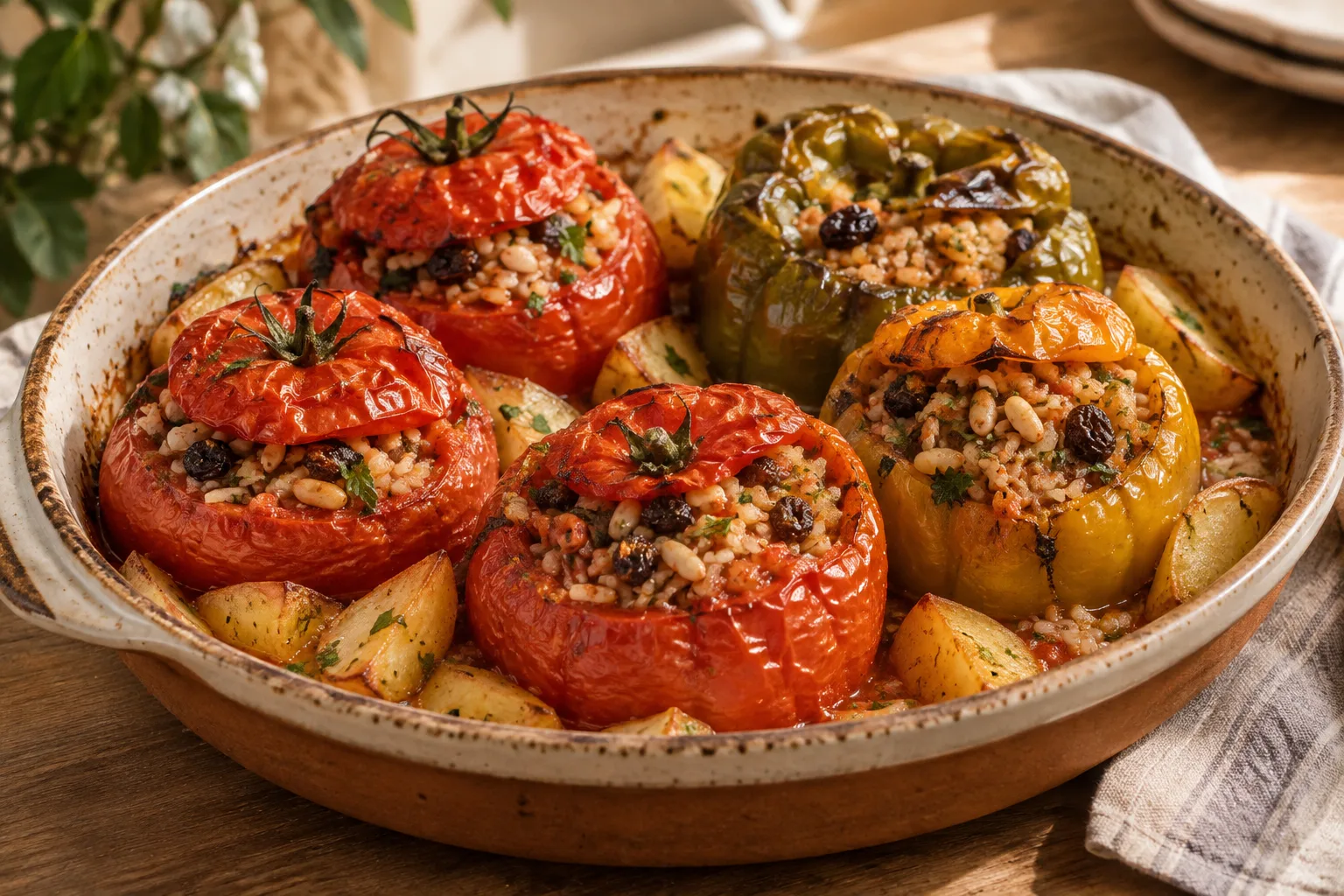
Use it raw when you want slices or chunks to add juiciness to a salad, sandwich or side dish. If it is firm enough to hold its shape, it can also be hollowed and stuffed. When it is very ripe or has softened but is still in good condition, grating, blending or cooking it into a sauce, sofrito or cold soup is often more practical. Choose according to the dish: firmness and the amount of flesh vary between varieties.
How to use it
Wash the tomato before cutting and dry it so excess surface water does not dilute a dressing. Remove the stem, then cut into slices, wedges or dice to suit the dish; season and add olive oil and fresh herbs if desired. For a sauce, grate or blend it, or chop and cook it until it reaches the consistency you want. You can also roast it or hollow it out for stuffing if it is firm enough. Adjust the cut and cooking to the tomato’s flesh and juiciness rather than assuming every tomato will behave the same way.
Flavour and texture
Flavour can balance sweetness with fresh acidity, but varies with variety and ripeness. The flesh may be meaty or more watery; a firm tomato generally holds its shape better when sliced, while a very ripe one is softer and juicier. Colour alone is not a universal guide to flavour or ripeness.
How to choose it
Choose tomatoes that look intact and have a firmness suited to the task: firm for slicing or stuffing, riper for cooking. Weight, aroma and slight give under gentle pressure can help, but vary by variety. Do not use colour as the only guide, since ripe tomatoes can be shades other than red. Buy tomatoes at different stages of ripeness if you will not use them all at once.
Storage
Leave tomatoes that still need to ripen at room temperature in a moderate spot away from direct sun. If they are very ripe and you will not use them soon, refrigeration may help you keep them longer, although prolonged chilling can affect aroma and texture. Avoid stacking heavy items on them and handle them gently to prevent bruising. Wash just before use.
Substitutions
For slices, another large, firm salad tomato can serve a similar purpose, though juiciness and acidity may differ. For sauce, a pulpy pear or Roma tomato is a culinary alternative suited to that preparation. Cherry tomatoes can take the place of large tomatoes in a side dish or salad, but change the size and result.
Common mistakes
Do not choose by colour alone or expect every variety to have the same texture. A very ripe tomato may collapse when cut into thin slices; use it for grating or cooking if it is still in good condition. Avoid repeatedly squeezing tomatoes while shopping, as rough handling can bruise them.
Safety and allergens
Check the tomato’s condition before preparing it and wash it before cutting. If you have a food allergy, check the labels of packaged products served with the tomato and ask for ingredient information when eating prepared food.
Culinary uses
- Fresh salad ingredient
- Base for sauces, sofrito and cold soups
- Filling ingredient for stuffed tomatoes
Recommended techniques
- Slice or cut into wedges for raw dishes
- Grate or crush for sauces and toast
- Roast or cook slowly for sauces and stews
- Hollow out and fill
Pairs well with
- Olive oil and salt
- Fresh herbs such as basil
- Bread
- Other salad vegetables and cheese
Frequently asked questions
How can I tell whether a large tomato is ripe?
Look at the colour expected for its variety, check for slight give with gentle pressure and notice its aroma. Colour alone is not enough, because ripe varieties can have different hues.
Can I cook a tomato that is too soft for a salad?
If it is still in good condition, reduced firmness may make it better suited to grating, blending or cooking into a sauce, sofrito or cold soup.
Should tomatoes be kept in the refrigerator?
Tomatoes that still need to ripen can be left at room temperature, away from direct sunlight. Chilling a very ripe tomato that will not be used soon may buy time, but can affect aroma and texture.
Ingredient allergens
Allergen listThere are no verified associations for these ingredients yet.
Estimated nutrition
- Fat
- 0.11 g
- Saturates
- 0.02 g
- Carbohydrate
- 4.01 g
- Sugars
- 2.49 g
- Fibre
- 0.7 g
- Protein
- 0.95 g
- Salt
- 0.03 g
Sources and review
Automatically researched, cross-checked and validated content. Sources consulted:
- Alérgenos alimentarios | EFSA www.efsa.europa.eu/es/safe2eat/food-allergens
- Los 6 mejores tipos de tomate y cómo usarlos en cocina mercadosantamariadelacabeza.es/blog/tesoros-gastronomicos/tipos-de-tomate
- 6 VARIEDADES DE TOMATES Y SUS USOS EN COCINA - Masymas Supermercados super-masymas.com/variedades-de-tomates/
- Agencia Española de Seguridad Alimentaria y Nutrición www.aesan.gob.es/
- Tomate: tipos, cómo elegirlo, saber si está maduro, conservarlo y usarlo en cocina - El Mercado de Origen www.elmercadodeorigen.com/tomate-como-elegir-conservar-usar-cada-tipo/
- Tomate de verano, guía de tipos y recetas - Mercado de Chamartín mercadodechamartin.es/blog/guia-tomate-verano-variedades-recetas/
- Qué sabes realmente sobre los tomates - Secretos Del Sur. www.secretosdelsur.com/es/estilo-de-vida-mediterraneo/consejos-de-salud/que-sabes-realmente-…
- Food Allergies | FDA www.fda.gov/food/nutrition-food-labeling-and-critical-foods/food-allergies
- Food allergens | Food Safety and Quality | FAO www.fao.org/food-safety/scientific-advice/food-allergens/en
- Safety of yellow/orange tomato extract as a novel food pursuant to Regulation (EU) 2015/2283 - PMC pmc.ncbi.nlm.nih.gov/articles/PMC10190518/
- Food allergen labelling and information requirements: technical guidance - GOV.UK www.gov.uk/government/publications/food-allergen-labelling-and-information-requirements-tech…
- ¡El tomate!: Un alimento con grandes posibilidades | RTVE.es www.rtve.es/play/noticias/20200928/tomate-alimento-grandes-posibilidades-comer/2043201.shtml
- Variedades de tomate - ComeFruta comefruta.es/variedades-de-tomate
- Qué tipos de tomates existen y cómo utilizar cada uno para cocinar | Onda Cero Radio www.ondacero.es/noticias/sociedad/que-tipos-tomates-existen-como-utilizar-cada-uno-cocinar_2…
- Recuperando los tomates de Madrid – Productos de Madrid productosdemadrid.academiamadrilenadegastronomia.org/recuperando-los-tomates-de-madrid/