- Category
- Meat
- State
- Fresh
- Usual unit
- unit
What it is
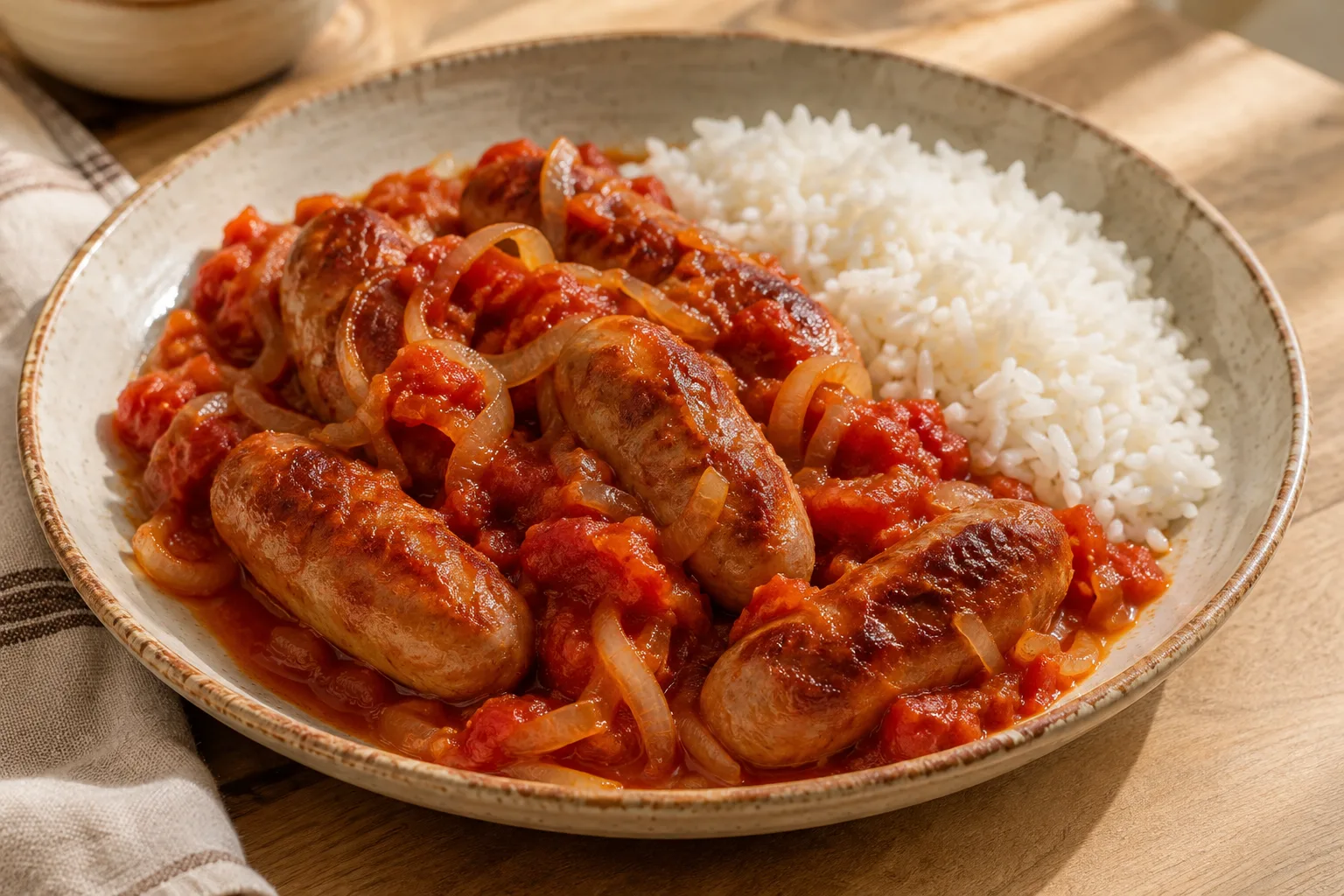
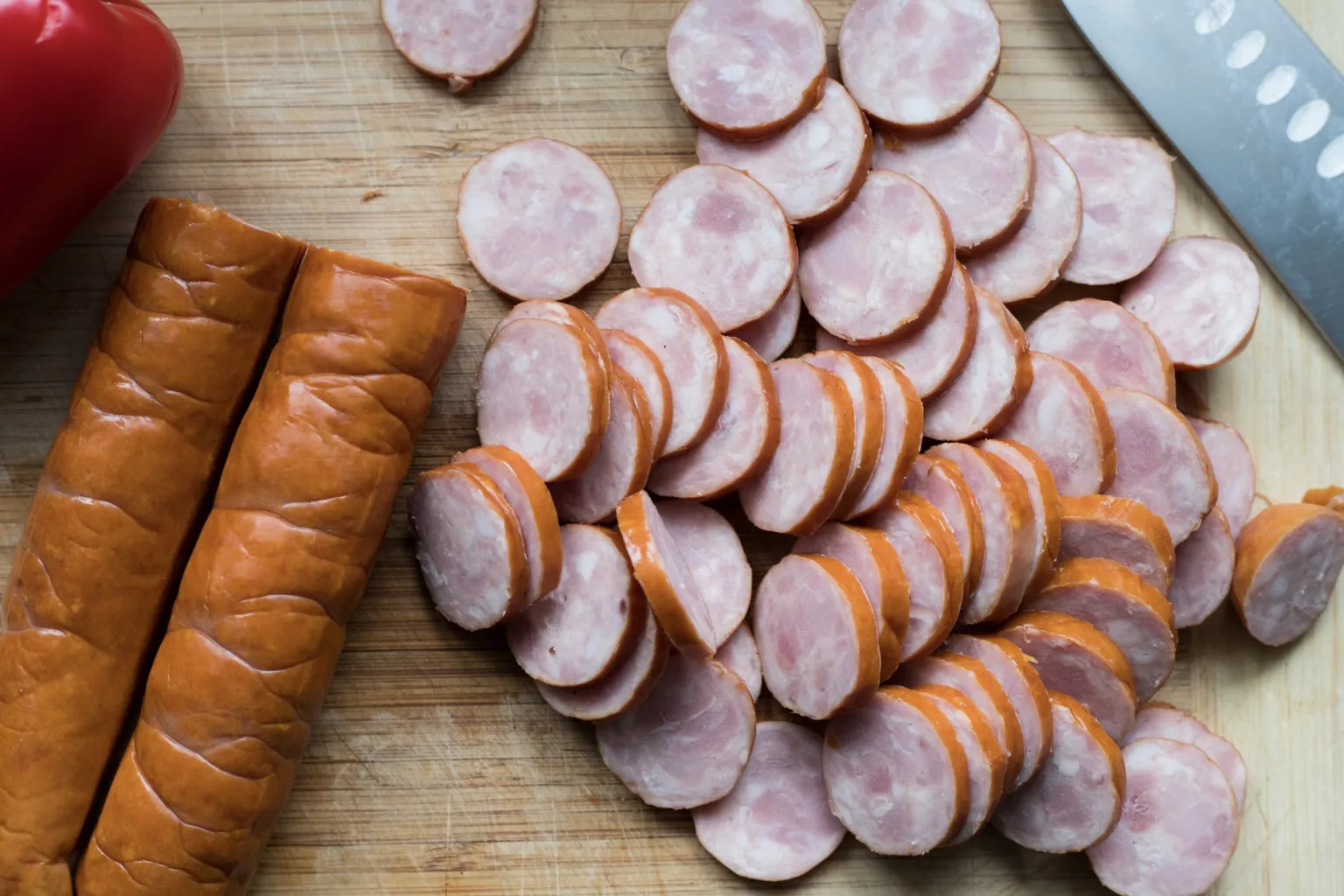
A sausage is a seasoned meat product, commonly made from minced meat and formed into an elongated shape in a casing. “Large” describes size, not a specific recipe: meat, fat, seasoning, casing, and processing can vary. This profile is for fresh sausages, which should not be confused with cooked, smoked, or cured varieties. Check the product name and directions to learn what it contains and how it should be prepared; size alone does not show whether it is ready to eat.
When to use it
Use large sausages as a main dish with sides or as the filling for a sandwich. They can also be included in stews and mixed dishes when the preparation suits the particular sausage. Fresh sausages are commonly pan-fried or grilled, but cooking method and time depend on the product and its size. Follow the package directions rather than relying on one general cooking time.
How to use it
Before cooking, read the product name, ingredient list, and storage and preparation directions. If it is identified as fresh, follow its cooking instructions rather than assuming it is ready to eat. You can pan-fry, grill, or roast it when those methods suit the package directions. Serve it whole with bread, mustard, potatoes, or vegetables, or add it to a stew or mixed dish. There is no single cooking time that applies to every large sausage.
Flavour and texture
Flavor depends on the meat, fat, and seasonings used, so large sausages do not have one standard taste. A fresh sausage has a different texture from a cooked or cured one; browning can create a toasted exterior while the inside remains juicy when properly prepared. Check the label for the ingredients and style of the sausage you have.
How to choose it
Look for a clear product name and check the ingredients, declared allergens, date, and storage and use directions. Size does not identify the animal species or whether the sausage is cooked. When buying loose or from a food counter, ask what type it is and how it should be prepared. Choose a product whose description and preparation suit your recipe.
Storage
Store the sausage according to its package or the seller’s directions, and check the date and any refrigeration requirements. Storage conditions may differ with processing and presentation, so there is no single storage period that applies to every sausage. After opening, follow the instructions for that product and do not store it in a way that conflicts with the stated directions.
Substitutions
If a large sausage is unavailable, use another fresh sausage with similar size and seasoning, adjusting the amount to suit the recipe. A fresh sausage made with a different meat may also work, but its flavor and possibly its ingredients will differ. Check that the substitute has the same preparation state; a cooked or cured sausage may not behave like a fresh one.
Common mistakes
Do not assume all large sausages contain the same meat or are ready to eat. Treating a fresh sausage as if it were cooked or cured can lead to unsuitable preparation. Avoid relying on a universal cooking time: check the product directions, especially when size or processing differs.
Safety and allergens
Check the label for ingredients, allergens, date, and storage and use conditions. For a product identified as fresh, follow its cooking directions and do not assume it is ready to eat unless that is confirmed. If necessary directions are missing, ask the seller or manufacturer.
Culinary uses
- Main dish
- Ingredient in sandwiches, stews, and mixed dishes
Recommended techniques
- Pan-frying
- Grilling
- Roasting
Pairs well with
- Bread and mustard
- Potatoes and vegetables
- Legumes
Frequently asked questions
Are all large sausages fresh?
No. Size does not tell you whether a sausage is fresh, cooked, smoked, or cured. Check the product name and package directions.
How should I cook a large fresh sausage?
Follow the package directions, since method and cooking time depend on the product. Pan-frying, grilling, or roasting may be suitable when the directions allow.
What can I serve with large sausages?
Serve them with bread and mustard, potatoes, or vegetables. They can also be added to a stew or mixed dish.
Ingredient allergens
Allergen listThere are no verified associations for these ingredients yet.
Sources and review
Automatically researched, cross-checked and validated content. Sources consulted:
- En el etiquetado alimentario hay algunas menciones que son obligatorias eletiquetadocuentamucho.aesan.gob.es/obligatoria.html
- Client Challenge doi.org/10.2307/jj.27939689.16
- The Essential Glossary of Cooking Terms for the Culinary Arts - Escoffier www.escoffier.edu/blog/culinary-arts/the-essential-glossary-of-cooking-terms-for-the-culinar…
- EFNEP Hispanic Heritage Recipes | Community Nutrition | Extension/College of Agriculture, Health & Natural Resources | University of Connecticut communitynutrition.cahnr.uconn.edu/efnep-hispanic-heritage-recipes/
- Lesson 4A – Semillas: Elementary Spanish I pressbooks.uiowa.edu/elementary-spanish-i/chapter/lesson-4a/
- Jams and jellies: Problems and solutions | Servicio de Extensión de OSU extension.oregonstate.edu/es/food/preservation/jams-jellies-problems-solutions
- Tipos de salchichas: variedades y características www.campofrio.es/tipos-de-salchichas
- Time, Temperature, and Pressure in Canning Foods extension.psu.edu/time-temperature-and-pressure-in-canning-foods/
- Salchicha - Wikipedia, la enciclopedia libre es.wikipedia.org/wiki/Salchicha
- - YouTube www.youtube.com/watch?v=sK_qXUmfNvc
- Tipos de salchichas: variedades y usos en la cocina www.uncomo.com/comida/articulo/tipos-de-salchichas-variedades-y-usos-en-la-cocina-55697.html
- Para la ciudadanía www.aesan.gob.es/para-la-ciudadania
- The Effects of a 12 Week Nutrition and Physical Activity ... digitalscholarship.fiu.edu/record/11275/files/FIDC000710.pdf