- Category
- Sugar and sweeteners
- State
- Dry
- Usual unit
- cup
What it is
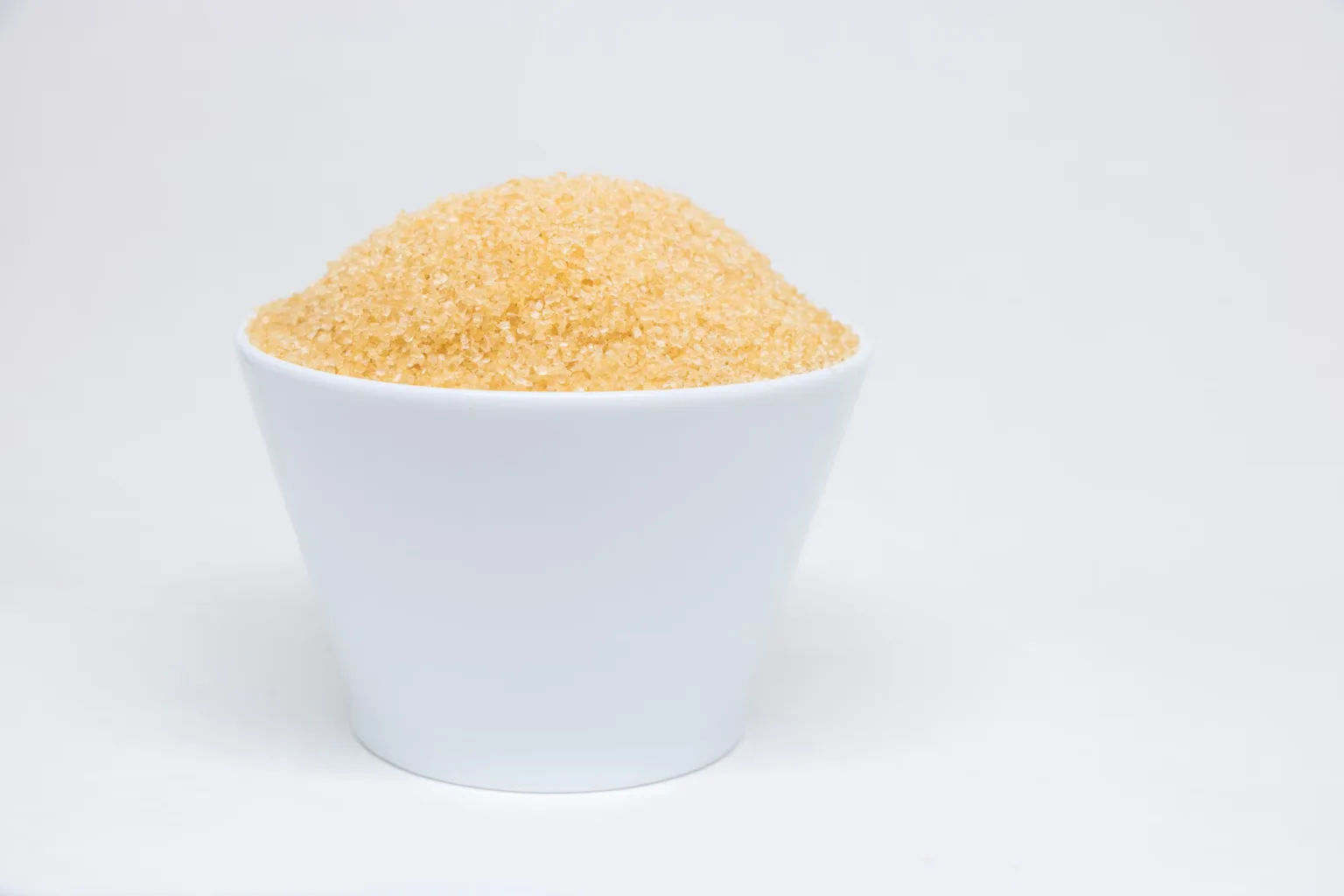
Light brown sugar is crystalline sugar that contains residual molasses or has molasses added to it. The molasses gives it a yellow-brown color and a more complex, caramel-like flavor than white sugar. The amount of molasses and the crystal size can vary from product to product, so color and texture are not identical across brands. The word “light” generally distinguishes it from darker, more intense brown sugars, but it does not establish a universal composition. It is sold as a dry ingredient, although molasses can make it feel moist or form clumps. It is a culinary sweetener used especially in baking, glazes and seasonings when a molasses note is wanted.
When to use it
Choose light brown sugar when you want to sweeten a dish and add a caramel-like note without the intensity of a darker brown sugar. It suits baking, glazes and seasonings, and works in recipes where brown sugar contributes to flavor as well as sweetness. In recipes calling for white sugar, it may change both color and aroma; use it only if that change suits the intended result. For a stronger molasses flavor, consider a darker variety. Molasses content and crystal size vary by product, so check the recipe and the product description rather than assuming every light brown sugar behaves identically.
How to use it
Measure the sugar as directed by the recipe and mix it with the other ingredients. Add it to baking mixtures, or use it in glazes and seasonings to contribute sweetness, color and caramel-like notes. If a recipe specifically calls for light brown sugar, that variety is the closer choice for retaining its intended flavor and color balance; dark brown sugar may be more pronounced. If you replace it with white sugar, expect a less caramel-like flavor and a different appearance. Brown sugars vary in crystal size and moisture, so do not assume that a volume measure will behave exactly the same across products. Follow the recipe’s quantities and adjust only when the preparation allows.
Flavour and texture
Its sweetness comes with molasses and caramel notes, generally less pronounced than those of dark brown sugar. The crystals may feel somewhat moist because of the molasses; crystal size and moisture vary among products. It can clump, which by itself does not mean that its culinary profile has changed.
How to choose it
Look for a product labelled light brown sugar and check its ingredient list and package directions. Color, crystal size and moisture can vary; the word “light” does not specify a universal molasses content. If a recipe depends on a mild flavor, take care not to choose a dark variety by mistake. Compare the product with the intended use, and do not assume that every brown sugar can be substituted without changing the result.
Storage
Keep it tightly closed in a dry place and follow the package directions. Molasses makes brown sugar hygroscopic and naturally moist, so surrounding moisture can affect how it feels or clumps. Keep water and dirt out, and do not assume a specific shelf life if the package does not state one.
Substitutions
Granulated white sugar can replace it to provide sweetness, but has a cleaner flavor and fewer caramel-like notes. Dark brown sugar can also be used, but gives a stronger molasses flavor and may change the color. Since varieties differ in moisture and crystal size, a substitution does not guarantee the same texture; choose according to the flavor you want and the recipe’s directions.
Common mistakes
Do not assume all brown sugars have the same flavor, moisture or crystal size. Replacing light brown sugar with white sugar can remove its molasses note, while a dark variety can intensify it. The word “light” is not a universal measure of molasses content, and volume measures should not automatically be treated as identical across products with different crystals.
Safety and allergens
The available evidence identifies no specific safety warning for this ingredient. Protect it from moisture and contamination, and follow the package directions. Do not use it if it is visibly dirty or has changes that concern you.
Culinary uses
- Endulzar preparaciones de repostería
- Aportar color y sabor a glaseados y condimentos
Recommended techniques
- Mezclar con los ingredientes de una masa o preparación dulce
- Incorporar a glaseados y condimentos
Pairs well with
- Repostería
- Glaseados y condimentos
- Preparaciones de sabor intenso, como el gingerbread
Frequently asked questions
What distinguishes light brown sugar from white sugar?
Molasses in brown sugar gives it color and a more caramel-like flavor. White sugar has a cleaner flavor profile.
Can I replace it with dark brown sugar?
You can if you are comfortable with a stronger molasses flavor and a possible color change. The two are not identical in flavor.
Why can it feel moist or form clumps?
Molasses is hygroscopic, and brown sugar can naturally have a moist texture. Moisture in the surroundings can also affect how it clumps.
Ingredient allergens
Allergen listThere are no verified associations for these ingredients yet.
Estimated nutrition
- Fat
- 0 g
- Saturates
- 0 g
- Carbohydrate
- 100 g
- Sugars
- 100 g
- Protein
- 0 g
- Salt
- 0 g
Sources and review
Automatically researched, cross-checked and validated content. Sources consulted:
- Del blanco a la panela: los 19 tipos de azúcar más comunes, en qué se diferencian y cómo usarlos en cocina www.directoalpaladar.com/ingredientes-y-alimentos/blanco-a-panela-19-tipos-azucar-comunes-qu…
- El azúcar: tipos y usos. Parte II - Blog de recetas de María Lunarillos www.marialunarillos.com/blog/el-azucar-tipos-y-usos-parte-ii.html
- Azúcar moreno - Wikipedia, la enciclopedia libre es.wikipedia.org/wiki/Az%C3%BAcar_moreno
- Duke University Dissertation Template dukespace.lib.duke.edu/bitstreams/e673585b-67b7-4e97-a14c-766083285457/download
- Eating Spain: National Cuisine Since 1900 - UKnowledge uknowledge.uky.edu/context/hisp_etds/article/1031/viewcontent/Eating_Spain_National_Cuisine_…
- Vamos a Conservar Alimentos: Rellenos de fruta para tartas, tortas y pasteles extension.psu.edu/vamos-a-conservar-alimentos-rellenos-de-fruta-para-tartas-tortas-y-pastele…
- Hybrid! Healthscapes:! Mothers'! Health! Care! and! Food! ... ir.library.oregonstate.edu/downloads/vx021j08p
- inalienable bodies: palenquera women and negotiations of ... repository.upenn.edu/bitstreams/46e25782-cd5f-42ef-844f-6703463dbd4d/download
- ¿Por qué seguimos sin tener claro qué es una dieta sostenible? doi.org/10.64628/aao.nce74x96k
- Jose R. Rodríguez Oral History Interview Audio | Hispanic Oral History Project Interviews www.lib.uidaho.edu/digital/hohp/items/hohp023.html
- Ciphering Nations: Performing Identity in Brazil and the ... conservancy.umn.edu/bitstreams/7ea9652e-f246-49ad-bdd9-dc84dd908060/download
- Azúcar moreno alimento: análisis y comparativa de las mejores opciones para preparar sushi y recetas asiáticas sukimotril.es/azucar-moreno-alimento/
- Diferencias entre azúcar blanca y azúcar moreno: las fundamentales - Edulcorantes de Origen natural a medida - BSedulcorantes www.bsedulcorantes.com/diferencias-entre-azucar-blanca-y-azucar-moreno-las-fundamentales/