- Category
- Sugar and sweeteners
- State
- Liquid
- Usual unit
- tablespoon
What it is
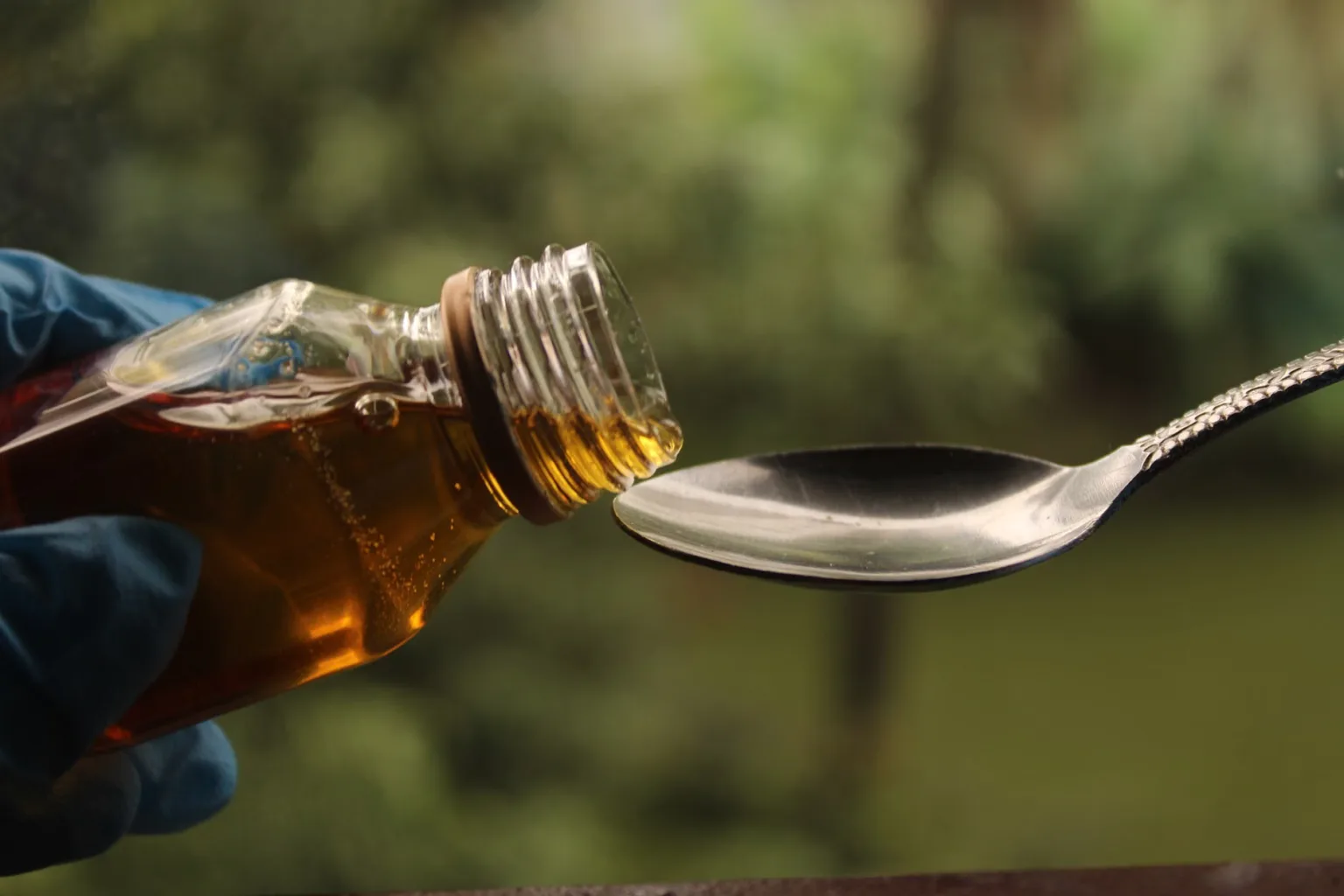
Light syrup is a sweet, pourable syrup; a basic version is made by dissolving sugar in water. The word “light,” however, does not establish a universal concentration. Some syrups are more diluted than others, and commercial products may include flavorings or other ingredients. In fruit preserving, light, medium and heavy syrups refer to different water-and-sugar mixtures. Do not assume that every product called light syrup has the same composition or can be used interchangeably. Check the ingredient list and the product’s intended use, especially when a recipe depends on a specific concentration.
When to use it
Use light syrup when you want to add liquid sweetness to a drink or sweet preparation and the recipe allows it. It can be useful in coffee, tea, cocktails, smoothies, baking or as a dessert topping. Sweetness and thickness depend on the product, so start with a small amount and adjust to taste. If a preserving recipe calls for light syrup, use the mixture and process specified in that recipe; do not automatically replace it with a commercial syrup whose concentration is unknown.
How to use it
Add the syrup gradually and stir it in; taste before adding more, since sweetness varies with concentration and product. In drinks, pour it in and stir until combined. In desserts, use it as a topping or mix it into a preparation when the recipe calls for that. For cocktails or to moisten a cake, measure the amount stated in the recipe and adjust only after tasting. When preserving fruit, follow a reliable recipe’s exact sugar-to-water ratio and preservation process. The words “light syrup” alone do not specify either a precise ratio or a preservation process.
Flavour and texture
When unflavored, light syrup is generally sweet and fairly neutral, though the type of sugar and the concentration can affect its character. It is liquid and easy to stir into other ingredients. More concentrated versions may feel thicker and deliver more sweetness per spoonful. Flavored products can taste quite different. Check the ingredient list, and do not use color or the word “light” alone to judge sweetness or intensity.
How to choose it
Check the label for ingredients, flavor and intended use: “light syrup” does not guarantee a fixed sugar-to-water ratio. Choose a product whose sweetness and consistency suit your drink or recipe, and note whether it contains flavorings or other ingredients. For preserving recipes, do not use a commercial product in place of the specified mixture unless you have confirmed that its formulation matches what the recipe requires.
Storage
Follow the storage directions on the package and observe the manufacturer’s date; shelf stability may vary with ingredients and processing. Keep the container closed and avoid contaminating the contents when serving. The available evidence does not establish a storage period for homemade syrup, so use a reliable recipe and follow its specific storage instructions rather than assuming homemade syrup keeps as long as a commercial product.
Substitutions
Another simple sugar-and-water syrup may work if the recipe allows you to adjust sweetness and consistency. Granulated sugar can sometimes substitute when there is time for it to dissolve, but it does not provide the same liquid texture or behave identically in every preparation. Compare concentration and flavor before substituting, particularly in preserving recipes that rely on a specified ratio.
Common mistakes
Do not assume that “light” always means the same concentration, or swap one preserving syrup for another without checking the recipe. Adding too much at once can make a drink or dessert overly sweet. It is also a mistake to assume that a pale product has no added flavorings or other ingredients; read the label.
Safety and allergens
Check the ingredient list and package storage directions, especially when allergies or specific dietary needs are a concern. For preserving fruit, use a reliable recipe with defined proportions and a preservation process; the name “light syrup” alone is not preservation guidance.
Culinary uses
- Liquid sweetener
- Sweetener for drinks and desserts
Recommended techniques
- Stir into liquids
- Drizzle or brush onto baked goods
Pairs well with
- Coffee, tea and cocktails
- Fruit desserts and ice cream
Frequently asked questions
Does light syrup always have the same proportions?
No. The name does not define one universal concentration; check the label or use the exact ratio specified in your recipe.
How should I use it in a drink?
Add a small amount, stir and taste. Adjust gradually until the sweetness and consistency suit you.
Can I replace it with sugar?
Sometimes, if the recipe allows the sugar to dissolve and does not depend on the syrup’s liquid texture.
Ingredient allergens
Allergen listThere are no verified associations for these ingredients yet.
Estimated nutrition
- Fat
- 0.97 g
- Saturates
- 0 g
- Carbohydrate
- 34.56 g
- Sugars
- 28.57 g
- Fibre
- 0 g
- Protein
- 1.4 g
- Salt
- 0.25 g
Sources and review
Automatically researched, cross-checked and validated content. Sources consulted:
- REGLAMENTO (UE) No 1169/2011 DEL PARLAMENTO ... eletiquetadocuentamucho.aesan.gob.es/media/reglamento-11692011.pdf
- Agencia Española de Seguridad Alimentaria y Nutrición www.aesan.gob.es/
- Eating Spain: National Cuisine Since 1900 - UKnowledge uknowledge.uky.edu/context/hisp_etds/article/1031/viewcontent/Eating_Spain_National_Cuisine_…
- ¿Qué es el Sirope?: Principales Usos en Cocina | EBBANY ebbany.com/que-es-el-sirope-y-como-usarlo/
- Appendix B: Recipes for Disease Prevention – Culinary Medicine opentextbooks.library.arizona.edu/culinarymedicine/back-matter/appendix-b-recipes/
- ¿Por qué seguimos sin tener claro qué es una dieta sostenible? doi.org/10.64628/aao.nce74x96k
- Menus - Dining dining.berkeley.edu/menus/
- price competitiveness of fruits and vegetables at local food ... dl.tufts.edu/downloads/cf95jp93s?filename=t435gr02m.pdf
- Preserving foods: berries | Servicio de Extensión de OSU extension.oregonstate.edu/es/catalog/sp-50-780-preserving-foods-berries
- Tipos de sirope: cómo elegir el adecuado | Oxefruit oxefruit.es/tipos-de-sirope-como-elegir-adecuado/?srsltid=AYCX9vKtXNFwC9ZNta53fOhbfay8EvkEkr…
- Como Hacer Sirope de Azúcar para Cócteles - YouTube www.youtube.com/watch?v=ZNhVZb9uS3w