- Category
- Vegetables
- State
- Fresh
- Usual unit
- unit
What it is
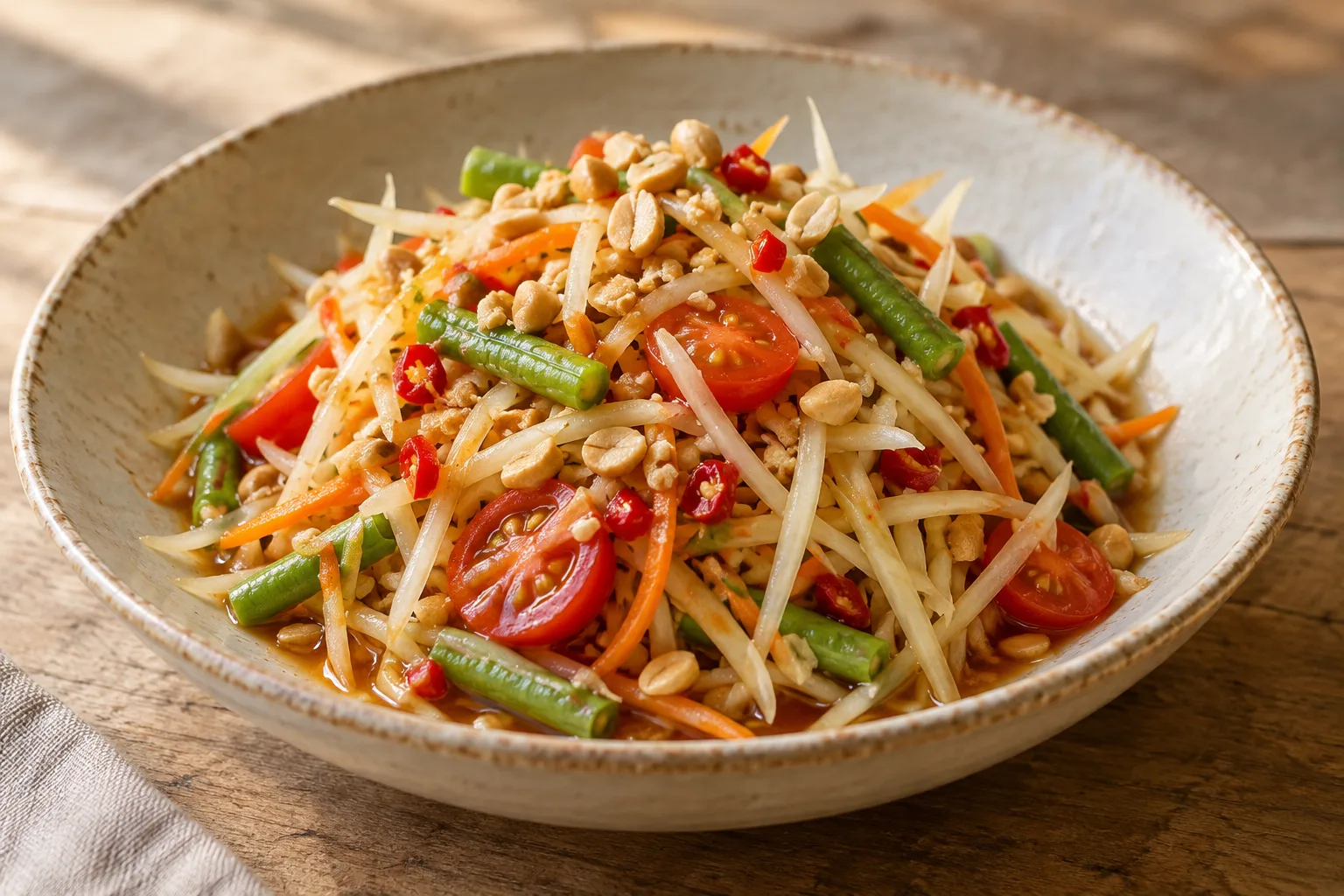
Green beans are the tender pods of a legume plant, used in cooking as a vegetable. The pods may be flat or rounded, and are commonly green, though yellow and other-colored varieties also exist. Shape and length vary by variety, so the name “long” does not by itself identify a specific variety. Beans may be cooked whole or cut into pieces, and work well boiled, sautéed, roasted, or added to salads, stews, and purées. Fresh beans should be washed before preparation.
When to use it
Use long green beans when you want a mild-tasting vegetable as a side dish or in a vegetable main, soup, stew, or salad. Fresh pods are convenient for cooking straight away; thicker ones may take longer to cook than thin ones. They are available year-round in some markets, although availability depends on location and growing conditions. Frozen green beans are also useful for soups and sides when fresh ones are unavailable.
How to use it
Rinse the pods under cold running water and trim the ends if you wish. Leave them whole or cut them into pieces of similar size so they cook evenly. Boil or steam until they reach your preferred texture, then serve with olive oil and a vinaigrette or add them to a salad. You can also sauté them in a pan, roast them on a tray, or stir them into a stew. Adjust cooking to the thickness of the pods and check their texture before taking them off the heat.
Flavour and texture
Their flavor is mild and sometimes slightly sweet, so it works with simple dressings as well as stronger seasonings. Cooked pods can be tender while retaining some firmness if cooking is controlled. Texture depends on variety, thickness, and maturity: over-mature pods can be tough or stringy, while limp beans may have lost freshness.
How to choose it
Choose pods with a bright color, an even shape, and a fresh appearance. Look for beans that feel tender and firm; avoid those that are wet or sticky, have brown spots, or appear wilted. Size alone does not determine quality: thickness, firmness, and the condition of the pod are useful clues. Very hard or fibrous beans may be over-mature.
Storage
Keep fresh beans in the refrigerator in a perforated or ventilated bag and use them soon for best quality. Available guidance suggests using them within about a week, though storage life can vary with initial freshness and conditions. To freeze, wash and cut the beans if desired, blanch them, cool them quickly, drain them, then pack and freeze.
Substitutions
Yellow wax beans can replace green beans in sautéed dishes, sides, and salads, although they will change the dish’s color and appearance. Frozen green beans are another option, especially for soups and stews. Adjust cooking to the form and texture you want rather than assuming a substitute needs exactly the same time as fresh beans.
Common mistakes
Do not skip washing the pods, or assume that every bean has the same thickness and needs identical cooking. Over-mature pods can be tough and stringy, so check texture as they cook. If freezing green beans, do not skip blanching: preservation guidance recommends blanching them before freezing.
Safety and allergens
Wash fresh beans under cold running water before cutting or eating them. For home canning, use a tested process specifically for green beans; do not use a boiling-water bath, because green beans are a low-acid food.
Culinary uses
- Side dish
- Salad ingredient
- Ingredient for soups and purées
Recommended techniques
- Boiling
- Steaming
- Sautéing
- Roasting
Pairs well with
- Potatoes
- Tomatoes
- Garlic
- Eggs
- Olive oil
Frequently asked questions
Do long green beans need to be cut before cooking?
No. You can cook them whole if they fit your pan or pot, or cut them into pieces for serving or mixing into other dishes.
How can I tell if green beans are fresh?
Look for firm, tender pods with a lively color and no brown spots or wet, sticky appearance.
Can green beans be frozen?
Yes. Preservation guidance recommends washing and blanching them before cooling, draining, packing, and freezing.
Ingredient allergens
Allergen listThere are no verified associations for these ingredients yet.
Estimated nutrition
- Fat
- 0.22 g
- Saturates
- 0.05 g
- Carbohydrate
- 6.97 g
- Sugars
- 3.26 g
- Fibre
- 2.7 g
- Protein
- 1.83 g
- Salt
- 0.02 g
Sources and review
Automatically researched, cross-checked and validated content. Sources consulted:
- Client Challenge doi.org/10.2307/jj.27939689.16
- The Essential Glossary of Cooking Terms for the Culinary Arts - Escoffier www.escoffier.edu/blog/culinary-arts/the-essential-glossary-of-cooking-terms-for-the-culinar…
- Conoce las judías verdes, sus caracteristicas y como cocinarlas con 5 recetas www.cocinayaficiones.com/judias-verdes-apuntes-y-recetas/
- Judías verdes | Introducción | Verduras y hortalizas | EROSKI CONSUMER verduras.consumer.es/judias-verdes/introduccion
- Judías verdes (judías verdes) - Spend Smart Eat Smart spendsmart.extension.iastate.edu/produce-item/judias-verdes-judias-verdes/?lang=es
- Para la ciudadanía www.aesan.gob.es/para-la-ciudadania
- Food & Nutrition | Colorado State University Extension foodsmartcolorado.colostate.edu/category/recipes-and-how-tos/recipe-index/pantry-staples-and…
- Ensalada de judías verdes marinadas www.udel.edu/academics/colleges/canr/cooperative-extension/nutrition-wellness/recipes/ensala…
- How to Preserve Pole and Bush Beans (Green Beans & Wax Beans) | USU extension.usu.edu/preserve-the-harvest/research/pole-bush-beans
- Garlicky Green Beans.pub myllu.llu.edu/utilities-fileManager/action:image/?item=%2Flivingwhole%2Frecipes%2FAjo%20Pica…
- Vamos a Conservar Alimentos: Judías verdes (habichuelas) extension.psu.edu/vamos-a-conservar-alimentos-judias-verdes-habichuelas/
- - YouTube www.youtube.com/watch?v=BOis3bkgV6g
- 12 recetas con judías verdes: platos nutritivos y sabrosos muy fáciles de hacer bonviveur.com/es/recetas/lista/judias/
- Judías verdes, alto contenido en fibra | ChefCaprabo www.chefcaprabo.com/es/escuela-de-cocina/ingredientes/Judias-verdes/