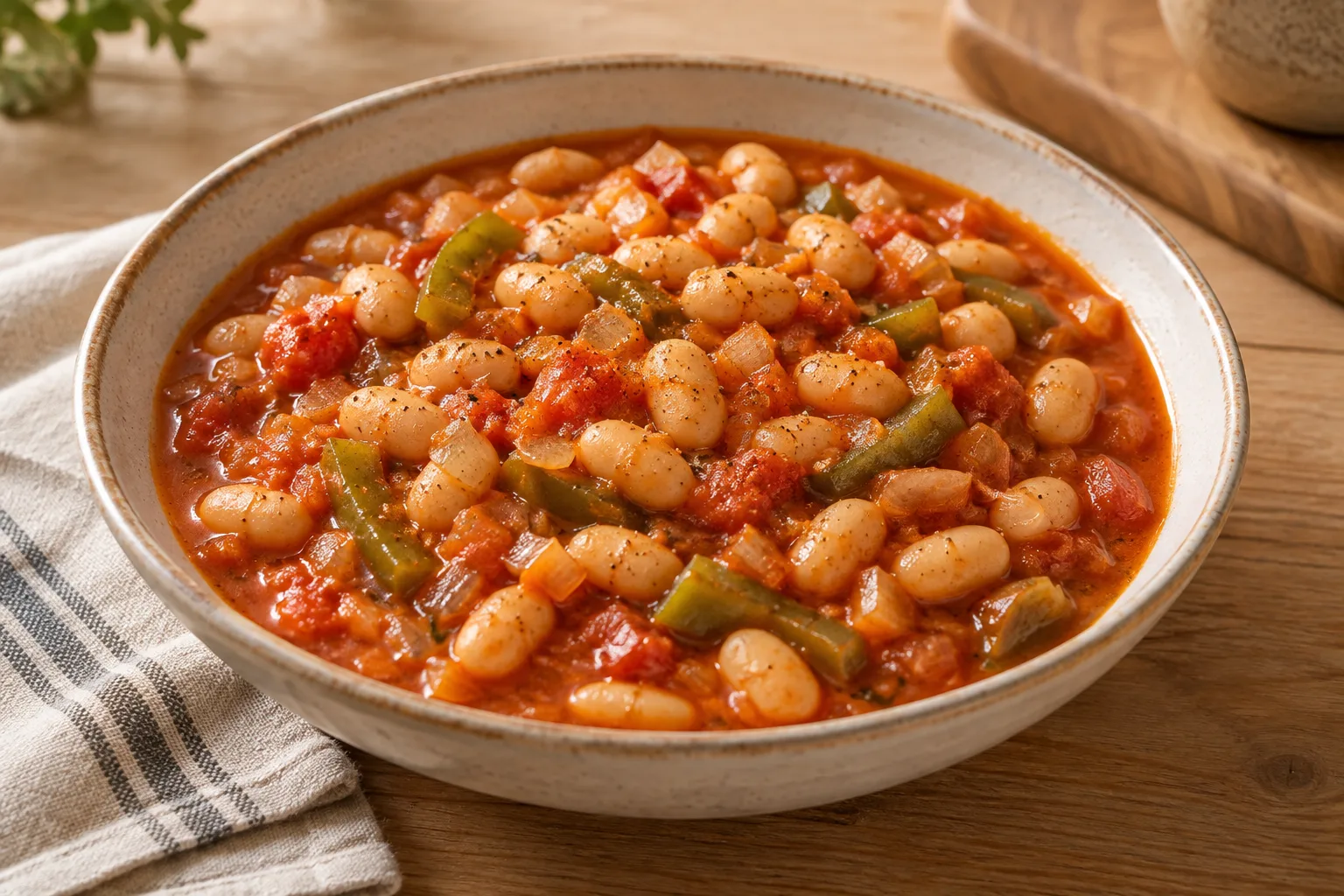
- Category
- Vegetables
- State
- Fresh
- Usual unit
- unit
What it is
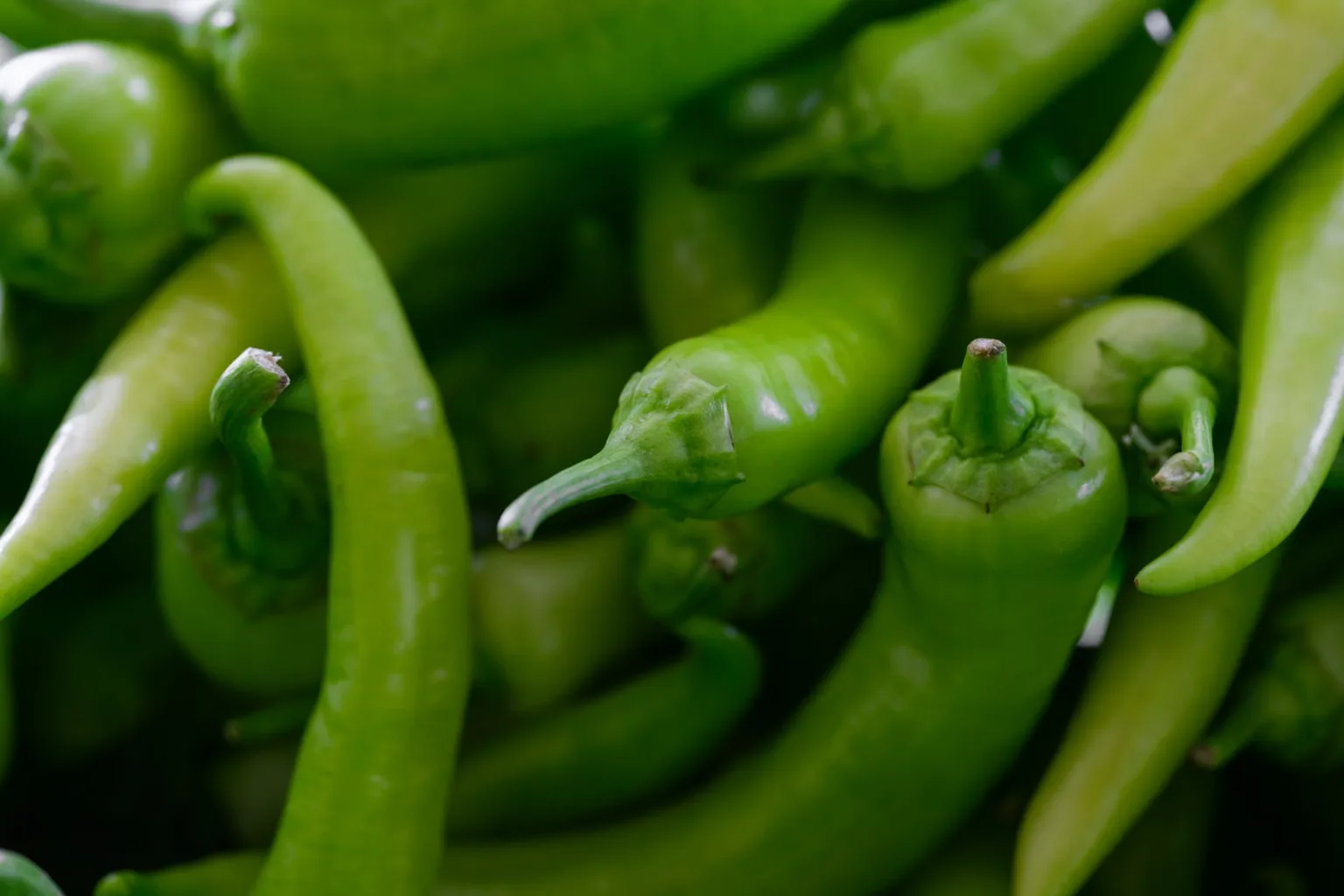
Long green peppers are fresh peppers identified by their elongated shape and green colour. The name describes their appearance but does not necessarily identify one specific variety: long green peppers can differ in size, flesh thickness, flavour, and heat. Some elongated green types have thin flesh and a sweet flavour, while other peppers can be hot. Do not assume every long pepper is alike. They are used as a vegetable and can be served raw or cooked. If a recipe depends on a mild flavour, check the variety or taste a small piece before using the pepper.
When to use it
Choose long green peppers when you want a vegetable that is easy to cut into strips or rounds and add to a dish. Raw, they bring a crisp texture to salads and snacks; cooked, they work for frying, roasting, grilling, or making a sofrito. Their shape can also make them convenient for stuffing, provided the size and firmness suit the recipe. Since flavour and heat can vary, taste one before adding a large amount to a mild or delicate dish.
How to use it
Wash the pepper before cutting it, then remove the stem and seeds if your recipe calls for it. For a salad or snack, slice it into strips, rounds, or cubes and serve it raw. To cook it, fry, sauté, roast, grill, steam, or add it to a sofrito. Mix it with other vegetables, or pair it with ingredients such as tomatoes, rice, couscous, quinoa, or beans. To stuff a pepper, open it and choose a filling that fits its size. The evidence available here does not establish cooking times, so follow the directions for your particular recipe.
Flavour and texture
Long green peppers can taste mild, with slightly bitter notes and less sweetness than a riper pepper. Some elongated types have thin, sweet flesh, but flavour is not identical across all peppers, and some may be hot. Raw, they are crisp; heat softens them and can concentrate their flavour. Flesh thickness also varies by type.
How to choose it
Choose peppers that feel firm and look fresh, with smooth, glossy skin. Check that the stem is firm and green and that the pepper has no bruises, dents, or damaged areas. A pepper that feels proportionate in weight to its size can be a useful comparison when choosing. Since “long” does not by itself identify a variety or guarantee a certain heat level, ask about the type if your recipe calls for a sweet pepper.
Storage
Keep fresh peppers in the refrigerator vegetable drawer and avoid rubbing or knocking them, which can damage the skin. One available recommendation is to use them within five days of purchase for freshness; the condition of individual peppers varies, so inspect them before use. If you cut a pepper and do not use all of it, refrigerate the remainder in a clean container and use it soon.
Substitutions
Another long green sweet pepper can stand in for these peppers when you want a similar result, although size and flesh thickness may differ. A red sweet pepper can also work in many dishes, but it is generally riper and sweeter, so account for the flavour change. If heat matters, check the variety before substituting: green colour and an elongated shape do not guarantee a mild pepper.
Common mistakes
Do not assume that every long green pepper is sweet or has the same amount of flesh. Avoid peppers that are soft, bruised, or visibly damaged. For salads, cut them shortly before serving if you want to preserve their crisp texture. If frying or roasting them, check the type first when the dish needs a mild flavour.
Safety and allergens
Wash the pepper before preparing it. If you need to avoid particular ingredients because of an allergy, check the ingredients and allergen information for prepared or packaged pepper products, as these may depend on other ingredients.
Culinary uses
- Fresh vegetable for salads and snacks
- Cooked ingredient for frying, roasting, stuffing, and sofrito
Recommended techniques
- Slice or dice and use raw
- Fry, roast, grill, steam, or cook in a pan
Pairs well with
- Tomatoes, courgettes, carrots, or broccoli
- Rice, couscous, quinoa, beans, or avocado
Frequently asked questions
Are long green peppers always sweet?
No. The name describes shape and colour, not one specific variety; flavour and heat can vary. Check the type or taste a small piece.
Can long green peppers be eaten raw?
Yes. Wash and slice them into strips, rounds, or cubes for salads and snacks. You can also fry, roast, grill, or cook them in a sofrito.
How should I store fresh long green peppers?
Keep them in the refrigerator vegetable drawer and avoid knocks or rubbing. One available recommendation is to use them within five days of purchase.
Ingredient allergens
Allergen listThere are no verified associations for these ingredients yet.
Estimated nutrition
- Fat
- 11.8 g
- Saturates
- 1.59 g
- Carbohydrate
- 4.22 g
- Sugars
- 2.17 g
- Fibre
- 1.8 g
- Protein
- 0.78 g
- Salt
- 0.04 g
Sources and review
Automatically researched, cross-checked and validated content. Sources consulted:
- Client Challenge doi.org/10.2307/jj.27939689.16
- Variedades de pimientos más populares y algunas recetas con ellos www.hola.com/cocina/noticias/20210311185711/variedades-de-pimientos-y-recetas/
- El Pimiento Verde. Un ingrediente tradicional - Restaurante La Española restaurantelaespanola.es/el-pimiento-verde-un-ingrediente-tradicional/
- Food Allergens - International Regulatory Chart | Food Allergy Research & Resource Program | Nebraska farrp.unl.edu/IRChart/
- El Pimiento Y Su Importancia En La Gastronomía Española - Restaurante Romero restaurante-romero.es/el-pimiento-y-su-importancia-en-la-gastronomia-espanola/
- El pimiento ecológico: un ingrediente principal en nuestras cocinas www.afuegolento.com/articulo/el-pimiento-ecologico-ingrediente-principal-nuestras-cocinas/51…
- 4 diferencias entre el pimiento verde y el pimiento rojo - Ametller Origen www.ametllerorigen.com/es/blog/diferencias-entre-el-pimiento-rojo-y-el-pimiento-verde/
- Pimientos dulces, verdes (¿crudos, orgánicos?) | Fundación G+E www.diet-health.info/es/recetas/ingredientes/in/yr3300-pimiento-verde-crudo
- Allergies - Food Safety - European Commission food.ec.europa.eu/food-safety/campaign-2026/allergies_en
- Food allergens | Food Safety and Quality | FAO www.fao.org/food-safety/scientific-advice/food-allergens/en
- Food Allergy Labeling Laws: International Guidelines for Residents and Travelers - PMC pmc.ncbi.nlm.nih.gov/articles/PMC10169132/
- Etiquetado de sustancias que causan alergias e intolerancias alimentarias www.aesan.gob.es/en/seguridad-alimentaria/informacion-alimentaria/etiquetado-sustancias
- Alérgenos y Etiquetas de Alimentos www.dshs.texas.gov/sites/default/files/foods/Allergens%20and%20Food%20Labeling/Allergens%20w…
- ¿Tiene alergias a los alimentos? Lea la etiqueta | FDA www.fda.gov/consumers/articulos-para-el-consumidor-en-espanol/tiene-alergias-los-alimentos-l…
- Curiosidades sobre los pimientos - Daliber daliber.com/curiosidades-sobre-los-pimientos/