- Category
- Fruit
- State
- Fresh
- Usual unit
- unit
What it is
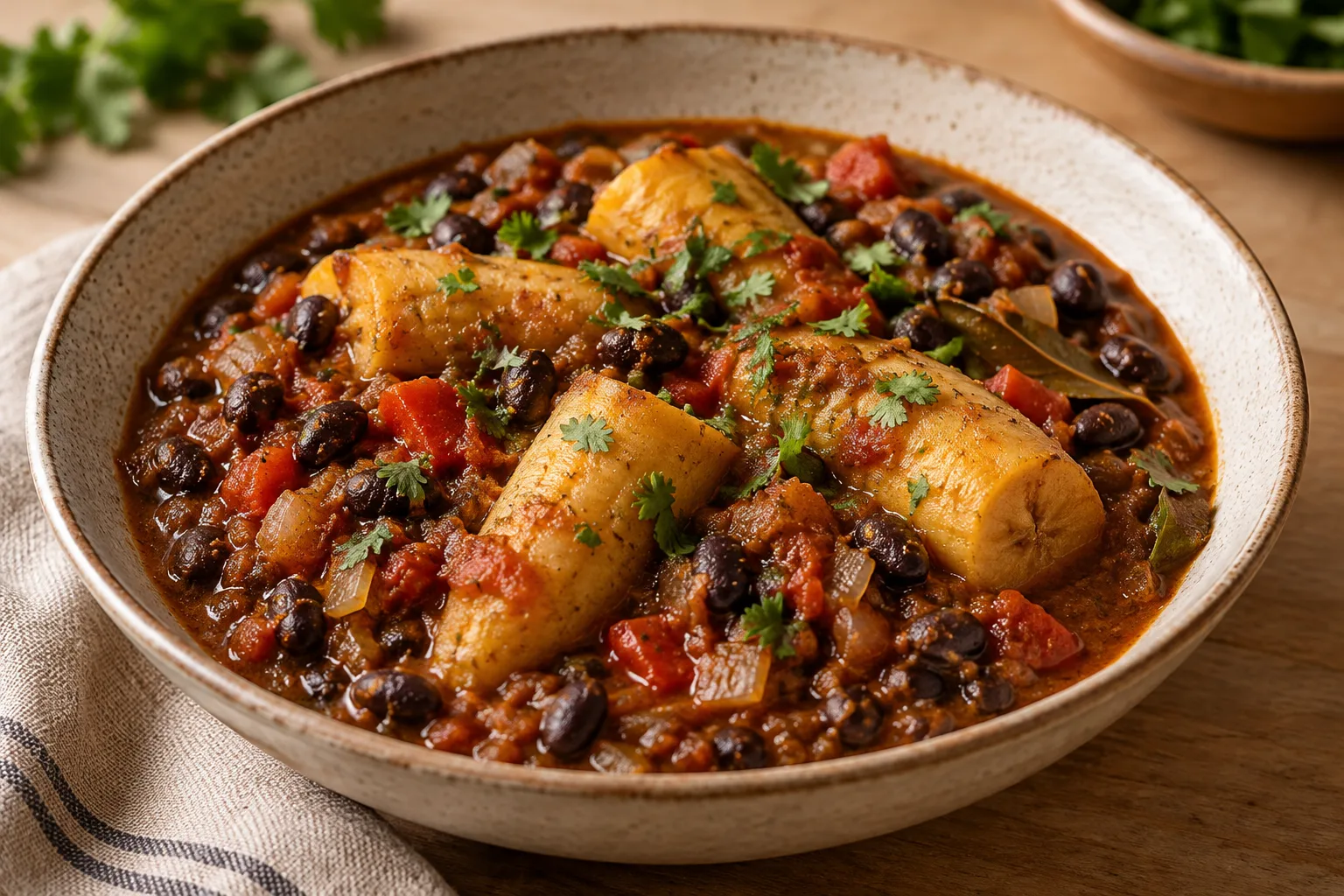
Matoke, also spelled matooke, is a name for green, starchy cooking bananas and, depending on context, the savory food made from them. It is not the sweet yellow banana commonly eaten raw: the fruit is used while green and firm, cooked until tender, and served mashed or alongside a stew. Some preparations boil the fruit whole in its peel; others peel it, cut it, and steam it, sometimes wrapped in banana leaves. The word may describe either the ingredient or the finished dish, so it helps to clarify which is meant. Matoke is eaten as a staple in Uganda and used as a starchy accompaniment for sauces, beans, vegetables, and meat. There is no single required side dish or texture: recipes and household customs shape how it is presented.
When to use it
Choose matoke when you want a mild, savory, filling base for sauce or stew rather than a sweet fruit to eat raw. Green, firm cooking bananas suit a soft, starchy result. Serve them with bean or peanut sauce, leafy vegetables, or meat, or mash them as an accompaniment to a stew. Peeled pieces can also be cooked directly in a stew. The name does not mean that chicken, meat, peanuts, or any other accompaniment is automatically included; those are separate ingredients that depend on the preparation.
How to use it
Wash the fruit before preparing it and choose green, firm cooking bananas. One method is to boil them whole in their peel until tender; drain them, let them cool enough to handle, peel them, and mash to make a soft purée. Alternatively, peel and steam them, sometimes wrapped in banana leaves, or cut them into pieces and cook them in a stew until soft. Serve matoke warm as a base for sauce, beans, vegetables, or meat. Some mashed versions include milk and butter, but neither is essential to the meaning of the ingredient or dish. Adding pieces directly to a stew produces a different texture from cooking and mashing them separately.
Flavour and texture
Matoke made from green cooking bananas has a mild, not very sweet flavor and a starchy texture that becomes tender with cooking. Mashing produces a soft, cohesive mass that works well with sauces; pieces keep more of their shape if cooked only until tender. The result varies with ripeness and method: boiling, steaming, wrapping in leaves, and stewing do not create exactly the same texture. Do not expect the sweetness or consistency of a ripe yellow banana.
How to choose it
Look for green, firm cooking bananas if you want the mild, starchy result associated with savory matoke. Matoke is not always sold under one standardized retail name; it may be labeled with a local name for green or cooking bananas. Ask the seller if you are unsure whether a particular fruit is suitable for cooking. Culinary descriptions identify green fruit as the choice for these preparations, but do not establish a commercial grading system or detailed damage criteria.
Storage
The available information does not establish a specific storage temperature, shelf life, or storage method for fresh matoke, so do not assume a universal time limit. For cooking, consider the fruit’s ripeness: the savory preparations described use green, firm fruit. Follow any storage instructions supplied by the seller for the particular product. Once peeled or cut, use it as part of the planned preparation rather than assuming it will keep the same qualities as whole fruit.
Substitutions
For a similar preparation, try another firm, green cooking banana or plantain, while allowing for differences in flavor and texture. Cooked cassava or potato can provide a starchy accompaniment to a stew, but neither reproduces matoke’s banana flavor. These are not exact swaps, and the amount or cooking method may need adjustment for the replacement ingredient.
Common mistakes
Using a sweet, yellow banana and expecting the mild, starchy character of green matoke can change the result considerably. It is also easy to mistake the name for a fixed recipe: matoke does not necessarily mean chicken stew or require a particular sauce. Do not assume that every version uses banana leaves, milk, or butter; these are preparation choices, not universal requirements.
Safety and allergens
Cook cooking bananas before serving them as matoke; the preparations described boil, steam, or stew them until tender. If the meal includes meat, milk, or other ingredients, check those ingredients and handle them safely as well. No verified allergen declaration for every recipe or product is available here.
Culinary uses
- Starchy cooking fruit served as a savory staple
- Soft, neutral base for stews, beans, vegetables, and sauces
Recommended techniques
- Boiling whole, often in the peel, then peeling and mashing
- Steaming peeled green fruit, including wrapping in banana leaves
- Adding peeled, cut pieces to a stew and cooking until tender
Pairs well with
- Bean or peanut-based sauces
- Vegetable stews and leafy greens
- Meat stews, including chicken
- Rice, cassava, or other savory staple foods
Frequently asked questions
Is matoke a fruit or a dish?
It can mean the green cooking banana or the savory dish made from it. Context indicates which meaning is intended.
Can matoke be eaten raw like a sweet banana?
The preparations described use cooked green cooking bananas. They are boiled, steamed, or stewed until tender.
What is matoke served with?
It may accompany sauces, beans, vegetables, or meat stews. Pairings vary and there is no single required combination.
Ingredient allergens
Allergen listThere are no verified associations for these ingredients yet.
Sources and review
Automatically researched, cross-checked and validated content. Sources consulted:
- Client Challenge doi.org/10.2307/jj.27939689.16
- Matoke, estofado de pollo y plátano - Paasa tolvasaypaasa.es/matoke-estofado-de-pollo-y-platano/
- Assessment of the energy needs for cooking local food in ... ui.adsabs.harvard.edu/abs/2022ESusD..67...67K/abstract
- Lots of Matooke | Office of Undergraduate Research undergradresearch.northwestern.edu/2017/06/09/matooke-vs-vegetables-urban-agriculture-is-hea…
- Projecting Food Demand in 2030 and 2050 - AgEcon Search ageconsearch.umn.edu/record/313899/files/Abstracts_21_06_15_13_27_29_56__187_221_107_196_0.p…
- Food Waste Part 6: Introduction to Increasing Cooking Skills and Preserving Foods | USU extension.usu.edu/nutrition/research/food-waste-part-6
- Food Waste in Schools and Strategies to Reduce It extension.sdstate.edu/food-waste-schools-and-strategies-reduce-it
- Food insecurity coping strategies among households with ... dr.lib.iastate.edu/bitstreams/125a0216-bf7b-4ce0-9b34-4d1c1a3ec975/download
- Matoke: origen, ingredientes y alérgenos www.menuella.com/es/food-wiki/matoke
- Matoke, estofado de pollo con plátano. Receta de Uganda - TodoCooking Recetas www.todocooking.com/matoke-estofado-pollo-platano/
- Matoke o estofado de plátanos con pollo. Receta ugandesa www.directoalpaladar.com/recetas-de-carnes-y-aves/matoke-o-estofado-de-platanos-con-pollo-re…
- matoke | matooke - Historia de la Cocina y la Gastronomía www.historiacocina.com/es/tag/matoke-matooke
- - YouTube www.youtube.com/watch?v=tWNSkhgCf-Q