- Category
- Vegetables
- State
- Fresh
- Usual unit
- unit
What it is
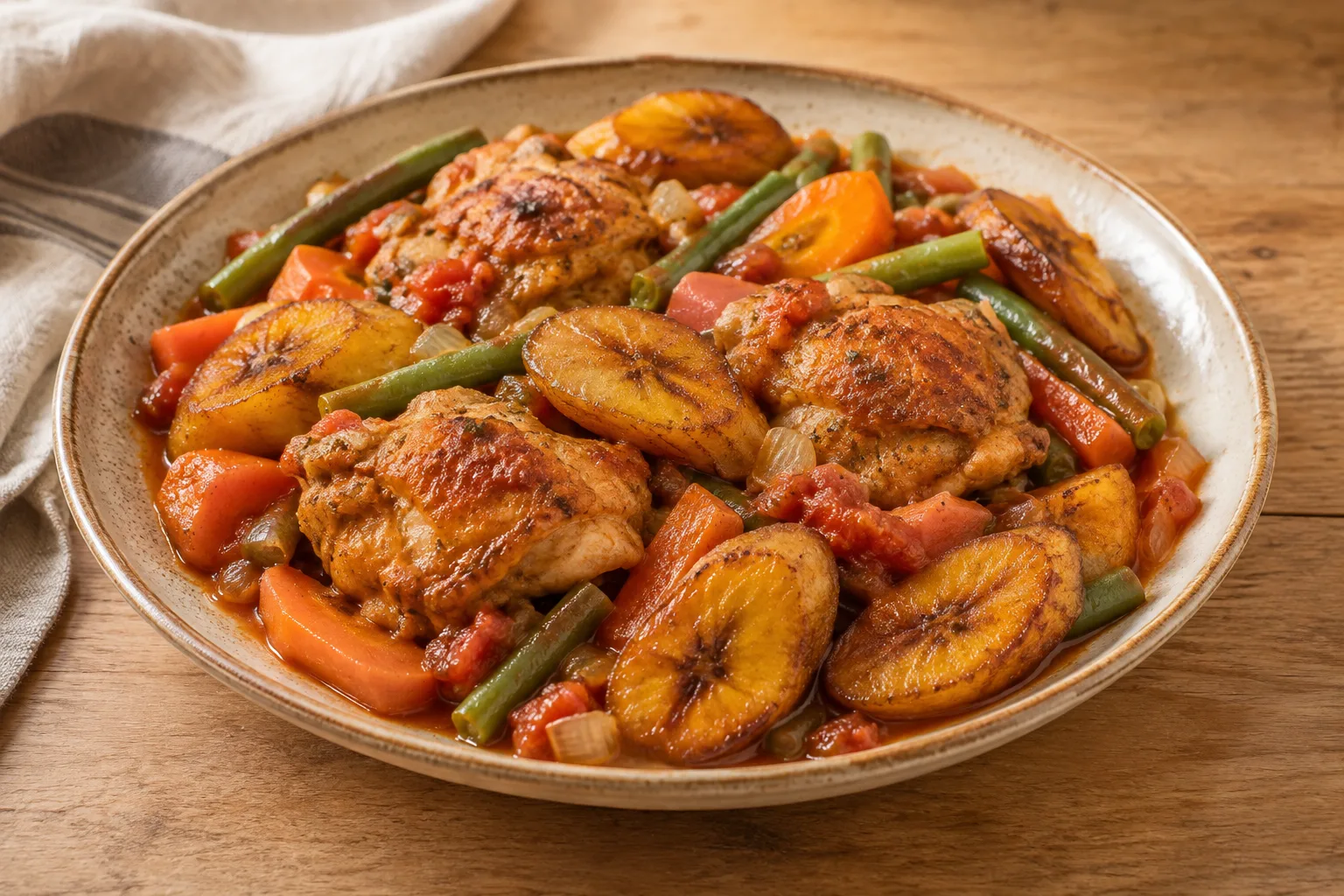
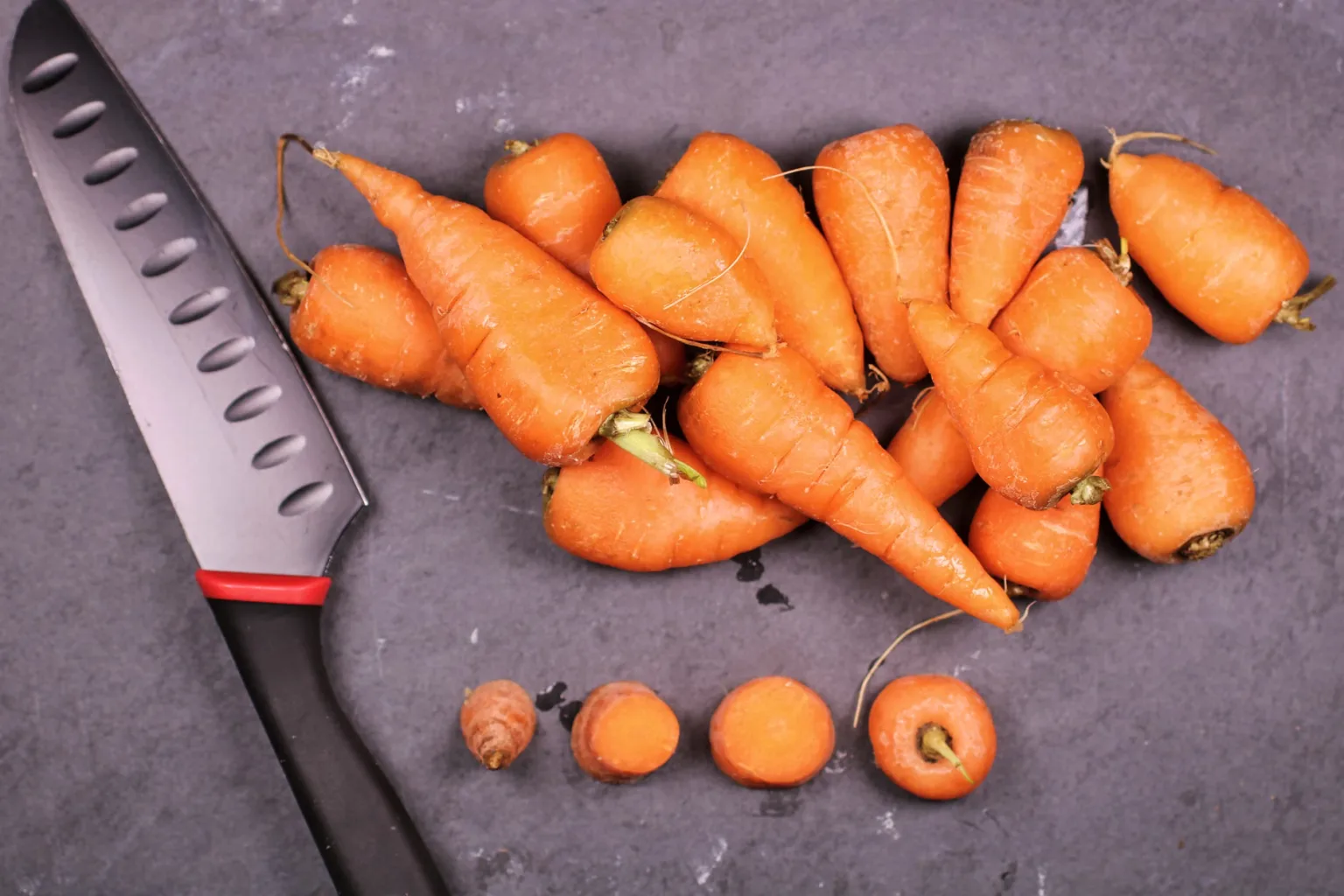
A carrot is an edible root and a vegetable in the Apiaceae family. The word “medium” indicates the size category given for this ingredient, but the available evidence does not establish a universal measurement for that category. In cooking, carrots can be diced and prepared with other ingredients. One soup recipe, for example, cooks carrot with onion before adding squash, corn, beans, tomato, broth, and seasonings. Carrot is also used with potatoes in a dish containing tomato sauce. These examples make medium carrots a practical option for cooked dishes, without requiring an assumed season or a precise size standard.
When to use it
Use medium carrots when a recipe calls for a vegetable in soup, a simmered dish, or another cooked preparation. They suit recipes that specify diced carrot and cook it with onion before adding the remaining ingredients. They can also be included in cooked dishes with potatoes and tomato sauce. The size of the pieces can affect how quickly they soften, so check their texture during cooking rather than assuming every piece will cook at the same rate.
How to use it
Wash the carrots before preparing them, then dice them if the recipe calls for small pieces. For a vegetable soup, cook them in a pan with onion and oil; once the onion begins to brown lightly, add the other ingredients specified, such as squash, corn, beans, tomato, broth, and seasonings. Bring the soup to a boil, then simmer until the vegetables are tender to your liking. Cooking time depends on the vegetables used and the texture you want. Carrots can also be included in cooked dishes with potatoes and tomato sauce. Wash fresh produce before eating or preparing it.
Flavour and texture
The available evidence establishes carrots as an ingredient in cooked dishes but does not describe the flavor or texture of medium carrots in detail. In soup, the final texture depends on the size of the pieces and how long they cook. Check whether they are tender according to the recipe and your preference rather than relying only on the size label. When cooked with broth, onion, and other vegetables, they contribute to the overall character of the dish.
How to choose it
The label “medium carrots” indicates a size category, but the available sources do not give dimensions or specific criteria for selecting them at the store. Choose carrots that suit the size called for in your recipe, bearing in mind that differently sized pieces may cook at different rates. If the recipe calls for diced carrot, cut the pieces to a similar size for more even cooking.
Storage
The available sources do not specify a storage method or duration for fresh carrots. Follow any storage directions on the package or from the place where you bought them, and do not assume an unverified storage period. If you want to preserve carrots at home by canning, do not improvise the method: edible roots require pressure canning unless they are acidified, such as in a properly tested pickled preparation.
Substitutions
In a flexible soup, you can adapt the vegetables to what is available; recipes may also allow the beans to vary. If replacing carrot, choose another vegetable that suits the dish and check its texture as it cooks, since ingredient type and piece size can affect the result. No exact quantity or cooking-time equivalence for these substitutions is established in the available evidence.
Common mistakes
Do not assume that “medium” means one exact measurement: cut the pieces to a similar size and check their tenderness as they cook. Also, do not treat a soup recipe as guidance for canning carrots. For home canning of edible roots, use a validated safe process; do not replace pressure canning with a water-bath method unless the product has been acidified using an appropriate process.
Safety and allergens
Wash carrots and other fresh produce before preparing or eating them. For home canning of edible roots, follow a validated process: non-acidified products require pressure canning; do not use a water bath as a substitute.
Culinary uses
- Vegetable in soups and simmered dishes
- Ingredient cooked with potatoes and tomato-based sauces
Recommended techniques
- Dice for even-sized pieces
- Sauté with onion before adding other ingredients
- Simmer in liquid until the vegetables reach the desired tenderness
Pairs well with
- Onion, squash, corn, beans, tomatoes, broth, cumin, and black pepper
- Potatoes, tomato sauce, and jalapeño
Frequently asked questions
What does “medium carrot” mean?
It identifies a size category, but the available sources do not set a universal measurement. If size matters to the recipe, cut pieces evenly and check their doneness.
How can I cook medium carrots in soup?
Dice them and cook them with onion before adding the other ingredients. Then simmer the soup until the vegetables are tender to your liking.
Can I substitute for carrots in soup?
In a flexible soup, you can adapt the vegetables to what you have available. Choose an alternative that suits the dish and check its texture as it cooks.
Ingredient allergens
Allergen listThere are no verified associations for these ingredients yet.
Sources and review
Automatically researched, cross-checked and validated content. Sources consulted:
- Client Challenge doi.org/10.2307/jj.27939689.16
- Sabores de nuestras tierras/recetas - 2024 | Agricultura y Recursos Naturales ucanr.edu/site/agricultura-y-recursos-naturales/sabores-de-nuestras-tierras-recetas-2024
- Vamos a Conservar Alimentos: Raíces comestibles: remolachas, zanahorias, nabos y colinabos extension.psu.edu/vamos-a-conservar-alimentos-raices-comestibles-remolachas-zanahorias-nabos…
- EFNEP Hispanic Heritage Recipes | Community Nutrition | Extension/College of Agriculture, Health & Natural Resources | University of Connecticut communitynutrition.cahnr.uconn.edu/efnep-hispanic-heritage-recipes/
- Su Propio Cultivo | Servicio de Extensión de OSU extension.oregonstate.edu/es/catalog/em-9027-s-su-propio-cultivo
- Vocabulario Módulo 2 – El Jardín del Lenguaje: A Collaborative Textbook for Intermediate Spanish pressbooks.uiowa.edu/spanishforeducators/chapter/vocabulario-modulo-2/
- Cenando con Diez Centavos 2014 agosto extension.k-state.edu/humannutrition/archived_newsletters/dining-on-a-dime/dining-on-a-dime-…
- Maqueta nº 10.2 aesan.gob.es/dam/jcr:1538b6eb-680f-44b8-bbc5-b08d810b00dc/comite_cientifico_10.pdf
- Las zanahorias, un tesoro nutricional biotta.es/es/estacional/las-zanahorias-un-tesoro-nutricional
- Origen e historia de la zanahoria www.uncomo.com/comida/articulo/origen-e-historia-de-la-zanahoria-44059.html